How to Compare a Construction Machinery Supplier
Choosing the right construction machinery supplier is essential for buyers seeking reliable equipment, competitive pricing, and long-term cooperation. Whether you source commercial vehicle parts, truck cylinder products, bulk cement trailer solutions, or work with a truck spare parts supplier, effective comparison helps reduce risk and improve procurement results. This guide explains how to evaluate suppliers, compare capabilities, and identify trustworthy partners in the global heavy equipment and transport industry.
Why supplier comparison matters in construction machinery procurement
In the road transport equipment industry, supplier selection affects far more than the purchase price. A weak construction machinery supplier can create delays in spare parts, inconsistent technical documentation, poor fit with truck chassis systems, and long downtime after delivery. For buyers managing infrastructure, logistics, mining, or municipal engineering projects, even a delay of 7–15 days can disrupt fleet schedules and jobsite planning.
This is why procurement teams, business evaluators, and distributors usually compare suppliers across at least 5 core dimensions: product scope, manufacturing capability, quality control, delivery performance, and after-sales support. If the machinery must work with heavy trucks, trailers, hydraulic systems, or commercial vehicle components, cross-category compatibility also becomes a practical requirement rather than a nice-to-have feature.
A professional B2B platform can simplify this process. The Global Heavy Truck Industry Platform connects manufacturers, suppliers, distributors, and buyers across the commercial vehicle and heavy equipment supply chain. That broader visibility helps users compare construction machinery suppliers in a more structured way, especially when projects involve complete trucks, construction equipment, trailers, and spare parts in one procurement cycle.
For information researchers, the first goal is usually to narrow down the market. For purchasing teams, the next step is to verify which suppliers can meet the required lead time, documentation, and support level. For agents and distributors, the real question is whether the supplier can sustain cooperation over 12–24 months instead of only handling one initial shipment.
Typical risks when buyers compare too quickly
- Selecting only by unit price without checking parts availability, service response time, or packaging suitability for international transport.
- Assuming that a supplier of truck spare parts can also support construction machinery attachments with the same technical depth.
- Ignoring region-specific compliance expectations, maintenance manuals, or language support for cross-border transactions.
- Failing to compare order flexibility for small batch, medium batch, and recurring bulk orders.
How to compare a construction machinery supplier step by step
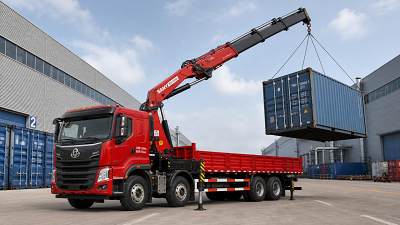
A practical comparison process should follow a clear sequence. In most B2B sourcing cases, buyers can use a 4-step method: define the application, check supplier capability, validate commercial terms, and confirm service support. This structure is especially useful when comparing suppliers for excavators, loaders, road equipment, truck-mounted systems, and related transport components.
Start with the application. Construction machinery for quarry work, municipal engineering, and long-haul support fleets does not require the same wear resistance, hydraulic configuration, or maintenance cycle. A supplier that performs well in one scenario may be less suitable in another. Buyers should list 3 basic operating conditions before requesting quotations: workload intensity, working environment, and expected service interval.
Then move to capability verification. Ask whether the supplier supports standard models only or also offers adaptation for truck chassis, body integration, or country-specific electrical and safety requirements. For projects with repeat orders every quarter or every 6 months, production consistency matters more than attractive introductory pricing.
The next step is commercial comparison. Review MOQ, quotation validity, payment structure, parts package options, and estimated delivery windows such as 20–35 days for standard orders or 45–60 days for customized configurations. Finally, evaluate after-sales support. A supplier that answers technical claims within 24–72 hours is usually easier to work with than one that only responds through sales channels.
A practical 4-step evaluation workflow
- Define the equipment use case, workload, terrain, and integration needs with trucks, trailers, or auxiliary systems.
- Request technical sheets, production information, inspection scope, and spare parts support details.
- Compare cost structure, lead time, packaging, warranty terms, and shipment readiness.
- Confirm service response, claim handling process, and long-term cooperation capability for repeat supply.
Key questions to ask before shortlisting
Can the supplier provide matching support for machinery, truck components, and related spare parts in one sourcing channel? Can they explain the difference between standard export packaging and special packing for long inland transfer plus ocean shipping? Can they support documentation for customs, inspection, and destination-side distributor review? These questions often reveal more than a basic catalog ever can.
Which comparison criteria should buyers score most carefully?
Not every supplier comparison item has the same weight. In many road transport equipment projects, buyers should prioritize 6 practical checks: product fit, documentation quality, lead time stability, quality control visibility, spare parts readiness, and communication efficiency. These criteria are easier to score than general claims about reputation, and they directly affect procurement outcomes.
Product fit means more than model matching. A construction machinery supplier should clarify operating range, loading context, compatibility with transport vehicles, and maintenance access. Documentation quality includes manuals, packing lists, parts lists, and technical drawings when required. In international trade, incomplete files can slow approval, payment release, and distributor handover.
Lead time stability is especially important for contractors and dealers. An average quotation may promise shipment in 30 days, but serious buyers should ask whether that applies during peak production periods, component shortages, or mixed orders that include machinery and truck spare parts. Consistency across 2–3 purchase cycles is often more valuable than one fast first order.
Quality control visibility is another strong filter. Suppliers should be able to explain inspection points, pre-shipment checks, and how they handle nonconformity. Even without naming proprietary systems, they should communicate a clear process. If a supplier cannot describe what they inspect before dispatch, buyers should assume post-delivery risk is higher.
Recommended supplier comparison scorecard
The table below gives a practical way to compare a construction machinery supplier for heavy equipment and commercial vehicle related procurement. It works well for sourcing teams, business review staff, and distributors who need an internal evaluation sheet before moving to quotation or negotiation.
Using a weighted scorecard helps teams avoid emotional decisions. It also makes internal reporting easier, especially when procurement, operations, and finance departments all need to approve the supplier. On a professional industry platform, buyers can collect comparable information faster and reduce the time needed for supplier screening from several weeks to a more manageable review cycle.
How to assess technical, compliance, and service capability
Technical capability should be reviewed in relation to the operating environment. In construction machinery and road transport equipment, common checks include duty cycle, material suitability, hydraulic or mechanical compatibility, and service access. Buyers do not always need laboratory data, but they do need clear technical descriptions, routine inspection items, and component replacement guidance.
Compliance is another area where buyers often lose time. A supplier may offer acceptable machinery, but fail to support export documents, safety markings, or destination market paperwork. Depending on the country and product type, buyers may need standard commercial documents, product specification sheets, packing declarations, or conformity-related files. It is wise to clarify document scope before the deposit stage, not after production starts.
Service capability should cover three periods: before order confirmation, during production, and after delivery. Before order confirmation, the supplier should answer application questions clearly. During production, they should provide milestone updates over a 2–4 week or 4–8 week cycle depending on complexity. After delivery, they should support installation guidance, claims review, and replacement parts planning.
The Global Heavy Truck Industry Platform is valuable here because buyers are not limited to a single product page. They can compare related categories such as complete trucks, chassis and cabs, construction machinery, trailers, and spare parts in one ecosystem. That is useful when the procurement decision depends on whether one supplier can support a broader transport solution rather than only one machine type.
Checklist for technical and service review
- Confirm whether the machinery is intended for light-duty, medium-duty, or heavy-duty working cycles.
- Check if wear parts, hydraulic elements, and replacement intervals are clearly stated.
- Ask what documents will be available at quotation stage, order stage, and shipment stage.
- Verify whether after-sales support is handled within 24–72 hours and whether spare parts can be supplied in routine batches.
Common compliance points in cross-border sourcing
While requirements vary by market, buyers should review labeling, safety-related documentation, packing suitability, and consistency between quotation, invoice, and shipping files. A reliable construction machinery supplier does not need to promise every document for every country, but they should identify early which items are standard and which require advance confirmation.
Cost comparison: look beyond the quoted price
One of the most common procurement mistakes is comparing suppliers only by ex-factory or FOB price. In reality, the total acquisition cost includes equipment configuration, spare parts package, packaging method, inland transport, shipping readiness, document handling, commissioning support, and expected maintenance frequency over the first 6–12 months. Lower price does not always mean lower project cost.
This is especially true when the supplier relationship involves both construction machinery and commercial vehicle parts. If the machine arrives quickly but critical truck cylinder products or service parts take another 3–5 weeks, the operational cost rises through idle labor, delayed fleet deployment, and emergency sourcing. Buyers should compare complete supply capability instead of isolated unit prices.
A structured cost table helps decision-makers explain why one supplier is more competitive over time. This matters for distributors and agents who must protect margin while maintaining reliable support for end customers. It also matters for business evaluation teams that need clear justification for vendor approval.
Below is a practical cost comparison framework for heavy equipment and transport-related sourcing. It can be used for initial screening, supplier meetings, or internal commercial review before contract negotiation.
The main lesson is simple: compare total purchasing value, not only headline pricing. In many cases, a supplier with clearer documentation, better spare parts support, and more stable delivery creates lower operational cost over a 12-month period than a cheaper supplier with fragmented service.
Common mistakes, FAQs, and how to make the final decision
Even experienced buyers can miss important signals when they compare a construction machinery supplier. The most frequent mistake is treating all suppliers as if they serve the same market level and product complexity. Some are better at standard equipment export, while others are better at integrated supply involving trucks, trailers, spare parts, and application-specific machinery packages.
Another mistake is failing to align the internal team. Procurement may focus on price, operations may focus on durability, and finance may focus on payment terms. A final decision works best when 3 sides agree on a short list of mandatory conditions, such as delivery window, minimum documentation set, and spare parts response plan. That alignment can save one or two extra negotiation rounds.
The final decision should combine objective scoring with practical communication experience. If two suppliers appear similar on paper, choose the one that answers faster, explains technical limits clearly, and supports future procurement planning. In cross-border B2B trade, clarity and coordination often determine success as much as the machinery itself.
Below are several frequently asked questions that reflect common search intent from information researchers, purchasing managers, and distributors in the heavy equipment and commercial vehicle sector.
How do I know if a construction machinery supplier is suitable for long-term cooperation?
Look beyond the first order. Check whether the supplier can support repeat procurement over 6–12 months, maintain documentation consistency, and supply wear parts or replacement items without restarting the whole approval process. Long-term suitability is usually visible in communication discipline, lead time stability, and willingness to discuss after-sales procedures before payment.
What delivery timeline is common in this industry?
For standard configurations, buyers often see production windows around 20–35 days, while customized machinery or mixed orders involving truck spare parts, trailer items, or special packing may take 45–60 days. Always confirm whether the quoted period starts from deposit receipt, drawing approval, or final specification confirmation.
What should distributors and agents focus on most?
Distributors should prioritize model continuity, parts availability, and technical file completeness. End users judge the local seller by delivery reliability and service speed, not by factory claims alone. If you plan to build inventory, ask which parts are fast-moving, which are custom, and what replenishment cycle is realistic for monthly or quarterly orders.
Can one platform really help compare different supplier types?
Yes, especially when the platform is focused on the heavy truck and commercial vehicle ecosystem. The Global Heavy Truck Industry Platform helps buyers review suppliers across construction machinery, complete trucks, trailers, chassis, and spare parts in one place. That makes it easier to compare supply breadth, evaluate compatibility, and identify partners for broader transport equipment projects rather than isolated purchases.
Why choose us for supplier comparison and sourcing support
The Global Heavy Truck Industry Platform is built for buyers who need more than a simple supplier list. It brings together manufacturers, suppliers, distributors, and buyers across the global commercial vehicle and heavy equipment supply chain. This makes it easier to compare a construction machinery supplier with the context that real B2B sourcing requires, including related trucks, trailers, components, and spare parts.
For information researchers, the platform offers structured access to product categories, market insights, brand directories, and buying guides. For procurement teams, it supports faster supplier screening and better comparison across quotation, application fit, lead time, and service capability. For distributors and agents, it helps identify partners with export readiness and long-term cooperation potential.
If you are comparing construction machinery suppliers, truck spare parts suppliers, bulk cement trailer partners, or commercial vehicle component sources, you can contact us for specific support on parameter confirmation, product selection, delivery cycle review, customization options, documentation scope, sample arrangements, and quotation communication. These are the issues that directly influence purchasing confidence and project execution.
Share your target market, required equipment category, order volume, and timeline. We can help you narrow supplier options, organize comparison points, and improve decision efficiency for your next heavy equipment or road transport equipment sourcing project.
Trending News
- Truck Tipper Exporter Compliance Risks in Cross-Border Deliveries
- Truck Trailer Distributor Trends Shaping Regional Market Growth in 2026
- Crane Truck for Sale: 7 Checks Before You Choose a Model
- How to Compare a Truck Trailer Supplier Beyond Unit Price
- Bulldozer for Construction: Key Specs That Affect Earthmoving Efficiency
Tag
Recommended News
 Buying GuideCrane Truck for Sale: 7 Checks Before You Choose a ModelCrane truck for sale: discover 7 essential checks to compare models, reduce procurement risk, control total cost, and choose the right truck for safer, more efficient operations.
 Buying GuideHow to Compare a Truck Trailer Supplier Beyond Unit PriceTruck trailer supplier comparison should go beyond unit price. Learn how to assess quality, compliance, delivery, and after-sales support to reduce risk and secure long-term value.
 Buying GuideSemi Trailer Bulk Order Checklist for Delivery Risk and Lead TimeSemi trailer bulk order success starts with a clear checklist. Learn how to reduce delivery risk, control lead time, compare suppliers, and keep large trailer procurement on schedule.
 Buying GuideTruck Tipper OEM vs Standard Models: Which Lowers Project Costs?Truck tipper OEM vs standard models: discover which option cuts total project costs through better uptime, compliance, payload fit, and lower lifecycle expenses.
 Buying GuideHow to Evaluate a Heavy Truck Chassis Manufacturer with R&D CapabilityHeavy truck chassis manufacturer with R&D capability: learn how to assess engineering strength, validation, customization, and compliance to choose a reliable supplier with confidence.
 Buying GuideLogging Truck Price Guide: Spec Choices That Change Total Ownership CostLogging truck price is more than the upfront quote. Discover how axle setup, engine sizing, durability, and service support shape total ownership cost and smarter buying decisions.
 Buying GuideLogging Truck Supplier Selection: Load Capacity, Terrain Fit, and DowntimeLogging truck supplier selection guide: compare load capacity, terrain fit, parts support, and downtime risk to choose reliable forestry trucks and cut operating costs.
 Buying GuideCrane Truck Manufacturer Comparison: Boom Stability, Payload, and SupportCrane truck manufacturer comparison guide covering boom stability, payload, chassis integration, and support to help buyers choose safer, more efficient trucks with long-term value.
 Buying GuideHow to Evaluate a Heavy Truck Chassis Manufacturer With R&D CapabilityHeavy truck chassis manufacturer with R&D capability: learn how to assess engineering strength, testing, customization, and long-term support to choose a reliable partner.
 Buying GuideDump Truck Supplier With Quick Delivery: What to Verify FirstDump truck supplier with quick delivery: learn what to verify first, from factory credibility and capacity to compliance, landed cost, and after-sales support before you buy.
 Buying GuideCab Chassis Truck for Fire Department: Key Fitment PointsCab chassis truck for fire department selection starts with fitment. Learn key points on GVWR, wheelbase, PTO, safety, and body integration to improve uptime and response performance.
 Buying GuideHow to Evaluate a Heavy Truck Chassis Manufacturer With R&D CapabilityLearn how to evaluate a heavy truck chassis manufacturer with R&D capability using practical criteria for design, testing, customization, and long-term fleet value.
 Fleet ManagementDelivery Truck Supplier in USA: What Matters Most for Fleet ExpansionDelivery truck supplier in USA selection impacts uptime, cost, and fleet growth. Learn how to compare suppliers by route needs, service support, and long-term scalability.
 Buying GuideCost-Effective Delivery Truck Supply: What Low Price May Leave OutDelivery truck supplier with cost-effective solutions: learn what low prices may leave out, from compliance and after-sales support to lifecycle value, so you can source smarter and avoid hidden costs.
 FAQDelivery Truck for School Transportation: Safety Points Before OrderingDelivery truck supplier for school transportation: review key safety points before ordering, from braking and visibility to compliance and passenger protection.
 Buying GuideHow to Choose a Truck Trailer Distributor for Stable After-Sales SupportTruck trailer distributor selection starts with after-sales strength. Learn how to compare service networks, parts support, warranty response, and technical help for long-term uptime.
 Buying GuideWhat to Check Before Choosing a Truck Cement Mixer SupplierTruck cement mixer supplier selection starts with the right checks. Learn how to compare quality, compliance, delivery, and after-sales support to reduce risk and choose with confidence.
 Buying GuideBulldozer Price Guide: What Affects Cost Across Jobsite TypesBulldozer price guide for construction, mining, roadwork, and municipal projects. Compare key cost drivers, avoid overbuying, and source the right dozer with confidence.
 Fleet ManagementHow to Choose Commercial Vehicle Parts for Warehouse Fleet UptimeCommercial vehicle parts for warehouse fleets directly impact uptime. Learn how to choose durable, accurate-fit parts and reliable suppliers to reduce downtime and control maintenance costs.
 Buying GuideLogging Truck Supplier Selection: Durability Points That Matter in Tough TerrainLogging truck supplier selection starts with durability. Discover the key strength, traction, braking, and support factors that reduce downtime in tough terrain.
 FAQDump Truck Sourcing Mistakes That Delay Construction ProjectsDump truck sourcing mistakes can delay construction projects, raise hidden costs, and disrupt site schedules. Learn the key risks to avoid and source smarter for faster, more reliable project delivery.
 Buying GuideWhat Makes a Delivery Truck Supplier Suitable for School TransportationDelivery truck supplier for school transportation: learn how to assess safety, compliance, body design, and after-sales support for urban, rural, and school logistics needs.
 Buying GuideHow to Plan a Semi Trailer Bulk Order Without Costly Specification MistakesSemi trailer bulk order planning starts with the right specs. Learn how to avoid costly mistakes, compare suppliers wisely, and secure compliant, fleet-ready trailers.
 Fleet ManagementWhy a Light Duty Truck Manufacturer in USA Still Matters for Fleet ReliabilityLight duty truck manufacturer in USA choices still shape fleet uptime, parts access, and lifecycle value. See what buyers should compare for more reliable operations.
![]() Buying GuideFlatbed Trailer Supplier for Logistics Transportation: What to Check Before OrderingFlatbed trailer supplier for logistics transportation: learn what to check before ordering, from load capacity and compliance to customization and supplier reliability.
Buying GuideFlatbed Trailer Supplier for Logistics Transportation: What to Check Before OrderingFlatbed trailer supplier for logistics transportation: learn what to check before ordering, from load capacity and compliance to customization and supplier reliability.