When a BULLDOZER for Road Construction Delivers Better Site Efficiency
When timelines are tight and ground conditions are challenging, choosing the right BULLDOZER for road construction can significantly improve site efficiency. For project managers and engineering leaders, the real value lies in faster earthmoving, better grading control, reduced downtime, and smoother coordination across the jobsite. Understanding these advantages helps teams make smarter equipment decisions and keep infrastructure projects on schedule.
Why a Checklist-Based Decision Process Matters First
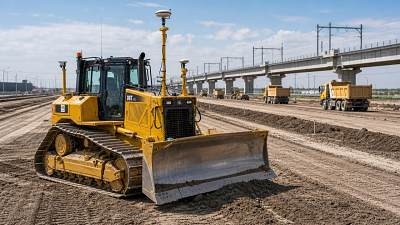
For roadwork leaders, the biggest mistake is not choosing a weak machine; it is choosing a machine before confirming the work profile. A BULLDOZER for road construction may be used for clearing, stripping topsoil, pushing fill, rough grading, embankment shaping, or supporting haul-road preparation. Each of these tasks places different demands on blade capacity, undercarriage strength, traction, and control precision. A structured checklist shortens evaluation time and reduces procurement errors before they turn into schedule delays.
In many projects, equipment decisions are made under pressure within 3 to 10 working days, especially when a subcontractor changes, weather windows narrow, or site access opens earlier than planned. In that environment, project teams need a practical method to judge whether a crawler dozer will actually improve production rates. A checklist approach helps compare machine suitability against haul distance, material type, slope condition, and target daily output instead of relying on broad assumptions.
This is especially relevant in the road transport equipment sector, where project managers often coordinate not only earthmoving equipment, but also heavy trucks, dump bodies, low-bed trailers, service vehicles, and spare-parts logistics. The right BULLDOZER for road construction does not work in isolation. It must fit the wider transport chain, fuel supply plan, maintenance support window, and machine mobilization route across the jobsite.
What should be checked before comparing brands or offers
- Confirm the primary task ratio, such as 40% clearing, 35% bulk pushing, and 25% finish grading, because one machine rarely performs every task equally well.
- Measure average push distance. In many road formation jobs, dozers are most efficient in short to medium pushes, often below 100 meters.
- Check underfoot conditions, including wet clay, blasted rock fragments, loose fill, or compacted subgrade, since track wear and traction vary sharply.
- Review support resources, including service technicians, wear parts availability, fuel delivery intervals, and transport permits for machine relocation.
Using this pre-check method allows procurement and site teams to speak the same operational language. It also makes supplier discussions more productive, because requests can be framed around working conditions, expected shift hours, and maintenance intervals rather than only asking for a general quotation.
Core Selection Checklist for a BULLDOZER for Road Construction
The most useful way to evaluate a BULLDOZER for road construction is to break the decision into machine class, blade configuration, terrain suitability, and supportability. For most road-building operations, production efficiency comes from balancing power and control rather than simply selecting the largest available unit. An oversized machine may increase fuel burn, transport cost, and compaction damage on prepared layers, while an undersized unit can cause repeated passes and missed progress targets.
Below is a practical comparison table that project managers can use during supplier screening. The ranges are general industry references, useful for early-stage evaluation when a project is defining equipment needs for highway approaches, rural roads, municipal access roads, or industrial haul routes.
The table shows that site efficiency is not driven by horsepower alone. For example, a PAT blade can be valuable when shaping shoulders or drainage features, while a semi-U blade may support larger pushing volumes in embankment work. On road projects with multiple short tasks in one shift, a versatile configuration often delivers better total productivity than a single-purpose setup.
Priority checks during evaluation
- Match the machine to average haul and push distance, not peak demand only.
- Check whether the blade supports both bulk spreading and formation trimming within the same work package.
- Review undercarriage design and wear-part accessibility, especially for sites operating 8 to 12 hours per shift.
- Ask about fuel consumption behavior under sustained pushing rather than idle or travel-only conditions.
- Verify transport dimensions and mobilization requirements, particularly if the machine must move between sections frequently.
Blade and grading control are often underestimated
In road foundation work, grading accuracy can have a direct effect on compaction quality, drainage behavior, and later paving performance. If the BULLDOZER for road construction lacks proper blade response or visibility, crews may need more corrective passes by a motor grader or excavator. That can add 10% to 20% more machine interaction time on some sections, especially where shoulder shaping and side slope transitions are frequent.
Project managers should therefore assess not only bulk movement ability but also how well the dozer can contribute to formation control. On mixed road projects, this dual capability often supports better crew sequencing and reduces waiting time for follow-on machines.
How Site Conditions Change the Best Choice
A BULLDOZER for road construction that performs well on dry rural alignments may be far less effective in wet cut-and-fill zones or industrial access roads with sharp gradients. Site efficiency depends on whether the machine can maintain traction, keep material moving, and avoid excessive rutting or undercarriage damage. The best choice changes when the project moves from clearing to mass earthwork, then to subgrade refinement.
This is why project teams should map machine choice against road segment type, soil profile, and support fleet arrangement. If haul trucks deliver inconsistent loads or if the site relies on limited service windows, the dozer may spend too much time waiting, repositioning, or working outside its most efficient cycle. Good equipment planning is therefore also a transport coordination issue, not just a machine specification issue.
The following table can help teams judge which features should be prioritized under common roadwork conditions. It is useful during early procurement reviews, rental comparisons, or supplier consultations on project staging.
A useful takeaway is that jobsite conditions should drive configuration priorities. If a project spans 20 to 50 kilometers and includes both wet lowlands and dry elevated sections, one standard machine setup may not be enough. In some cases, pairing a primary dozer with support equipment or changing blade configuration between stages can improve consistency across the project.
Scenario-based checks for project leaders
- For greenfield road construction, verify whether the dozer must handle clearing residue before earth shaping begins.
- For mining access roads, check whether the machine can tolerate abrasive material and higher maintenance frequency.
- For municipal engineering, confirm maneuverability near utilities, traffic zones, and tight turning areas.
- For contractor fleets serving multiple projects, assess relocation speed, loading compatibility, and spare-parts commonality.
These checks are particularly important for companies sourcing through international B2B channels, where the commercial offer may look strong but actual project suitability still depends on detailed application matching.
Common Overlooked Risks That Reduce Efficiency
Even when the machine itself is suitable, several overlooked factors can reduce the value of a BULLDOZER for road construction. The first is underestimating maintenance timing. A dozer operating in abrasive fill or stone-rich material may require more frequent inspection of track components, cutting edges, and blade wear points than teams initially plan for. If these checks are delayed, small wear issues can become productivity losses within 1 to 2 weeks.
The second risk is poor fleet synchronization. If dump trucks, excavators, compactors, and the dozer are not sequenced properly, the road section becomes stop-and-go rather than continuous flow. From a site-efficiency standpoint, this can be more damaging than choosing a slightly smaller machine. A well-matched dozer within a stable equipment chain often performs better than a larger unit working inside a disorganized cycle.
The third risk is buying with too little attention to parts and service logistics. In cross-border procurement, even a 7 to 14 day delay for a critical wear component can disrupt section handover, grading continuity, and trucking schedules. Project managers should therefore review not only machine features but also supply responsiveness and documentation support.
Risk checklist before final approval
- Confirm daily and weekly inspection items with the supplier or fleet manager, including blade edges, rollers, track tension, and hydraulic response.
- Review whether critical wear parts can be shipped quickly to the project country or region.
- Check if the operator skill level matches the control system, especially if grade-assist or advanced hydraulic functions are included.
- Make sure fuel storage, refueling access, and shift-change planning support continuous machine utilization.
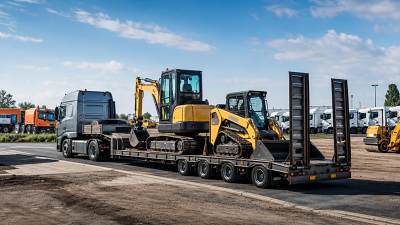
- Verify low-bed trailer compatibility and route restrictions if the machine must move between multiple road sections.
Do not ignore operator visibility and training
On projects with drainage lines, culvert approaches, shoulder shaping, or constrained working edges, visibility can affect both safety and output. A machine with acceptable production capacity may still cause slower progress if the operator cannot judge blade edge position well. On some road packages, even 5% to 8% less rework can justify paying closer attention to cab layout, control response, and training support.
For procurement teams, this means efficiency should be evaluated as a combined result of machine design, operator usability, and after-sales practicality rather than through specification sheets alone.
Execution Plan: What to Prepare Before You Request Quotations
If your team wants to source a BULLDOZER for road construction efficiently, the next step is to prepare a short but complete requirement package. This makes supplier comparison faster and reduces back-and-forth clarification. For project managers using a global heavy truck and equipment sourcing platform, the quality of the initial request often determines whether quotes are operationally useful or only commercially broad.
A practical request package should include project location, road type, material conditions, estimated shift length, target application, and expected delivery window. If the machine needs to work alongside dump trucks, compactors, or motor graders already on site, include that too. These details help suppliers recommend a more suitable machine class, blade option, and support arrangement.
For international sourcing, it is also wise to clarify spare-parts expectations, packaging requirements, documentation needs, and whether local assembly or technical support is required. This is particularly important when the procurement timeline is below 30 days or when the machine must enter service immediately after arrival.
Minimum information to send suppliers
- Project type: highway, rural road, municipal road, industrial access road, or mining haul road.
- Main tasks: clearing, spreading fill, cut shaping, shoulder trimming, drainage support, or maintenance grading.
- Ground conditions: wet clay, granular fill, mixed rock, or compacted subgrade.
- Planned working schedule: for example 8-hour, 10-hour, or 12-hour shifts.
- Commercial requirements: delivery lead time, spare-parts package, documentation, and budget range.
Why choose us for equipment sourcing support
The Global Heavy Truck Industry Platform connects buyers with manufacturers, suppliers, and distributors across the commercial vehicle and heavy equipment chain. For teams evaluating a BULLDOZER for road construction, this means access to broader product visibility, clearer supplier comparison, and a more efficient path to matching equipment with actual jobsite needs. Instead of searching fragmented sources, project leaders can review equipment categories, supporting transport solutions, and related industry resources within one professional B2B environment.
Our platform is especially relevant when your decision involves more than one machine. Many road construction projects require coordinated sourcing of dozers, dump trucks, trailers, parts, and support components. By working through an industry-focused platform, buyers can compare options in a way that reflects complete project logistics rather than isolated unit pricing.
If you are ready to move forward, contact us with your key project details. We can help you organize parameter confirmation, product selection, delivery timing, spare-parts planning, customization needs, documentation requirements, and quotation discussions. A clear sourcing brief today can save weeks of adjustment later, especially when road construction schedules are tight and equipment efficiency must be proven from the first shift.
Trending News
- How to match lowbed trailer deck height to your hauling equipment
- What documents are needed to export a low bed trailer to Southeast Asia?
- What to verify before choosing a delivery truck supplier for school transportation
- What an excavator manufacturer catalog should show before you compare models
- What to check before appointing a bulldozer distributor
Tag
Recommended News
 Technology & InnovationConstruction Machinery OEM: Key Specs That Affect Integration QualityConstruction machinery OEM selection starts with specs. Learn how dimensions, hydraulics, electrical interfaces, and documentation shape integration quality, safety, and uptime.
 Technology & InnovationHow Truck Body Design Affects Payload and Fuel EfficiencyTruck body design directly affects payload, fuel efficiency, and operating cost. Learn how the right truck body boosts performance, reduces waste, and improves fleet value.
 Technology & InnovationHydraulic Pump Selection Mistakes That Lead to DowntimeHydraulic pump selection mistakes can quietly trigger costly downtime in transport equipment. Learn what to verify before buying and choose with more confidence.
 Technology & InnovationManzhouli Smart Sealing Cuts TIR-Rail Clearance to 3.2 HoursManzhouli Smart Sealing cuts TIR-rail clearance to 3.2 hours, boosting visibility and delivery certainty for China-Europe cargo. See what it means for exporters and forwarders.
 Technology & InnovationConstruction Machinery OEM vs ODM: Key Differences That Affect QualityConstruction machinery OEM vs ODM explained: discover how design control, parts consistency, and lifecycle quality affect performance, sourcing risk, and smarter buying decisions.
 Technology & InnovationBULLDOZER with GPS Tracking: Benefits for Jobsite ControlBULLDOZER with GPS tracking improves jobsite control with better grading accuracy, fleet coordination, and uptime. See how it reduces rework and boosts project efficiency.
 Technology & InnovationGlobal Heavy-Duty Autonomous Trucks Near CommercializationHeavy-duty autonomous trucks are nearing commercialization — 200+ L4 vehicles deployed in Saudi & Chilean mines, delivering 120,000+ km fault-free haulage.
 Technology & InnovationWhen to Use an Excavator With Long Reach Boom on SiteEXCAVATOR with long reach boom guide: learn when it adds real value for dredging, demolition, slopes, and drainage jobs to improve safety, access, and site efficiency.
 Technology & InnovationGlobal Heavy-Duty Autonomous Truck Testing Reaches Commercial Inflection PointHeavy-duty autonomous truck testing hits commercial inflection point: 1M km L4 mining ops in Saudi Arabia & Chile — key for OEMs, mining logistics & global off-road transport.
 Technology & InnovationWhat Advanced Technology Means in Heavy Truck Chassis DesignDiscover how a heavy truck chassis manufacturer with advanced technology improves strength, durability, payload efficiency, and integration for demanding transport needs.
 Technology & InnovationChina Adds Tractor-Trailers' Battery-Swap Systems to NEV Bus Subsidy SchemeBattery-swap systems for tractor-trailers now qualify for China’s NEV bus subsidy—up to ¥32,000 per system. Key for logistics, mining & port electrification.
 Technology & InnovationPortable Construction Machinery Supplier: Where Mobility Improves Jobsite OutputConstruction machinery supplier with portable options helps contractors cut mobilization time, improve transport efficiency, and boost jobsite output across road, municipal, and multi-site projects.
 Technology & InnovationChina Adds Heavy-Duty Tractor Battery-Swap Systems to EV Bus Subsidy SchemeHeavy-duty tractor battery-swap systems now qualify for China’s 2026 EV bus subsidy—30% off, up to ¥280,000. Act before Dec 31!
 Technology & InnovationDo Energy-Saving Excavators Lower Fuel Use in Daily Jobsite Operations?Excavator manufacturer with energy-saving features: discover how smarter hydraulics, auto idle, and telematics can cut daily fuel use, improve uptime, and lower jobsite operating costs.
 Technology & InnovationL4 Autonomous Trucks Launch on Tianjin Port–Xiong’an RouteL4 autonomous trucks launch on Tianjin Port–Xiong’an route—first routine platooned operations in China’s strategic logistics corridor. Watch EU & Gulf certification unfold.
 Technology & InnovationAre Energy-Saving Excavators Worth It for Long-Term Operations?Excavator manufacturer with energy-saving features: discover if lower fuel use, reduced downtime, and stronger long-term ROI make these machines the smart choice for demanding operations.
 Technology & InnovationSouth China Pioneer Studio Wins Youth May 4th Award for Smart Truck CertificationSmart truck certification breakthrough: South China Pioneer Studio wins Youth May 4th Award for EU R155/R156 compliance — a game-changer for global陆路运输设备 exports.
 Technology & InnovationL4 Autonomous Container Trucks Begin Trial on Tianjin Port–Xiong'an CorridorL4 autonomous container trucks begin trial on Tianjin Port–Xiong'an Corridor—key milestone for cross-border logistics, heavy-equipment transport & smart intermodal supply chains.
 Technology & InnovationQuick Installation Excavators: Do They Reduce Setup Time on Real Sites?Excavator manufacturer with quick installation: discover whether fast-deploy excavators truly cut real-site setup time, lower labor costs, and improve uptime before you buy.
 Technology & InnovationModular Flatbed Trailers: When Design Flexibility Improves UtilizationFind out how a flatbed trailer supplier with modular design helps fleets boost utilization, adapt to varied loads, cut idle assets, and improve long-term ROI.
 Technology & InnovationPortable Construction Machinery: Where Flexible Equipment Saves TimeConstruction machinery supplier with portable options helps cut relocation time, improve transport efficiency, and keep projects moving faster across changing job sites.
 Technology & InnovationSemi Trailer Manufacturer with Lightweight Design: Is Lower Weight Worth It?Semi trailer manufacturer with lightweight design: discover when lower weight boosts payload, fuel savings, and fleet ROI—and when durability, compliance, and repair costs matter more.
![]() Technology & InnovationWhy Quick Installation Matters When Choosing an Excavator ManufacturerExcavator manufacturer with quick installation: discover how faster setup cuts downtime, simplifies maintenance, improves reliability, and keeps heavy equipment projects on schedule.
Technology & InnovationWhy Quick Installation Matters When Choosing an Excavator ManufacturerExcavator manufacturer with quick installation: discover how faster setup cuts downtime, simplifies maintenance, improves reliability, and keeps heavy equipment projects on schedule. Technology & InnovationHow Modular Design Changes the Value of a Flatbed Trailer SupplierFlatbed trailer supplier with modular design: discover how modular platforms cut lifecycle costs, boost fleet flexibility, and improve ROI for logistics, construction, and industrial buyers.
 Technology & InnovationHow Portable Construction Machinery for Mining Helps Remote Projects Move FasterConstruction machinery for mining helps remote projects move faster with easier transport, quick setup, and flexible deployment. Learn how to cut delays and improve site efficiency.