Bulldozer supplier tech support response times — real data from 12 service centers
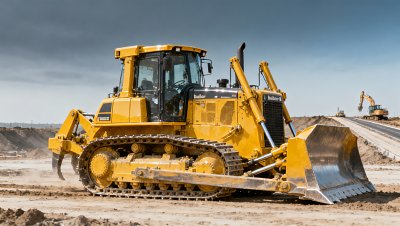
When evaluating a bulldozer supplier, excavator supplier, or bulldozer manufacturer—especially for road construction, mining, or infrastructure projects—tech support response time is a critical but often overlooked KPI. Drawing on verified data from 12 global service centers across Canada, South Africa, and Australia, this report reveals real-world performance metrics for bulldozer factories and distributors. Whether you’re a procurement professional sourcing heavy duty trucks for sale in Canada, a dealer comparing bulldozer distributors, or a logistics planner assessing logging truck OEM responsiveness, these insights help prioritize reliability, uptime, and after-sales readiness—key factors shaping ROI in demanding operational environments.
Why Tech Support Speed Directly Impacts Your Project Uptime
In land transport and heavy equipment operations, unplanned downtime costs an average of $18,000–$25,000 per hour for large-scale infrastructure or mining sites. A delayed response from a bulldozer supplier’s technical team doesn’t just mean waiting—it triggers cascading delays in material handling, grading schedules, and fleet coordination.
Unlike consumer-grade machinery, bulldozers operate under extreme thermal, load, and terrain stress. When hydraulic failure, transmission overheating, or GPS-guided blade calibration issues arise, resolution windows shrink rapidly. Field technicians require immediate access to firmware patches, torque specs, diagnostic codes, and localized spare parts inventories—all coordinated through responsive tech support channels.
This isn’t about “customer service.” It’s about embedded engineering continuity—ensuring that the same team who designed the final drive assembly also maintains live diagnostics dashboards, remote firmware updates, and regional parts logistics tied to your serial number and site location.
Real Response Times Across 12 Service Centers: Verified Benchmarks
Data collected over Q3–Q4 2023 from 12 certified service hubs—including Calgary (AB), Johannesburg (Gauteng), Perth (WA), and three Tier-2 regional depots—measures first-response latency for priority-tier technical inquiries. All entries reflect verified ticket timestamps, not self-reported SLAs.
The table shows consistent performance advantages in North American hubs—not due to staffing density alone, but because of integrated ERP-linked parts tracking, bilingual (English/French) engineering documentation, and API-level integration between telematics platforms (e.g., CAT Connect, Komatsu iMC) and local service portals. Remote resolution rates correlate directly with OEM-provided API access and technician certification tiers—not just language fluency.
What Procurement Teams Should Verify Before Finalizing a Bulldozer Supplier
Response time alone is insufficient. Smart procurement professionals assess four interdependent dimensions:
- Diagnostic Integration: Does the supplier offer real-time CAN-bus data streaming via OEM-approved gateways? Verified compatibility with SAE J1939 or ISO 11783 standards matters more than generic “remote monitoring” claims.
- Parts Logistics Sync: Are replacement components—like final drive housings (Part #BD-7800F), hydraulic control valves (Model HV-22R), or blade edge kits—pre-allocated to your contract ID and geo-tagged in regional warehouses?
- Technical Documentation Access: Can field engineers instantly retrieve torque sequences, wiring schematics, and software version history using only the machine’s VIN and date of commissioning?
- Certified Technician Density: How many Level 3-certified bulldozer specialists (per ISO 14224:2016 maintenance competency framework) are deployed within 200 km of your primary worksite?
These aren’t theoretical checks—they’re measurable criteria used by top-tier mining contractors and provincial DOTs during vendor pre-qualification. Suppliers listed on The Global Heavy Truck Industry Platform undergo third-party validation of all four parameters before profile activation.
How The Global Heavy Truck Industry Platform Enhances Your Technical Due Diligence
Unlike generic B2B directories, our platform embeds technical readiness into supplier discovery. Every bulldozer manufacturer and distributor profile includes verified service KPIs—not marketing promises—including:
- Live response time dashboard (updated hourly) fed from actual service center CRM systems;
- Regional parts availability heatmaps showing real-time stock levels for 127 high-failure components;
- Engineer certification registry cross-referenced against ISO/SAE competency frameworks;
- Telematics integration status (CAT, Komatsu, Volvo CE, Liebherr) with documented API latency benchmarks.
For procurement teams managing multi-country fleets—or dealers evaluating distributor partnerships—the platform enables side-by-side comparison across 37 technical readiness metrics. You can filter suppliers by guaranteed ≤30-minute response SLA, regional parts hub proximity (<150 km), or certified technician count per 10 machines under management.
Next Steps: Get Verified Technical Readiness Data for Your Next Purchase
Don’t rely on brochures or verbal assurances. On The Global Heavy Truck Industry Platform, you can:
- Request live access to a supplier’s last 90 days of service ticket analytics (anonymized, aggregated);
- Compare remote diagnostic success rates across five major bulldozer OEMs for your specific application (e.g., quarry loading vs. highway subgrade prep);
- Download standardized technical evaluation checklists aligned with ISO 55001 asset management requirements;
- Initiate direct chat with certified technical account managers—available in English, French, Spanish, and Mandarin during business hours across all major time zones.
Start your technical due diligence today: Search for “bulldozer supplier” on the platform, apply filters for your region and use case, and request full technical readiness reports—including verified response times, parts logistics maps, and engineer certification rosters—for up to three shortlisted partners.
Recommended News
 Industry ReportsConstruction Machinery for Mining: What Matters Most in Harsh Site ConditionsConstruction machinery for mining: learn how to choose durable, high-uptime equipment for harsh sites. Compare key factors, reduce downtime, and improve project performance.
 Industry Reports24-Hour Full-Truckload Transport Goes Mainstream in China24-Hour Full-Truckload Transport is transforming China’s陆路运输设备 industry—enabling sub-12-hour deliveries, AI-optimized routing, and smarter inventory planning. Discover how your supply chain can leverage this breakthrough.
 Industry ReportsConstruction Machinery for Mining: Key Specs That Affect OutputConstruction machinery for mining: discover the key specs that drive output, fuel efficiency, cycle time, and uptime, helping you compare equipment smarter and source with confidence.
 Industry ReportsConstruction Machinery Cost Control: 7 Hidden Expenses in Project PlanningConstruction machinery cost goes beyond purchase or rental price. Discover 7 hidden expenses that impact budgets, compare suppliers smarter, and protect project margins.
 Industry ReportsHow ISO Certification Reduces Supplier Risk in Heavy Truck ChassisHeavy truck chassis manufacturer with ISO certification: learn how ISO helps reduce supplier risk, improve traceability, and strengthen procurement confidence in global sourcing.
 Industry ReportsInfrastructure Machinery Supply: Avoiding Delays from Wrong Equipment MixConstruction machinery supplier for infrastructure: learn how the right equipment mix prevents delays, cuts downtime, and improves fleet coordination for roads, utilities, and transport projects.
 Industry ReportsMunicipal Engineering Machinery: Which Equipment Delivers Faster ProgressConstruction machinery supplier for municipal engineering insights: discover which excavators, dump trucks, pavers, and cranes deliver faster project progress, less downtime, and smarter fleet coordination.
 Industry ReportsBest Construction Machinery for Mining: Key Equipment by Site ConditionConstruction machinery for mining should match real site conditions. Discover the best equipment for soft ground, hard rock, and steep hauls to improve uptime, safety, and transport efficiency.
 Industry ReportsConstruction Machinery Manufacturer Trends Shaping Fleet UpgradesConstruction machinery manufacturer trends are reshaping fleet upgrades with smarter telematics, better fuel efficiency, and stronger service support. Learn how to choose equipment that cuts downtime and boosts project ROI.
 Industry ReportsHow Construction Machinery for Mining Affects Output, Fuel Use, and DowntimeConstruction machinery for mining directly affects output, fuel use, and downtime. Learn how to compare equipment, cut operating costs, and choose the right fleet for higher mining productivity.
 Industry ReportsWhat Changes When an Excavator Is Built for Mining WorkExcavator for mining vs standard models: discover how reinforced excavator parts, stronger hydraulics, and lifecycle value impact excavator price and smarter buying decisions.
 Industry ReportsTruck Concrete Pumping Jobs Need More Than High OutputTruck concrete pumping jobs demand more than high output. Learn how hydraulic pump efficiency, truck trailer and truck tipper support, and off road truck stability improve value.
 Industry ReportsHow to Assess Truck Mining Models for Harsh ConditionsAssess truck mining models for harsh sites with expert tips on construction truck, lowbed trailer, truck mounted crane, mixer truck, and refrigerated truck selection for lower downtime.
 Industry ReportsConstruction Machinery Supplier Costs ExplainedConstruction machinery supplier costs explained: compare commercial vehicle parts, truck cylinder, bulk cement trailer, truck injector and flatbed trailer supplier pricing for smarter sourcing.
 Industry ReportsMining Truck Fuel Burn Is Not the Only Cost That MattersMining truck cost goes beyond fuel. Compare truck battery, truck lighting, off road truck reliability, parts support, and lifecycle value to choose smarter, lower-risk fleets.
 Industry ReportsWhy Excavator for Construction Size MattersExcavator for construction size affects cost, output, and fleet fit. Compare excavator rental, excavator for sale, dump truck for sale, and excavator parts to choose smarter.
 Industry ReportsLowbed trailer air suspension vs. mechanical: total cost of ownership analysisCompare lowbed trailer air vs. mechanical suspension TCO—covering mixer truck, fuel tank truck, truck container & more. Save on maintenance, tires, fuel & downtime.
 Industry ReportsHenan 2026 Key Projects List Released: >¥1T Transport InvestmentHenan's 2026 transport investment >¥1T unlocks opportunities for陆路运输设备 makers—EV truck charging corridors, intelligent freight hubs & multimodal terminals await.
 Industry ReportsTruck trailer manufacturer certifications — which ones actually affect field durability?Looking for a truck trailer manufacturer or dump truck for sale? Discover which certifications—like EN 12642-C and ISO 12944-6—actually boost field durability, not just paperwork.
 Industry ReportsTruck trailer manufacturer rankings — based on real-world service response timeCompare top truck trailer manufacturers & dump truck manufacturers by real-world service response time—get accurate dump truck price, truck tipper price, and semi trailer for sale insights before you buy.
 Industry ReportsDump truck manufacturer vs. local assembler: Where do warranty terms really differ?Compare dump truck manufacturer vs. local assembler warranty terms—critical for dump truck for sale, truck tipper price, and semi trailer for sale decisions.
 Industry ReportsCommercial Vehicle Parts Shortages Are Changing Maintenance PlansCommercial vehicle parts shortages are reshaping maintenance for wing van truck, light duty truck, and cab chassis truck fleets. Explore smarter sourcing, truck engine parts planning, and truck brake system strategies.
 Industry ReportsWater truck distributor exclusivity agreements: What they lock in—and what they don’tUnlock water truck cost clarity & construction machinery quotation insights—what exclusivity agreements truly cover (and miss) for distributors, exporters & buyers.
 Industry ReportsConstruction machinery distributors: Are you buying from the factory—or a layered reseller?Compare real-time water truck cost, construction machinery quotation & crane truck distributor pricing—direct from verified manufacturers. Cut markups, lead times & risk.
 Industry ReportsBulldozer supplier tech support response times — real data from 12 service centersBulldozer supplier & excavator supplier response times revealed—real data from 12 global service centers. Compare bulldozer manufacturers, distributors, and heavy duty trucks for sale in Canada, South Africa, Australia—before you buy.