EU REACH Restrictions Expand to Truck Wiring Harnesses and Interior Materials
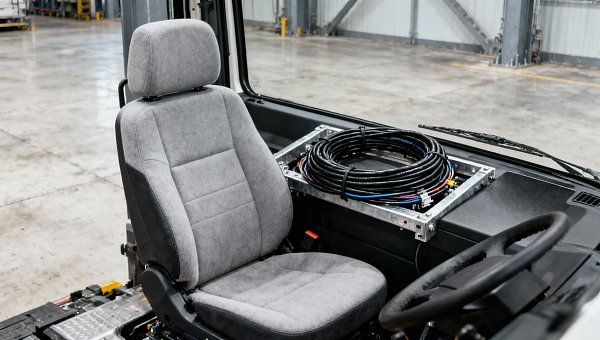
As of 1 June 2026, new restrictions under the EU REACH Regulation enter into force for wiring harnesses, driver cabin interior components, and seat covering materials used in heavy-duty trucks. This update directly affects exporters and suppliers in the commercial vehicle parts supply chain—particularly those based in China—and signals a tightening of chemical compliance requirements for automotive aftermarket and OEM component trade with the EU.
Event Overview
On 27 May 2026, the European Commission adopted Regulation (EU) 2026/XXXX, amending Annex XVII of the REACH Regulation. The amendment adds three phthalates and one flame retardant to the list of restricted substances. The restriction applies to all imported truck wiring harnesses, cab interior trim parts, and seat upholstery materials, effective 1 June 2026. Affected exporters must provide a Declaration of Conformity (DoC) and third-party test reports verifying compliance.
Industries Impacted by Segment
Direct Exporters (Truck Component Manufacturers)
These enterprises face immediate regulatory obligations when shipping to the EU. Non-compliant shipments may be detained or rejected at EU borders. The requirement for both DoC and accredited test reports introduces new documentation and verification steps before customs clearance.
Raw Material Suppliers (Plasticizers, Flame Retardants, Polymer Compounds)
Suppliers of base materials used in wiring insulation, dashboard substrates, or fabric coatings must ensure their formulations exclude the newly restricted substances. Downstream customers will increasingly request updated material declarations and substance-level test data—shifting traceability responsibility upstream.
Contract Manufacturers & Tier-2 Assemblers
Companies assembling wiring harnesses or sewing seat covers using sourced materials must verify compliance across subcomponents—not just final products. This increases reliance on supplier audits and batch-level testing, especially where mixed-material assemblies are involved.
Supply Chain Compliance Service Providers
Testing labs, certification bodies, and regulatory consultants serving the automotive supply chain will see higher demand for REACH-specific assessments targeting these new entries. However, service scope is limited to the four listed substances and only within the defined product categories—no broader REACH SVHC screening is mandated by this amendment.
Key Actions for Enterprises and Practitioners
Monitor official EU publications for transitional provisions
Although enforcement begins 1 June 2026, Regulation (EU) 2026/XXXX may include grace periods for existing stock or specific application exemptions. Stakeholders should track updates from the European Chemicals Agency (ECHA) and national REACH helpdesks before finalising compliance timelines.
Identify high-exposure product lines and material families
Focus first on PVC-based wire insulation, polyurethane foam seating, and brominated flame-retardant-treated textiles—categories historically associated with the newly restricted phthalates and flame retardant. Prioritise testing and reformulation efforts accordingly.
Distinguish between regulatory signal and enforceable obligation
This amendment expands existing REACH restrictions but does not introduce new reporting mechanisms (e.g., SCIP submissions) or authorisation requirements. Compliance remains focused on substance concentration limits in articles—making it a product-level, not company-level, obligation.
Update procurement contracts and technical specifications
Require upstream suppliers to warrant compliance with Annex XVII as amended by (EU) 2026/XXXX. Revise internal material specifications to reference the exact CAS numbers and concentration thresholds specified in the regulation—and retain supporting documentation for at least 10 years per REACH record-keeping rules.
Editorial Perspective / Industry Observation
Observably, this amendment reflects an incremental—but operationally significant—step in the EU’s chemical management strategy for transport equipment. It does not represent a systemic overhaul of automotive REACH compliance, nor does it extend to passenger vehicles or light commercial vehicles at this stage. Analysis shows the focus remains narrowly on heavy-duty truck interiors and electrical systems—likely driven by exposure risk assessments for occupational and end-user safety in long-haul and vocational applications. From an industry perspective, the change functions more as a compliance checkpoint than a strategic pivot: it confirms continued enforcement pressure on legacy additives, but does not yet indicate imminent expansion to other vehicle segments or broader substance groups.
Concluding, this regulatory update formalises chemical restrictions that were widely anticipated following earlier ECHA risk assessments. Its primary significance lies in converting guidance-level expectations into binding, enforceable requirements—with clear deadlines and documentary obligations. For stakeholders, it is best understood not as an isolated event, but as part of an ongoing calibration of chemical safety standards in mobility supply chains—where consistency of implementation, rather than novelty of scope, defines near-term operational impact.
Source: European Commission Regulation (EU) 2026/XXXX, published 27 May 2026; Annex XVII to Regulation (EC) No 1907/2006 (REACH). Note: Full text of Regulation (EU) 2026/XXXX and associated ECHA guidance remain under observation for potential clarifications on enforcement interpretation and sampling protocols.
Trending News
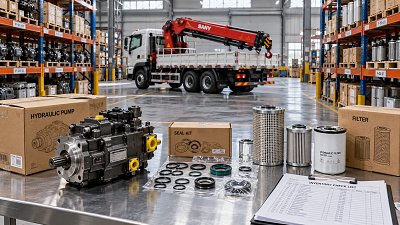
- How to verify spare parts availability with a crane truck supplier
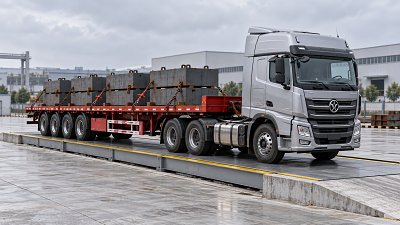
- How to verify a truck trailer OEM's claimed payload capacity
- How does operating weight affect the price of a new excavator?
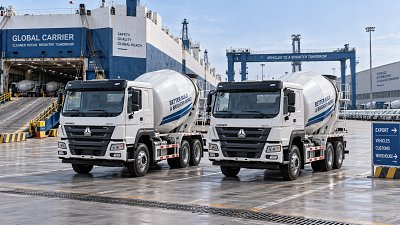
- How to compare concrete mixer truck suppliers by total landed cost
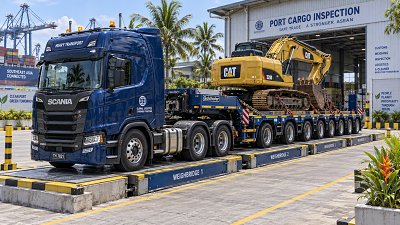
- How axle load limits affect low bed trailer exports to Southeast Asia
Tag
Recommended News
 Buying GuideHow to verify spare parts availability with a crane truck supplierChoosing a crane truck supplier? Learn how to verify spare parts stock, compatibility, delivery times, and support commitments to reduce downtime and buy with confidence.
 Buying GuideHow to verify a truck trailer OEM's claimed payload capacityVerify a truck trailer OEM's payload claim with tare records, load calculations, and structural evidence. Learn key checks to avoid costly mistakes and buy with confidence.
 Buying GuideHow does operating weight affect the price of a new excavator?See how operating weight affects excavator price, transport costs, and productivity. Compare configurations and uncover the best value for your next equipment purchase.
 Buying GuideHow to compare concrete mixer truck suppliers by total landed costCompare truck cement mixer supplier quotes by total landed cost, including freight, duties, and delivery. Uncover hidden charges and choose the best-value truck for your fleet.
 Policy & RegulationsHow axle load limits affect low bed trailer exports to Southeast AsiaPlanning low bed trailer export to Southeast Asia? Learn how axle load limits affect legal payload, axle layouts, and route compliance to avoid costly mistakes before ordering.
 Truck TechnologyHow to locate a truck exhaust system leak before replacing partsLocate a truck exhaust system leak before replacing parts. Learn how to spot soot trails, confirm leaks safely, and identify root causes to avoid costly guesswork and repeat repairs.
 Buying GuideWhen does heavy equipment transport require a lowboy trailer?Does your heavy equipment need a lowboy trailer? Discover how loaded height, weight distribution, loading access, and route limits determine the right choice for safe transport.
 Fleet ManagementWhen does a light commercial vehicle for urban delivery save fleet costs?Light commercial vehicle for urban delivery: learn when route density, payload utilization, access, and driver productivity can reduce fleet cost per successful stop.
 Buying GuideHow to choose an off road truck for steep and unstable job sitesChoose the right off road truck for steep, unstable job sites. Compare traction, braking, stability, clearance, payload, and route-test essentials.
 Buying GuideHow to match crane truck lifting capacity to your jobsite loadsCrane truck capacity planning made clear: calculate gross load, radius, rigging, outriggers, and ground conditions to select safer, job-ready lifting equipment.
 Transportation CostsWhat drives logging truck cost beyond the base purchase price?Logging truck cost goes far beyond the base price. Explore chassis, cranes, trailers, fuel, compliance, and support factors to make a smarter timber-hauling investment.
 Buying GuideHow to match lowbed trailer deck height to your hauling equipmentLowbed trailer deck height guide: match equipment clearance, ramp geometry, axle loads, tractor fit, and route limits for safer, more efficient hauling.
 Truck ExportWhat documents are needed to export a low bed trailer to Southeast Asia?Low bed trailer export to Southeast Asia: discover essential shipping, customs, origin, and technical documents to avoid delays and ensure smooth import clearance.
 Buying GuideWhat to verify before choosing a delivery truck supplier for school transportationDelivery truck supplier for school transportation: verify route fit, payload, safety, compliance, service support, and total cost before choosing a reliable partner.
 Buying GuideWhat an excavator manufacturer catalog should show before you compare modelsExcavator manufacturer catalog guide: verify supplier identity, configurations, hydraulics, compliance, parts support, and delivery readiness before comparing models.
 Buying GuideWhat to check before appointing a bulldozer distributorBulldozer distributor selection guide: evaluate service, parts availability, warranty, pricing, compliance, and lifecycle value to reduce downtime and protect fleet investment.
 Truck ExportHow to verify supplier reliability when sourcing bulldozers overseasBulldozer sourcing made safer: learn how to verify overseas suppliers, inspect quality, confirm specifications, manage export documents, and reduce lifecycle risk.
 Buying GuideWhat to verify before choosing a truck cement mixer supplierTruck cement mixer supplier checklist: verify chassis fit, drum quality, hydraulics, compliance, spare parts, and after-sales support before you buy.
 Buying GuideHow to verify a truck spare parts supplier before placing a bulk orderTruck spare parts supplier verification made practical: learn how to check part specifications, factory control, test records, samples, pricing, and delivery capability before placing a bulk order.
 Buying GuideWhat size truck container is right for a typical freight load?Truck container sizing made simple: compare payload, volume, pallet layouts, route access, and loading needs to choose the most efficient freight solution.
 Buying GuideWhat drives semi trailer price differences between similar models?Semi trailer price differences come down to frame materials, axles, suspension, coating, and configuration. Compare specifications line by line to choose lasting value.
 Truck Parts IndustryWhat causes a truck injector to fail prematurely?Truck injector failure can stem from fuel contamination, water, wiring faults, heat, or incorrect installation. Discover practical diagnostic steps to prevent repeat repairs.
 Buying GuideHow to compare excavator manufacturer price lists before requesting quotesCompare an excavator manufacturer price list with confidence. Learn to normalize configurations, calculate landed costs, assess options and service, and create stronger RFQs.
 Truck TechnologyDoes a cab chassis truck for fire department have enough frame capacity?Cab chassis truck for fire department: assess frame strength, axle loads, tank weight, stability and compliance for a safer, reliable fire apparatus build.
 Buying GuideHow to choose a mixer truck drum capacity for your concrete pourMixer truck capacity guide: match drum size to pour rate, legal payload, site access, and delivery cycles for efficient, reliable concrete placement.