China-Vietnam Truck Parts Export Hits Zero Tariff Under RCEP
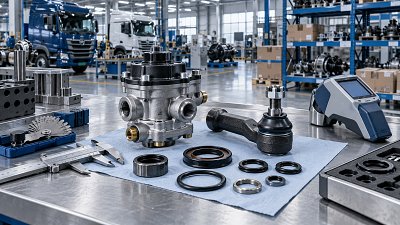
On June 1, 2026, Vietnam’s Ministry of Industry and Trade confirmed the implementation of zero import tariffs on 37 categories of Chinese truck components—including brake discs, air suspension brackets, and LED combination tail lamps—under the Regional Comprehensive Economic Partnership (RCEP) origin rules. The move, paired with a new ‘RCEP Green Channel’ at Hanoi Port, cuts average customs clearance time by 40%, from 3.2 to 1.9 days. This development is particularly relevant for automotive parts exporters, Tier-2 supply chain participants, and logistics service providers operating across China–Vietnam trade lanes.
Event Overview
Effective June 1, 2026, Vietnam granted zero import tariffs on 37 specified categories of Chinese-made truck components upon verified RCEP-origin declarations. The Hanoi Port simultaneously launched an RCEP-specific customs clearance pathway, reducing average processing time from 3.2 days to 1.9 days. The Vietnamese Ministry of Industry and Trade publicly confirmed both measures on that date.
Industries Affected by This Development
Direct export trading firms: These companies face immediate changes in tariff classification, documentation requirements, and duty refund eligibility. Impact manifests in revised landed cost calculations, updated commercial invoices, and mandatory use of RCEP Certificate of Origin (Form RCEP) for preferential treatment.
Component manufacturing enterprises (especially SMEs): As beneficiaries of expanded market access, manufacturers supplying the listed 37 part categories may see increased order volume from Vietnamese OEMs and Tier-1 assemblers. However, qualification for RCEP origin status requires strict adherence to product-specific rules of origin—particularly regarding regional value content and material sourcing.
Logistics and customs brokerage service providers: The ‘RCEP Green Channel’ introduces process-specific workflows at Hanoi Port. Service providers must adapt documentation handling, pre-clearance verification protocols, and client advisory frameworks to reflect the new timeline and compliance checkpoints.
Supply chain procurement teams (Vietnam-based): Buyers sourcing truck components from China now have stronger incentive to shift volume toward RCEP-eligible SKUs. This may accelerate vendor qualification reviews and trigger updates to procurement policies, especially around origin certification and lead-time assumptions.
What Relevant Enterprises or Practitioners Should Focus On
Monitor official guidance on RCEP origin verification procedures
Vietnamese customs authorities may issue supplementary notices on document validation, post-clearance audits, or acceptable proof of origin for specific parts. Exporters should subscribe to updates from Vietnam’s General Department of Vietnam Customs and China’s Ministry of Commerce.
Verify eligibility of current and planned SKUs against the 37-part list
The tariff waiver applies only to the 37 explicitly named categories. Firms should cross-check HS codes and technical descriptions—not just product names—to confirm coverage. Misalignment may result in denied preferential treatment despite RCEP certification.
Distinguish between policy announcement and operational readiness
While the measure took effect June 1, 2026, full integration across port terminals, customs IT systems, and local broker networks may require several weeks. Early adopters should allow buffer time for first-time submissions and treat initial clearances as test cases.
Prepare origin documentation and internal traceability systems now
RCEP origin claims require verifiable records of materials, processing steps, and regional value content. Manufacturers should audit their BOMs and supplier declarations, and update internal recordkeeping to support potential origin verification requests within three years post-export.
Editorial Perspective / Industry Observation
Observably, this is not merely a tariff adjustment—it signals Vietnam’s prioritization of RCEP implementation in high-value automotive subsectors. Analysis shows the 40% clearance time reduction is operationally significant: it narrows the efficiency gap between RCEP-eligible shipments and domestic alternatives, making Chinese parts more competitive in just-in-time assembly contexts. From an industry perspective, the measure functions primarily as a policy signal—early-stage, narrowly scoped, and contingent on consistent enforcement. Its broader impact hinges on whether additional part categories are added, whether other Vietnamese ports replicate the green channel, and whether Vietnamese OEMs actively restructure procurement to capture the benefit. Continued monitoring is warranted, but near-term execution remains the dominant concern for affected firms.
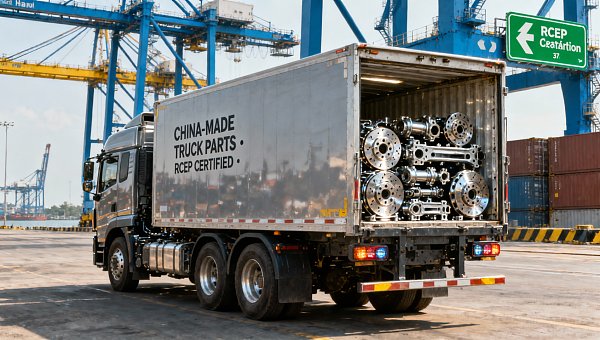
This development marks a concrete step in RCEP’s operationalization for automotive supply chains—but its scale remains selective. It reflects growing institutional capacity to apply preferential trade rules at the port level, rather than delivering broad-based tariff elimination. For stakeholders, the most rational interpretation is that this is a targeted, pilot-like enhancement—not a systemic shift—whose value depends entirely on disciplined compliance and responsive logistics planning.
Source: Vietnam Ministry of Industry and Trade (official announcement, June 1, 2026).
Note: Expansion beyond the 37 listed parts, application at other Vietnamese ports, and long-term enforcement consistency remain subjects for ongoing observation.
Trending News
- How to assess a crane truck distributor's spare parts support
- Volvo Group Forms Volvo Mining to Integrate Equipment and Autonomous Solutions
- How to verify spare parts availability with a crane truck supplier
- How to verify a truck trailer OEM's claimed payload capacity
- How does operating weight affect the price of a new excavator?
Tag
Recommended News
 Buying GuideHow to assess a crane truck distributor's spare parts supportAssess a crane truck distributor's spare parts support with practical checks for stock, delivery, and technical expertise. Discover how to reduce downtime and buy with confidence.
 Company NewsVolvo Group Forms Volvo Mining to Integrate Equipment and Autonomous SolutionsVolvo Mining will unite Volvo Group trucks, construction equipment and autonomous solutions from January 2027. Explore what this could mean for mining procurement and operational support.
 Buying GuideHow to verify spare parts availability with a crane truck supplierChoosing a crane truck supplier? Learn how to verify spare parts stock, compatibility, delivery times, and support commitments to reduce downtime and buy with confidence.
 Buying GuideHow to verify a truck trailer OEM's claimed payload capacityVerify a truck trailer OEM's payload claim with tare records, load calculations, and structural evidence. Learn key checks to avoid costly mistakes and buy with confidence.
 Buying GuideHow does operating weight affect the price of a new excavator?See how operating weight affects excavator price, transport costs, and productivity. Compare configurations and uncover the best value for your next equipment purchase.
 Buying GuideHow to compare concrete mixer truck suppliers by total landed costCompare truck cement mixer supplier quotes by total landed cost, including freight, duties, and delivery. Uncover hidden charges and choose the best-value truck for your fleet.
 Policy & RegulationsHow axle load limits affect low bed trailer exports to Southeast AsiaPlanning low bed trailer export to Southeast Asia? Learn how axle load limits affect legal payload, axle layouts, and route compliance to avoid costly mistakes before ordering.
 Truck TechnologyHow to locate a truck exhaust system leak before replacing partsLocate a truck exhaust system leak before replacing parts. Learn how to spot soot trails, confirm leaks safely, and identify root causes to avoid costly guesswork and repeat repairs.
 Buying GuideWhen does heavy equipment transport require a lowboy trailer?Does your heavy equipment need a lowboy trailer? Discover how loaded height, weight distribution, loading access, and route limits determine the right choice for safe transport.
 Fleet ManagementWhen does a light commercial vehicle for urban delivery save fleet costs?Light commercial vehicle for urban delivery: learn when route density, payload utilization, access, and driver productivity can reduce fleet cost per successful stop.
 Buying GuideHow to choose an off road truck for steep and unstable job sitesChoose the right off road truck for steep, unstable job sites. Compare traction, braking, stability, clearance, payload, and route-test essentials.
 Buying GuideHow to match crane truck lifting capacity to your jobsite loadsCrane truck capacity planning made clear: calculate gross load, radius, rigging, outriggers, and ground conditions to select safer, job-ready lifting equipment.
 Transportation CostsWhat drives logging truck cost beyond the base purchase price?Logging truck cost goes far beyond the base price. Explore chassis, cranes, trailers, fuel, compliance, and support factors to make a smarter timber-hauling investment.
 Buying GuideHow to match lowbed trailer deck height to your hauling equipmentLowbed trailer deck height guide: match equipment clearance, ramp geometry, axle loads, tractor fit, and route limits for safer, more efficient hauling.
 Truck ExportWhat documents are needed to export a low bed trailer to Southeast Asia?Low bed trailer export to Southeast Asia: discover essential shipping, customs, origin, and technical documents to avoid delays and ensure smooth import clearance.
 Buying GuideWhat to verify before choosing a delivery truck supplier for school transportationDelivery truck supplier for school transportation: verify route fit, payload, safety, compliance, service support, and total cost before choosing a reliable partner.
 Buying GuideWhat an excavator manufacturer catalog should show before you compare modelsExcavator manufacturer catalog guide: verify supplier identity, configurations, hydraulics, compliance, parts support, and delivery readiness before comparing models.
 Buying GuideWhat to check before appointing a bulldozer distributorBulldozer distributor selection guide: evaluate service, parts availability, warranty, pricing, compliance, and lifecycle value to reduce downtime and protect fleet investment.
 Truck ExportHow to verify supplier reliability when sourcing bulldozers overseasBulldozer sourcing made safer: learn how to verify overseas suppliers, inspect quality, confirm specifications, manage export documents, and reduce lifecycle risk.
 Buying GuideWhat to verify before choosing a truck cement mixer supplierTruck cement mixer supplier checklist: verify chassis fit, drum quality, hydraulics, compliance, spare parts, and after-sales support before you buy.
 Buying GuideHow to verify a truck spare parts supplier before placing a bulk orderTruck spare parts supplier verification made practical: learn how to check part specifications, factory control, test records, samples, pricing, and delivery capability before placing a bulk order.
 Buying GuideWhat size truck container is right for a typical freight load?Truck container sizing made simple: compare payload, volume, pallet layouts, route access, and loading needs to choose the most efficient freight solution.
 Buying GuideWhat drives semi trailer price differences between similar models?Semi trailer price differences come down to frame materials, axles, suspension, coating, and configuration. Compare specifications line by line to choose lasting value.
 Truck Parts IndustryWhat causes a truck injector to fail prematurely?Truck injector failure can stem from fuel contamination, water, wiring faults, heat, or incorrect installation. Discover practical diagnostic steps to prevent repeat repairs.
 Buying GuideHow to compare excavator manufacturer price lists before requesting quotesCompare an excavator manufacturer price list with confidence. Learn to normalize configurations, calculate landed costs, assess options and service, and create stronger RFQs.