How to Evaluate an Excavator Manufacturer in China
Choosing the right excavator manufacturer in China can shape cost control, equipment uptime, and long-term supply security. In a market filled with factories, trading companies, and mixed-capability suppliers, careful evaluation matters far more than a low initial quote. For construction machinery buyers working across logistics, infrastructure, mining, and municipal projects, the real question is not only who can produce an excavator, but who can deliver consistent quality, dependable support, and transparent cooperation over time.
Why this decision matters in today’s equipment market
China remains one of the most important manufacturing bases for heavy equipment. It offers strong production capacity, broad component ecosystems, and competitive pricing across many excavator classes.
That opportunity also creates complexity. Not every excavator manufacturer in China operates with the same engineering standards, quality controls, export experience, or after-sales discipline.
This matters even more in the wider land transportation equipment sector. Excavators often work alongside heavy trucks, trailers, and site transport fleets. If one machine fails, transport schedules, jobsite planning, and operating budgets can all be affected.
A good sourcing decision supports more than one purchase order. It improves fleet reliability, spare parts planning, and cross-border procurement efficiency.
Start by understanding what kind of supplier you are reviewing
Before comparing quotations, it helps to identify the supplier’s real business model. In practice, buyers may encounter several different profiles in the Chinese market.
- OEM manufacturers with their own factories, production lines, and technical teams.
- Assemblers that rely heavily on outsourced frames, hydraulic systems, or engines.
- Trading companies that coordinate sourcing from several partner plants.
- Export-focused groups that combine manufacturing with international service support.
None of these categories is automatically unsuitable. The key is alignment between supplier type and project requirements.
For example, a private-label program may work well with a capable OEM. A mixed-equipment procurement plan may benefit from a platform-based sourcing approach with stronger comparison tools and supplier visibility.
Core evaluation areas that reveal real manufacturing strength
Production capability and factory depth
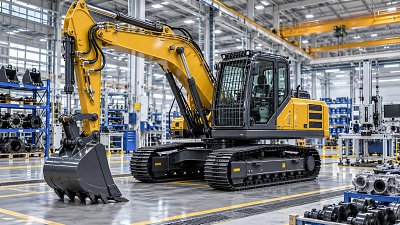
A credible excavator manufacturer in China should be able to explain its production process clearly. That includes fabrication, welding, machining, painting, assembly, and testing.
Factory scale alone is not enough. More useful signals include stable throughput, modern equipment, traceable workflow, and visible inspection points.
Engineering and product consistency
Product quality should be judged through consistency, not only appearance. Ask about design validation, hydraulic system integration, structural durability, and component matching.
If the same model performs differently between batches, lifecycle cost rises quickly. That is a major risk in overseas procurement.
Export readiness and compliance
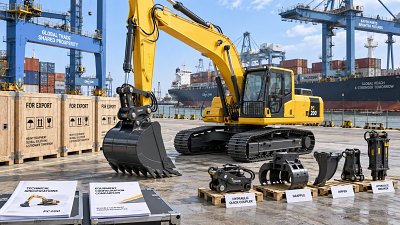
An experienced excavator manufacturer in China usually understands export packaging, customs documentation, shipping coordination, and certification requirements for target regions.
This becomes especially important when equipment is part of larger infrastructure or transport fleet planning, where delivery timing and document accuracy affect project schedules.
Look beyond price and compare total procurement risk
A low quotation from an excavator manufacturer in China may look attractive at first, but procurement value depends on the full cost of ownership.
That includes fuel efficiency, service intervals, spare parts availability, operator familiarity, and machine resale potential. Downtime during peak project periods can erase the benefit of a cheaper purchase.
It is useful to compare suppliers across four layers: purchase price, delivery reliability, operating cost, and support cost.
- Check whether quoted specifications match the actual configuration.
- Confirm lead times against production capacity, not sales promises.
- Review warranty coverage in practical terms, not only headline duration.
- Ask how critical spare parts will be stocked and shipped.
Usually, the most competitive supplier is not the cheapest one. It is the one that creates the least uncertainty across the machine lifecycle.
Signals that help verify supplier reliability
Reliable evaluation often depends on verification, not presentation. Catalogs and online listings are useful, but they should lead to deeper checks.
Useful verification steps
- Request recent export cases for similar machine sizes and markets.
- Ask for factory videos that show real production, not only showrooms.
- Review serial number logic, inspection reports, and packing records.
- Compare technical sheets from different batches or quotations.
- If possible, arrange a third-party factory audit before final confirmation.
Communication quality also matters. A dependable excavator manufacturer in China usually answers technical questions directly, clarifies limits, and documents changes carefully.
Vague replies, shifting specifications, and delayed paperwork often indicate future operational friction.
Match the manufacturer to the jobsite and fleet context
The right supplier depends on intended use. Excavators working in mining, road construction, urban utilities, or logistics yard development do not face the same duty cycle.
A compact unit for municipal work may prioritize maneuverability and easy service access. A larger crawler model for quarry or infrastructure work may require stronger structural endurance and stable hydraulic performance.
This is where broader industry platforms become useful. In a digital B2B environment focused on commercial vehicles and heavy equipment, buyers can compare excavators alongside related transport assets, suppliers, and spare parts networks.
That wider view helps connect machine selection with actual operating ecosystems, including trucks, trailers, construction machinery, and replacement components.
How industry platforms support better supplier evaluation
When reviewing an excavator manufacturer in China, access to structured market information can reduce blind spots. A specialized heavy equipment and commercial vehicle platform does more than display products.
It can help buyers compare supplier profiles, identify product categories, review market signals, and connect sourcing decisions with wider equipment strategies.
For example, when a project involves excavation, hauling, and site transport, it is practical to assess construction machinery together with heavy trucks, trailers, and spare parts support.
A platform built around the global heavy truck and equipment supply chain can therefore improve visibility, shorten comparison time, and make supplier screening more evidence-based.
A practical shortlist framework
To move from broad search results to a manageable shortlist, use a simple scoring method. Keep it tied to project needs rather than brand impressions.
This approach makes it easier to compare more than one excavator manufacturer in China without being distracted by incomplete offers or inconsistent claims.
What to do next before making a final choice
A strong decision usually comes from narrowing the field step by step. Start with technical fit, then verify production capability, then review service readiness and commercial terms.
If several suppliers remain close, compare their responsiveness, documentation quality, and willingness to support long-term parts planning. Those details often separate a workable partner from a risky one.
In practical sourcing, evaluating an excavator manufacturer in China is less about finding the biggest factory and more about finding the most reliable match for the application. Clear criteria, disciplined verification, and access to better market information will usually lead to a stronger outcome.
The next useful step is to build a comparison sheet based on operating conditions, configuration requirements, spare parts expectations, and delivery targets. With that framework in place, supplier conversations become more focused and more productive.
Trending News
- How order size affects wholesale pricing for cement mixer trucks
- Commercial Vehicle Leaders Hold Firm in Q1–Q3 2026 Automotive Influence Index
- How to choose a refrigerated truck for multi-stop urban deliveries
- Tata Motors Returns to Q2 Profit on Strong Commercial Vehicle Demand
- How to load an excavator onto a lowbed trailer without tipping
Tag
Recommended News
 Buying GuideHow order size affects wholesale pricing for cement mixer trucksExplore truck cement wholesale pricing by order size. Compare volume discounts, landed costs, and delivery terms to secure better value and avoid costly overbuying.
 Buying GuideHow to choose a refrigerated truck for multi-stop urban deliveriesKeep your truck refrigerated through every urban delivery stop. Learn how to compare cooling capacity, payload and door layouts to protect cargo and choose the right vehicle.
 Buying GuideHow much torque does a truck engine need for heavy-duty hauling?How much truck engine torque do you need? Explore the 1,250–2,050 lb-ft range and learn how load, gearing, and gradients shape the right choice for heavy-duty hauling.
 Buying GuideHow to assess a crane truck distributor's spare parts supportAssess a crane truck distributor's spare parts support with practical checks for stock, delivery, and technical expertise. Discover how to reduce downtime and buy with confidence.
 Buying GuideHow to verify spare parts availability with a crane truck supplierChoosing a crane truck supplier? Learn how to verify spare parts stock, compatibility, delivery times, and support commitments to reduce downtime and buy with confidence.
 Buying GuideHow to verify a truck trailer OEM's claimed payload capacityVerify a truck trailer OEM's payload claim with tare records, load calculations, and structural evidence. Learn key checks to avoid costly mistakes and buy with confidence.
 Buying GuideHow does operating weight affect the price of a new excavator?See how operating weight affects excavator price, transport costs, and productivity. Compare configurations and uncover the best value for your next equipment purchase.
 Buying GuideHow to compare concrete mixer truck suppliers by total landed costCompare truck cement mixer supplier quotes by total landed cost, including freight, duties, and delivery. Uncover hidden charges and choose the best-value truck for your fleet.
 Buying GuideWhen does heavy equipment transport require a lowboy trailer?Does your heavy equipment need a lowboy trailer? Discover how loaded height, weight distribution, loading access, and route limits determine the right choice for safe transport.
 Buying GuideHow to choose an off road truck for steep and unstable job sitesChoose the right off road truck for steep, unstable job sites. Compare traction, braking, stability, clearance, payload, and route-test essentials.
 Buying GuideHow to match crane truck lifting capacity to your jobsite loadsCrane truck capacity planning made clear: calculate gross load, radius, rigging, outriggers, and ground conditions to select safer, job-ready lifting equipment.
 Buying GuideHow to match lowbed trailer deck height to your hauling equipmentLowbed trailer deck height guide: match equipment clearance, ramp geometry, axle loads, tractor fit, and route limits for safer, more efficient hauling.
 Buying GuideWhat to verify before choosing a delivery truck supplier for school transportationDelivery truck supplier for school transportation: verify route fit, payload, safety, compliance, service support, and total cost before choosing a reliable partner.
 Buying GuideWhat an excavator manufacturer catalog should show before you compare modelsExcavator manufacturer catalog guide: verify supplier identity, configurations, hydraulics, compliance, parts support, and delivery readiness before comparing models.
 Buying GuideWhat to check before appointing a bulldozer distributorBulldozer distributor selection guide: evaluate service, parts availability, warranty, pricing, compliance, and lifecycle value to reduce downtime and protect fleet investment.
 Buying GuideWhat to verify before choosing a truck cement mixer supplierTruck cement mixer supplier checklist: verify chassis fit, drum quality, hydraulics, compliance, spare parts, and after-sales support before you buy.
 Buying GuideHow to verify a truck spare parts supplier before placing a bulk orderTruck spare parts supplier verification made practical: learn how to check part specifications, factory control, test records, samples, pricing, and delivery capability before placing a bulk order.
 Buying GuideWhat size truck container is right for a typical freight load?Truck container sizing made simple: compare payload, volume, pallet layouts, route access, and loading needs to choose the most efficient freight solution.
 Buying GuideWhat drives semi trailer price differences between similar models?Semi trailer price differences come down to frame materials, axles, suspension, coating, and configuration. Compare specifications line by line to choose lasting value.
 Buying GuideHow to compare excavator manufacturer price lists before requesting quotesCompare an excavator manufacturer price list with confidence. Learn to normalize configurations, calculate landed costs, assess options and service, and create stronger RFQs.
 Buying GuideHow to choose a mixer truck drum capacity for your concrete pourMixer truck capacity guide: match drum size to pour rate, legal payload, site access, and delivery cycles for efficient, reliable concrete placement.
 Buying GuideHow to size a bulldozer for construction site grading workBulldozer for construction sizing guide: match weight, blade, traction, grade control, and transport needs to improve grading productivity and costs.
 Buying GuideHow to assess a truck cement manufacturer’s build quality before orderingTruck cement manufacturer build quality: assess tank steel, welding, chassis integration, pneumatic systems, factory QC, and inspection evidence before ordering.
 Buying GuideWhen does a truck trailer OEM make sense for private-label fleets?Truck trailer OEM programs help private-label fleets cut lifecycle costs, standardize operations, and improve uptime. Learn when customization delivers real commercial value.
 Buying GuideWhat to verify before choosing a water truck OEM for your fleetWater truck OEM selection guide: verify chassis compatibility, tank quality, pump performance, compliance, and service support to build a safer, more reliable fleet.