Dump Truck Wholesale: MOQ, Lead Time and Cost Risks
Why does dump truck wholesale become risky so quickly?
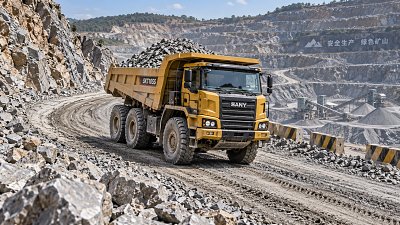
Dump truck wholesale looks simple from a distance. You compare prices, confirm quantity, and place an order. In practice, the harder part is controlling what happens after the quotation.
A low unit price can lose its advantage once minimum order quantity, production scheduling, freight, local compliance, and spare parts support are added back into the calculation.
That is why experienced buyers treat dump truck wholesale as a supply strategy, not only a price negotiation. Margin protection usually starts before the first purchase order.
The heavy truck market also moves with construction cycles, mining demand, road projects, and public infrastructure budgets. Lead time and model availability can shift faster than expected.
A more reliable approach is to compare suppliers through operational details. Production capacity, documentation quality, export experience, and after-sales responsiveness often matter more than headline discounts.
This is where a global industry platform becomes useful. When product listings, supplier profiles, market insights, and truck category data sit in one place, early-stage screening becomes more efficient.
What MOQ is reasonable in dump truck wholesale?
MOQ in dump truck wholesale is rarely a fixed number that works for every order. It depends on whether the truck is standard, semi-customized, or built for a narrow operating condition.
For standard dump truck models, suppliers may accept smaller opening orders. The logic is simple. Shared components, repeat production, and existing export configurations reduce their planning risk.
MOQ usually rises when the order includes special axle ratios, reinforced cargo bodies, left-hand or right-hand drive differences, local emission requirements, or branded cabin details.
More common than a strict MOQ is a value threshold. Some suppliers are flexible on units but require a minimum order value to justify engineering support, production slot allocation, or shipping coordination.
A practical way to judge MOQ is to ask two questions at the same time. How many trucks make production efficient, and how many trucks can your local market absorb without slowing cash flow?
If those numbers are far apart, the order size is probably wrong. In that case, it is better to reduce customization, combine specifications, or stage the purchase into confirmed batches.
The better question is not only “What is your MOQ?” A stronger question is “What order structure gives stable cost without creating slow-moving inventory?”
How long should lead time really take?
Lead time in dump truck wholesale is often underestimated because many quotations only mention factory production days. That number alone does not represent the full procurement cycle.
A realistic lead time includes technical confirmation, deposit receipt, component sourcing, chassis production, body assembly, inspection, export paperwork, port handling, ocean freight, and inland delivery.
In actual transactions, delays usually come from specification changes and document gaps. Even small revisions can reset production planning if the truck uses non-standard hydraulic systems or axle combinations.
Seasonality also matters. Large infrastructure cycles and year-end shipment peaks can extend booking times. A supplier may finish production, yet the trucks still wait for vessel space.
To make lead time predictable, request a milestone schedule instead of one final date. Ask for target dates for drawing approval, production start, completion, inspection, and shipment release.
When comparing suppliers through an international heavy truck marketplace, this milestone view is valuable. It helps separate factories with real scheduling discipline from those giving optimistic estimates.
- Check whether chassis and dump body are built in one plant or coordinated across multiple partners.
- Confirm which imported parts may extend production, such as transmissions, hydraulic kits, or special tires.
- Ask how shipment delays are reported and who updates export documents.
Where do hidden costs usually appear?
Most cost surprises in dump truck wholesale are not hidden in the invoice. They appear in assumptions that were never clearly written into the deal.
Freight is one obvious example, but not the only one. Port charges, inland transfer, pre-shipment inspection, customs document correction, and local homologation can change landed cost significantly.
Another common issue is specification mismatch. A cheaper truck may need tire upgrades, stronger body steel, extra filtration, or suspension adjustments after arrival. That turns initial savings into rework cost.
Warranty is another area where cost risk hides. A warranty that looks acceptable on paper may exclude labor, field travel, wear parts, or urgent component air freight.
Payment structure also affects total cost. A lower quoted price with strict prepayment may create financing pressure, especially when the local sales cycle is longer than expected.
A useful comparison method is to convert each offer into landed cost per usable truck, not just ex-factory price. That model usually reveals which quotation is truly competitive.
How can supplier reliability be checked beyond the quote?
Supplier reliability in dump truck wholesale should be tested through evidence, not impression. A fast response is useful, but it does not prove delivery discipline or technical consistency.
Start with export case history. Ask where similar dump trucks have been shipped, under what road conditions, and with which after-sales arrangement. Specific answers usually indicate real experience.
Then review documentation quality. Drawings, VIN logic, parts lists, warranty clauses, and inspection records should be clear and internally consistent. Weak paperwork often signals larger execution issues.
It also helps to evaluate category depth. Suppliers active across truck chassis, complete trucks, trailers, construction machinery, and spare parts often have stronger supply-chain visibility.
This does not mean bigger is always better. It means cross-category experience can reduce coordination failures, especially when a dump truck order depends on body builders, hydraulic suppliers, and parts support.
Industry platforms focused on heavy trucks can shorten this screening stage. Product comparison tools, supplier directories, market updates, and buying guides help verify whether an offer fits the broader market pattern.
- Review whether the supplier can support both complete trucks and replacement parts.
- Check if the quote matches current market positioning for similar dump truck wholesale offers.
- Look for proof of multilingual export service and document handling accuracy.
What ordering strategy reduces procurement risk the most?
The safest dump truck wholesale strategy is usually phased, standardized, and data-led. It reduces exposure without slowing business development too much.
Begin with a configuration that covers the largest share of local demand. Avoid excessive variation in the first batch unless the market already proved those requirements.
Next, connect the opening order to a spare parts plan. The first truck sale often creates the first urgent service case. Without parts support, even a good truck can become a commercial problem.
It is also wise to build an internal review sheet covering MOQ, full lead time, Incoterms, technical scope, compliance documents, warranty execution, and post-delivery support responsibilities.
Where market visibility is limited, compare offers through a professional global heavy truck platform. Access to supplier networks, industry news, and category data helps improve negotiating position and timing.
In simple terms, dump truck wholesale works best when cost, delivery, and support are evaluated together. Focusing on only one of them usually creates risk somewhere else.
Final question: what should be confirmed before moving forward?
Before committing to dump truck wholesale, confirm three things with discipline. First, the truck specification must fit the real operating environment. Second, the commercial structure must protect cash flow. Third, the supplier must be able to support the order after shipment.
That means reviewing MOQ against sales pace, checking lead time against project timing, and calculating landed cost against expected margin. It also means reading warranty terms as operational commitments, not marketing language.
A well-informed sourcing process usually relies on more than quotations alone. Supplier comparison, industry insight, brand directories, and cross-border trade information all help reduce uncertainty.
The next step is practical. Shortlist comparable models, build a landed-cost sheet, map the full delivery timeline, and verify the supplier’s evidence before releasing the first batch.
Trending News
- How to verify a truck trailer OEM's claimed payload capacity
- How does operating weight affect the price of a new excavator?
- How to compare concrete mixer truck suppliers by total landed cost
- How axle load limits affect low bed trailer exports to Southeast Asia
- How to locate a truck exhaust system leak before replacing parts
Tag
Recommended News
 Buying GuideHow to verify a truck trailer OEM's claimed payload capacityVerify a truck trailer OEM's payload claim with tare records, load calculations, and structural evidence. Learn key checks to avoid costly mistakes and buy with confidence.
 Buying GuideHow does operating weight affect the price of a new excavator?See how operating weight affects excavator price, transport costs, and productivity. Compare configurations and uncover the best value for your next equipment purchase.
 Buying GuideHow to compare concrete mixer truck suppliers by total landed costCompare truck cement mixer supplier quotes by total landed cost, including freight, duties, and delivery. Uncover hidden charges and choose the best-value truck for your fleet.
 Buying GuideWhen does heavy equipment transport require a lowboy trailer?Does your heavy equipment need a lowboy trailer? Discover how loaded height, weight distribution, loading access, and route limits determine the right choice for safe transport.
 Buying GuideHow to choose an off road truck for steep and unstable job sitesChoose the right off road truck for steep, unstable job sites. Compare traction, braking, stability, clearance, payload, and route-test essentials.
 Buying GuideHow to match crane truck lifting capacity to your jobsite loadsCrane truck capacity planning made clear: calculate gross load, radius, rigging, outriggers, and ground conditions to select safer, job-ready lifting equipment.
 Buying GuideHow to match lowbed trailer deck height to your hauling equipmentLowbed trailer deck height guide: match equipment clearance, ramp geometry, axle loads, tractor fit, and route limits for safer, more efficient hauling.
 Buying GuideWhat to verify before choosing a delivery truck supplier for school transportationDelivery truck supplier for school transportation: verify route fit, payload, safety, compliance, service support, and total cost before choosing a reliable partner.
 Buying GuideWhat an excavator manufacturer catalog should show before you compare modelsExcavator manufacturer catalog guide: verify supplier identity, configurations, hydraulics, compliance, parts support, and delivery readiness before comparing models.
 Buying GuideWhat to check before appointing a bulldozer distributorBulldozer distributor selection guide: evaluate service, parts availability, warranty, pricing, compliance, and lifecycle value to reduce downtime and protect fleet investment.
 Buying GuideWhat to verify before choosing a truck cement mixer supplierTruck cement mixer supplier checklist: verify chassis fit, drum quality, hydraulics, compliance, spare parts, and after-sales support before you buy.
 Buying GuideHow to verify a truck spare parts supplier before placing a bulk orderTruck spare parts supplier verification made practical: learn how to check part specifications, factory control, test records, samples, pricing, and delivery capability before placing a bulk order.
 Buying GuideWhat size truck container is right for a typical freight load?Truck container sizing made simple: compare payload, volume, pallet layouts, route access, and loading needs to choose the most efficient freight solution.
 Buying GuideWhat drives semi trailer price differences between similar models?Semi trailer price differences come down to frame materials, axles, suspension, coating, and configuration. Compare specifications line by line to choose lasting value.
 Buying GuideHow to compare excavator manufacturer price lists before requesting quotesCompare an excavator manufacturer price list with confidence. Learn to normalize configurations, calculate landed costs, assess options and service, and create stronger RFQs.
 Buying GuideHow to choose a mixer truck drum capacity for your concrete pourMixer truck capacity guide: match drum size to pour rate, legal payload, site access, and delivery cycles for efficient, reliable concrete placement.
 Buying GuideHow to size a bulldozer for construction site grading workBulldozer for construction sizing guide: match weight, blade, traction, grade control, and transport needs to improve grading productivity and costs.
 Buying GuideHow to assess a truck cement manufacturer’s build quality before orderingTruck cement manufacturer build quality: assess tank steel, welding, chassis integration, pneumatic systems, factory QC, and inspection evidence before ordering.
 Buying GuideWhen does a truck trailer OEM make sense for private-label fleets?Truck trailer OEM programs help private-label fleets cut lifecycle costs, standardize operations, and improve uptime. Learn when customization delivers real commercial value.
 Buying GuideWhat to verify before choosing a water truck OEM for your fleetWater truck OEM selection guide: verify chassis compatibility, tank quality, pump performance, compliance, and service support to build a safer, more reliable fleet.
 Buying GuideHow to size a cab chassis truck for a fire department apparatusCab chassis truck for fire department sizing guide: balance GVWR, axle loads, wheelbase, water tank placement, and mission needs for safer apparatus design.
 Buying GuideWhat to verify before choosing a truck chassis supplierChoose the right truck chassis supplier with a practical checklist for application fit, axle ratings, body integration, quality control, delivery reliability, and after-sales support.
 Buying GuideHow to choose a logging truck for steep and rough forest roadsLogging truck selection for steep, rough forest roads: compare traction, braking, gearing, chassis strength, tires, and supplier support for safer, more reliable hauling.
 Buying GuideHow to choose a flatbed trailer deck length for oversized loadsFlatbed trailer deck length guide for oversized loads: balance cargo support, axle weight, securement space, overhang, and route access for safer transport.
 Buying GuideHow to assess a truck chassis supplier for trailer manufacturingTruck chassis supplier for trailer manufacturing: learn how to assess technical fit, quality control, engineering support, and delivery reliability for smarter sourcing.