Dump Truck Price Guide: What Shapes Total Cost in 2026?
Why does dump truck price deserve closer attention in 2026?
Dump truck price is no longer a simple sticker comparison. In 2026, total cost depends on equipment specification, regulatory pressure, freight conditions, and supplier reliability.
That matters because a lower initial quote can easily become a higher operating expense. Fuel burn, payload efficiency, maintenance intervals, and parts access often decide the real outcome.
In practice, buyers are comparing more than trucks. They are comparing uptime, compliance risk, delivery lead time, and long-term fleet fit.
The market is also more transparent than before. Global digital sourcing platforms now make it easier to review dump truck models, supplier backgrounds, and application data across regions.
That wider visibility helps narrow the gap between advertised dump truck price and actual ownership cost. It also makes poor specification choices easier to spot early.
What usually makes one dump truck price much higher than another?
The biggest driver is configuration. A 6x4 road dump truck for municipal hauling is priced very differently from an 8x4 heavy-duty unit for mining or infrastructure work.
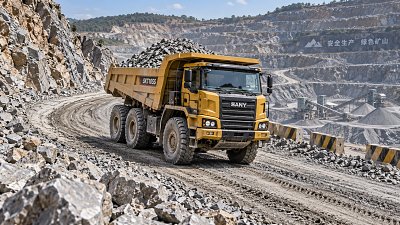
Payload capacity changes both purchase cost and frame design. Higher tonnage usually requires stronger axles, reinforced suspension, and a more durable dump body.
Engine output also matters. More horsepower supports tougher terrain and heavier loads, but it raises the dump truck price through drivetrain upgrades and cooling requirements.
Emission standards are another major factor. Euro V or Euro VI compliant models often cost more upfront because of aftertreatment systems and control electronics.
Body material is often overlooked. High-strength steel bodies may cost more initially, yet they can improve payload efficiency and reduce premature wear in abrasive applications.
Then there is origin and supplier structure. A factory-direct quote may look attractive, but freight, duties, local certification, and service support can change the final number quickly.
A quick comparison helps separate price from value
How can you tell whether the quoted dump truck price fits the job?
Start with the material being hauled. Sand, aggregate, ore, demolition waste, and wet clay place very different stress on the truck body and chassis.
Route conditions come next. Highway hauling favors fuel economy and compliance. Quarry routes usually need heavier suspension, stronger tires, and better underbody protection.
Loading method also changes the right specification. Excavator loading, loader loading, and conveyor loading each affect body shape, wall thickness, and impact resistance.
A useful question is whether the truck will be weight-limited or volume-limited. That single point often changes whether a higher dump truck price creates real operating value.
When the application is mixed, a balanced configuration tends to outperform an extreme one. Overspecification ties up capital, while underspecification leads to downtime and body repair.
- Check axle rating against local legal load limits.
- Match engine power to gradient, road quality, and trip frequency.
- Confirm body volume using actual material density, not brochure assumptions.
- Review tire specification because replacement cost affects total ownership.
Is a lower dump truck price actually cheaper over the full lifecycle?
Often, no. The cheaper unit may win the tender on paper while losing on fuel, maintenance, and residual value after two or three years.
Fuel efficiency remains one of the fastest cost multipliers. A small difference per trip becomes significant when the truck runs daily in long-haul or repeated construction cycles.
Parts availability matters just as much. A competitive dump truck price loses appeal if filters, hydraulic seals, brake components, or body parts require long import lead times.
Service network coverage should be checked early. Even strong truck brands can create operating delays if there is weak local support for diagnostics or major repairs.
Resale value is another hidden lever. Well-known chassis brands and standardized configurations usually hold value better in secondary markets.
A practical comparison should include total cost categories, not only purchase price. This is where many sourcing decisions improve.
A better way to compare total cost
Where do buyers misread dump truck price most often?
One common mistake is comparing trucks with different specifications as if they were equal. A quote is only comparable when chassis, body size, axle rating, and engine standard align.
Another mistake is ignoring delivered cost. Insurance, inland transport, port fees, customs duty, and homologation can materially change the final dump truck price.
Some buyers also focus too heavily on horsepower. More power sounds attractive, but if the route does not require it, operating cost rises without a useful productivity gain.
Hydraulic quality is often underestimated. Weak cylinders or inconsistent pump performance may not appear in the quote, yet they create frequent disruptions in demanding work cycles.
Documentation matters too. Warranty scope, spare parts lists, inspection standards, and production lead time should be part of the price review, not an afterthought.
- Request a detailed configuration sheet before comparing offers.
- Ask which items are optional and which are already included.
- Confirm whether the quote covers tools, spare tires, and basic parts kits.
- Review warranty response process across the destination market.
What is the smartest next step when sourcing in a global market?
The most effective move is to build a short comparison framework before requesting offers. That keeps dump truck price discussions tied to real application requirements.
A useful sourcing process usually starts with load type, route condition, required payload, expected annual mileage, and local compliance rules. Those points eliminate many unsuitable options early.
Then compare suppliers on both technical and commercial terms. Production capacity, export experience, after-sales response, and documentation quality deserve the same attention as unit price.
Global industry platforms are increasingly helpful here. They allow side-by-side review of truck categories, chassis options, supplier profiles, and market references across the heavy equipment chain.
That is especially useful in cross-border sourcing, where a competitive dump truck price must be balanced with transparency, lead time control, and long-term support confidence.
In the end, the right decision usually comes from matching cost structure to job reality. Clarify the operating profile, compare full delivered cost, and test every quote against lifecycle value.
If two offers still look close, the better choice is often the one with clearer specifications, stronger service coverage, and more predictable parts access. That is what keeps dump truck price aligned with real return.
Trending News
- When does heavy equipment transport require a lowboy trailer?
- When does a light commercial vehicle for urban delivery save fleet costs?
- How to choose an off road truck for steep and unstable job sites
- How to match crane truck lifting capacity to your jobsite loads
- What drives logging truck cost beyond the base purchase price?
Tag
Recommended News
 Buying GuideWhen does heavy equipment transport require a lowboy trailer?Does your heavy equipment need a lowboy trailer? Discover how loaded height, weight distribution, loading access, and route limits determine the right choice for safe transport.
 Buying GuideHow to choose an off road truck for steep and unstable job sitesChoose the right off road truck for steep, unstable job sites. Compare traction, braking, stability, clearance, payload, and route-test essentials.
 Buying GuideHow to match crane truck lifting capacity to your jobsite loadsCrane truck capacity planning made clear: calculate gross load, radius, rigging, outriggers, and ground conditions to select safer, job-ready lifting equipment.
 Buying GuideHow to match lowbed trailer deck height to your hauling equipmentLowbed trailer deck height guide: match equipment clearance, ramp geometry, axle loads, tractor fit, and route limits for safer, more efficient hauling.
 Buying GuideWhat to verify before choosing a delivery truck supplier for school transportationDelivery truck supplier for school transportation: verify route fit, payload, safety, compliance, service support, and total cost before choosing a reliable partner.
 Buying GuideWhat an excavator manufacturer catalog should show before you compare modelsExcavator manufacturer catalog guide: verify supplier identity, configurations, hydraulics, compliance, parts support, and delivery readiness before comparing models.
 Buying GuideWhat to check before appointing a bulldozer distributorBulldozer distributor selection guide: evaluate service, parts availability, warranty, pricing, compliance, and lifecycle value to reduce downtime and protect fleet investment.
 Buying GuideWhat to verify before choosing a truck cement mixer supplierTruck cement mixer supplier checklist: verify chassis fit, drum quality, hydraulics, compliance, spare parts, and after-sales support before you buy.
 Buying GuideHow to verify a truck spare parts supplier before placing a bulk orderTruck spare parts supplier verification made practical: learn how to check part specifications, factory control, test records, samples, pricing, and delivery capability before placing a bulk order.
 Buying GuideWhat size truck container is right for a typical freight load?Truck container sizing made simple: compare payload, volume, pallet layouts, route access, and loading needs to choose the most efficient freight solution.
 Buying GuideWhat drives semi trailer price differences between similar models?Semi trailer price differences come down to frame materials, axles, suspension, coating, and configuration. Compare specifications line by line to choose lasting value.
 Buying GuideHow to compare excavator manufacturer price lists before requesting quotesCompare an excavator manufacturer price list with confidence. Learn to normalize configurations, calculate landed costs, assess options and service, and create stronger RFQs.
 Buying GuideHow to choose a mixer truck drum capacity for your concrete pourMixer truck capacity guide: match drum size to pour rate, legal payload, site access, and delivery cycles for efficient, reliable concrete placement.
 Buying GuideHow to size a bulldozer for construction site grading workBulldozer for construction sizing guide: match weight, blade, traction, grade control, and transport needs to improve grading productivity and costs.
 Buying GuideHow to assess a truck cement manufacturer’s build quality before orderingTruck cement manufacturer build quality: assess tank steel, welding, chassis integration, pneumatic systems, factory QC, and inspection evidence before ordering.
 Buying GuideWhen does a truck trailer OEM make sense for private-label fleets?Truck trailer OEM programs help private-label fleets cut lifecycle costs, standardize operations, and improve uptime. Learn when customization delivers real commercial value.
 Buying GuideWhat to verify before choosing a water truck OEM for your fleetWater truck OEM selection guide: verify chassis compatibility, tank quality, pump performance, compliance, and service support to build a safer, more reliable fleet.
 Buying GuideHow to size a cab chassis truck for a fire department apparatusCab chassis truck for fire department sizing guide: balance GVWR, axle loads, wheelbase, water tank placement, and mission needs for safer apparatus design.
 Buying GuideWhat to verify before choosing a truck chassis supplierChoose the right truck chassis supplier with a practical checklist for application fit, axle ratings, body integration, quality control, delivery reliability, and after-sales support.
 Buying GuideHow to choose a logging truck for steep and rough forest roadsLogging truck selection for steep, rough forest roads: compare traction, braking, gearing, chassis strength, tires, and supplier support for safer, more reliable hauling.
 Buying GuideHow to choose a flatbed trailer deck length for oversized loadsFlatbed trailer deck length guide for oversized loads: balance cargo support, axle weight, securement space, overhang, and route access for safer transport.
 Buying GuideHow to assess a truck chassis supplier for trailer manufacturingTruck chassis supplier for trailer manufacturing: learn how to assess technical fit, quality control, engineering support, and delivery reliability for smarter sourcing.
 Buying GuideIs the SHACMAN H3000 6×4 Cement Mixer suitable for large projects?SHACMAN H3000 6×4 Cement Mixer: assess payload, cycle time, traction, and service support to see if it can keep large concrete projects moving efficiently.
 Buying GuideHow to evaluate heavy duty trucks for sale in Russia before buyingHeavy duty trucks for sale in Russia: learn how to compare specifications, winter readiness, service support, supplier reliability, and total ownership costs before buying.
 Buying GuideWhat to verify before choosing a logging truck producerChoose a logging truck producer with confidence: verify chassis strength, load security, compliance, service support, and delivery control for demanding forestry routes.