Truck spare parts supplier response time benchmarks: What’s acceptable for mining operations versus municipal fleets?
In mining operations and municipal fleets, downtime costs escalate rapidly—making truck spare parts supplier response time a critical KPI. While commercial vehicle parts for harsh mining environments demand <24-hour emergency support, municipal fleets often prioritize cost-efficient, scheduled replenishment from trusted heavy truck parts manufacturers. This article benchmarks acceptable response windows across use cases, helping procurement personnel, project managers, and technical evaluators assess suppliers on the Global Heavy Truck Industry Platform—whether sourcing from a semi trailer manufacturer, construction machinery supplier, or low bed trailer export partner. Timely delivery isn’t just logistics—it’s operational resilience.
Why Response Time Is a Non-Negotiable Operational Metric
Downtime in heavy-duty transport is not measured in hours—it’s quantified in lost tons per shift, delayed infrastructure milestones, or missed municipal service windows. In open-pit mining, one idle 220-ton haul truck incurs $18,000–$25,000/hour in opportunity cost (based on average fleet productivity and commodity price exposure). Municipal refuse fleets face tighter budgetary constraints: a single garbage collection delay triggers cascading penalties under municipal SLAs—often $350–$900 per incident.
Unlike light commercial vehicles, heavy truck components—including chassis subassemblies, driveline modules, and hydraulic systems—require certified fitment, torque sequencing, and OEM-compliant diagnostics. A 48-hour delay in receiving a replacement axle carrier isn’t merely logistical friction—it halts preventive maintenance cycles, increases wear on adjacent components, and elevates safety audit risk. The Global Heavy Truck Industry Platform addresses this by pre-vetting suppliers against verified lead-time SLAs—not just cataloged “in stock” claims.
This operational gravity reshapes procurement priorities. Technical evaluators no longer compare only part numbers and unit prices—they evaluate documented response cadence across three tiers: emergency (<24 h), urgent (1–3 business days), and routine (5–15 days). Each tier maps to distinct validation requirements, inventory depth commitments, and regional distribution readiness.
Mining vs. Municipal: Divergent Benchmarks, Shared Accountability
While both sectors rely on heavy trucks, their operational rhythms, failure modes, and supply chain tolerances differ fundamentally. Mining operations run 24/7 with minimal planned stoppages; municipal fleets operate on rigid daily schedules with weekend/midnight restrictions. These realities produce divergent—but equally rigorous—response expectations.
The table reveals that mining-grade responsiveness demands more than speed—it requires geographic proximity, ruggedized packaging, and cross-border customs pre-clearance capabilities. Municipal procurement, while less time-critical per incident, emphasizes predictability: consistent weekly replenishment windows, multi-year contract compliance tracking, and integration with public-sector ERP systems like SAP S/4HANA Public Sector or Oracle Cloud ERP for Government.
How the Global Heavy Truck Industry Platform Validates Supplier Responsiveness
The platform doesn’t accept self-reported SLAs. Instead, it enforces accountability through three verification layers: historical fulfillment data (minimum 6-month performance history), third-party logistics audit reports, and real-time inventory API integration with Tier-1 distributors. Suppliers listed for mining applications must demonstrate ≥94% on-time-in-full (OTIF) rate for emergency orders over the prior quarter.
For municipal buyers, the platform surfaces “SLA Confidence Scores”—a composite metric combining order accuracy (≥99.2%), documentation completeness (e.g., MRO traceability logs), and return authorization turnaround (<2 business days). These scores are updated biweekly and visible before RFQ submission.
When sourcing from specialized providers—such as a semi trailer manufacturer or construction machinery supplier—the platform cross-references component-level lead times. For example, a low bed trailer export partner may quote 12 days for structural frames but only 3 days for standardized suspension kits. Granular visibility prevents procurement bottlenecks caused by assuming uniform timelines across subsystems.
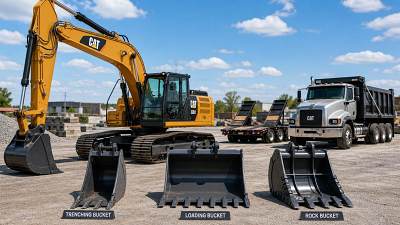
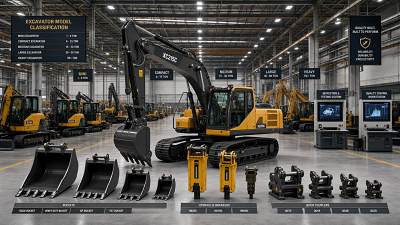
One practical example: 3T5T bucket teeth for excavator wheel loader bulldozer earthmoving —a high-wear item critical to loading efficiency in both quarry and landfill operations—carries dual-tiered SLA tagging: mining-grade variants guarantee ≤18-hour dispatch from regional hubs in Australia, South Africa, and Chile; municipal-grade equivalents follow a 5-day scheduled replenishment cycle aligned with quarterly maintenance calendars.
Procurement Action Framework: What to Verify Before Engagement
Before finalizing a supplier relationship on the platform, procurement and technical teams should jointly validate five non-negotiables:
- Geographic Redundancy: Confirm ≥2 active distribution nodes within 1,500 km of primary operation sites.
- Emergency Protocol Documentation: Require written escalation paths, including after-hours contact routing and satellite phone coordination capability.
- Component Traceability: Verify batch-level serial tracking for safety-critical parts (e.g., brake calipers, steering knuckles).
- Customs Readiness: For cross-border mining sites, confirm pre-approved HS code classification and bonded warehouse access.
- Failure Mode Alignment: Ensure supplier’s root-cause analysis framework matches your fleet’s dominant failure categories (e.g., corrosion vs. impact fatigue).
These checks transform abstract “response time” into auditable, enforceable obligations—reducing dispute resolution cycles by up to 68% (per platform benchmarking of 2023 Q4 disputes).
Future-Proofing Through Predictive Responsiveness
Next-generation responsiveness goes beyond reaction—it anticipates. The Global Heavy Truck Industry Platform now integrates predictive analytics using anonymized fleet telematics feeds (with opt-in consent). When a mine’s CAT 797F fleet shows rising vibration harmonics in rear axle bearings, the system proactively alerts preferred suppliers—and pre-reserves stock based on failure probability models calibrated to ore type, haul distance, and ambient temperature gradients.
Similarly, municipal sanitation fleets receive automated replenishment recommendations tied to seasonal waste composition shifts (e.g., increased organic load in summer → higher wear on compactor rams → adjusted reorder points). This shifts procurement from calendar-based to condition-driven—cutting excess inventory by 22–31% while maintaining ≥99.7% mission-readiness.
Operational resilience isn’t built in crisis—it’s engineered through precision-aligned response benchmarks, platform-verified accountability, and proactive intelligence. Whether you manage a 400-unit mining haul fleet or a 65-vehicle municipal engineering division, your next critical spare part decision starts with verifying *how fast—and how reliably—a supplier delivers when it matters most.*
Explore verified suppliers, compare real-time SLA performance dashboards, and request customized response-time benchmarking reports for your specific fleet profile—start your assessment on the Global Heavy Truck Industry Platform today.
Tag
Recommended News
 Buying GuideSemi Trailer Supplier Comparison: Specs, Warranty, DeliverySemi trailer supplier comparison guide covering specs, warranty, and delivery. Learn how to reduce sourcing risk, compare suppliers smarter, and choose reliable long-term partners.
 Buying GuideTruck Trailer Sourcing: 7 Risks to Check Before OrderingTruck trailer sourcing starts with risk control. Discover 7 critical checks on specs, compliance, build quality, parts, and total cost before you place an order.
 Buying GuideHow to Evaluate a Light Duty Truck Manufacturer in USALight duty truck manufacturer in USA evaluation guide: compare quality, compliance, service, and total cost to choose a reliable supplier and make smarter fleet purchasing decisions.
 FAQExcavator Bucket Sizes Explained for Trenching, Loading, and Rock WorkExcavator bucket size affects trenching accuracy, loading speed, and rock work durability. Learn how to choose the right excavator bucket for better productivity and lower wear.
 Buying GuideHeavy Duty Trucks for Sale: 7 Checks Before You Compare OffersHeavy duty trucks for sale: compare offers smarter with 7 essential checks on specs, condition, compliance, supplier trust, and total cost before you buy.
 Buying GuideHow to Choose a Reliable Excavator Supplier in 2026Excavator supplier selection in 2026 goes beyond price. Learn how to verify quality, delivery, service, and parts support to choose a reliable partner with confidence.
 FAQTruck Battery Problems: Signs, Causes, and FixesTruck battery problems can lead to breakdowns and costly delays. Learn the key warning signs, main causes, and practical fixes to keep heavy trucks reliable and on the road.
 Buying GuideWhat to Check in an Excavator Manufacturer CatalogExcavator manufacturer catalog guide: learn what to check in specs, hydraulics, durability, emissions, attachments, and service support to compare suppliers with confidence.
 Buying GuideHow to Choose a Light Duty Truck With a Durable EngineLight duty truck with durable engine buying guide: compare engine durability, fuel economy, supplier support, and lifecycle cost to choose a reliable truck that reduces downtime.
 Buying GuideTruck Pump Selection: Flow, Pressure, and Duty CycleTruck pump selection starts with the right flow, pressure, and duty cycle. Learn how to match real truck applications for better uptime, efficiency, and longer service life.
 Used Truck MarketVietnam Tightens Used Commercial Vehicle Import RulesUsed commercial vehicle exporters face tighter Vietnam import rules from July 2026. Learn how new compliance documents may affect customs clearance, inventory turnover, and shipment planning.
 Fleet ManagementHeavy Truck Fuel Efficiency: What Impacts Operating CostsHeavy truck fuel efficiency directly impacts operating costs. Learn how design, payload, maintenance, and driver behavior affect fuel use and smarter truck buying decisions.
 Buying GuideHow to Choose a Cab Chassis Truck for Construction ProjectsCab chassis truck for construction buying guide: learn how to match axle layout, wheelbase, frame strength, and lifecycle cost to project needs for smarter fleet decisions.
 Used Truck MarketVietnam Tightens Proof Rules for Used Commercial Vehicle ImportsVietnam tightens proof rules for used commercial vehicle imports from July 1, 2026. Learn key compliance risks, certificate requirements, and how importers can avoid port refusal.
 Buying GuideExcavator Manufacturer Supplier Comparison: Quality Control Points That MatterExcavator manufacturer supplier comparison guide: learn the quality control points that reduce risk, improve reliability, and help buyers choose with confidence.
 Buying GuideHeavy Truck Chassis Manufacturer Checklist for Durability and Axle LayoutHeavy truck chassis manufacturer checklist covering durability, axle layout, quality control, and lifecycle cost. Compare suppliers smarter and choose a chassis built for long-term fleet performance.
 Buying GuideHow to Evaluate an Excavator Manufacturer in USA for Long-Term Parts SupportExcavator manufacturer in USA selection should go beyond specs. Learn how to assess long-term parts support, dealer strength, and uptime protection before you buy.
 Buying GuideWhat to Check Before Choosing a Construction Machinery SupplierConstruction machinery supplier selection starts with the right checks. Learn how to compare quality, certifications, delivery, and after-sales support to reduce risk and buy with confidence.
 Buying GuideHow to Choose a Bulldozer for Construction Site ConditionsBulldozer for construction selection starts with site conditions. Learn how to match size, blade, tracks, and cost factors to boost productivity and reduce downtime.
 Used Truck MarketVietnam Tightens Papers for Used Commercial Vehicle ImportsVietnam tightens papers for used commercial vehicle imports from July 1, 2026. Learn the new certificate and re-inspection rules, key compliance risks, and how exporters can avoid costly delays.
 Buying GuideTruck Trailer Bulk Order: How to Compare Price, Lead Time, and QualityTruck trailer bulk order decisions should go beyond the lowest quote. Learn how to compare price, lead time, quality, and supplier reliability for better fleet value.
 Buying GuideHow to Choose a Light Commercial Vehicle for Last Mile DeliveryLearn how to choose a light commercial vehicle for last mile delivery by comparing payload, cargo space, powertrain, and total cost to improve urban efficiency and fleet ROI.
![]() Buying GuideHow to Choose a Delivery Truck Supplier in USA Without Costly DelaysDelivery truck supplier in USA selection affects uptime, compliance, and delivery speed. Learn how to avoid costly delays, compare suppliers smarter, and choose a lower-risk fleet partner.
Buying GuideHow to Choose a Delivery Truck Supplier in USA Without Costly DelaysDelivery truck supplier in USA selection affects uptime, compliance, and delivery speed. Learn how to avoid costly delays, compare suppliers smarter, and choose a lower-risk fleet partner. Buying GuideHow to Evaluate a Crane Truck Supplier for Fleet ReliabilityCrane truck supplier selection affects uptime, parts access, and long-term fleet performance. Learn how to compare quality, support, and export capability with confidence.
 Buying GuideCrane Truck Quotation Checklist: Specs That Change the Final PriceCrane truck quotation guide: compare chassis, boom, axles, outriggers, compliance, and hidden costs before you buy. Get smarter quotes and avoid costly sourcing mistakes.