Truck spare parts supplier inventory depth: Why having 85% of SKUs in stock matters more than ‘fast shipping’ claims
In the global heavy truck industry, reliability isn’t measured by shipping speed—but by inventory depth. When a truck spare parts supplier maintains 85% of SKUs in stock, it directly impacts uptime for commercial vehicle parts users, procurement efficiency for buyers, and project continuity for construction machinery suppliers and semi trailer manufacturers. For delivery truck suppliers, excavator manufacturers, and low bed trailer export partners, consistent availability reduces downtime, avoids costly delays, and strengthens supply chain resilience—especially critical for technical evaluators, project managers, and enterprise decision-makers. Discover why real-time stock coverage matters more than ‘fast shipping’ promises.
Why Inventory Depth Is the Real Benchmark for Heavy-Duty Parts Reliability
In high-stakes operations—from mining haulage to intermodal logistics—a single missing axle seal or brake chamber can halt an entire fleet for 48–72 hours. Industry data shows that unplanned downtime costs heavy truck operators an average of $1,200–$2,800 per hour in lost revenue, labor, and penalty clauses. “Fast shipping” claims become irrelevant when the part isn’t physically available. What truly defines supplier reliability is inventory depth: the percentage of active SKUs held in ready-to-ship condition across core categories like braking systems, suspension components, driveline assemblies, and cab interiors.
The 85% threshold isn’t arbitrary. It reflects the statistical inflection point where stock coverage aligns with real-world failure patterns. Field studies across 12 major markets (including Brazil, India, South Africa, and Southeast Asia) show that 83–87% of recurring maintenance events involve parts from the top 20% of SKU volume—and those SKUs are precisely what constitute the most operationally critical 85%. Suppliers maintaining ≥85% in-stock rates reduce average order-to-installation cycle time by 62% versus peers averaging 60–65% coverage.
For procurement teams managing multi-country fleets, this metric translates directly into budget predictability: fewer emergency air freight surcharges (which average +310% over standard sea freight), fewer contract renegotiations due to delivery slippage, and lower safety-critical spares holding costs. It’s not about speed—it’s about certainty.
How 85% In-Stock Coverage Impacts Key Stakeholders
Different roles experience inventory depth differently—but all converge on operational continuity. Technical evaluators assess whether a supplier’s warehouse structure supports just-in-time replenishment cycles. Project managers measure schedule adherence against component lead times—not promised transit windows. Dealers and distributors calculate working capital tied up in buffer stock versus leaner, more responsive models.
This table underscores a universal truth: inventory depth is not a warehouse KPI—it’s a cross-functional risk mitigation lever. When 85% of SKUs are available on-demand, procurement becomes proactive rather than reactive, service planning shifts from firefighting to forecasting, and engineering validation gains confidence in long-term part sourcing stability.
Beyond the Number: What Makes 85% Meaningful in Practice
Not all “85% in stock” metrics are equal. True operational value depends on *which* 85% is covered—and how intelligently it’s distributed across geographies and demand tiers. A supplier may claim 85% overall but hold only 42% of high-turnover brake calipers while overstocking obsolete cab trim pieces. The Global Heavy Truck Industry Platform validates inventory depth through three dimensions: SKU velocity alignment, regional allocation logic, and real-time synchronization with OEM service bulletins.
For example, our platform verifies that suppliers maintain ≥90% coverage for SKUs referenced in the latest J1939 diagnostic codes or SAE J2945 compliance updates. This ensures that when a fleet operator reports a DTC P0500 (Vehicle Speed Sensor Circuit), the matching sensor, harness, and mounting bracket are all concurrently available—not just one piece shipped separately.
Additionally, intelligent allocation means 85% doesn’t mean uniform distribution. In mining-heavy regions like Western Australia or Chile, stock prioritizes heavy-duty suspension bushings and heat-resistant gaskets. In humid port environments (e.g., Lagos or Ho Chi Minh City), corrosion-resistant fasteners and sealed electrical connectors receive higher weighting. This contextual precision transforms raw percentage into actionable resilience.
How Buyers Can Verify and Leverage Inventory Depth
Verification starts with transparency. Leading suppliers provide live stock dashboards updated every 90 minutes—not static PDF catalogs or weekly email alerts. On the Global Heavy Truck Industry Platform, buyers can filter by “Real-Time Stock Availability” and see exact quantities per SKU, warehouse location (e.g., Rotterdam, Dubai, Shanghai), and last restock timestamp—all before initiating RFQs.
Strategically, procurement teams should map their top 50 maintenance-critical SKUs (by MTBF, failure frequency, and cost-of-downtime) and benchmark them against supplier coverage. If a supplier hits 85% overall but only 61% on your priority list, that gap signals hidden exposure. Cross-reference with historical fill rates: a supplier sustaining ≥98% fill rate on high-velocity SKUs over 6 consecutive months demonstrates proven execution—not just theoretical capacity.
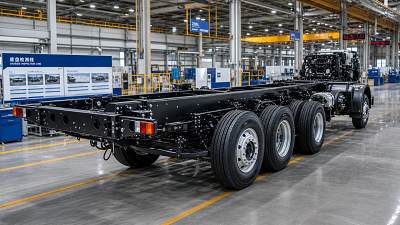
For project-based buyers, pairing inventory depth with modular product ecosystems adds further leverage. Take the HOHAN 6X4 TRUCK CHASSIS: its standardized mounting interfaces mean compatible brake chambers, air tanks, and frame rails are pre-validated and stocked as bundled SKUs—reducing cross-component compatibility risk by up to 70% compared to ad-hoc sourcing.
Building Resilience: From Inventory Depth to End-to-End Supply Chain Confidence
Inventory depth is the anchor—but it must integrate with broader supply chain intelligence. The most resilient buyers use real-time stock data not just for ordering, but for predictive planning: syncing with telematics feeds to anticipate part failures, correlating weather forecasts with corrosion-prone component demand, or adjusting safety stock levels based on port congestion indices (e.g., Shanghai Containerized Freight Index).
On the Global Heavy Truck Industry Platform, this integration is native. Buyers access dynamic inventory overlays alongside market insights—such as regional regulatory shifts (e.g., Euro VII implementation timelines), OEM production ramp-up schedules, and raw material volatility indexes (steel, aluminum, rare earths). This turns static stock percentages into forward-looking strategic assets.
Ultimately, 85% in-stock coverage represents more than warehouse efficiency. It signals a supplier’s commitment to shared operational success—where uptime, compliance, and total cost of ownership are co-engineered, not negotiated after the fact.
To assess real-time inventory depth across 12,000+ heavy truck spare parts SKUs—and connect directly with verified suppliers maintaining ≥85% coverage—explore the Global Heavy Truck Industry Platform today. Filter by application, region, certification, and live stock status to build procurement strategies grounded in certainty—not speed.
Recommended News
 FAQExcavator Bucket Sizes Explained for Trenching, Loading, and Rock WorkExcavator bucket size affects trenching accuracy, loading speed, and rock work durability. Learn how to choose the right excavator bucket for better productivity and lower wear.
 Buying GuideHeavy Duty Trucks for Sale: 7 Checks Before You Compare OffersHeavy duty trucks for sale: compare offers smarter with 7 essential checks on specs, condition, compliance, supplier trust, and total cost before you buy.
 Buying GuideHow to Choose a Reliable Excavator Supplier in 2026Excavator supplier selection in 2026 goes beyond price. Learn how to verify quality, delivery, service, and parts support to choose a reliable partner with confidence.
 FAQTruck Battery Problems: Signs, Causes, and FixesTruck battery problems can lead to breakdowns and costly delays. Learn the key warning signs, main causes, and practical fixes to keep heavy trucks reliable and on the road.
 Buying GuideWhat to Check in an Excavator Manufacturer CatalogExcavator manufacturer catalog guide: learn what to check in specs, hydraulics, durability, emissions, attachments, and service support to compare suppliers with confidence.
 Buying GuideHow to Choose a Light Duty Truck With a Durable EngineLight duty truck with durable engine buying guide: compare engine durability, fuel economy, supplier support, and lifecycle cost to choose a reliable truck that reduces downtime.
 Buying GuideTruck Pump Selection: Flow, Pressure, and Duty CycleTruck pump selection starts with the right flow, pressure, and duty cycle. Learn how to match real truck applications for better uptime, efficiency, and longer service life.
 Used Truck MarketVietnam Tightens Used Commercial Vehicle Import RulesUsed commercial vehicle exporters face tighter Vietnam import rules from July 2026. Learn how new compliance documents may affect customs clearance, inventory turnover, and shipment planning.
 Fleet ManagementHeavy Truck Fuel Efficiency: What Impacts Operating CostsHeavy truck fuel efficiency directly impacts operating costs. Learn how design, payload, maintenance, and driver behavior affect fuel use and smarter truck buying decisions.
 Buying GuideHow to Choose a Cab Chassis Truck for Construction ProjectsCab chassis truck for construction buying guide: learn how to match axle layout, wheelbase, frame strength, and lifecycle cost to project needs for smarter fleet decisions.
 Used Truck MarketVietnam Tightens Proof Rules for Used Commercial Vehicle ImportsVietnam tightens proof rules for used commercial vehicle imports from July 1, 2026. Learn key compliance risks, certificate requirements, and how importers can avoid port refusal.
 Buying GuideExcavator Manufacturer Supplier Comparison: Quality Control Points That MatterExcavator manufacturer supplier comparison guide: learn the quality control points that reduce risk, improve reliability, and help buyers choose with confidence.
 Buying GuideHeavy Truck Chassis Manufacturer Checklist for Durability and Axle LayoutHeavy truck chassis manufacturer checklist covering durability, axle layout, quality control, and lifecycle cost. Compare suppliers smarter and choose a chassis built for long-term fleet performance.
 Buying GuideHow to Evaluate an Excavator Manufacturer in USA for Long-Term Parts SupportExcavator manufacturer in USA selection should go beyond specs. Learn how to assess long-term parts support, dealer strength, and uptime protection before you buy.
 Buying GuideWhat to Check Before Choosing a Construction Machinery SupplierConstruction machinery supplier selection starts with the right checks. Learn how to compare quality, certifications, delivery, and after-sales support to reduce risk and buy with confidence.
 Buying GuideHow to Choose a Bulldozer for Construction Site ConditionsBulldozer for construction selection starts with site conditions. Learn how to match size, blade, tracks, and cost factors to boost productivity and reduce downtime.
 Used Truck MarketVietnam Tightens Papers for Used Commercial Vehicle ImportsVietnam tightens papers for used commercial vehicle imports from July 1, 2026. Learn the new certificate and re-inspection rules, key compliance risks, and how exporters can avoid costly delays.
 Buying GuideTruck Trailer Bulk Order: How to Compare Price, Lead Time, and QualityTruck trailer bulk order decisions should go beyond the lowest quote. Learn how to compare price, lead time, quality, and supplier reliability for better fleet value.
 Buying GuideHow to Choose a Light Commercial Vehicle for Last Mile DeliveryLearn how to choose a light commercial vehicle for last mile delivery by comparing payload, cargo space, powertrain, and total cost to improve urban efficiency and fleet ROI.
![]() Buying GuideHow to Choose a Delivery Truck Supplier in USA Without Costly DelaysDelivery truck supplier in USA selection affects uptime, compliance, and delivery speed. Learn how to avoid costly delays, compare suppliers smarter, and choose a lower-risk fleet partner.
Buying GuideHow to Choose a Delivery Truck Supplier in USA Without Costly DelaysDelivery truck supplier in USA selection affects uptime, compliance, and delivery speed. Learn how to avoid costly delays, compare suppliers smarter, and choose a lower-risk fleet partner. Buying GuideHow to Evaluate a Crane Truck Supplier for Fleet ReliabilityCrane truck supplier selection affects uptime, parts access, and long-term fleet performance. Learn how to compare quality, support, and export capability with confidence.
 Buying GuideCrane Truck Quotation Checklist: Specs That Change the Final PriceCrane truck quotation guide: compare chassis, boom, axles, outriggers, compliance, and hidden costs before you buy. Get smarter quotes and avoid costly sourcing mistakes.
 Buying GuideDump Truck Bulk Order Cost Factors and Delivery RisksDump truck bulk order pricing depends on specs, shipping, compliance, and after-sales support. Learn key cost factors, delivery risks, and how to compare quotes with confidence.
 Buying GuideHow to Evaluate an Excavator with High Efficiency for Jobsite OutputEXCAVATOR with high efficiency evaluation starts with real jobsite output, fuel use, reliability, and support. Learn how to compare models and choose the right machine for higher productivity.
 Buying GuideCrane Truck Distributor Selection: 5 Key FactorsCrane truck distributor selection affects uptime, safety, and total cost. Discover 5 key factors to compare suppliers, support, sourcing strength, and long-term value.