Truck Cement Sourcing Problems That Delay Delivery Schedules
Delivery delays often start long before dispatch—especially when truck cement sourcing is unclear, pricing shifts unexpectedly, or supplier coordination breaks down. For buyers comparing truck cement price, truck trailer price, and semi trailer price, understanding sourcing risks is essential. This article explores how procurement bottlenecks affect schedules and how to evaluate a reliable semi trailer supplier, semi trailer exporter, and truck cement OEM for bulk order success.
Why truck cement sourcing problems disrupt delivery schedules so often
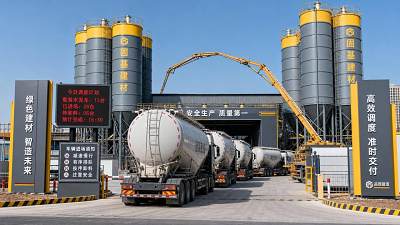
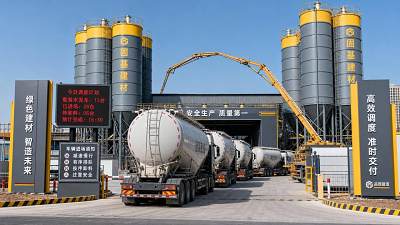
In the road transport equipment sector, delivery delays are rarely caused by one issue alone. A missed shipment can begin with unclear technical specifications, slow supplier confirmation, inconsistent truck cement price quotations, or a mismatch between trailer production and cement tank component availability. For procurement teams, the problem is not only buying the right product, but aligning manufacturing, compliance, logistics, and payment timing within a practical delivery window.
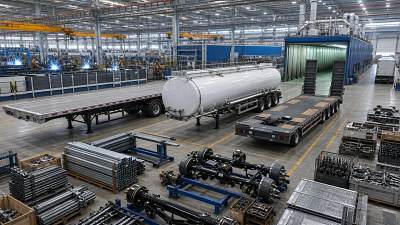
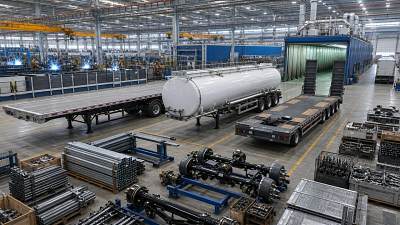
Truck cement sourcing usually involves multiple linked items rather than a single finished unit. Buyers may need chassis matching, tank body fabrication, axle configuration, piping layout, air compressor options, discharge system details, and export packing coordination. If even 1 of these 6–8 checkpoints remains unconfirmed, the schedule can shift by 7–15 days, especially when suppliers wait for final drawings or deposit release before locking production.
Price comparison also causes hidden delay. Many buyers compare truck trailer price, semi trailer price, and truck cement price on a headline basis, but two quotations may not include the same steel grade, tanker volume, suspension type, tire brand, or certification support. A lower initial price may later trigger redesign, accessory replacement, or document revision. These changes often extend procurement cycles by 2–4 weeks.
For information researchers, business evaluators, distributors, and bulk buyers, the key issue is visibility. Without a structured B2B sourcing environment, it is difficult to compare suppliers across regions, check delivery capability, review product categories, and assess whether a semi trailer supplier or semi trailer exporter can actually support consistent order execution. That is where an industry platform with broad supplier access and procurement guidance becomes operationally valuable, not just convenient.
The most common delay triggers in bulk procurement
Most schedule failures appear during the transition from inquiry to production release. In practice, buyers should watch for the following delay triggers before confirming a purchase order.
- Incomplete requirement definition, such as unclear tank volume, loading medium density, or discharge height requirement.
- Quotation inconsistency, where truck cement price excludes valves, compressor, landing gear, or painting specification.
- Supplier coordination gaps between trailer factory, component vendors, and export documentation teams.
- Compliance uncertainty for destination market paperwork, inspection requirements, or common road transport regulations.
- Late approval from internal finance or technical departments, often adding another 5–10 working days.
When 2 or 3 of these issues occur together, a planned dispatch date can become unreliable even before production starts. This is why buyers should evaluate sourcing flow, not only product appearance or unit price.
What buyers should compare beyond truck cement price, truck trailer price, and semi trailer price
A procurement decision becomes stronger when cost is reviewed together with configuration, lead time, and operational fit. For cement transport equipment, price alone does not show loading efficiency, unloading performance, wear resistance, or after-sales support burden. A semi trailer supplier with a mid-range price may create better schedule certainty than a low-price seller with weak documentation and unstable production planning.
Buyers should compare at least 5 core dimensions: structural specification, component source, compliance support, production lead time, and total trade coordination. This is especially important for distributors and agents who need consistent reordering. In recurring procurement, a 10-day delay can be more damaging than a small unit price difference because downstream contracts, fleet deployment, and inventory turnover are already planned.
The table below helps decision-makers compare sourcing options in a practical way. It is useful when reviewing truck cement OEM offers, assessing semi trailer exporter capabilities, or balancing truck trailer price against delivery reliability.
This comparison shows why a direct truck cement price check is not enough. Buyers need to know what is included, how fast changes can be managed, and whether the supplier can support project timing under real export conditions. A transparent marketplace with product categories, supplier profiles, and industry buying resources reduces these blind spots and shortens evaluation time.
How to interpret price differences correctly
When one quote is 8%–15% lower than another, buyers should not assume the equipment is equivalent. The gap may come from thinner material selection, different axle brands, lower tire specification, simpler coating treatment, or excluded export support. In cement transport, discharge performance and body durability matter as much as acquisition cost.
A useful internal rule is to separate price review into 3 layers: base vehicle or trailer structure, operating system and accessories, and trade execution cost. This makes it easier for procurement teams and business evaluators to explain differences to finance, management, or end customers.
Quick cost review checklist
- Check whether tank volume, axle count, and suspension type are identical across offers.
- Confirm whether the truck cement OEM includes compressor, piping, hose, and discharge accessories.
- Review painting, anti-corrosion treatment, and spare parts package for long-distance operation.
- Verify if the semi trailer exporter includes packing method, shipping support, and required documents.
How to evaluate a reliable semi trailer supplier, semi trailer exporter, and truck cement OEM
A reliable supplier is not defined by sales language. In B2B road transport equipment sourcing, reliability means the supplier can convert specifications into stable production, maintain communication across departments, and deliver the required documents on time. For bulk orders, this capability matters even more than showroom presentation because every delay compounds across multiple units.
Procurement teams should review supplier capability through a staged assessment. Stage 1 is technical responsiveness within 24–72 hours. Stage 2 is quotation completeness and revision discipline. Stage 3 is evidence of export process familiarity, including packaging, shipment coordination, and document preparation. If the supplier struggles at the inquiry stage, delays are likely to worsen during production.
Distributors and agents should also check product range breadth. A supplier limited to one narrow configuration may not support future market expansion. In contrast, a platform that aggregates categories such as Truck Chassis & Cab, Complete Trucks, Construction Machinery, Trailers & Semi-Trailers, and Spare Parts helps buyers compare alternatives without restarting the sourcing process from zero each time demand changes.
The next table can be used as a practical evaluation tool during supplier screening. It helps teams assess whether a semi trailer supplier or semi trailer exporter is suitable for a one-off order, a dealership relationship, or a recurring project supply arrangement.
For business assessment teams, this table also supports vendor benchmarking. It shifts the discussion from subjective trust to observable execution factors. A supplier who can answer these points clearly is generally easier to work with during urgent projects and repeat orders.
Five practical questions to ask before placing a bulk order
Before confirming any truck cement OEM or trailer supplier, buyers should ask 5 direct questions to reduce schedule risk.
- What is the standard production lead time for the selected configuration, and which parts usually create delays?
- Which components are standard and which are optional, especially for unloading and pneumatic systems?
- How are design revisions handled after deposit, and what impact do they have on schedule?
- What export documents and inspection steps can be supported for the destination market?
- Can the supplier support spare parts planning for the first 6–12 months of operation?
These questions are simple, but they reveal whether the supplier works from real process control or just reactive sales communication.
Which procurement workflow helps reduce delivery risk in cement transport equipment
The best way to reduce delay is to control the sourcing workflow before production begins. In many road transport equipment projects, buyers move too quickly from inquiry to payment without closing configuration gaps. A better method is a 4-step workflow: requirement definition, supplier comparison, technical confirmation, and dispatch planning. This shortens clarification loops and gives all parties a common operating baseline.
Requirement definition should cover route type, payload target, unloading method, local road conditions, and destination compliance expectations. For cement transport, even a small mismatch in tank design or discharge system can affect unloading time and maintenance burden. Spending 2–3 days on structured confirmation can save 2–3 weeks of later correction.
Supplier comparison should include not only truck trailer price and semi trailer price, but also communication speed, category depth, and supply chain transparency. This is where a global heavy truck industry platform adds value. Buyers can review products across multiple segments, compare suppliers more efficiently, and use market information and buying guides to support better internal decision-making.
Technical confirmation is the point where many orders either stabilize or fail. A confirmed configuration sheet, accessory list, and shipment plan should be completed before production release. Buyers handling large projects may also request milestone updates at 3 points: order confirmation, mid-production, and pre-dispatch inspection readiness.
A practical 4-step sourcing flow
- Step 1: Define the operating scenario, including load material, transport distance, road condition, and unloading requirements.
- Step 2: Compare 3 or more qualified suppliers on scope, price structure, lead time, and export support.
- Step 3: Lock the final configuration and confirm drawings, component list, and estimated production schedule.
- Step 4: Prepare dispatch, documents, and spare parts planning before shipment release.
This workflow is especially useful for distributors, purchasing departments, and evaluation teams that manage several stakeholders. It creates a repeatable process and reduces the chance of urgent corrections at the port or factory gate.
Where platforms improve procurement efficiency
A specialized international B2B platform improves sourcing by connecting manufacturers, suppliers, distributors, and buyers across the heavy truck supply chain. Instead of searching through fragmented channels, users can review product categories, compare partner capabilities, follow industry updates, and use buying resources in one place. For teams under time pressure, this reduces supplier discovery time and improves procurement confidence.
Because the platform covers trucks, trailers, construction machinery, and spare parts, it also helps buyers plan adjacent procurement. That matters when a cement transport project requires more than one equipment type, or when a dealer needs to expand into related road transport equipment lines over the next 1–2 quarters.
FAQ: common sourcing questions from buyers, evaluators, and distributors
How long does a truck cement or semi trailer order usually take?
The answer depends on configuration complexity, component availability, and export preparation. A standard configuration may move faster, while custom units often require additional confirmation. In practical terms, buyers should ask for a schedule divided into confirmation, production, and dispatch preparation rather than one total promise. That makes delays easier to detect early.
What should I focus on besides truck cement price?
Focus on total sourcing value: technical fit, unloading system completeness, component brand consistency, documentation support, and realistic lead time. A lower truck cement price can become more expensive if the order requires design changes, part substitution, or delayed shipment. For B2B buyers, the best purchase is often the one that arrives on schedule and performs as expected.
How do I know whether a semi trailer supplier is suitable for repeat business?
Look at process discipline rather than only the first quote. Can the supplier respond within 24–72 hours, provide a complete specification sheet, explain production timing, and support export documentation? Repeat business needs predictability. If the supplier cannot maintain clarity during evaluation, repeat order management will likely become difficult.
Are truck trailer price and semi trailer price directly comparable?
Not always. Prices are only comparable when product scope is aligned. Buyers must check axle count, suspension, body material, tire specification, accessories, coating, and trade terms. Comparing unlike configurations creates false savings and usually leads to later renegotiation or delay.
Why choose us for heavy truck and trailer sourcing support
The Global Heavy Truck Industry Platform is built for professional B2B sourcing across the commercial vehicle and heavy equipment supply chain. It connects buyers with manufacturers, suppliers, distributors, and exporters in a more transparent environment, helping teams compare products, understand market options, and identify suitable partners for trucks, trailers, machinery, and spare parts.
For buyers dealing with truck cement sourcing, semi trailer supplier screening, or truck trailer price comparison, the platform offers more than product listings. It supports smarter decisions through supplier discovery, category comparison, industry insights, market information, and practical buying guidance. This is especially useful when delivery schedules are tight and procurement mistakes are costly.
You can contact us for specific procurement support, including parameter confirmation, product selection, bulk order planning, delivery cycle discussion, supplier comparison, export documentation questions, and quotation communication. If your project also involves chassis, complete trucks, trailers, or spare parts, we can help you structure the sourcing process across multiple categories instead of treating each item separately.
If you are evaluating a truck cement OEM, checking semi trailer exporter capability, or comparing truck cement price with long-term supply reliability, send your required configuration, target market, quantity range, and delivery timeline. With clearer input, it becomes much easier to identify matching suppliers, shorten decision cycles, and reduce the sourcing problems that delay delivery schedules.
Trending News
- Nanjing Launches First Wind Power Equipment Shipping Route to Pakistan
- Irkeshtam Port’s 24-Hour Freight Clearance Boosts Exports to Kyrgyzstan
- Erenhot-Mongolia 24-Hour Freight Clearance Marks First Anniversary
- China-Europe Railway Express Surpasses 130,000 Trains
- Iran-Pakistan Launch 6 Cross-Border Roads, 3 New Land Ports
Tag
Recommended News
 Logistics & FreightNanjing Launches First Wind Power Equipment Shipping Route to PakistanWind power equipment shipping route from Nanjing to Pakistan launched—key logistics upgrade for CPEC renewable projects, heavy transport & EPC contractors.
 Logistics & FreightIran-Pakistan Launch 6 Cross-Border Roads, 3 New Land PortsIran-Pakistan launch 6 cross-border roads & 3 new land ports—boosting overland logistics, heavy-duty truck demand, and Central Asia–Gulf corridor efficiency.
 Logistics & FreightTruck Spare Parts Supplier in Europe: How to Avoid Cross-Border DelaysTruck spare parts supplier in Europe guide: learn how to reduce cross-border delays, improve parts sourcing, and keep fleet repairs fast with smarter supplier selection.
 Logistics & FreightFlatbed Trailer Supplier for Logistics Transportation: Key Load FactorsFlatbed trailer supplier for logistics transportation: learn key load factors like weight distribution, cargo size, and road conditions to choose safer, cost-efficient trailers.
 Logistics & FreightHuanggang Port Freight Operations Cease, Shenzhen-Hong Kong Cross-Border Logistics Shifts to 'East-In-East-Out, West-In-West-Out'Huanggang Port freight operations cease May 2026—Shenzhen-Hong Kong logistics shifts to 'East-In-East-Out, West-In-West-Out'. Key for陆路运输设备 stakeholders: update vehicle specs, optimize routes, ensure compliance now.
 Logistics & FreightAll 27 Cross-River Bridges of the Pinglu Canal CompletedAll 27 cross-river bridges of the Pinglu Canal are now complete — enabling 49-ton heavy-duty truck transport 24/7 between Yangtze manufacturing hubs and Beibu Gulf Port.
 Logistics & FreightNew Railway Cargo Transport Rules Effective May 1, 2026New Railway Cargo Transport Rules (2026): 72-hour advance submission required for oversized, overweight & special-purpose freight — ensure compliance & avoid delays.
 Logistics & FreightSemi Trailer Manufacturer for Logistics: What Impacts Turnaround EfficiencySemi trailer manufacturer for logistics selection shapes turnaround efficiency through build quality, customization, lead time control, and after-sales support—learn what drives faster, more reliable fleet deployment.
 Logistics & FreightHong Kong–Shenzhen Cross-Border Freight Shifts: Huanggang Closure Marks New EraHong Kong–Shenzhen cross-border freight shifts: Huanggang Port closure reshapes road transport logistics—discover impacts, alternatives & smart clearance must-dos.
 Logistics & FreightPinglu Canal Bridges Completed: 55-Ton Trucks Now PermittedPinglu Canal Bridges completed: 55-ton trucks now permitted—unlock faster, cost-efficient land transport for RCEP exporters, heavy-truck makers & logistics providers in Southwest China.
 Logistics & FreightErenhot-Mongolia 24-Hour Freight Clearance Boosts Auto & Fresh Produce TransitErenhot-Mongolia 24-hour freight clearance slashes auto & fresh produce transit time to <15 mins—boosting JIT delivery for OEMs, parts suppliers & cold-chain logistics.
 Logistics & FreightHow a Truck Cement Supplier Affects Site Delivery EfficiencyTruck cement supplier performance can make or break site delivery efficiency. Learn how reliable dispatch, fleet control, and coordination reduce delays, cut costs, and keep projects on schedule.
 Logistics & FreightSemi Trailer OEM Lead Times: What Affects Delivery More Than CapacitySemi trailer OEM lead times depend on sourcing, engineering changes, compliance, and shipping—not just capacity. Learn what delays delivery and how to choose a reliable OEM partner.
 Logistics & FreightHow a Truck Cement Supplier Affects Site Delivery EfficiencyTruck cement supplier performance can make or break site delivery efficiency. Learn how reliable dispatch, fleet control, and coordination reduce delays, cut costs, and keep projects on schedule.
 Logistics & FreightSemi Trailer OEM Lead Times: What Affects Delivery More Than CapacitySemi trailer OEM lead times depend on sourcing, engineering changes, compliance, and shipping—not just capacity. Learn what delays delivery and how to choose a reliable OEM partner.
 Logistics & FreightHow a Truck Cement Supplier Affects Site Delivery EfficiencyTruck cement supplier performance can make or break site delivery efficiency. Learn how reliable dispatch, fleet control, and coordination reduce delays, cut costs, and keep projects on schedule.
 Logistics & FreightPinglu Canal Bridges Completed: Heavy-Duty Transport UpgradedPinglu Canal Bridges completed: Heavy-duty transport upgraded to 49-ton capacity—boosting logistics for mining trucks, concrete mixers & port tractors to Qinzhou Port and ASEAN.
 Logistics & FreightHuanggang Port Freight Operations Cease, Shenzhen-HK Logistics Shifts to Zoned ModelHuanggang Port freight operations cease Dec 2025—Shenzhen-HK land logistics shifts to zoned model. Critical for automotive, NEV, and cross-border supply chains.
 Logistics & FreightErlianhot-Mongolia 24-Hour Freight Clearance Boosts Truck Transit by 40%Erlianhot-Mongolia 24-hour freight clearance cuts truck transit time by 40% — boosting cold-chain, auto parts & light commercial vehicle exports.
 Logistics & FreightIran-Pakistan Launch 6 Cross-Border Roads, 3 New PortsIran-Pakistan launch 6 cross-border roads & 3 new ports—boosting land freight efficiency for heavy-duty trucks, semi-trailers, and intelligent tractor units across Asia.
 Logistics & FreightPinglu Canal Bridges Completed: Heavy-Duty Transport UpgradedPinglu Canal Bridges completed: Heavy-duty transport upgraded to 49-ton capacity—boosting logistics for mining trucks, concrete mixers & port tractors to Qinzhou Port and ASEAN.
 Logistics & FreightHuanggang Port Freight Operations Cease, Shenzhen-HK Logistics Shifts to Zoned ModelHuanggang Port freight operations cease Dec 2025—Shenzhen-HK land logistics shifts to zoned model. Critical for automotive, NEV, and cross-border supply chains.
 Logistics & FreightErlianhot-Mongolia 24-Hour Freight Clearance Boosts Truck Transit by 40%Erlianhot-Mongolia 24-hour freight clearance cuts truck transit time by 40% — boosting cold-chain, auto parts & light commercial vehicle exports.
 Logistics & FreightIran-Pakistan Launch 6 Cross-Border Roads, 3 New PortsIran-Pakistan launch 6 cross-border roads & 3 new ports—boosting land freight efficiency for heavy-duty trucks, semi-trailers, and intelligent tractor units across Asia.
 Logistics & FreightPinglu Canal Bridges Completed: Heavy-Duty Transport UpgradedPinglu Canal Bridges completed: Heavy-duty transport upgraded to 49-ton capacity—boosting logistics for mining trucks, concrete mixers & port tractors to Qinzhou Port and ASEAN.