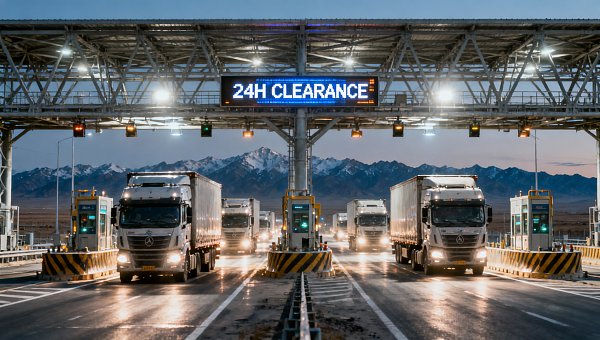
Erenhot Highway Port Launches 24-Hour Freight Clearance
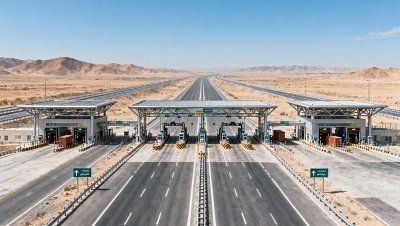
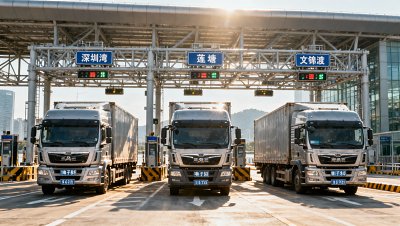
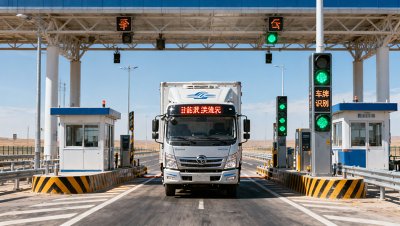
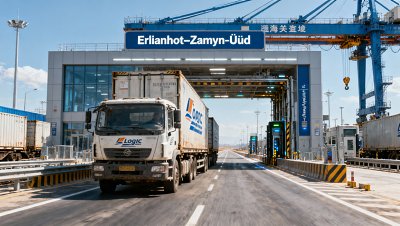
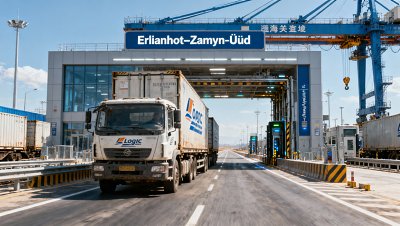
Starting April 1, 2026, Erenhot Highway Port—the largest China–Mongolia land port—has officially implemented year-round 24-hour freight clearance, ending its six-month trial phase. This development is especially relevant for cross-border logistics providers, heavy vehicle exporters, cold-chain equipment manufacturers, and supply chain stakeholders operating along the northern Eurasian corridor.
Event Overview
Effective April 1, 2026, Erenhot Highway Port has transitioned from a six-month trial to formal,常态化 24-hour freight clearance. During the trial period, total regulated freight volume reached 2.038 million tonnes (up 57.3% year-on-year), and vehicle clearance frequency increased by 70.1%. The adjustment applies exclusively to freight vehicles; passenger clearance remains subject to existing schedules.
Industries Affected
Direct Exporters of Heavy-Duty Vehicle Components
Manufacturers exporting truck chassis, semi-trailers, refrigeration units, and spare parts to Mongolia, Russia, and Central Asia are directly impacted. The 24-hour clearance reduces border dwell time, enabling tighter production-to-delivery scheduling and improved on-time delivery performance for export orders.
Logistics & Cross-Border Transport Operators
Fleet operators managing China–Mongolia–Russia routes face lower uncertainty in transit planning. With no mandatory overnight holding at the border, round-trip cycle times shorten significantly—especially for time-sensitive shipments such as temperature-controlled cargo or just-in-time components.
Importers Sourcing from Northern Eurasian Corridor Markets
Importers relying on goods transiting through Erenhot—including raw materials, machinery parts, or assembled equipment—experience reduced waiting costs and greater predictability in lead times. This may influence inventory strategy decisions, particularly for businesses previously buffering against border delays.
What Enterprises and Practitioners Should Monitor and Do Now
Track official implementation guidance beyond the announcement
The April 1 launch marks formalization—not necessarily full operational maturity. Stakeholders should monitor subsequent notices from General Administration of Customs of China and Inner Mongolia Entry-Exit Inspection and Quarantine Bureau regarding documentation requirements, designated lanes, and inspection protocols during overnight hours.
Assess impact on priority product categories and routing alternatives
Truck chassis, semi-trailers, cold-chain units, and related spare parts are explicitly cited in the event summary. Exporters should review current shipping volumes and transit windows for these items—and compare feasibility of shifting volume from rail or other road ports (e.g., Manzhouli) to Erenhot based on confirmed clearance consistency.
Distinguish policy signal from actual throughput reliability
While trial-phase data shows strong growth (+57.3% freight volume, +70.1% vehicle frequency), those metrics reflect controlled conditions. Real-world performance post-April 1—especially during peak seasons or adverse weather—requires empirical observation over the next 2–3 months before adjusting long-term capacity planning.
Update internal coordination protocols with customs brokers and transport partners
24-hour operations demand revised handover windows, documentation cut-off times, and real-time communication channels. Logistics managers should align with brokers and drivers on updated SLAs for pre-clearance submission, contingency plans for off-hours inspections, and documentation verification timelines.
Editorial Perspective / Industry Observation
From an industry perspective, this shift is better understood as an infrastructure-readiness signal than an immediate operational transformation. It reflects institutional confidence in digital customs systems (e.g., single-window platforms) and physical lane capacity—but does not eliminate variability introduced by Mongolian-side clearance practices or seasonal road conditions. Observation suggests the change primarily benefits shippers with high-frequency, standardized freight profiles rather than low-volume or irregular consignments. Continued monitoring of Mongolian counterpart policies and bilateral coordination mechanisms remains essential, as unilateral Chinese adjustments alone cannot guarantee end-to-end corridor efficiency.
Conclusion
This policy marks a meaningful step toward stabilizing cross-border freight execution on the northern Eurasian land corridor—but its practical value depends on consistent enforcement, interoperability with Mongolian authorities, and sustained throughput quality. For now, it is more accurately interpreted as an enabler of planning certainty rather than a standalone productivity leap.
Information Source
Main source: Official notice issued by the General Administration of Customs of China and the Inner Mongolia Autonomous Region Government, effective April 1, 2026.
Note: Long-term impact on Mongolian-side processing capacity and bilateral inspection harmonization remains under observation.
Trending News
- Nanjing Launches First Wind Power Equipment Shipping Route to Pakistan
- Irkeshtam Port’s 24-Hour Freight Clearance Boosts Exports to Kyrgyzstan
- Erenhot-Mongolia 24-Hour Freight Clearance Marks First Anniversary
- China-Europe Railway Express Surpasses 130,000 Trains
- Iran-Pakistan Launch 6 Cross-Border Roads, 3 New Land Ports
Tag
Recommended News
 Logistics & FreightNanjing Launches First Wind Power Equipment Shipping Route to PakistanWind power equipment shipping route from Nanjing to Pakistan launched—key logistics upgrade for CPEC renewable projects, heavy transport & EPC contractors.
 Logistics & FreightIran-Pakistan Launch 6 Cross-Border Roads, 3 New Land PortsIran-Pakistan launch 6 cross-border roads & 3 new land ports—boosting overland logistics, heavy-duty truck demand, and Central Asia–Gulf corridor efficiency.
 Logistics & FreightTruck Spare Parts Supplier in Europe: How to Avoid Cross-Border DelaysTruck spare parts supplier in Europe guide: learn how to reduce cross-border delays, improve parts sourcing, and keep fleet repairs fast with smarter supplier selection.
 Logistics & FreightFlatbed Trailer Supplier for Logistics Transportation: Key Load FactorsFlatbed trailer supplier for logistics transportation: learn key load factors like weight distribution, cargo size, and road conditions to choose safer, cost-efficient trailers.
 Logistics & FreightHuanggang Port Freight Operations Cease, Shenzhen-Hong Kong Cross-Border Logistics Shifts to 'East-In-East-Out, West-In-West-Out'Huanggang Port freight operations cease May 2026—Shenzhen-Hong Kong logistics shifts to 'East-In-East-Out, West-In-West-Out'. Key for陆路运输设备 stakeholders: update vehicle specs, optimize routes, ensure compliance now.
 Logistics & FreightAll 27 Cross-River Bridges of the Pinglu Canal CompletedAll 27 cross-river bridges of the Pinglu Canal are now complete — enabling 49-ton heavy-duty truck transport 24/7 between Yangtze manufacturing hubs and Beibu Gulf Port.
 Logistics & FreightNew Railway Cargo Transport Rules Effective May 1, 2026New Railway Cargo Transport Rules (2026): 72-hour advance submission required for oversized, overweight & special-purpose freight — ensure compliance & avoid delays.
 Logistics & FreightSemi Trailer Manufacturer for Logistics: What Impacts Turnaround EfficiencySemi trailer manufacturer for logistics selection shapes turnaround efficiency through build quality, customization, lead time control, and after-sales support—learn what drives faster, more reliable fleet deployment.
 Logistics & FreightHong Kong–Shenzhen Cross-Border Freight Shifts: Huanggang Closure Marks New EraHong Kong–Shenzhen cross-border freight shifts: Huanggang Port closure reshapes road transport logistics—discover impacts, alternatives & smart clearance must-dos.
 Logistics & FreightPinglu Canal Bridges Completed: 55-Ton Trucks Now PermittedPinglu Canal Bridges completed: 55-ton trucks now permitted—unlock faster, cost-efficient land transport for RCEP exporters, heavy-truck makers & logistics providers in Southwest China.
 Logistics & FreightErenhot-Mongolia 24-Hour Freight Clearance Boosts Auto & Fresh Produce TransitErenhot-Mongolia 24-hour freight clearance slashes auto & fresh produce transit time to <15 mins—boosting JIT delivery for OEMs, parts suppliers & cold-chain logistics.
 Logistics & FreightHow a Truck Cement Supplier Affects Site Delivery EfficiencyTruck cement supplier performance can make or break site delivery efficiency. Learn how reliable dispatch, fleet control, and coordination reduce delays, cut costs, and keep projects on schedule.
 Logistics & FreightSemi Trailer OEM Lead Times: What Affects Delivery More Than CapacitySemi trailer OEM lead times depend on sourcing, engineering changes, compliance, and shipping—not just capacity. Learn what delays delivery and how to choose a reliable OEM partner.
 Logistics & FreightHow a Truck Cement Supplier Affects Site Delivery EfficiencyTruck cement supplier performance can make or break site delivery efficiency. Learn how reliable dispatch, fleet control, and coordination reduce delays, cut costs, and keep projects on schedule.
 Logistics & FreightSemi Trailer OEM Lead Times: What Affects Delivery More Than CapacitySemi trailer OEM lead times depend on sourcing, engineering changes, compliance, and shipping—not just capacity. Learn what delays delivery and how to choose a reliable OEM partner.
 Logistics & FreightHow a Truck Cement Supplier Affects Site Delivery EfficiencyTruck cement supplier performance can make or break site delivery efficiency. Learn how reliable dispatch, fleet control, and coordination reduce delays, cut costs, and keep projects on schedule.
 Logistics & FreightPinglu Canal Bridges Completed: Heavy-Duty Transport UpgradedPinglu Canal Bridges completed: Heavy-duty transport upgraded to 49-ton capacity—boosting logistics for mining trucks, concrete mixers & port tractors to Qinzhou Port and ASEAN.
 Logistics & FreightHuanggang Port Freight Operations Cease, Shenzhen-HK Logistics Shifts to Zoned ModelHuanggang Port freight operations cease Dec 2025—Shenzhen-HK land logistics shifts to zoned model. Critical for automotive, NEV, and cross-border supply chains.
 Logistics & FreightErlianhot-Mongolia 24-Hour Freight Clearance Boosts Truck Transit by 40%Erlianhot-Mongolia 24-hour freight clearance cuts truck transit time by 40% — boosting cold-chain, auto parts & light commercial vehicle exports.
 Logistics & FreightIran-Pakistan Launch 6 Cross-Border Roads, 3 New PortsIran-Pakistan launch 6 cross-border roads & 3 new ports—boosting land freight efficiency for heavy-duty trucks, semi-trailers, and intelligent tractor units across Asia.
 Logistics & FreightPinglu Canal Bridges Completed: Heavy-Duty Transport UpgradedPinglu Canal Bridges completed: Heavy-duty transport upgraded to 49-ton capacity—boosting logistics for mining trucks, concrete mixers & port tractors to Qinzhou Port and ASEAN.
 Logistics & FreightHuanggang Port Freight Operations Cease, Shenzhen-HK Logistics Shifts to Zoned ModelHuanggang Port freight operations cease Dec 2025—Shenzhen-HK land logistics shifts to zoned model. Critical for automotive, NEV, and cross-border supply chains.
 Logistics & FreightErlianhot-Mongolia 24-Hour Freight Clearance Boosts Truck Transit by 40%Erlianhot-Mongolia 24-hour freight clearance cuts truck transit time by 40% — boosting cold-chain, auto parts & light commercial vehicle exports.
 Logistics & FreightIran-Pakistan Launch 6 Cross-Border Roads, 3 New PortsIran-Pakistan launch 6 cross-border roads & 3 new ports—boosting land freight efficiency for heavy-duty trucks, semi-trailers, and intelligent tractor units across Asia.
 Logistics & FreightPinglu Canal Bridges Completed: Heavy-Duty Transport UpgradedPinglu Canal Bridges completed: Heavy-duty transport upgraded to 49-ton capacity—boosting logistics for mining trucks, concrete mixers & port tractors to Qinzhou Port and ASEAN.