China Boosts Eurasian Freight Efficiency via Hub Upgrades
On April 22, 2026, the Ministry of Finance and the Ministry of Transport jointly issued a policy notice targeting freight hub modernization — with direct implications for cross-border logistics providers, rail-road intermodal operators, and exporters relying on China-Europe land corridors.
Event Overview
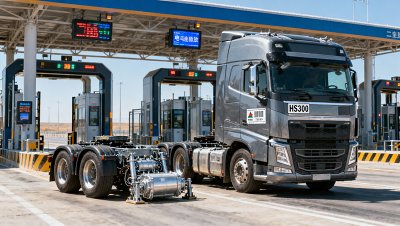
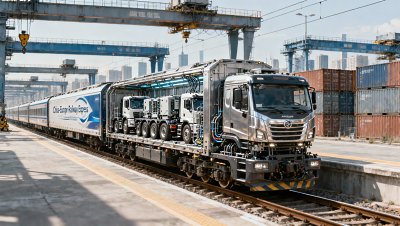
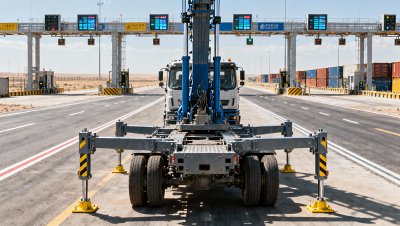
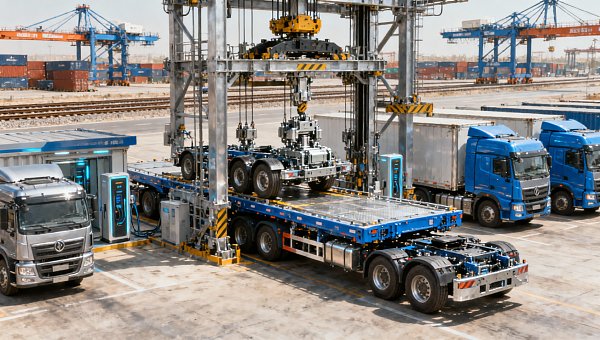
On April 22, 2026, the Ministry of Finance and the Ministry of Transport jointly released the Notice on Supporting the New Round of National Comprehensive Freight Hub Chain-Strengthening and Gap-Filling Action. The notice designates Xi’an, Urumqi, and Chengdu as key upgrade nodes for 2026, prioritizing construction of automated heavy-duty truck chassis exchange platforms and dedicated charging and battery-swapping stations for new-energy tractor units. The stated objective is to reduce heavy-truck chassis exchange time for China-Europe Express trains to ≤90 minutes.
Industries Affected
Direct Exporters & Importers (Especially to Eastern Europe and Central Asia)
These enterprises rely on ‘door-to-door’ reliability for time-sensitive or high-value shipments. Shorter chassis exchange times directly improve schedule adherence and reduce demurrage risk at inland hubs — potentially lowering total transit time variability by up to one full day per leg.
Rail-Road Intermodal Service Providers
Operators managing last-mile trucking connections to and from rail terminals face tighter synchronization requirements. Automated exchange platforms imply stricter slot booking discipline, standardized trailer interfaces, and higher compliance thresholds for vehicle certification and data integration (e.g., real-time location, chassis ID, cargo manifest linkage).
New-Energy Commercial Vehicle Manufacturers & Fleet Operators
The notice explicitly calls for dedicated charging and battery-swapping infrastructure for new-energy tractors. This signals near-term demand for certified, interoperable battery systems and depot-level energy management solutions compatible with heavy-duty logistics workflows.
Logistics Technology Providers (TMS, Yard Management, IoT)
Automated chassis exchange requires precise coordination between rail scheduling systems, yard control software, and truck telematics. Integration readiness — particularly around API standards for chassis availability status, gate-in/gate-out timing, and maintenance alerts — becomes operationally critical.
What Enterprises and Practitioners Should Monitor and Prepare For
Track official implementation timelines and technical specifications
The Notice outlines intent but not detailed rollout schedules or interface standards. Stakeholders should monitor subsequent announcements from provincial transport bureaus and the China State Railway Group regarding pilot launch dates, equipment certification criteria, and slot allocation mechanisms.
Assess exposure to Xi’an, Urumqi, and Chengdu gateway operations
Shippers using these three hubs — especially those routing via Kazakhstan or Belarus — should review current dwell times, chassis handover SLAs, and contingency plans for manual fallback procedures during early-phase automation transitions.
Distinguish policy signal from operational reality
While the 90-minute target is stated, actual performance will depend on system integration maturity, workforce training, and cross-border regulatory alignment (e.g., customs pre-clearance harmonization). Early adopters should treat this as a multi-year capability build — not an immediate service upgrade.
Prepare documentation and vehicle compliance packages
Fleet operators planning to access upgraded terminals should begin compiling vehicle type approvals, battery certification documents (for new-energy units), and digital identity credentials aligned with national freight information platform requirements — ahead of formal onboarding windows.
Editorial Observation / Industry Perspective
From an industry perspective, this Notice is best understood as a targeted infrastructure acceleration signal — not yet a fully deployed capability. Analysis来看, it reflects a deliberate shift from broad corridor development to precision node optimization, focusing on bottlenecks that constrain end-to-end reliability rather than just line-haul speed. Observation来看, the emphasis on automation *and* new-energy infrastructure suggests convergence of decarbonization and efficiency agendas in national freight strategy. Current more relevant interpretation is that this marks the start of a phased, hub-specific modernization cycle — where tangible impact will emerge incrementally over 2026–2027, contingent on local execution capacity and cross-agency coordination.
Conclusion
For stakeholders in Eurasian land logistics, this policy represents a calibrated step toward improving service consistency — particularly for time- and reliability-sensitive segments. It does not alter existing corridor geography or tariff structures, nor does it guarantee immediate performance gains. Rather, it sets measurable benchmarks for terminal-level interoperability and energy infrastructure readiness. Currently, it is more appropriately understood as a directional commitment with staged implementation — requiring close attention to local rollout details rather than broad strategic recalibration.
Information Sources
Main source: Official notice jointly issued by the Ministry of Finance and the Ministry of Transport of the People’s Republic of China, dated April 22, 2026.
Note: Implementation timelines, technical standards, and performance verification metrics remain subject to further official publication and field observation.
Trending News
- Truck Tipper Exporter Compliance Risks in Cross-Border Deliveries
- Truck Trailer Distributor Trends Shaping Regional Market Growth in 2026
- Crane Truck for Sale: 7 Checks Before You Choose a Model
- How to Compare a Truck Trailer Supplier Beyond Unit Price
- Bulldozer for Construction: Key Specs That Affect Earthmoving Efficiency
Tag
Recommended News
 Truck ExportTruck Tipper Exporter Compliance Risks in Cross-Border DeliveriesTruck tipper exporter compliance risks can delay cross-border deliveries and raise liability. Learn key controls for safety, customs, and documentation to protect shipments.
 Truck ExportIran Launches New HS Code System, Boosting Trailer Export EfficiencyIran's new 2026 HS code system boosts trailer export efficiency—key for Chinese exporters targeting the Middle East with intelligent air-suspension and aluminum trailers.
 Truck ExportErlianhot 24-Hour Freight Clearance for Mongolia Marks One YearErlianhot 24-hour freight clearance boosts Mongolia truck exports — customs time slashed to 18 mins, lead times down 40%. Optimize your陆路运输设备 supply chain now.
 Truck ExportWater Truck Exporter Checklist for Harsh Climate and Road ConditionsWater truck exporter checklist for harsh climates and rough roads. Learn how to compare durability, compliance, chassis fit, and support to reduce risk and choose with confidence.
 Truck ExportIrkeshtam Port 24/7 Cargo Clearance Boosts Exports to Kyrgyzstan by 66%Irkeshtam Port’s 24/7 cargo clearance boosts陆路运输设备 exports to Kyrgyzstan by 66%—unlock faster customs, higher volumes & modular trailer demand.
 Truck ExportErenhot-Mongolia 24-Hour Freight Clearance Marks First AnniversaryErenhot-Mongolia 24-hour freight clearance boosts heavy-duty truck equipment exports by 37% — optimize logistics, cut customs time to 18 mins.
 Truck ExportConstruction Machinery Exporter Selection: 5 Key Cost ChecksConstruction machinery exporter selection starts with 5 critical cost checks. Learn how to compare total cost, delivery risk, parts support, and warranty to source smarter.
 Truck ExportYerkeshkan Port 24-Hour Freight Clearance Boosts Heavy Vehicle Exports to KyrgyzstanYerkeshkan Port’s 24-hour freight clearance is accelerating heavy vehicle exports to Kyrgyzstan — boosting demand for semi-trailers, tankers & rugged chassis. Act now.
 Truck ExportManzhouli Highway Port Launches 24-Hour Freight ClearanceManzhouli Highway Port’s 24-hour freight clearance boosts heavy-duty truck, natural gas tractor & engineering chassis exports to Russia/CIS — faster, more reliable cross-border logistics.
 Truck ExportIrkeshtam Port’s 24-Hour Freight Clearance Boosts Exports to Kyrgyzstan by 66%Irkeshtam Port’s 24-hour freight clearance slashes border delays—boosting China-to-Kyrgyzstan auto component exports by 66%. Optimize your陆路运输设备 supply chain now.
 Truck ExportErenhot-Mongolia 24-Hour Freight Clearance Marks One-Year MilestoneErenhot-Mongolia 24-hour freight clearance boosts reliability for heavy-duty trucks, refrigerated semi-trailers & dump chassis exports — optimize your cross-border logistics now.
 Truck ExportErenhot-Mongolia 24-Hour Freight Clearance Marks First AnniversaryErenhot-Mongolia 24-hour freight clearance delivers 40% faster road freight & zero-delay customs for auto parts, machinery, and fresh produce—key for logistics and heavy-vehicle exporters.
 Truck ExportChina-Europe Railway Express Surpasses 130,000 TrainsChina-Europe Railway Express surpasses 130,000 trains — a pivotal milestone for陆路运输设备 exporters, offering faster, more reliable overland logistics amid maritime volatility.
 Truck ExportHeavy Equipment Export to Africa: Market Openings and Compliance ChallengesHeavy equipment export to Africa is accelerating as infrastructure and logistics demand grows. Explore market openings, compliance risks, and smart strategies for sustainable expansion.
 Truck ExportLow Bed Trailer Export to Southeast Asia: Specs That Meet Local DemandLow bed trailer export to Southeast Asia starts with the right specs. Discover how to match payload, axles, ramps, and compliance needs to win dealers, reduce risk, and boost sales.
 Truck ExportHeavy Equipment Export for Mining Operations: Key Risks Before ShipmentHeavy equipment export for mining operations: identify compliance, logistics, technical, and supplier risks before shipment to avoid delays, control costs, and protect mine project timelines.
 Truck ExportHow to Vet an Excavator Exporter for Delivery Risk and ComplianceExcavator exporter selection affects delivery, customs, and project timelines. Learn how to vet suppliers, verify compliance, and reduce shipping risk before you buy.
 Truck ExportManzhouli Highway Port Hits 1-Year Milestone in 24/7 Freight ClearanceManzhouli Highway Port’s 24/7 freight clearance boosts heavy-duty truck & semi-trailer exports by 290% — faster, more reliable Eurasian land transport.
 Truck ExportWorld's Largest Car Carrier Makes Maiden Call at Shanghai PortWorld's largest car carrier Gro Navigator arrives at Shanghai Port—boosting capacity for heavy-duty & NEV exports to Europe, ME, LATAM. Key update for PCTC shippers.
 Truck ExportLow Bed Trailer Export for Mining: How to Match Axle Layout to Load TypeLow bed trailer export for mining: learn how to match axle layout to load type for safer transport, better compliance, and higher payload efficiency in demanding mining routes.
 Truck ExportAre Waterproof Features Worth It in Low Bed Trailer Export ProjectsLow bed trailer export with waterproof features: find out when the upgrade protects cargo, cuts corrosion and downtime, and delivers stronger long-term value in export projects.
![]() Truck ExportTruck Parts Exporter Guide: How to Avoid Fitment and Packaging ProblemsTruck parts exporter guide for buyers who need accurate fitment and secure packaging. Learn how to reduce returns, prevent damage, and choose reliable suppliers for global heavy truck parts trade.
Truck ExportTruck Parts Exporter Guide: How to Avoid Fitment and Packaging ProblemsTruck parts exporter guide for buyers who need accurate fitment and secure packaging. Learn how to reduce returns, prevent damage, and choose reliable suppliers for global heavy truck parts trade. Truck ExportLow Bed Trailer Export to Southeast Asia: Specs That Commonly Cause DelaysLow bed trailer export to Southeast Asia often faces delays from spec mismatches. Learn the key dimensions, axle, brake, tire, and ramp details buyers must verify before ordering.
 Truck ExportExcavator Exporter Checklist: Documents, Lead Time, and Delivery RisksExcavator exporter checklist covering key documents, realistic lead times, and delivery risks. Learn how to compare suppliers, reduce import uncertainty, and make smarter sourcing decisions.
 Truck ExportIrkeshtam Port 24-Hour Freight Clearance Boosts Exports to KyrgyzstanIrkeshtam Port’s 24-hour freight clearance boosts exports to Kyrgyzstan—87.4% surge in medium trucks, crane chassis & hydraulic outriggers. Optimize your陆路运输设备 logistics now.