How to Compare a Truck Chassis Supplier in Europe
Choosing the right truck chassis supplier in Europe can directly affect vehicle quality, delivery efficiency, and long-term operating costs. For procurement professionals, comparing suppliers requires more than checking prices—it means evaluating manufacturing capability, certification, customization options, and supply reliability. This guide will help you identify the key factors that matter when selecting a dependable European chassis partner.
What should procurement teams compare first in a truck chassis supplier in Europe?
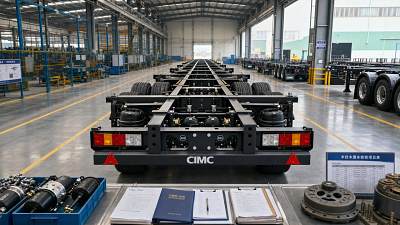
When evaluating a truck chassis supplier in Europe, buyers should start with fit-for-purpose capability rather than unit price. A chassis for regional logistics, municipal service, construction transport, or mining support must match payload, axle layout, suspension needs, and regulatory expectations. A low quoted price can become expensive if the frame design, lead time, or documentation does not align with the project.
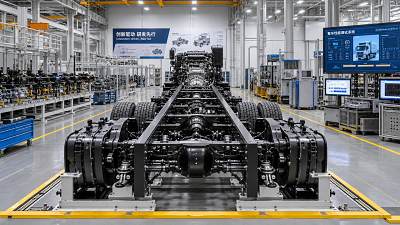
In the road transport equipment sector, chassis performance affects body installation, operational uptime, tire wear, fuel use, and legal compliance. This is why experienced buyers compare suppliers across production strength, engineering support, export readiness, and after-sales coordination. A supplier that understands application conditions can reduce integration risk before the order is placed.
For many procurement teams, the challenge is not finding options, but filtering them quickly. The Global Heavy Truck Industry Platform helps solve this by connecting buyers with manufacturers, component suppliers, and industry data across the heavy truck supply chain. Instead of reviewing isolated offers, buyers can compare product categories, supplier profiles, and sourcing information in one digital environment.
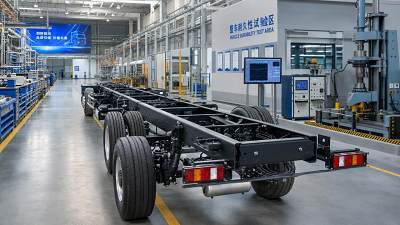
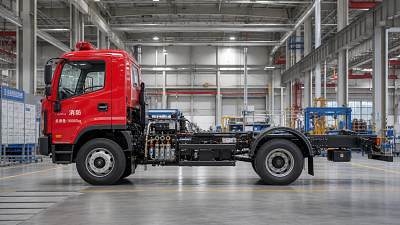
- Check whether the supplier regularly produces the chassis type you need, such as rigid truck chassis, cab-and-chassis platforms, or special-purpose heavy-duty frames.
- Confirm whether engineering drawings, dimensional tolerances, and interface points for body builders can be provided early in the process.
- Review export communication ability, document accuracy, and responsiveness on technical clarification, not only commercial negotiation speed.
A practical starting framework
A useful first screen is to compare four essentials: technical match, compliance readiness, supply continuity, and total procurement cost. If a truck chassis supplier in Europe cannot demonstrate these clearly, deeper price discussions should wait. This approach helps procurement teams avoid time loss on suppliers that look attractive online but are weak in execution.
How do technical specifications reveal supplier suitability?
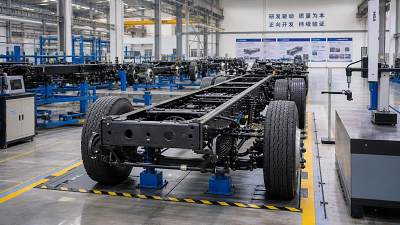
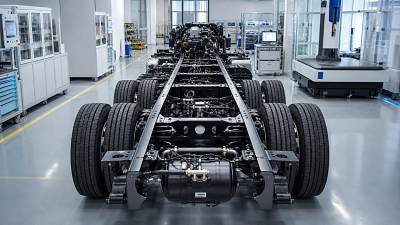
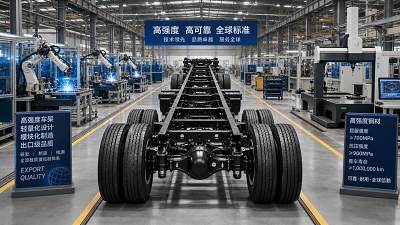
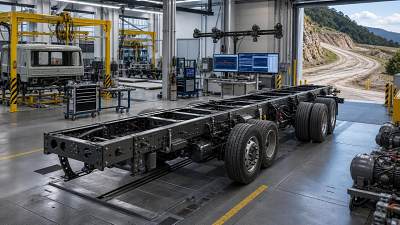
Technical comparison is where many sourcing decisions become clearer. Two suppliers may both offer a nominally similar truck chassis, but differences in gross vehicle weight range, wheelbase options, axle configuration, frame material, suspension design, and body-mount flexibility can significantly change final suitability. Procurement staff should translate operating needs into measurable chassis requirements.
The table below provides a practical comparison checklist for evaluating a truck chassis supplier in Europe from a technical perspective before moving to contract terms.
This comparison shows why a technical datasheet should never be treated as a formality. Procurement teams should request dimensional drawings, weight distribution details, and interface data for body installation. For special vehicles, even small changes in frame height or rear overhang can influence legal compliance and operational safety.
Which chassis details are often overlooked?
Buyers often focus on engine power and axle count, but overlook mounting flexibility, electrical architecture, and service part commonality. These details matter when fleets need easy maintenance across multiple units. A capable truck chassis supplier in Europe should explain what is standard, what is optional, and what requires engineering change.
- Frame drilling restrictions and body-builder guidelines
- Brake system specification and compatibility with local operating conditions
- Electrical connectors and control interfaces for mounted equipment
- Availability of spare parts shared with other common truck platforms
Which certifications and compliance documents should buyers request?
Compliance is a major decision point when comparing any truck chassis supplier in Europe. Depending on the destination market and application, procurement staff may need to verify vehicle type approval status, emissions conformity, braking compliance, lighting requirements, and traceable manufacturing documentation. Missing paperwork can delay customs clearance, registration, or final body approval.
The exact requirements vary by country and use case, so buyers should ask suppliers to state clearly which standards the chassis already meets and which must be adapted for the target market. General references may include UNECE-related vehicle requirements, applicable EU conformity expectations, and component-level certificates where relevant.
The table below helps procurement teams compare compliance readiness among shortlisted suppliers.
A reliable supplier should answer these points with specific documents, not general assurances. For procurement teams buying across borders, this is also where a specialized B2B platform becomes valuable. By accessing supplier information, product categories, and industry guidance in one place, buyers can reduce the time spent validating whether a supplier is truly ready for export and compliance review.
How should buyers compare price, lead time, and total cost?
Price comparison becomes meaningful only after configuration alignment. If one truck chassis supplier in Europe quotes a base frame and another includes reinforced suspension, PTO preparation, and approval support, the lower quote may not be the better value. Procurement teams should compare total delivered cost and total operating impact, not just ex-works pricing.
Key cost drivers beyond the purchase price
- Specification gap cost: later modification, additional bracket fabrication, and rework after body installation can be expensive.
- Lead time risk: a cheaper supplier with unstable production planning may delay your entire fleet deployment or project launch.
- Parts and service cost: uncommon components or weak service support can increase downtime and inventory burden.
- Documentation and compliance cost: missing certificates often lead to third-party testing, local adaptation, or delayed release.
Buyers should request a structured quotation that separates standard specification, options, packaging, documentation support, and delivery terms. This makes it easier to compare suppliers on equal footing. A strong truck chassis supplier in Europe will usually be willing to clarify what is included and where cost changes are likely if requirements shift.
When is a higher-priced supplier the safer choice?
If the procurement project involves urgent delivery, special body integration, or strict registration requirements, paying more for consistency may be justified. In land transport equipment purchasing, a delayed or non-compliant chassis can affect downstream body builders, transport contractors, and project owners at the same time. Procurement decisions should reflect that operational chain impact.
What signals indicate a reliable supply partner, not just a seller?
The most dependable truck chassis supplier in Europe usually shows strong process discipline before the order is signed. This appears in quotation accuracy, drawing control, revision tracking, realistic production scheduling, and clear responses on inspection points. A partner mindset matters because chassis procurement often involves multiple stakeholders, including body builders, fleet managers, technical teams, and finance departments.
Procurement teams should test supplier reliability through the quality of communication. Ask for sample documents, standard lead times, quality checkpoints, packing methods, and issue escalation procedures. If answers are vague during pre-sales, execution may become difficult later.
- Can the supplier provide a stable point of contact for technical and commercial coordination?
- Are production milestones and inspection stages defined before shipment?
- Is there a process for handling engineering changes without causing confusion in delivered units?
- Can spare parts planning be discussed at the same time as the chassis order?
Why digital comparison tools matter in cross-border sourcing
For international buyers, sourcing reliability improves when supplier discovery is supported by a sector-focused platform rather than random listings. The Global Heavy Truck Industry Platform brings together truck chassis, complete trucks, trailers, construction machinery, and spare parts resources in one ecosystem. This allows procurement teams to compare supplier categories, study market information, and narrow down candidates more efficiently.
That broader supply-chain visibility is especially useful when a chassis purchase must connect with cab selection, body installation, parts procurement, or regional distribution planning. Instead of treating the chassis as an isolated item, buyers can evaluate it as part of a complete commercial vehicle sourcing strategy.
How can procurement teams build a practical supplier comparison process?
A structured process helps prevent subjective decisions. Rather than moving from inquiry to negotiation too quickly, procurement teams should use a staged evaluation model. This is particularly important when sourcing from multiple regions, where documentation standards, manufacturing practices, and delivery promises may differ.
Recommended evaluation steps
- Define the operating scenario: payload, road condition, body type, compliance target, and preferred service life.
- Create a uniform RFQ package: include technical specification, target delivery window, documentation needs, and Incoterms expectations.
- Screen suppliers by technical match first, then by compliance readiness, then by commercial terms.
- Ask for clarification on any deviation from the requested specification and record it in a comparison sheet.
- Review total cost, spare parts planning, and project risk before final selection.
If possible, buyers should also compare how each supplier handles non-standard requests. Custom wheelbase, reinforcement, PTO preparation, or body interface modifications can reveal whether the supplier is process-driven or improvisational. In the truck chassis sector, disciplined customization is often more valuable than a fast verbal promise.
Common mistakes when choosing a truck chassis supplier in Europe
Several purchasing mistakes appear repeatedly in heavy vehicle sourcing. The most common one is choosing based on visible price while underestimating integration complexity. Another is assuming that a chassis used successfully in one country will automatically match requirements in another. Procurement teams should also avoid relying on product photos or generic brochures as proof of current manufacturing capability.
- Do not approve a supplier before verifying whether the quoted chassis configuration exactly matches axle, wheelbase, and suspension needs.
- Do not assume compliance coverage without reviewing actual documentation for the target destination.
- Do not ignore the body-builder interface. A technically acceptable chassis can still create expensive adaptation work.
- Do not separate chassis buying from spare parts and service planning if the fleet will run in demanding conditions.
A disciplined sourcing process reduces these risks. Procurement leaders who compare suppliers with clear technical, compliance, and delivery criteria usually achieve better lifecycle value than teams driven mainly by initial quotation pressure.
FAQ: questions buyers often ask before selecting a European chassis supplier
How do I know whether a truck chassis supplier in Europe is suitable for my application?
Start with the application, not the catalog. Define payload, route condition, body type, compliance target, and required delivery schedule. Then check whether the supplier can provide matching axle configuration, wheelbase, suspension, and body interface documentation. Suitability is proven by specification alignment and execution ability, not by general product range alone.
What is more important: low price or short lead time?
That depends on project consequences. If a chassis delay affects fleet launch, construction schedules, or customer delivery commitments, lead time stability may be more important than a lower price. In many cases, the best choice is the supplier with the most balanced offer across cost, timing, technical fit, and compliance support.
What documents should I request during comparison?
Request technical datasheets, dimensional drawings, body-builder information, quality inspection records, applicable approval or conformity documents, spare parts information, and a clear quotation breakdown. If the supplier exports regularly, ask about packaging standards, shipping preparation, and documentation support for customs and destination registration.
Can a digital B2B platform really help with supplier comparison?
Yes, especially in a fragmented international market. A focused industry platform helps buyers compare product categories, supplier scope, related spare parts, and market information in one place. For procurement teams with limited time, this shortens the path from broad search to qualified supplier shortlist and improves decision quality.
Why choose us for your truck chassis sourcing research and supplier comparison?
The Global Heavy Truck Industry Platform is built for buyers who need more than a supplier directory. It supports professional sourcing across the commercial vehicle and heavy equipment chain, including Truck Chassis & Cab, complete trucks, trailers, construction machinery, and spare parts. For procurement teams comparing a truck chassis supplier in Europe, this means easier access to relevant categories, sourcing references, and industry-specific information.
You can use the platform to narrow supplier options, review product scope, and connect your chassis inquiry with related needs such as body fitment, parts sourcing, or broader fleet procurement. This is especially valuable when your project includes multiple vehicle types or requires coordination across logistics, infrastructure, or municipal transport applications.
If you are preparing a sourcing project, contact us to discuss the points that matter before you commit: parameter confirmation, chassis selection, delivery timeline, customization possibilities, certification expectations, spare parts planning, sample support, and quotation comparison. A clearer comparison process at the start often prevents costly changes later.
Trending News
- Truck Cement Wholesale: What Determines Stable Delivery and Margin?
- Truck Trailer Bulk Order Cost Breakdown for 2026 Budget Planning
- Truck Trailer Sourcing: 7 Checks Before You Compare Suppliers
- Truck Trailer OEM vs ODM: Which Model Lowers Supply Risk?
- How to Evaluate a Heavy Truck Chassis Manufacturer With R&D Capability in 2026
Tag
Recommended News
 Buying GuideTruck Trailer Sourcing: 7 Checks Before You Compare SuppliersTruck trailer sourcing starts with the right checks. Discover 7 essential steps to verify compliance, quality, lead time, and after-sales support before comparing suppliers.
 Buying GuideTruck Trailer OEM vs ODM: Which Model Lowers Supply Risk?Truck trailer OEM vs ODM: learn which model better reduces supply risk, improves quality control, and protects long-term sourcing flexibility for global trailer buyers.
 Buying GuideHow to Evaluate a Heavy Truck Chassis Manufacturer With R&D Capability in 2026Heavy truck chassis manufacturer with R&D capability: learn how to evaluate engineering strength, validation, compliance, and long-term reliability in 2026 to choose the right supplier.
 Buying GuideHow to Compare Semi Trailer Distributors by Lead Time and SupportSemi trailer distributor comparison starts with lead time and support. Learn how to evaluate delivery reliability, technical response, and after-sales service for smarter sourcing.
 Buying GuideSemi Trailer Bulk Order Risks and Quality Checks Before SigningSemi trailer bulk order risks can quickly multiply without strict checks. Discover the key quality, compliance, and delivery points to verify before signing and protect your fleet investment.
 Buying GuideHow to Evaluate a Heavy Truck Chassis Manufacturer With R&D CapabilityHeavy truck chassis manufacturer with R&D capability: learn how to verify engineering, testing, customization, and quality control to reduce sourcing risk and choose a reliable supplier.
 Buying GuideTruck Tipper Sourcing Checklist: Specs, Lead Time, and ComplianceTruck tipper sourcing starts with the right checklist. Compare specs, lead time, and compliance requirements to reduce risk, evaluate suppliers faster, and choose equipment that fits your operation.
 Buying GuideTruck Tipper Bulk Order: 5 Cost Risks to Check Before SigningTruck tipper bulk order buyers: uncover 5 hidden cost risks before signing, from specs and landed cost to compliance, payment terms, and after-sales support.
 Buying GuideHow to Vet a Heavy Truck Chassis Manufacturer With R&D Capability in 2026Heavy truck chassis manufacturer with R&D capability: learn how to verify engineering depth, testing, customization, and reliability in 2026 to choose a lower-risk supplier.
 Buying GuideDump Truck Bulk Order Risks: What to Confirm Before SigningDump truck bulk order risks can erase savings fast. Learn what to confirm on supplier credibility, specs, delivery, compliance, payment terms, and after-sales support before you sign.
 Buying GuideTruck Cement for Sale: How to Compare Grades for Different Haul JobsTruck cement for sale guide: compare light, medium, and heavy-duty grades by route, payload, terrain, and service support to choose the right mixer truck with lower downtime.
 Buying GuideTruck Tipper Wholesale: Key Specs That Affect Jobsite EfficiencyTruck tipper wholesale guide for project managers: compare body capacity, hydraulics, axle layout, and durability to boost jobsite efficiency, uptime, and ROI.
 Buying GuideTruck Cement Supplier Checklist: Quality, Lead Time, and Delivery RiskTruck cement supplier checklist for B2B buyers: compare quality control, lead time, and delivery risk to reduce delays, improve sourcing confidence, and choose a more reliable supply partner.
 Buying GuideHow to Evaluate a Heavy Truck Chassis Manufacturer with R&D Capability in 2026Heavy truck chassis manufacturer with R&D capability: learn how to assess design strength, compliance readiness, testing, and supply reliability in 2026 for smarter sourcing.
 Buying GuideLogging Truck Manufacturer Guide: Payload, Stability, and Road ConditionsLogging truck manufacturer guide covering payload, stability, and road conditions. Compare real-world performance, safety, and lifecycle value before you buy.
 Buying GuideTruck Tipper Manufacturer Checklist for Mining and Construction FleetsTruck tipper manufacturer checklist for mining and construction fleets: compare durability, safety, payload efficiency, and support to choose the right supplier with confidence.
 Buying GuideTruck Trailer Supplier Comparison: Lead Time, Compliance, and After-Sales RisksTruck trailer supplier comparison goes beyond price. Learn how to assess lead time, compliance, and after-sales risks to choose a reliable partner and reduce sourcing uncertainty.
 Buying GuideWater Truck Manufacturer Selection: Key Tank, Pump, and Chassis ChecksWater truck manufacturer selection starts with the right checks. Learn how to verify tank quality, pump performance, and chassis fit to reduce downtime and choose a reliable supplier.
 Buying GuideHow to Evaluate a Heavy Truck Chassis Manufacturer With R&D Capability in 2026Heavy truck chassis manufacturer with R&D capability: learn how to verify engineering, testing, customization, and compliance in 2026 to choose a lower-risk supplier.
 Buying GuideHow to Compare a Logging Truck Distributor by Service CoverageLogging truck distributor comparison starts with service coverage. Learn how to assess parts access, field support, warranty response, and dealer backing for stronger uptime and growth.
 Buying GuideChoosing a Water Truck Supplier for Dust Control ProjectsWater truck supplier selection for dust control starts with reliability, spray performance, parts support, and service. Learn how to compare suppliers and choose with confidence.
 Buying GuideCrane Truck Manufacturer Checklist for Safe Lifting PerformanceCrane truck manufacturer checklist for safer lifting: compare structural strength, load safety systems, compliance, and service support to reduce risk and source with confidence.
 Buying GuideHow to Evaluate a Heavy Truck Chassis Manufacturer With R&D Capability in 2026Heavy truck chassis manufacturer with R&D capability: learn how to assess engineering depth, validation, compliance, and production consistency in 2026 to choose a reliable supplier.
 Buying GuideCab Chassis Truck for Fire Department: Key Specs Before OrderingCab chassis truck for fire department buyers: compare GVWR, axle ratings, PTO, braking, electrical capacity, and body-fit specs before ordering to reduce risk and improve fleet reliability.
 Buying GuideChoosing a Water Truck Factory for Municipal and Mining ProjectsWater truck factory selection impacts uptime, cost, and reliability. Learn how to compare suppliers for municipal and mining projects with practical buying criteria.