Choosing a Truck Spare Parts Supplier in Europe Without Overpaying
Choosing a truck spare parts supplier in Europe should not mean accepting inflated prices or hidden procurement risks. For finance decision-makers, the right supplier can improve cost control, parts availability, and long-term operational efficiency. This guide explains how to compare European suppliers more strategically, helping you reduce total purchasing costs while maintaining quality, compliance, and supply chain reliability.
Understanding What a Truck Spare Parts Supplier in Europe Really Offers
A truck spare parts supplier in Europe is not simply a seller of components. In the road transport equipment sector, the supplier often influences uptime, vehicle lifecycle cost, warranty exposure, inventory pressure, and even route planning. For finance approvers, this means supplier evaluation should extend beyond the unit price of a brake disc, clutch kit, lighting assembly, or suspension component. A lower line-item price can still create a higher total cost if lead times stretch from 5 days to 5 weeks, return handling is weak, or part matching errors increase workshop downtime.
The European market is especially important because it combines mature logistics infrastructure, broad aftermarket depth, and strict expectations around quality documentation. Buyers sourcing for heavy trucks, trailers, construction support fleets, and municipal transport vehicles often look to Europe for both OE-equivalent parts and cost-effective aftermarket alternatives. However, pricing can vary by 15% to 40% across suppliers for the same functional category, especially when brand positioning, stock location, and packaging standards differ.
This is why a finance-focused buying framework matters. The objective is not to buy the cheapest part available. It is to identify the truck spare parts supplier in Europe that provides the best balance of part accuracy, commercial transparency, replenishment stability, and predictable operating cost over a 12- to 24-month procurement cycle. That approach is more aligned with budget control and fleet reliability than price-only purchasing.
Core supplier roles in the heavy truck supply chain
In practice, suppliers may operate in several ways: as stock-holding distributors, direct exporters, multi-brand aggregators, or digital B2B marketplace participants. Each model affects pricing structure. A stock-heavy distributor may charge slightly more but reduce emergency freight cost. A direct exporter may offer lower ex-works pricing but require larger minimum order quantities, often 20 to 100 units per SKU for fast-moving items. A marketplace-based sourcing channel can broaden options, but it also requires tighter qualification and comparison discipline.
For road transport equipment buyers, the most relevant categories typically include engine parts, filtration, braking systems, steering and suspension parts, electrical components, body fittings, trailer accessories, and wear items for regular service intervals. These categories differ in failure risk and replacement frequency. A procurement team can therefore save more by segmenting purchases than by applying one uniform sourcing rule across all parts.
A qualified truck spare parts supplier in Europe should also support practical buying tasks such as cross-reference matching, VIN-related verification where applicable, packaging identification, pallet optimization, and shipment consolidation. These services may appear operational, but they directly affect financial performance by reducing mismatch claims, excess inventory, and delayed repairs.
What finance teams should verify first
- Whether quoted prices are ex-works, FCA, FOB, or DDP, and how this changes landed cost.
- Whether the supplier can maintain fill rates above a workable range, such as 85% to 95% for fast-moving service parts.
- Whether technical documentation, packing lists, and product identification are clear enough to reduce returns.
- Whether payment terms, return policy, and warranty process are defined before the first order.
Why Overpaying Happens in the European Truck Parts Market
Overpayment usually does not happen because the quoted price is obviously high. It happens because costs are fragmented across sourcing, transport, documentation, storage, and downtime. In heavy truck operations, one delayed repair can cost more than the apparent savings from buying a cheaper but less reliable part source. For finance reviewers, this means the true comparison should include at least 6 cost layers: unit price, freight, customs-related handling, payment terms, inventory carrying cost, and operational delay risk.
Another reason is inconsistent specification matching. Buyers may request parts by a general description rather than by verified part number, technical dimensions, axle application, or vehicle series. That creates a risk of receiving functionally similar but commercially unsuitable parts. Even a return rate of 3% to 5% can erode margins once repacking, reverse freight, and maintenance delay are counted. A capable truck spare parts supplier in Europe should therefore contribute to pre-order validation, not just dispatch.
The third reason is procurement fragmentation. Some companies source filters from one vendor, brake parts from another, electrical items from a third, and trailer hardware from a fourth without consolidating volume or terms. This may look competitive on paper, but it often weakens leverage. When annual demand across 50 to 200 recurring SKUs is not aggregated, buyers lose negotiating power on freight, lead time commitment, and stock reservation.
Typical hidden cost drivers
The table below shows where costs often accumulate when evaluating a truck spare parts supplier in Europe. Finance teams can use this structure to compare quotations on a like-for-like basis rather than accepting headline prices at face value.
For finance teams, the main takeaway is that overpayment is often the result of weak control over non-price variables. A supplier with a 6% higher unit price may still lower total procurement cost if lead times are stable, packaging is reliable, and claim handling is disciplined. This is particularly relevant for fleets with monthly replenishment cycles and service parts turnover every 30 to 90 days.
Industry conditions that make supplier choice more important
Road transport equipment buyers now operate in a market shaped by fluctuating freight rates, changing inventory strategies, and broader sourcing across borders. As fleets run mixed brands and mixed vehicle ages, parts procurement becomes less standardized. A truck spare parts supplier in Europe that can support multi-brand sourcing, from truck chassis and cab parts to trailer consumables, can reduce internal purchasing complexity.
European suppliers also differ in their ability to support international buyers with multilingual communication, export documentation, and consolidated product search. This matters when procurement decisions involve manufacturers, regional distributors, workshops, and finance controllers across multiple locations. Administrative friction alone can extend purchasing cycles by 2 to 7 business days if supplier responses are incomplete.
For companies managing global sourcing, a digital industry platform can be useful because it shortens the comparison stage. Rather than relying on isolated quotations, buyers can review product categories, supplier coverage, and sourcing alternatives in one environment. That creates a stronger starting point for negotiation and vendor qualification.
How to Evaluate Suppliers Without Reducing the Decision to Unit Price
A sound evaluation model should combine commercial, technical, and operational criteria. Finance approvers should ask procurement teams to score each truck spare parts supplier in Europe across at least 5 dimensions: price competitiveness, part accuracy, delivery performance, claims handling, and commercial clarity. This creates a repeatable process and prevents one attractive quotation from overriding broader risk signals.
The right weighting depends on fleet profile. For high-utilization long-haul fleets, downtime cost may justify higher weighting on availability and lead time consistency. For distributors or resellers, margin and turnover may place more weight on pricing and assortment breadth. For project-based equipment operators, low-frequency critical components may require stronger focus on technical verification and sourcing support.
A practical evaluation period is usually 3 to 6 months, covering sample orders, documentation review, service response speed, and at least one replenishment cycle. This is long enough to test consistency but short enough to avoid locking into a weak supplier relationship.
Recommended supplier scorecard
The following table can help structure discussions between procurement, technical teams, and finance. It is especially useful when comparing more than one truck spare parts supplier in Europe for recurring categories.
This type of scorecard helps move the conversation from “Who is cheapest today?” to “Who is most cost-efficient over the next four quarters?” That shift is important in heavy truck spare parts, where recurring orders, service intervals, and operational uptime matter more than one-off spot pricing.
Questions worth asking before approval
- Can the supplier support both fast-moving maintenance parts and slower critical items in one purchase plan?
- How often are stock positions updated, and what is the usual replenishment cycle for common truck and trailer parts?
- What proof of product identification is supplied before shipment: photos, labels, dimensions, or cross-reference sheets?
- What percentage of annual demand can be consolidated to gain better freight and payment terms?
These questions are especially relevant when sourcing through a global B2B platform, where comparison opportunities are broader. A structured marketplace can help buyers identify suitable suppliers across categories such as complete trucks, chassis and cab parts, trailers, construction machinery support parts, and general spare parts. For finance teams, that broader view improves benchmark quality and reduces the risk of approving overpriced sourcing based on limited market visibility.
Part Categories, Buying Patterns, and Cost Priorities
Not all spare parts should be sourced using the same commercial logic. In road transport equipment, recurring service items usually require a stock-and-turnover strategy, while low-frequency critical components require a risk-and-availability strategy. A truck spare parts supplier in Europe should therefore be evaluated by category fit, not just overall catalog size.
For example, filters, brake linings, lamps, seals, belts, and common suspension wear parts often move on a 30-, 60-, or 90-day replenishment rhythm. These categories benefit from price ladder negotiations, packaging efficiency, and stock availability. By contrast, specialized steering parts, cooling assemblies, electrical control items, or certain trailer couplings may move less frequently but create disproportionate downtime when unavailable.
Finance teams can control spend more effectively when they separate purchasing into demand bands. High-frequency items may justify annual agreements or scheduled call-offs, while lower-frequency items may be better sourced through vetted flexible channels. This is where a digital supplier platform has value: it allows buyers to access broad product coverage without losing comparison discipline.
Typical category-based sourcing approach
The table below outlines how cost priorities often differ by part type in heavy truck and trailer operations.
This category view helps explain why one supplier may be suitable for recurring maintenance parts while another is better for urgent specialty items. A finance-led sourcing policy should allow for these differences rather than forcing one blanket purchasing rule across all SKUs.
How category planning improves financial outcomes
When spend is organized by category, buyers can negotiate on actual demand behavior. Fast-moving lines can be grouped to target lower freight per kilogram, fewer purchase orders, and clearer annual budget forecasting. Slow-moving lines can be sourced with stronger emphasis on technical confirmation and supplier responsiveness. In many fleets, 20% of SKUs may account for 70% to 80% of replenishment frequency, while the remaining items drive more exception handling.
This kind of sourcing discipline also reduces overstock risk. Instead of buying wide assortments from a single catalog to chase a discount, companies can build a more rational mix of stock items, call-off items, and non-stock urgent buys. For finance departments, that means better working capital control without weakening maintenance readiness.
A truck spare parts supplier in Europe becomes more valuable when it can support this segmentation with organized catalogs, application references, and coordinated shipping. Those operational details often determine whether sourcing remains efficient at scale.
Practical Steps for Finance Decision-Makers Before Approving a Supplier
Before approving a new supplier, finance teams should require a structured pilot rather than a full-volume commitment. A sensible pilot may cover 10 to 30 SKUs across more than one category, including both fast-moving and technically sensitive parts. This allows the business to test quotation accuracy, packing quality, lead time discipline, and commercial communication under realistic conditions.
It is also useful to compare total landed cost under different order sizes. Some suppliers appear expensive on small orders but become competitive once freight is consolidated into pallet shipments or mixed-category dispatches. Others quote attractively but rely on fragmented delivery, which increases handling and scheduling cost. For a truck spare parts supplier in Europe, the buying model matters almost as much as the quoted unit price.
Documentation control should not be treated as an administrative afterthought. Clear invoices, packing lists, product identifiers, and claim records help avoid disputes and support internal audit. For international B2B buyers, these basics are critical when procurement spans multiple warehouses, workshops, or regional operating companies.
Approval checklist for controlled sourcing
- Validate at least one test order for delivery timing, packaging condition, and part traceability.
- Compare quotations on the same Incoterm and the same SKU specification set.
- Separate recurring maintenance parts from low-frequency critical parts in the approval model.
- Check whether the supplier can support future scaling from sample orders to quarterly replenishment.
- Require a defined process for returns, shortages, damaged goods, and substitution approval.
Where a specialized digital platform adds value
For many international buyers, the challenge is not a lack of suppliers but a lack of structured visibility. A specialized heavy truck industry platform can simplify early-stage screening by bringing together manufacturers, suppliers, distributors, and buyers across the commercial vehicle supply chain. Instead of collecting disconnected information, finance and procurement teams can compare product ranges, supplier positioning, and category coverage more efficiently.
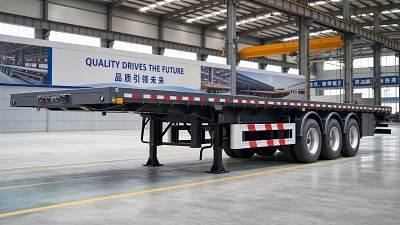
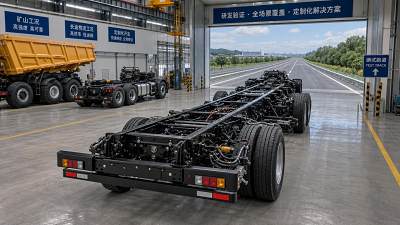
This is particularly useful when purchasing spans multiple segments such as truck chassis and cab, complete trucks, light trucks, trailers and semi-trailers, construction machinery, and spare parts. Broader visibility supports better supplier matching and makes it easier to identify whether a vendor is suitable for standalone parts sourcing or for wider fleet support requirements.
Over time, using a professional B2B platform can also improve supplier discovery, benchmark quality, and market awareness. For finance decision-makers, that means stronger negotiating leverage and better justification for approval decisions.
Why Work With Us for European Truck Parts Sourcing
The Global Heavy Truck Industry Platform is built to help buyers make more informed sourcing decisions across the commercial vehicle and heavy equipment supply chain. If you are evaluating a truck spare parts supplier in Europe, our platform gives you a more efficient way to explore product categories, compare supplier options, and reduce the risk of making decisions based on incomplete market information.
Our focus covers the sectors most relevant to road transport equipment buyers, including Truck Chassis & Cab, Complete Trucks, Light Trucks, Construction Machinery, Trailers & Semi-Trailers, and Spare Parts. This wider ecosystem matters because parts sourcing is often connected to broader vehicle planning, maintenance strategy, and cross-border supply decisions. A platform that understands the whole chain can support better purchasing outcomes than isolated product search alone.
If your team needs support, contact us for practical sourcing discussions. We can help you review part parameters, compare supplier options, clarify product selection, discuss delivery cycles, assess category-based procurement strategies, and improve quotation communication before approval. Whether you need sample support, supplier screening, certification-related clarification, or a more efficient route to European truck spare parts sourcing, our platform is ready to support your next step.
Trending News
- Cab Chassis Truck for Fire Department: Key Specs Before Ordering
- When to Use an Excavator With Long Reach Boom on Site
- Choosing a Water Truck Factory for Municipal and Mining Projects
- Truck Parts Wholesale: How to Balance Price, Quality, and Lead Time
- Crane Truck Price in 2026: What Drives Total Ownership Cost
Tag
Recommended News
 Buying GuideCab Chassis Truck for Fire Department: Key Specs Before OrderingCab chassis truck for fire department buyers: compare GVWR, axle ratings, PTO, braking, electrical capacity, and body-fit specs before ordering to reduce risk and improve fleet reliability.
 Buying GuideChoosing a Water Truck Factory for Municipal and Mining ProjectsWater truck factory selection impacts uptime, cost, and reliability. Learn how to compare suppliers for municipal and mining projects with practical buying criteria.
 Buying GuideLogging Truck Producer Comparison: Payload, Durability, and ServiceLogging truck producer comparison for buyers focused on payload, durability, and after-sales service. Learn how to compare suppliers, reduce downtime, and source with confidence.
 Buying GuideHow to Evaluate a Heavy Truck Chassis Manufacturer With R&D CapabilityHeavy truck chassis manufacturer with R&D capability: learn how to assess engineering depth, testing, customization, and compliance to choose a reliable supplier with lower lifecycle risk.
 Buying GuideChoosing a Truck Chassis Supplier for Trailer Manufacturing NeedsTruck chassis supplier for trailer manufacturing: learn how to compare quality, compliance, lead times, and total cost to choose reliable partners and improve sourcing results.
 Buying GuideBest Light Commercial Vehicle Options for Last Mile DeliveryLight commercial vehicle for last mile delivery: compare vans, light trucks, and chassis-cab options to reduce costs, improve uptime, and choose the best fit for urban logistics.
 Buying GuideTop Factors in Choosing a Truck Chassis Supplier in EuropeTruck chassis supplier in Europe selection starts with quality, compliance, customization, and lead time. Learn how to compare suppliers and reduce sourcing risk.
 Buying GuideHow to Evaluate a Heavy Truck Chassis Manufacturer With R&D CapabilityHeavy truck chassis manufacturer with R&D capability: learn how to assess engineering strength, validation, compliance, and support to choose durable, market-ready chassis solutions.
 Buying GuideWhat to Compare in a Light Duty Truck Manufacturer in USALight duty truck manufacturer in USA: compare build quality, compliance, lead time, customization, and service support to reduce sourcing risk and improve fleet value.
 Buying GuideChoosing a Dump Truck Supplier with Quick Delivery for Tight Project TimelinesFind a dump truck supplier with quick delivery that fits tight project timelines. Compare fast lead times, reliable quality, parts support, and export-ready service.
 Buying GuideHow to Evaluate a Heavy Truck Chassis Manufacturer with R&D CapabilityHeavy truck chassis manufacturer with R&D capability: learn how to assess testing, customization, compliance, and scenario fit to choose a reliable supplier with confidence.
 Buying GuideConstruction Machinery Supplier for Municipal Engineering: What to Compare FirstConstruction machinery supplier for municipal engineering: compare integrated equipment range, spare parts support, delivery reliability, and lifecycle value before price to reduce downtime and keep urban projects on schedule.
 Buying GuideHow to Evaluate a Heavy Truck Chassis Manufacturer with R&D CapabilityHeavy truck chassis manufacturer with R&D capability: learn how to assess engineering strength, customization, testing, and lifecycle support to choose a reliable supplier.
 Buying GuideFlatbed Trailer Supplier with High Strength: What to Check FirstFlatbed trailer supplier with high strength: learn what to check first, from payload and steel grade to welding, components, and after-sales support for safer, lower-cost transport.
 Buying GuideHow to Evaluate a Heavy Truck Chassis Manufacturer with R&D CapabilityHeavy truck chassis manufacturer with R&D capability: learn how to compare engineering strength, testing, customization, and supplier fit for long-haul, mining, construction, and municipal use.
 Buying GuideBulldozer Price vs Operating Cost: What Matters Before PurchaseBulldozer price is only the starting point. Compare fuel, maintenance, uptime, parts support, and resale value to choose a dozer that delivers lower total ownership cost.
 Buying GuideTruck Cement Mixer Supplier Comparison: Price, Lead Time, and ServiceTruck cement mixer supplier comparison guide covering price, lead time, service, and technical fit. Compare smarter, reduce sourcing risk, and choose a supplier that supports long-term fleet value.
 Buying GuideChoosing a Truck Cement Mixer Manufacturer for Long-Term ReliabilityTruck cement mixer manufacturer selection affects uptime, maintenance costs, and delivery reliability. Compare key specs, service support, and sourcing tips for smarter long-term procurement.
 Buying GuideTruck Cement Mixer Price: What Drives Total Cost in 2026Truck cement mixer price in 2026 depends on more than the quote. Compare chassis, drum capacity, maintenance, delivery, and supplier risk to make smarter, lower-cost buying decisions.
 Buying GuideCrane Truck for Sale: 7 Checks Before You Choose a ModelCrane truck for sale: discover 7 essential checks to compare models, reduce procurement risk, control total cost, and choose the right truck for safer, more efficient operations.
 Buying GuideHow to Compare a Truck Trailer Supplier Beyond Unit PriceTruck trailer supplier comparison should go beyond unit price. Learn how to assess quality, compliance, delivery, and after-sales support to reduce risk and secure long-term value.
 Buying GuideSemi Trailer Bulk Order Checklist for Delivery Risk and Lead TimeSemi trailer bulk order success starts with a clear checklist. Learn how to reduce delivery risk, control lead time, compare suppliers, and keep large trailer procurement on schedule.
 Buying GuideTruck Tipper OEM vs Standard Models: Which Lowers Project Costs?Truck tipper OEM vs standard models: discover which option cuts total project costs through better uptime, compliance, payload fit, and lower lifecycle expenses.
 Buying GuideLogging Truck Price Guide: Spec Choices That Change Total Ownership CostLogging truck price is more than the upfront quote. Discover how axle setup, engine sizing, durability, and service support shape total ownership cost and smarter buying decisions.
 Buying GuideLogging Truck Supplier Selection: Load Capacity, Terrain Fit, and DowntimeLogging truck supplier selection guide: compare load capacity, terrain fit, parts support, and downtime risk to choose reliable forestry trucks and cut operating costs.