Truck Dozer Limits That Are Easy to Miss Before Purchase
Before investing in a truck dozer, many buyers focus on price and specs but overlook practical limits that affect industrial transportation performance, maintenance, and long-term value. From engine assembly reliability and truck gearbox durability to truck turbocharger efficiency and truck filter support, understanding these hidden factors helps procurement teams, dealers, and fleet decision-makers avoid costly mistakes and compare suppliers with greater confidence.
Why truck dozer limits are often missed during early supplier comparison
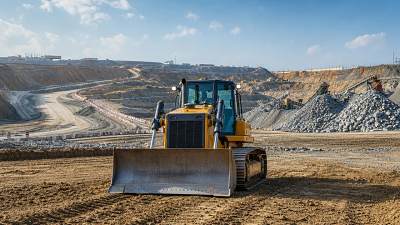
A truck dozer may look competitive on paper because rated power, blade size, and sale price are easy to compare in a quotation sheet. The real purchase risk usually appears later, when the machine enters continuous duty cycles, rough haul roads, or mixed jobsite logistics. In land transportation equipment procurement, hidden limits often emerge after 200–500 operating hours, not during the first visual inspection.
For information researchers and procurement teams, the challenge is not only identifying the right truck dozer model, but also checking the supporting systems behind it. Engine assembly quality, truck gearbox matching, truck turbocharger heat tolerance, and truck filter supply intervals all affect uptime. A machine that performs well for 8 hours per day may not hold the same reliability under 12–16 hour multi-shift operation.
Many distributors and business evaluators also underestimate transport-related constraints. A truck dozer used in mining access roads, municipal earthmoving, or infrastructure support must fit regional road conditions, service networks, and spare parts availability. If one key component has a 2–4 week lead time, short-term savings at purchase can turn into long idle periods later.
This is why B2B buyers increasingly rely on structured sourcing platforms rather than isolated brochures. A specialized heavy truck and equipment marketplace helps buyers compare suppliers across product categories, review technical scope beyond headline specifications, and identify whether a seller can support the full lifecycle of the truck dozer, from component selection to after-sales coordination.
The 4 hidden limit categories that affect long-term value
- Powertrain matching limits: engine output may look sufficient, but poor matching with transmission ratios reduces pushing efficiency under heavy load.
- Thermal management limits: turbocharger and cooling performance may fall in high-dust, high-temperature, or high-altitude environments.
- Serviceability limits: filter replacement, gearbox access, and spare parts identification can become difficult in cross-border operations.
- Duty-cycle limits: not every truck dozer is suitable for continuous operation, repeated short-haul movement, or steep grade work.
When buyers organize these four categories early, they improve comparison accuracy and reduce the risk of choosing a machine that is technically acceptable but commercially weak in real operation.
What practical limits should procurement teams check before purchase?
A strong truck dozer procurement process should move beyond brochure metrics and ask how the equipment behaves under actual working pressure. For land transportation equipment buyers, at least 5 key checks should be completed before supplier confirmation: engine assembly condition, truck gearbox load response, truck turbocharger stability, truck filter compatibility, and spare parts cycle planning.
Engine assembly reliability matters because truck dozers often work under repeated high torque demand. Buyers should verify whether the engine platform is common across multiple heavy truck or construction applications, since shared platforms usually improve parts access. This does not guarantee lower downtime, but it generally makes global sourcing easier over a 3–5 year operating period.
Truck gearbox durability is another easy-to-miss area. A gearbox that performs adequately in standard road transport may not be ideal for pushing, climbing, reversing, and frequent directional changes. Procurement teams should review gear ratio suitability, clutch heat load behavior, and maintenance intervals. In many practical cases, a mismatch in transmission selection creates higher wear costs than an engine issue.
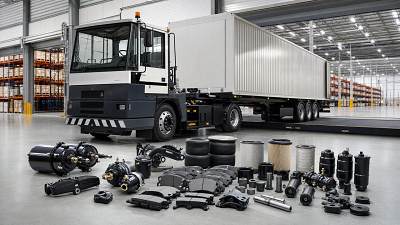
Truck turbocharger performance should also be reviewed carefully, especially when the machine will operate in dusty worksites, hot climates, or high-altitude infrastructure zones. Turbo lag, poor air intake sealing, and heat stress can reduce usable power. Likewise, truck filter support must be checked at the supply-chain level. If oil, air, fuel, and hydraulic filters are hard to source locally every 250–500 hours, maintenance planning becomes unstable.
Pre-purchase evaluation table for truck dozer limits
The table below helps procurement personnel, dealers, and commercial evaluators compare hidden truck dozer limits in a more operational way instead of relying only on nominal specifications.
This comparison shows why a lower purchase price does not always mean a lower ownership burden. In B2B heavy equipment buying, each overlooked limit can affect operation over months rather than days, especially when machines are deployed across multiple regions or contractors.
A practical 3-step supplier review method
- Ask for component-level configuration confirmation, not just complete machine output data.
- Request maintenance and replacement schedules for the first 500–1,000 operating hours.
- Compare whether the supplier can support spare parts, technical documents, and cross-border communication in one workflow.
This method is especially useful on a global industry platform where multiple manufacturers and suppliers can be reviewed side by side with broader product context.
How different application scenarios change truck dozer limits
Not all truck dozer limits appear in the same way. The operational environment determines which weakness becomes expensive first. In logistics-linked construction, mining roads, municipal engineering, and infrastructure development, the same machine may face very different stress patterns over a 6–12 month deployment period.
For example, a truck dozer working in mining support areas often runs in dust-heavy conditions with long idle and sudden-load cycles. Here, truck filter quality and truck turbocharger sealing become more important than headline horsepower. In municipal or mixed urban worksites, maneuverability, gearbox response, and service access can matter more because job intervals are shorter and movement is more frequent.
Infrastructure projects create another profile. These jobs may involve long gradients, repeated pushing, and project deadlines tied to other equipment. Under this scenario, engine assembly durability and truck gearbox cooling should be reviewed together, since transmission stress rises with repeated climbing and loaded starts. A delay of even 7–15 days for a replacement part can disrupt a larger project chain.
Dealers and distributors should also assess local support conditions. A technically sound truck dozer may still be a poor fit if there is no practical service channel in the target market. This is where a specialized B2B platform helps by connecting buyers with suppliers across complete trucks, chassis, construction machinery, trailers, and spare parts in one sourcing environment.
Scenario-based comparison for selection planning
The following table links typical truck dozer operating scenarios to the limits buyers should prioritize during evaluation.
Using scenario-based comparison reduces the chance of buying a machine that looks universal but is only optimized for limited conditions. It also helps commercial evaluators explain why two truck dozers with similar output can perform very differently in the field.
Common scenario mistakes
- Assuming one maintenance plan fits all environments, even when dust level, altitude, and route condition vary widely.
- Choosing based on nominal engine power without checking actual transmission and cooling suitability.
- Ignoring spare parts flow when the machine will work outside the supplier’s home market.
These errors are easy to prevent when selection is guided by application logic rather than a simple price comparison.
How to compare cost, service, and alternatives without making a false economy
A truck dozer purchase is rarely judged by acquisition price alone in B2B trade. Buyers should compare at least 3 cost layers: initial equipment price, operating maintenance cost, and downtime risk cost. A model with a lower invoice value can become more expensive if truck gearbox repairs are frequent or if truck filter replacements depend on long import lead times.
Alternative options should also be considered. In some projects, a complete truck paired with separate construction machinery may be more efficient than a truck dozer, especially where transport and earthmoving are split across different contractors. In other cases, a truck dozer remains the better choice because it reduces equipment transfers and supports integrated jobsite movement.
The key is to compare alternatives through workload pattern, support complexity, and replacement cycle. Procurement teams should ask whether the equipment will run as a primary machine for 1–2 shifts daily, as a support machine for intermittent tasks, or as a regional stock unit for dealer resale. Each mode changes the acceptable limit profile.
A global heavy truck industry platform creates value here by allowing buyers to compare truck dozers with adjacent product categories such as truck chassis, complete trucks, construction machinery, trailers, and spare parts. This wider sourcing view supports better trade decisions and reduces the risk of selecting in isolation.
Cost and alternative decision checklist
- Estimate the first 12 months of service requirements, including filters, lubricants, and wear parts.
- Check whether parts are standardized or model-specific, especially for engine assembly and turbocharger items.
- Review delivery timing: standard equipment may ship faster, while customized configurations can require 2–6 additional weeks.
- Compare support burden between one integrated truck dozer and a split-equipment solution.
What commercial evaluators should document
Business evaluation teams should build a comparison sheet that includes component source transparency, after-sales workflow, technical documentation quality, and supply continuity. This is especially important for dealers and agents who need resale confidence, not just end-user suitability.
If two suppliers offer similar pricing, the stronger choice is often the one with clearer maintenance documentation, better spare parts traceability, and broader category support. In cross-border B2B procurement, these practical details frequently determine whether a partnership scales successfully over multiple orders.
FAQ: the truck dozer questions buyers ask before committing
The questions below reflect common search intent from information researchers, procurement managers, and distribution partners. They also help buyers structure communication with suppliers more effectively.
How do I know if a truck dozer is suitable for continuous industrial transportation work?
Start by reviewing duty cycle expectations. If the machine will run 10–16 hours per day, ask for maintenance intervals, cooling system scope, gearbox configuration, and recommended replacement parts for the first 500 hours. Continuous industrial transportation work places more stress on thermal stability and transmission matching than occasional project use.
What should I prioritize if spare parts lead time is a concern?
Prioritize truck filter availability, common engine assembly parts, gearbox service items, and turbocharger-related components. These are among the parts most likely to affect early uptime. Buyers should also ask whether the supplier can prepare a recommended spare parts package for 6–12 months of operation and whether documentation is available in a usable language format.
Are higher power ratings always better when choosing a truck dozer?
No. A higher power rating does not automatically produce better field performance if gearbox ratios, cooling systems, and actual terrain conditions are not aligned. In many land transportation and construction scenarios, a balanced powertrain with reliable service support offers better commercial value than a more powerful but poorly matched configuration.
What documents should buyers request before placing an order?
Request a configuration list, major component details, maintenance schedule, spare parts list, delivery timeline, and any applicable compliance or inspection documents used in the target market. Where relevant, ask about standard export packaging, pre-shipment inspection steps, and whether manuals or service guidance can support local technicians.
Why work with a specialized global heavy truck industry platform
Truck dozer sourcing becomes more efficient when buyers can compare equipment, components, suppliers, and market information in one professional environment. A specialized global heavy truck industry platform is built for the commercial vehicle and heavy equipment supply chain, connecting manufacturers, suppliers, distributors, and buyers across categories that directly affect truck dozer selection and lifecycle support.
Instead of searching across disconnected channels, procurement teams can review complete trucks, construction machinery, truck chassis and cab systems, trailers, and spare parts together. This matters because truck dozer limits are rarely isolated. Engine assembly compatibility, truck gearbox options, truck turbocharger support, and truck filter sourcing often depend on broader supplier capability, not only on one product page.
The platform also supports better business evaluation by providing access to industry insights, supplier discovery, and structured product comparison. For dealers, distributors, and agents, this can shorten preliminary sourcing cycles from several weeks of fragmented communication into a more manageable review process with clearer technical and commercial checkpoints.
If you are evaluating truck dozer options, you can use the platform to confirm configuration details, compare supplier scope, review spare parts support, and discuss project-specific requirements before order placement. This is especially useful when your concerns include delivery period, product selection, customization direction, compliance expectations, sample-related questions, or quotation planning across multiple suppliers.
Why choose us
- We help buyers compare truck dozer suppliers with a wider heavy truck and equipment context, reducing the risk of narrow or incomplete selection.
- We support sourcing decisions with product discovery, market information, and supplier matching across trucks, construction machinery, trailers, and spare parts.
- We make it easier to discuss practical procurement issues such as configuration confirmation, delivery lead time, maintenance support, parts planning, and target-market requirements.
- We provide a more transparent and efficient channel for global buyers, distributors, and commercial evaluators who need reliable cross-border comparison, not just a single quotation.
Contact us for specific procurement support
If you are still comparing truck dozer limits before purchase, contact us with your required operating scenario, expected duty hours, component preferences, and target delivery timeline. We can help you review engine assembly options, truck gearbox suitability, truck turbocharger support, truck filter availability, customization needs, certification-related questions, and quotation communication with relevant suppliers on the platform.
Trending News
- Construction Machinery Cost Control: 7 Hidden Expenses in Project Planning
- Logging Truck Price Guide: Spec Choices That Change Total Ownership Cost
- Crane Truck Cost Breakdown: Chassis, Crane Unit, and Compliance Fees
- How to Vet a Logging Truck Distributor Before Entering a New Market
- Logging Truck Supplier Selection: Load Capacity, Terrain Fit, and Downtime
Tag
Recommended News
 Buying GuideLogging Truck Price Guide: Spec Choices That Change Total Ownership CostLogging truck price is more than the upfront quote. Discover how axle setup, engine sizing, durability, and service support shape total ownership cost and smarter buying decisions.
 Buying GuideLogging Truck Supplier Selection: Load Capacity, Terrain Fit, and DowntimeLogging truck supplier selection guide: compare load capacity, terrain fit, parts support, and downtime risk to choose reliable forestry trucks and cut operating costs.
 Buying GuideCrane Truck Manufacturer Comparison: Boom Stability, Payload, and SupportCrane truck manufacturer comparison guide covering boom stability, payload, chassis integration, and support to help buyers choose safer, more efficient trucks with long-term value.
 Buying GuideHow to Evaluate a Heavy Truck Chassis Manufacturer With R&D CapabilityHeavy truck chassis manufacturer with R&D capability: learn how to assess engineering strength, testing, customization, and long-term support to choose a reliable partner.
 Buying GuideDump Truck Supplier With Quick Delivery: What to Verify FirstDump truck supplier with quick delivery: learn what to verify first, from factory credibility and capacity to compliance, landed cost, and after-sales support before you buy.
 Buying GuideCab Chassis Truck for Fire Department: Key Fitment PointsCab chassis truck for fire department selection starts with fitment. Learn key points on GVWR, wheelbase, PTO, safety, and body integration to improve uptime and response performance.
 Buying GuideHow to Evaluate a Heavy Truck Chassis Manufacturer With R&D CapabilityLearn how to evaluate a heavy truck chassis manufacturer with R&D capability using practical criteria for design, testing, customization, and long-term fleet value.
 Fleet ManagementDelivery Truck Supplier in USA: What Matters Most for Fleet ExpansionDelivery truck supplier in USA selection impacts uptime, cost, and fleet growth. Learn how to compare suppliers by route needs, service support, and long-term scalability.
 Buying GuideCost-Effective Delivery Truck Supply: What Low Price May Leave OutDelivery truck supplier with cost-effective solutions: learn what low prices may leave out, from compliance and after-sales support to lifecycle value, so you can source smarter and avoid hidden costs.
 FAQDelivery Truck for School Transportation: Safety Points Before OrderingDelivery truck supplier for school transportation: review key safety points before ordering, from braking and visibility to compliance and passenger protection.
 Buying GuideHow to Choose a Truck Trailer Distributor for Stable After-Sales SupportTruck trailer distributor selection starts with after-sales strength. Learn how to compare service networks, parts support, warranty response, and technical help for long-term uptime.
 Buying GuideWhat to Check Before Choosing a Truck Cement Mixer SupplierTruck cement mixer supplier selection starts with the right checks. Learn how to compare quality, compliance, delivery, and after-sales support to reduce risk and choose with confidence.
 Buying GuideBulldozer Price Guide: What Affects Cost Across Jobsite TypesBulldozer price guide for construction, mining, roadwork, and municipal projects. Compare key cost drivers, avoid overbuying, and source the right dozer with confidence.
 Fleet ManagementHow to Choose Commercial Vehicle Parts for Warehouse Fleet UptimeCommercial vehicle parts for warehouse fleets directly impact uptime. Learn how to choose durable, accurate-fit parts and reliable suppliers to reduce downtime and control maintenance costs.
 Buying GuideLogging Truck Supplier Selection: Durability Points That Matter in Tough TerrainLogging truck supplier selection starts with durability. Discover the key strength, traction, braking, and support factors that reduce downtime in tough terrain.
 FAQDump Truck Sourcing Mistakes That Delay Construction ProjectsDump truck sourcing mistakes can delay construction projects, raise hidden costs, and disrupt site schedules. Learn the key risks to avoid and source smarter for faster, more reliable project delivery.
 Buying GuideWhat Makes a Delivery Truck Supplier Suitable for School TransportationDelivery truck supplier for school transportation: learn how to assess safety, compliance, body design, and after-sales support for urban, rural, and school logistics needs.
 Buying GuideHow to Plan a Semi Trailer Bulk Order Without Costly Specification MistakesSemi trailer bulk order planning starts with the right specs. Learn how to avoid costly mistakes, compare suppliers wisely, and secure compliant, fleet-ready trailers.
 Fleet ManagementWhy a Light Duty Truck Manufacturer in USA Still Matters for Fleet ReliabilityLight duty truck manufacturer in USA choices still shape fleet uptime, parts access, and lifecycle value. See what buyers should compare for more reliable operations.
![]() Buying GuideFlatbed Trailer Supplier for Logistics Transportation: What to Check Before OrderingFlatbed trailer supplier for logistics transportation: learn what to check before ordering, from load capacity and compliance to customization and supplier reliability.
Buying GuideFlatbed Trailer Supplier for Logistics Transportation: What to Check Before OrderingFlatbed trailer supplier for logistics transportation: learn what to check before ordering, from load capacity and compliance to customization and supplier reliability. FAQIs a Bulldozer for Construction the Right Fit for Your Site ConditionsBulldozer for construction: learn how terrain, soil, slope, and job size determine the right machine fit. Compare site conditions, avoid costly mismatches, and choose with confidence.
![]() Buying GuideBulldozer Price Guide: What Changes the Final Cost MostBulldozer price explained for finance buyers: compare size, brand, used vs. new, shipping, and service factors that shape total cost and smarter budget decisions.
Buying GuideBulldozer Price Guide: What Changes the Final Cost MostBulldozer price explained for finance buyers: compare size, brand, used vs. new, shipping, and service factors that shape total cost and smarter budget decisions. Buying GuideChoosing a Truck Cement Mixer Supplier for Stable Long-Term OperationTruck cement mixer supplier selection affects uptime, parts access, and lifecycle cost. Use this practical checklist to compare suppliers and choose reliable equipment for stable long-term operation.
 FAQDump Truck OEM Quality Control Points Before Factory AcceptanceDump truck OEM quality control points before factory acceptance: learn the key checks for welding, hydraulics, brakes, and safety to reduce risk, avoid failures, and choose reliable suppliers.
 Buying GuideHow to Shortlist a Water Truck Supplier for Municipal ContractsWater truck supplier shortlist guide for municipal contracts: compare compliance, chassis reliability, service support, and lifecycle value to choose with confidence.