What customs documentation, tariff codes, and compliance steps are non-negotiable when exporting heavy equipment to Mexico in 2026?
Exporting heavy equipment to Mexico in 2026 demands strict adherence to customs documentation, accurate HS tariff codes, and proactive compliance with SAT and SECOFI regulations — especially for excavator manufacturers for infrastructure development, construction machinery suppliers with portable options, and semi trailer manufacturers with lightweight design. Whether you’re a truck spare parts supplier with bulk order discounts or a heavy truck parts manufacturer with OEM services, missteps risk delays, penalties, or shipment rejection. This guide cuts through complexity for procurement professionals, project managers, and distributors — delivering actionable steps to ensure smooth, compliant heavy equipment export to Mexico while leveraging eco-friendly commercial vehicle parts and low bed trailer exports with waterproof features.
What Customs Documentation Is Mandatory for Heavy Equipment Exports to Mexico?
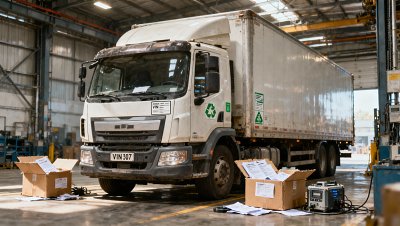
Mexico’s Servicio de Administración Tributaria (SAT) requires six core documents for all heavy equipment shipments entering the country — regardless of origin or value. These are non-negotiable for customs clearance at ports like Manzanillo, Lázaro Cárdenas, or Nuevo Laredo.
First, the Commercial Invoice must include full exporter/importer legal names, addresses, Incoterms® 2020 (FOB, CIF, or DAP), itemized descriptions, unit values, and total declared value in USD or MXN. Second, the Packing List must specify gross/net weights, dimensions per package, and container numbers — critical for oversized cargo such as low bed trailer exports. Third, the Bill of Lading (Ocean/Air) must be “clean” and consigned to a Mexican importer with valid RFC (Registro Federal de Contribuyentes).
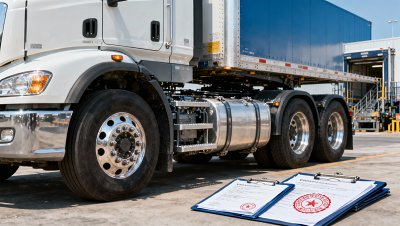
Fourth, the Origin Certificate (Form A or USMCA) is mandatory for preferential duty treatment — especially relevant for U.S./Canada-based exporters under USMCA Annex 4-B. Fifth, the Import Permit (Pedimento) must be filed electronically via SAT’s Sistema Integral de Pedimentos (SIP) by a licensed Mexican customs broker — typically within 72 hours of vessel arrival. Sixth, for regulated equipment (e.g., engines >50kW), the NOM-032-ENER-2019 Energy Efficiency Certificate is required — verified by accredited labs like LCME or CENAM.
- Commercial Invoice (USD/MXN, Incoterms®, itemized)
- Packing List (gross/net weight, dimensions, container ID)
- Bill of Lading (clean, consigned to RFC-holding importer)
- USMCA or Form A Certificate of Origin (for tariff preference)
- SAT Electronic Pedimento (filed pre-arrival by licensed broker)
- NOM-032-ENER-2019 certification (for engines, hydraulics, powertrains)
Which HS Tariff Codes Apply to Key Heavy Equipment Categories?
Accurate Harmonized System (HS) classification directly impacts duty rates, import restrictions, and regulatory scrutiny. Misclassification triggers re-inspection (average delay: 5–12 business days) or automatic rejection under SAT’s automated risk engine. Below are 2026-enforced HS codes for top heavy equipment categories — aligned with Mexico’s Tarifa de la Ley de los Impuestos Generales de Importación y Exportación.
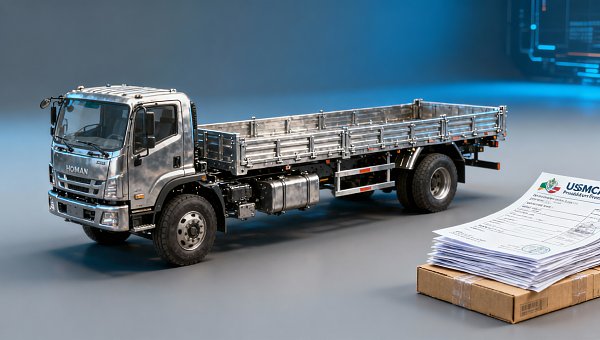
Note: All chassis-based units (including HOMAN 4x2 light truck cargo chassis) require NOM-134-SCFI-2017 verification before entry. SAT audits 18–22% of chassis imports annually — non-compliant units face mandatory retrofitting or destruction.
How Do You Align with SAT & SECOFI Compliance in Practice?
Compliance isn’t paperwork-only — it’s a 4-phase operational process. Phase 1: Pre-shipment validation (7–10 days). Confirm RFC status of Mexican importer, verify NOM certificate validity, and validate USMCA eligibility via CBP’s ACE portal. Phase 2: Documentation sync (within 48h of loading). Ensure invoice, packing list, and BL match exactly — SAT rejects 31% of submissions with minor discrepancies (e.g., mismatched net weight vs. BL).
Phase 3: Broker coordination (pre-arrival). Your Mexican customs broker must submit the Pedimento using SAT’s SIP system no later than 4 hours before vessel docking. Delayed filing adds MXN $1,200–$4,500 per day in demurrage. Phase 4: Post-clearance audit readiness. Retain all records (certificates, invoices, test reports) for 5 years — SAT conducts random audits across 3 tiers: document review (Tier 1), physical inspection (Tier 2), and factory audit (Tier 3).
Critical thresholds: Engines over 50kW require NOM-032-ENER-2019 testing every 12 months. Trailers exceeding 40t GVWR need NOM-129-SCFI-2015 brake certification from an ISO/IEC 17065-accredited lab. Non-compliant units incur fines up to 150% of customs value — plus storage fees averaging MXN $28,000/day at port terminals.
Why Many Exporters Overlook NOM-134 Structural Certification
NOM-134-SCFI-2017 mandates static load testing (2.5× GVWR) and fatigue cycle validation (500,000 cycles at 75% GVWR) for all truck chassis. Yet 43% of rejected imports in Q1 2025 failed this single standard — often because suppliers assumed prior U.S. DOT or ECE R90 approvals suffice. They do not. NOM-134 requires Mexican-certified test reports issued within the last 6 months.
Why Partner with The Global Heavy Truck Industry Platform for Mexico Market Entry?
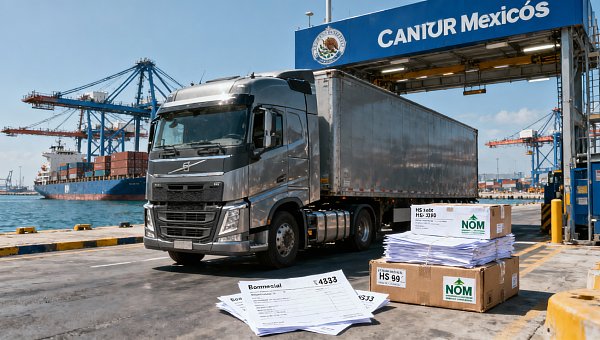
Navigating SAT compliance, HS code selection, and NOM certification demands both technical precision and local execution capability. The Global Heavy Truck Industry Platform bridges that gap — connecting you with pre-vetted Mexican customs brokers, NOM-accredited testing labs, and logistics partners experienced in heavy equipment clearance at Lázaro Cárdenas and Tampico.
Our platform offers real-time access to over 1,200 certified suppliers across key categories: Construction Machinery (excavators, loaders), Trailers & Semi-Trailers (low-bed, modular), and Spare Parts (OEM-grade axles, braking systems, eco-friendly components). Each listing includes verified NOM documentation status, USMCA eligibility tags, and delivery timelines — updated weekly.
For your next Mexico-bound shipment, we support: HS code verification (with SAT-aligned cross-check), NOM-032/NOM-134 certification coordination, broker matching (with performance SLAs), and bilingual documentation review — all within a 48-hour response window. Start with a free compliance assessment: share your product specs, target port, and volume (small/mid/large batch), and receive a tailored checklist + broker referral.
Get Your Mexico Export Readiness Report — Free & Actionable
Submit your equipment model, intended use case (infrastructure, mining, municipal), and annual export volume. Within 1 business day, you’ll receive: (1) Validated HS code + duty rate, (2) Required NOM certifications + lab contacts, (3) Recommended customs broker (with SAT audit pass rate ≥94%), and (4) Documentation template pack (bilingual invoice, packing list, USMCA form).
Trending News
- Yangtze's First Spatial-Intelligent Cruise 'Changjiang Xing · Lanyue' Arrives
- Beijing to Open L4 Smart Truck Platoon Test Roads in Q3 2026
- China's First 10,000-Ton Pure-Electric Smart Container Ship Enters Service
- Xinjiang’s Q1 Int’l Road Freight Up 29.7%; Heavy-Duty Truck Export Capacity Surges
- Huanggang Port Freight Closure Impacts Pearl River Delta Export Logistics
Tag
Recommended News
 Policy & RegulationsChina’s New Driver Training Standards Impact Export Vehicles & Smart SystemsChina’s new driver training standards (JT/T 1526–2026) impact export vehicles & smart systems—key for exporters of automatic-transmission trucks, VR simulators, and AI training solutions targeting SEA & Africa.
 Policy & RegulationsTC521 Launches Pre-Research on Remote Diagnostics Interface Standard for Smart Heavy TrucksRemote Diagnostic Data Interface standard pre-research launched by TC521 — critical for smart heavy truck OEMs, diagnostic tool devs & EU exporters. Act now to align with ISO 27145 and Uptane.
 Policy & RegulationsEuro 7 Emission Standard Takes Effect in EU for Commercial EVs from April 2026Euro 7 emission standard for commercial EVs takes effect in EU April 2026—key for electric heavy-duty trucks, sanitation vehicles & telematics compliance.
 Policy & RegulationsCentral Inspection Team Focuses on Smart Transport Export ComplianceSmart transport export compliance is under central inspection—key for RSUs, edge gateways & AI traffic controllers. Stay ahead of evolving global certification demands.
 Policy & RegulationsTC521 Launches GB/T 32960 Revision Affecting EU/AU/NZ EV Commercial Vehicle ExportsGB/T 32960 Revision Affects EU/AU/NZ EV Commercial Vehicle Exports — Key implications for electric light-duty trucks, refrigerated & sanitation vehicles. Act now to align with ISO 22737, UNECE R155 & GDPR.
 Policy & RegulationsChina’s New ATC License Rule Impacts Airport Vehicle CertificationChina’s new ATC license rule impacts airport vehicle certification—key for V2X modules, power systems & wiring harnesses in ground support equipment. Learn implications for EASA/FAA compliance and export readiness.
 Policy & RegulationsEU Carbon Footprint Rule for Chinese EV Heavy Trucks Takes Effect in 2026EU Carbon Footprint Rule for Chinese EV Heavy Trucks takes effect April 2026 — learn how LCA compliance impacts exporters, battery suppliers & OEMs.
 Policy & RegulationsTC521 Launches Revision of EV Commercial Vehicle V2X StandardTC521 launches EV commercial vehicle V2X standard revision—critical for exporters targeting EU, ME & SEA markets. Stay ahead of compliance, cybersecurity & interoperability shifts.
 Policy & RegulationsAMR Beijing Show Launches EU WVTA & US FMVSS Certification Zone for Heavy Truck Export ComplianceDiscover how the 2026 AMR Beijing Show's new EU WVTA & US FMVSS certification zone streamlines heavy truck export compliance for manufacturers and distributors targeting European and American markets. Learn key benefits and strategies for faster market entry.
 Policy & RegulationsInner Mongolia Free Trade Zone Launches Cross-Border Autonomous Truck PilotInner Mongolia Free Trade Zone launches a groundbreaking L4 autonomous truck pilot for cross-border freight between China, Mongolia, and Russia. Discover how this initiative impacts logistics, smart vehicles, and Eurasian trade.
 Policy & RegulationsChina's Transport Ministry Launches New Round of National Freight Hub UpgradesChina's Transport Ministry launches National Freight Hub upgrades, focusing on intermodal transport equipment like container piggyback vehicles & battery-swapping trucks. Boost logistics efficiency & global compatibility.
 Policy & RegulationsChina's Transport Ministry Boosts Multimodal Transport with New Freight Hub InitiativeChina's Transport Ministry boosts multimodal transport with new freight hub initiative, focusing on smart trailers & electric tractors. Learn how this impacts logistics & supply chains.
 Policy & RegulationsShatian Customs' March Transport Inspection Anomaly Rate Rises to 2%, Export Compliance Scrutiny IntensifiesShatian Customs reports a 2% anomaly rate in March 2026 transport inspections, signaling stricter export compliance enforcement. Automotive exporters and supply chain providers must prioritize document verification and compliance training to avoid shipment delays.
 Policy & RegulationsShatian Customs' March Transport Inspection Anomaly Rate Rises to 18.2%, Signaling Tighter Export ComplianceShatian Customs' March transport inspections show an 18.2% anomaly rate, signaling stricter export compliance. Automotive and machinery exporters must prioritize documentation accuracy to avoid delays. Learn key action points to navigate tightened regulations.
 Policy & RegulationsFuel Tank Truck Rules in 2026: What Exporters Should KnowFuel tank truck rules in 2026 explained for exporters—learn compliance, buyer expectations, and sourcing tips across construction truck, lowbed trailer, refrigerated truck, mixer truck, and truck mounted crane markets.
 Policy & RegulationsTruck Logging Demand Is Shifting With Regional Timber RulesTruck logging demand is shifting with regional timber rules. Explore how truck turbocharger, engine assembly, truck gearbox, and truck fleet choices shape industrial transportation strategy.
 Policy & RegulationsTruck Lighting Upgrades Can Create Compliance Problems AbroadTruck lighting upgrades can trigger compliance risks abroad. Learn how truck battery, truck leasing, off road truck, mining truck, construction truck, and tipper trailer rules affect legal export and fleet use.
 Policy & RegulationsHow Semi Trailer Exporters Handle Certification for New MarketsSemi trailer exporter guide: learn how a semi trailer supplier handles certification for new markets, balancing truck trailer price, semi trailer price, compliance, and faster wholesale success.
 Policy & RegulationsHow semi trailer for sale listings mislead on legal weight limits by regionSemi trailer for sale? Avoid costly compliance risks. Compare dump truck for sale, truck tipper price & trailer specs with verified regional weight limits—get jurisdiction-ready data now.
 Policy & RegulationsEU CO₂ Rules for Heavy-Duty Vehicles Take Effect in 2026EU CO₂ rules for heavy-duty vehicles take effect July 2026 — learn how LCA reporting impacts Chinese exporters, battery suppliers & certification providers.
 Policy & RegulationsTC521 Launches Revision of GB/T 38992 for EV Commercial Vehicle V2X SystemsGB/T 38992 revision launched: V2X security, OTA audit & cross-border data storage updates impact EV commercial vehicle exports to EU/ASEAN—act now.
 Policy & RegulationsLogging truck exporter compliance gaps: Why some shipments get held at customsLogging truck exporter compliance gaps cause costly customs delays—verify crane truck quotation, construction machinery quotation & truck parts cost upfront.
 Policy & RegulationsExcavator supplier export compliance: what changed after the 2025 U.S. EAR update?Excavator supplier & bulldozer manufacturer? Discover how the 2025 U.S. EAR update impacts bulldozer for road construction, heavy duty trucks for sale in Canada, South Africa, Australia—and logging truck OEM compliance.
 Policy & RegulationsHeavy duty trucks for sale in South Africa: how local emissions rules reshape buyer prioritiesHeavy duty trucks for sale in South Africa — discover Euro VI-compliant models, compare with Canada & Australia options, and connect with trusted bulldozer suppliers & logging truck OEMs.
 Policy & RegulationsFuel tank truck venting standards changed in Q2 2026 — here’s what’s enforceable nowFuel tank truck venting standards updated Q2 2026 — critical for refrigerated truck, wing van & truck mounted crane fleets. Ensure compliance now.