Euro 7 Emission Standard Takes Effect in EU for Commercial EVs from April 2026
Euro 7 emission regulations — set to enter into force in the European Union on 21 April 2026 — introduce new mandatory technical requirements for electric commercial vehicles, directly affecting export eligibility for Chinese-made electric heavy-duty trucks, intelligent sanitation vehicles, and other new-energy special-purpose vehicles. This development marks a significant tightening of market access conditions for exporters targeting the EU.
Event Overview
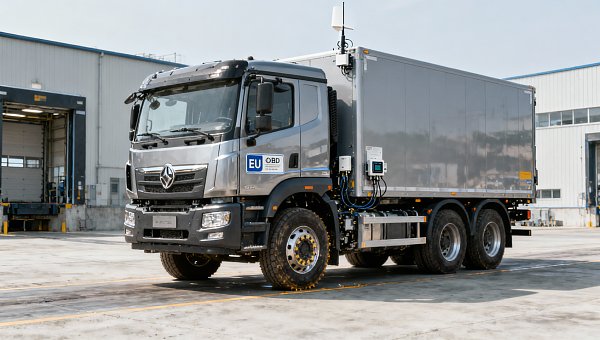
The Euro 7 standard will be implemented in phases starting 21 April 2026. It imposes binding requirements on vehicle durability, brake particulate emissions, tire wear emissions, and compliance of remote monitoring data systems. For electric commercial vehicles, onboard diagnostic (OBD) and remote monitoring systems must conform to UNECE Regulations R156 and R157, as well as GDPR provisions on data localization. In response, China’s TC521 Standardization Technical Committee has initiated revision of the Interface Specification for Remote Monitoring Data of Battery Electric Commercial Vehicles to align with EU type-approval pathways.
Industries Affected
Electric commercial vehicle exporters: Exporters of electric heavy-duty trucks, intelligent sanitation vehicles, and new-energy special-purpose vehicles face direct regulatory barriers. Compliance is now required not only for tailpipe emissions (which are zero for BEVs), but also for non-exhaust emissions and digital system interoperability — shifting certification focus from propulsion to holistic vehicle lifecycle and data governance.
OBD and telematics system suppliers: Suppliers providing OBD modules or remote monitoring platforms must ensure hardware-software stacks meet both UNECE R156/R157 functional safety and cybersecurity requirements, plus GDPR-compliant data handling — including storage location, processing consent, and cross-border transfer mechanisms.
Domestic standard-setting and testing institutions: Entities involved in type approval, conformity assessment, or technical validation must adapt test protocols to cover brake particle mass, tire wear quantification, and remote data interface verification — areas previously outside scope for electric commercial vehicles under Euro VI.
What Enterprises and Practitioners Should Monitor and Do Now
Track official implementation timelines and transitional provisions
The phased rollout means certain requirements may apply first to new type approvals, then later to all new registrations. Enterprises should monitor updates from the European Commission and national type-approval authorities (e.g., KBA, RDW) for staged applicability dates and grandfathering rules.
Validate remote monitoring architecture against R156/R157 and GDPR data localization clauses
Systems must support secure over-the-air updates, real-time fault reporting, and tamper-resistant logging — while ensuring personal or vehicle-identifiable data processed in the EU remains stored and managed within the EEA. Pre-certification audits by notified bodies are advisable before submission.
Prepare for non-exhaust emission testing protocols
Brake particle and tire wear measurements require standardized road testing cycles and lab-based abrasion analysis. Manufacturers should engage accredited EU labs early to assess current vehicle configurations and identify necessary design adjustments (e.g., brake material selection, wheel alignment specs).
Align domestic standards revision progress with EU certification pathways
TC521’s ongoing revision of the Interface Specification for Remote Monitoring Data is intended to support mutual recognition. Exporters should follow draft versions and participate in public consultation rounds to ensure alignment with actual EU validation practices — rather than assuming equivalence based on title alone.
Editorial Perspective / Industry Observation
From an industry perspective, the Euro 7 rollout is best understood not as a finalized technical barrier, but as a signal of regulatory convergence between vehicle hardware, software, and data infrastructure. Analysis来看, its emphasis on non-exhaust emissions and digital system compliance reflects a broader EU policy shift toward lifecycle accountability — moving beyond tailpipe metrics to encompass braking, rolling resistance, and data sovereignty. Observation来看, the timing (2026) allows a two-year window for technical adaptation, yet early misalignment in remote monitoring interfaces or data architecture could delay type approval by several months. Current more appropriate interpretation is that Euro 7 functions as a structural checkpoint: it does not prohibit entry, but redefines the baseline for market readiness across mechanical, digital, and legal domains.
Conclusion
Euro 7 represents a calibrated escalation in technical expectations for electric commercial vehicles entering the EU — one that extends far beyond powertrain electrification. Its significance lies not in banning exports, but in requiring exporters to demonstrate integrated compliance across durability, particulate control, and secure, localized data handling. At this stage, it is more accurately viewed as a roadmap for systemic capability building than as an immediate gatekeeping measure. Enterprises are better served treating it as a coordinated engineering, regulatory, and data governance upgrade — rather than a discrete certification hurdle.
Information Sources
- European Commission Regulation (EU) 2024/... establishing Euro 7 (as published in Official Journal of the EU, confirmed effective date: 21 April 2026)
- UNECE Regulations No. 156 (Software Update Management System) and No. 157 (Automated Lane Keeping Systems — extended scope includes remote monitoring architecture requirements)
- GDPR Articles 44–49 on international data transfers and Article 25 on data protection by design
- China National Technical Committee TC521 announcement on revision of Interface Specification for Remote Monitoring Data of Battery Electric Commercial Vehicles (2024 Q3)
Note: Full test procedures for brake particulates and tire wear under Euro 7 remain under development by JRC and CEN; these are subject to ongoing standardization and warrant continued observation.
Trending News
- When does heavy equipment transport require a lowboy trailer?
- When does a light commercial vehicle for urban delivery save fleet costs?
- How to choose an off road truck for steep and unstable job sites
- How to match crane truck lifting capacity to your jobsite loads
- What drives logging truck cost beyond the base purchase price?
Tag
Recommended News
 Policy & RegulationsGermany Ends EV Subsidy ExtensionGermany ends EV subsidy extension, reshaping EV and commercial vehicle plans in Europe. See how importers, distributors, and Chinese NEV suppliers should respond.
 Policy & RegulationsEU Rule Sets LCA Certification for Truck ImportsEU Rule Sets LCA Certification for Truck Imports: learn how the new EU LCA and EPD compliance rule will affect truck approvals, export timelines, costs, and delivery planning.
 Policy & RegulationsEU Requires LCA Reports for Imported HDVs from Oct 2026EU LCA reports for imported HDVs become mandatory from Oct 2026. Learn how the new EU heavy-duty vehicle carbon compliance rule affects exporters, suppliers, costs, and delivery readiness.
 Policy & RegulationsChina Tightens Export Filing for New Energy Heavy TrucksChina Tightens Export Filing for New Energy Heavy Trucks: learn how new HS code rules and CNAS carbon-footprint reports may impact customs clearance, compliance, and delivery timelines.
 Policy & RegulationsEU Updates CO2 Rules for Heavy-Duty Vehicle ApprovalEU Updates CO2 Rules for Heavy-Duty Vehicle Approval: learn how new lifecycle carbon and battery due diligence requirements affect EU market access, approval timing, and compliance costs.
 Policy & RegulationsChina Customs Adds New Export Fields for Road Transport EquipmentChina Customs adds new export fields for road transport equipment from Aug 15, 2026. Learn how drive type and certification data may affect compliance, clearance speed, and export planning.
 Policy & RegulationsEU Tightens Truck WVTA Brake and Lighting TestsEU Tightens Truck WVTA Brake and Lighting Tests: learn how Regulation (EU) 2026/1387 reshapes brake response, headlamp compliance, certification timing, and EU market access.
 Policy & RegulationsEU Sets CO2 Rules for New Heavy Trucks from 2027EU Sets CO2 Rules for New Heavy Trucks from 2027: learn how new EU CO2 limits, OBD, and remote data upload requirements could reshape type approval, costs, and delivery planning.
 Policy & RegulationsEU Brings Forward Cybersecurity Approval for Heavy TrucksEU heavy truck cybersecurity approval moves to August 1, 2026. Learn how WVTA, UNECE R155, OTA and telematics rules will impact EU exports, type approval and delivery plans.
 Policy & RegulationsEU Moves Truck Cybersecurity WVTA Forward to Aug 1, 2026EU truck cybersecurity WVTA moves to Aug 1, 2026. Learn how UN R155 and EU 2022/1426 affect heavy truck type approval, exports, suppliers, and compliance planning.
 Policy & RegulationsEU Brings Forward WVTA Cybersecurity Approval for TrucksEU Brings Forward WVTA Cybersecurity Approval for Trucks: learn how the 2026 deadline impacts heavy truck exports, retrofit projects, supplier compliance, costs, and EU market-entry planning.
 Policy & RegulationsEU Brings Forward WVTA Cybersecurity Approval for Heavy TrucksEU heavy truck WVTA cybersecurity approval now starts on August 1, 2026. Learn how EU type approval, CSMS audits, ADAS, OTA, and registration risks affect exporters and manufacturers.
 Policy & RegulationsEU Cybersecurity Approval Rule Takes Effect for Heavy TrucksEU Cybersecurity Approval Rule now reshapes heavy trucks market access. Learn how CSMS, UNECE R155, and WVTA deadlines could impact certification, delivery, and EU export readiness.
 Policy & RegulationsEU Requires EN 15038 Declarations for Truck ImportsEU Requires EN 15038 Declarations for Truck Imports: learn how the new EU rule affects heavy truck customs clearance, compliance timing, and export readiness.
 Policy & RegulationsEU Rule Brings SCIP Filing to Imported Truck Battery PartsSCIP filing for imported truck battery parts becomes critical in the EU from Oct 1, 2026. Learn how the rule impacts heavy-duty truck exports, aftermarket parts, and customs compliance.
 Policy & RegulationsEU REACH Expands to Truck Battery PartsEU REACH expands to truck battery parts, covering lithium-ion battery modules, BMS units, and thermal systems. Learn how SCIP filing, SVHC disclosure, and EU export compliance may affect truck suppliers.
 Policy & RegulationsEU Sets Battery Footprint Rule for Heavy TrucksEU Sets Battery Footprint Rule for Heavy Trucks: learn how the 2027 EU battery carbon footprint requirement could impact type approval, customs clearance, and truck exports.
 Policy & RegulationsEU Requires Certified V2X Modules in Heavy TrucksEU Requires Certified V2X Modules in Heavy Trucks from July 22, 2026. Learn how UN R155 and ETSI EN 303 648 rules will impact EU type approval, registration, and exports.
 Policy & RegulationsEU Tightens V2X Approval for Heavy TrucksHeavy trucks entering the EU face tougher V2X approval from July 22, 2026. Learn how UNECE R155/R156 and EU Type Approval will affect registration, exports, and delivery readiness.
 Policy & RegulationsEU Rule Takes Effect: Heavy Trucks Need V2X from July 22, 2026Heavy trucks entering the EU from July 22, 2026 need V2X modules and UN R155 approval. Learn how this rule impacts compliance, certification, exports, and delivery.
 Policy & RegulationsEU Opens Euro 7 Transition for Heavy TrucksEU Opens Euro 7 Transition for Heavy Trucks: learn how new filing rules, battery carbon footprint declarations, and OBD II checks will impact EU truck exports and compliance planning.
 Policy & RegulationsEPA Update Removes Seven Chinese Diesel Engine ModelsEPA Update Removes Seven Chinese Diesel Engine Models: learn how this EPA compliance change could affect North American truck exports, sourcing, certification, and delivery planning.
 Policy & RegulationsEU Enforces Euro 7 for New Heavy TrucksEU Enforces Euro 7 for New Heavy Trucks: learn how stricter NOx, NH₃, and brake particle certification impacts EU market access, registration timing, and exporter compliance costs.
 Policy & RegulationsLight Duty Truck Manufacturer in USA: Key Compliance ChecksLight duty truck manufacturer in USA selection starts with compliance. Learn the key checks for FMVSS, emissions, load ratings, and traceability before you buy.
 Policy & RegulationsEU Enforces Euro 7 Upgrade for Heavy Truck ImportsEU Enforces Euro 7 Upgrade for Heavy Truck Imports: learn how new PN, NH3, brake and tire wear tests affect certification, customs clearance, and on-time EU delivery.