WTO Cuts 2026 Trade Growth Outlook to 1.9%
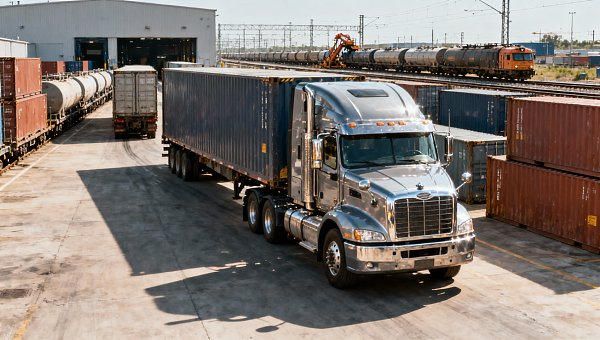
The WTO’s sixth report for 2026 says global goods trade growth has been lowered to 1.9% amid the continuing Middle East conflict. The report states that traffic through the Strait of Hormuz has fallen 94%, while carriers including Maersk and MSC have fully suspended sailings in the area. For industries tied to ocean freight, cross-border trade, export manufacturing, and inland logistics, this matters because rerouting via the Cape of Good Hope is extending Asia-Europe shipping times by 10–14 days and raising per-container costs by USD 2,000–4,000.
Event Overview
According to the WTO’s sixth report for 2026, the ongoing conflict in the Middle East has led to a sharp disruption in shipping through the Strait of Hormuz. The report says passage volumes through the strait have dropped by 94%.
It also states that major shipping lines, including Maersk and MSC, have fully suspended sailings related to the affected route. As a result, vessels rerouting around the Cape of Good Hope are facing longer Asia-Europe transit times of 10 to 14 days, with additional costs of USD 2,000 to USD 4,000 per container.
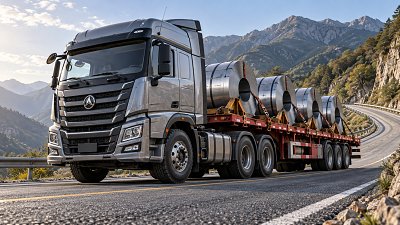
The same report warns that if the conflict continues, rising global freight cost pressure may accelerate the shift toward land transport alternatives, especially TIR operations and China-Europe Railway Express services. Within that context, the report highlights the resilience value of export logistics linked to China’s heavy truck and trailer sectors.
Which Industry Segments Are Affected
Direct trading companies
Importers and exporters are among the most immediately affected because shipping delays and higher container costs directly change delivery schedules and transaction economics. The impact is mainly reflected in longer fulfillment cycles, rising freight budgets, and greater uncertainty in route planning for Asia-Europe cargo.
Raw material procurement businesses
Companies dependent on inbound materials moved by sea may face timing pressure when ocean routes become longer and more expensive. The impact mainly appears in procurement scheduling, shipment consolidation decisions, and cost control for cargo previously planned around standard maritime lead times.
Processing and manufacturing enterprises
Manufacturers serving overseas markets may be affected when export logistics become slower and less predictable. The impact is mainly visible in production-to-delivery coordination, shipment planning, and the need to reassess whether ocean transport remains suitable for time-sensitive orders.
Channel distribution and overseas delivery businesses
Distributors and cargo owners responsible for downstream delivery may see added pressure because longer sea transit times can affect inventory positioning and customer delivery commitments. From an industry perspective, the key issue is not only freight cost, but also the increased difficulty of matching order cycles with actual arrival times.
Supply chain service providers
Freight forwarders, multimodal operators, and inland transport service providers are likely to face a change in customer demand structure. Analysis shows that when maritime disruption continues and rerouting costs rise, clients are more likely to compare sea freight against land alternatives such as TIR and China-Europe Railway Express for certain cargo categories and timelines.
Heavy truck and trailer export logistics chains
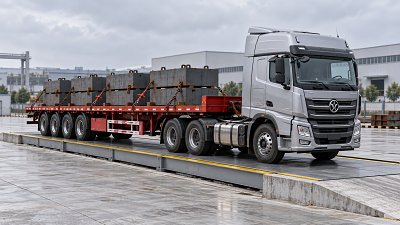
The report specifically points to the resilience value of export logistics in China’s heavy truck and trailer sectors. Observably, this means related logistics planners, vehicle exporters, and supporting transport networks may receive more attention as the market evaluates whether land-based transport capacity can absorb part of the pressure created by disrupted sea routes.
What Companies and Practitioners Should Watch and How to Respond
Track official updates and route-specific changes
Companies should closely follow subsequent WTO disclosures and operational announcements from major carriers already named in the report. Current priorities should include whether suspensions remain in place, whether rerouting patterns continue, and whether cost and transit impacts expand beyond current Asia-Europe estimates.
Reassess cargo allocation by urgency, margin, and route sensitivity
Current attention should focus on which goods can absorb 10–14 additional shipping days and which cannot. More appropriately understood, this is a cargo-structuring issue rather than only a freight issue: lower-margin shipments may be more exposed to the added USD 2,000–4,000 per-container cost, while time-sensitive cargo may require earlier booking or alternative routing evaluation.
Separate warning signals from actual operational changes
The WTO report includes both confirmed current impacts and a forward-looking warning about increased land transport substitution if the conflict continues. Companies should distinguish between what is already affecting booked cargo—such as rerouting, delays, and higher sea freight costs—and what remains a developing trend, such as a broader modal shift toward TIR and China-Europe Railway Express.
Prepare contingency plans across procurement, shipping, and client communication
From an industry perspective, practical response now should center on lead-time adjustments, budget rechecking, and proactive communication with buyers, suppliers, and logistics partners. Businesses with exposure to Asia-Europe shipping should review whether procurement windows, delivery commitments, and transport mode choices still match current route realities described in the report.
Editor’s View / Industry Observation
Analysis shows this development should not be read only as a shipping disruption update. It also serves as a trade and logistics signal: when a major maritime corridor experiences such a severe drop in traffic and large carriers suspend sailings, the effects can move quickly from freight operations into procurement, manufacturing schedules, and cross-border contract execution.
Observably, the WTO report presents both an immediate result and a directional warning. The immediate result is already visible in reduced Strait of Hormuz traffic, suspended sailings, longer Asia-Europe routes, and higher per-container costs. The warning is that, if the conflict continues, pressure on global freight costs may make land transport alternatives more commercially attractive in a wider set of use cases.
Current attention is more appropriately placed on how businesses translate this signal into operational decisions. For many market participants, the central question is no longer whether disruption exists, but which cargo flows, business models, and logistics chains are most exposed if current conditions persist.
Conclusion
The WTO’s lower 2026 global goods trade growth outlook and its warning over the Strait of Hormuz disruption carry significance well beyond headline trade data. For exporters, importers, manufacturers, distributors, and logistics providers, the more direct issue is the combination of route disruption, longer shipping times, and higher container costs.
From an industry perspective, this update is best understood as both a current operating challenge and a forward-looking signal on modal adjustment. A neutral reading at this stage is that companies should avoid overreacting, but they should also not treat the disruption as a short-term freight issue alone. The more appropriate response now is to monitor official developments closely, reassess cargo and route decisions, and prepare practical contingency plans around timing, cost, and transport options.
Source Information
Main source: WTO sixth report for 2026.
Items requiring continued observation: whether the Middle East conflict continues, whether shipping suspensions by major carriers remain in place, and whether the shift toward land transport alternatives such as TIR and China-Europe Railway Express develops further beyond the warning stated in the report.
Trending News
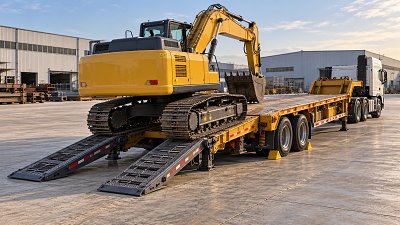
- How to load an excavator onto a lowbed trailer without tipping
- China’s New Energy Heavy Truck Sales Share Exceeds 50% in September 2026
- CATL Unveils Heavy-Truck Battery Range Extension, Signs Deals for 13,000 Vehicles
- CATL Unveils Tianxing II Electric-to-Electric Range-Extended Heavy Truck Solution
- How much torque does a truck engine need for heavy-duty hauling?
Tag
Recommended News
 Logistics & FreightHow to load an excavator onto a lowbed trailer without tippingLoading an excavator onto a lowbed trailer? Discover essential ramp checks, alignment tips, and controlled loading practices to reduce tipping risks and protect your equipment.
 New Energy TrucksChina’s New Energy Heavy Truck Sales Share Exceeds 50% in September 2026China’s new energy heavy truck sales share reached 50.28% in September 2026. Explore what this milestone means for fleet operators, operating costs and service support.
 Technology & InnovationCATL Unveils Heavy-Truck Battery Range Extension, Signs Deals for 13,000 VehiclesExplore CATL’s heavy-truck battery range-extension solution and deals covering 13,000 vehicles. Discover what fleet buyers should check on compatibility, delivery and battery swapping.
 New Energy TrucksCATL Unveils Tianxing II Electric-to-Electric Range-Extended Heavy Truck SolutionCATL Tianxing II Electric-to-Electric Range-Extended Heavy Truck Solution signals a new era for battery swapping, fleet procurement, and logistics coordination. Explore key industry impacts and practical considerations.
 Buying GuideHow much torque does a truck engine need for heavy-duty hauling?How much truck engine torque do you need? Explore the 1,250–2,050 lb-ft range and learn how load, gearing, and gradients shape the right choice for heavy-duty hauling.
 Buying GuideHow to assess a crane truck distributor's spare parts supportAssess a crane truck distributor's spare parts support with practical checks for stock, delivery, and technical expertise. Discover how to reduce downtime and buy with confidence.
 Company NewsVolvo Group Forms Volvo Mining to Integrate Equipment and Autonomous SolutionsVolvo Mining will unite Volvo Group trucks, construction equipment and autonomous solutions from January 2027. Explore what this could mean for mining procurement and operational support.
 Buying GuideHow to verify spare parts availability with a crane truck supplierChoosing a crane truck supplier? Learn how to verify spare parts stock, compatibility, delivery times, and support commitments to reduce downtime and buy with confidence.
 Buying GuideHow to verify a truck trailer OEM's claimed payload capacityVerify a truck trailer OEM's payload claim with tare records, load calculations, and structural evidence. Learn key checks to avoid costly mistakes and buy with confidence.
 Buying GuideHow does operating weight affect the price of a new excavator?See how operating weight affects excavator price, transport costs, and productivity. Compare configurations and uncover the best value for your next equipment purchase.
 Buying GuideHow to compare concrete mixer truck suppliers by total landed costCompare truck cement mixer supplier quotes by total landed cost, including freight, duties, and delivery. Uncover hidden charges and choose the best-value truck for your fleet.
 Policy & RegulationsHow axle load limits affect low bed trailer exports to Southeast AsiaPlanning low bed trailer export to Southeast Asia? Learn how axle load limits affect legal payload, axle layouts, and route compliance to avoid costly mistakes before ordering.
 Truck TechnologyHow to locate a truck exhaust system leak before replacing partsLocate a truck exhaust system leak before replacing parts. Learn how to spot soot trails, confirm leaks safely, and identify root causes to avoid costly guesswork and repeat repairs.
 Buying GuideWhen does heavy equipment transport require a lowboy trailer?Does your heavy equipment need a lowboy trailer? Discover how loaded height, weight distribution, loading access, and route limits determine the right choice for safe transport.
 Fleet ManagementWhen does a light commercial vehicle for urban delivery save fleet costs?Light commercial vehicle for urban delivery: learn when route density, payload utilization, access, and driver productivity can reduce fleet cost per successful stop.
 Buying GuideHow to choose an off road truck for steep and unstable job sitesChoose the right off road truck for steep, unstable job sites. Compare traction, braking, stability, clearance, payload, and route-test essentials.
 Buying GuideHow to match crane truck lifting capacity to your jobsite loadsCrane truck capacity planning made clear: calculate gross load, radius, rigging, outriggers, and ground conditions to select safer, job-ready lifting equipment.
 Transportation CostsWhat drives logging truck cost beyond the base purchase price?Logging truck cost goes far beyond the base price. Explore chassis, cranes, trailers, fuel, compliance, and support factors to make a smarter timber-hauling investment.
 Buying GuideHow to match lowbed trailer deck height to your hauling equipmentLowbed trailer deck height guide: match equipment clearance, ramp geometry, axle loads, tractor fit, and route limits for safer, more efficient hauling.
 Truck ExportWhat documents are needed to export a low bed trailer to Southeast Asia?Low bed trailer export to Southeast Asia: discover essential shipping, customs, origin, and technical documents to avoid delays and ensure smooth import clearance.
 Buying GuideWhat to verify before choosing a delivery truck supplier for school transportationDelivery truck supplier for school transportation: verify route fit, payload, safety, compliance, service support, and total cost before choosing a reliable partner.
 Buying GuideWhat an excavator manufacturer catalog should show before you compare modelsExcavator manufacturer catalog guide: verify supplier identity, configurations, hydraulics, compliance, parts support, and delivery readiness before comparing models.
 Buying GuideWhat to check before appointing a bulldozer distributorBulldozer distributor selection guide: evaluate service, parts availability, warranty, pricing, compliance, and lifecycle value to reduce downtime and protect fleet investment.
 Truck ExportHow to verify supplier reliability when sourcing bulldozers overseasBulldozer sourcing made safer: learn how to verify overseas suppliers, inspect quality, confirm specifications, manage export documents, and reduce lifecycle risk.
 Buying GuideWhat to verify before choosing a truck cement mixer supplierTruck cement mixer supplier checklist: verify chassis fit, drum quality, hydraulics, compliance, spare parts, and after-sales support before you buy.