How commercial truck manufacturers with electric models balance battery range, payload, and charging infrastructure in Europe
As Europe accelerates its transition to zero-emission transport, commercial trucks manufacturer with electric models face a critical triad of challenges: maximizing battery range without compromising payload capacity, and deploying reliable charging infrastructure across fragmented national networks. This balancing act directly impacts fleet operators, procurement teams, and infrastructure planners—especially those sourcing truck chassis supplier for heavy haulage or heavy truck chassis manufacturer with R&D capability. Whether evaluating cab chassis truck for military use, heavy duty trucks for sale in Russia, or light commercial vehicle for food delivery, stakeholders need actionable insights. The Global Heavy Truck Industry Platform delivers data-driven intelligence, supplier verification, and cross-border trade support to navigate this electrification frontier.
How Range, Payload, and Charging Infrastructure Interact in Real-World Operations
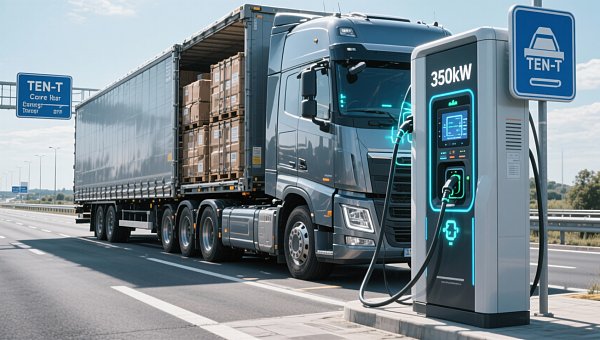
Electric heavy-duty trucks in Europe must deliver on three non-negotiable performance pillars: minimum 300 km real-world range under full payload (40–44 tonnes GVW), consistent payload retention above 90% of diesel equivalents, and compatibility with high-power charging (HPC) at ≥150 kW—ideally 350 kW—along major freight corridors like the TEN-T Core Network Corridors.
Battery weight remains the primary constraint: every 100 kWh added increases curb weight by ~350 kg, directly reducing usable payload. Leading OEMs—including Volvo, Daimler Truck, and Traton—now deploy modular battery packs (e.g., 250–500 kWh configurations) to allow regional customization. For example, urban distribution fleets prioritize 250–300 kWh packs for faster turnaround and lower upfront cost, while long-haul applications require dual 350 kWh units—adding ~2.5 tonnes but enabling 450+ km range at 42 tonnes GVW.
Charging infrastructure fragmentation compounds technical trade-offs. As of Q2 2024, only 42% of EU HPC sites support plug-and-charge authentication and CCS2/CCS3 interoperability across borders. Fleet managers report average unplanned downtime of 18–24 minutes per 100 km due to connector incompatibility or payment system failures—making route planning as critical as battery selection.
Key Operational Trade-Offs Across Use Cases
- Urban logistics: Prioritize 250–300 kWh batteries, 120–150 kW depot charging, and payload >22 tonnes—range demand rarely exceeds 180 km/day.
- Regional haul (300–600 km): Require 350–450 kWh systems with 200–350 kW en-route HPC; payload typically capped at 36–38 tonnes to maintain 320+ km range.
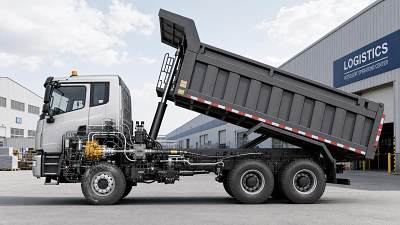
- Heavy haul & construction: Face highest compromise—many opt for hybrid-electric or trolley-assisted solutions where battery-only range drops to 120–180 km at 44 tonnes GVW.
What Procurement Teams Must Evaluate Before Committing
Procurement decisions for electric heavy trucks cannot rely solely on spec sheets. Buyers must validate five interdependent dimensions: certified real-world energy consumption (kWh/km at rated payload), battery thermal management performance across -10°C to +35°C ambient, charging curve consistency (time to 10–80% SOC at rated power), payload-to-battery-weight ratio, and OEM’s infrastructure partnership coverage (e.g., access to IONITY, Fastned, or national grid-linked networks).
For instance, a 44-tonne electric tractor-trailer consuming 2.1–2.4 kWh/km at 90% load will deplete a 400 kWh pack in 165–190 km—not the advertised 420 km WLTP figure. That gap forces procurement to assess not just “maximum range,” but “guaranteed operational range” under contractual payloads and seasonal temperatures.
Suppliers offering verified field data—such as 6-month fleet trial reports from German logistics operators or Swedish mining contractors—are significantly more credible than those relying only on lab-cycle claims. The Global Heavy Truck Industry Platform verifies such documentation through third-party validation protocols before listing suppliers.
This table reflects benchmarks used by Tier-1 European logistics buyers during 2023–2024 tender processes. Suppliers failing any one criterion were excluded from shortlisting—even if offering competitive pricing or extended warranties.
Why Cross-Border Supplier Verification Matters for Electrified Fleets
A growing number of European procurement teams source electric truck chassis from manufacturers outside the EU—particularly China-based OEMs expanding into Europe via strategic partnerships. While models like the SINOTRUK HOWO 6X4 stake Cargo Truck offer compelling value for municipal and construction applications, compliance with EU type-approval (UNECE R100, R101), battery safety standards (EN IEC 62619), and cyber-resilience requirements (UNECE R155) requires rigorous vetting.
The Global Heavy Truck Industry Platform applies a 6-step verification framework: (1) factory audit certification, (2) EU homologation document review, (3) battery cell origin traceability (LFP vs. NMC, supplier tier), (4) software update policy alignment with ISO/SAE 21434, (5) after-sales service footprint mapping across EEA, and (6) spare parts lead time validation (≤14 days for critical HV components). Only 37% of submitted electric heavy truck suppliers pass all six checks.
This level of scrutiny is essential when specifying vehicles for multi-country operations—such as pan-European cold-chain distribution or cross-border infrastructure projects requiring uniform maintenance protocols and digital telematics integration.
How to Get Actionable Support for Your Electrification Strategy
Whether you’re evaluating electric heavy truck chassis for a new logistics hub in Poland, comparing cab-over-engine models for Russian winter deployment, or sourcing lightweight electric tippers for Scandinavian mining sites—the Global Heavy Truck Industry Platform provides targeted support:
- Parameter-aligned matching: Filter suppliers by verified battery capacity (250–500 kWh), payload range (22–44 tonnes), and charging interface (CCS2/CCS3/Tesla adapter).
- Cross-border compliance briefing: Receive country-specific regulatory summaries (e.g., Germany’s KBA approval timelines, France’s bonus-malus incentives, Spain’s ZEV mandate phases).
- Fleet integration toolkit: Access standardized telematics API specs, charging network interoperability scorecards, and payload optimization calculators.
- Verified supplier shortlist: Request pre-vetted OEMs with proven EU deliveries, EN 15194-compliant software updates, and ≥2-year HV battery warranty transferability.
Start your evaluation today: submit your operational profile—including daily mileage, payload profile, depot charging capability, and target deployment countries—and receive a customized supplier comparison report within 3–5 business days. We also support sample unit coordination, technical specification alignment, and joint feasibility workshops with certified engineering partners.
Recommended News
 Logistics & FreightReusable Box Exports Reshape Cold Trailer DeliveryReusable box exports are reshaping cold trailer delivery with lower packaging costs, simpler customs paperwork, and faster port-ready handover for global refrigerated trailer shipments.
 Truck TechnologyASEAN Import Rule Adds ADAS Baseline for Light TrucksASEAN import rule adds an ADAS baseline for light trucks from June 2026. See how AEB, LDW, ESC, lab validation, and the 6-month transition affect exporters.
 Logistics & Freight25,000 Trains Mark New Speed for EV Truck ChassisEV truck chassis rail logistics hit a new milestone as 25,000 China-Europe Railway Express trains cut transit to 11.2 days, offering faster, lower-cost delivery for exporters and buyers.
 Policy & RegulationsEU Tire Label Rule Hits Chinese Truck ExportsEU Tire Label Rule hits Chinese truck exports as ECE R117-03 links compliant tire labeling to EU registration. Learn the risks, required approvals, and urgent steps exporters should take now.
 Policy & RegulationsChina Tightens Cold-Chain Truck Export RulesChina Tightens Cold-Chain Truck Export Rules: learn how new refrigerated truck compliance standards reshape market access, customs clearance, and export planning for the Middle East, Africa, and Southeast Asia.
 FAQTruck Battery Problems: Signs, Causes, and FixesTruck battery problems can lead to breakdowns and costly delays. Learn the key warning signs, main causes, and practical fixes to keep heavy trucks reliable and on the road.
 Buying GuideWhat to Check in an Excavator Manufacturer CatalogExcavator manufacturer catalog guide: learn what to check in specs, hydraulics, durability, emissions, attachments, and service support to compare suppliers with confidence.
 Truck Driver IndustryLogging Truck Safety Risks and Terrain Performance GuideLogging truck safety starts with real terrain. Discover how route slope, load stability, braking, and service support affect performance and help you choose the right truck with confidence.
 Transportation CostsBulk Cement Trailer Capacity vs Operating Cost ExplainedBulk cement trailer capacity directly affects fuel use, trip frequency, maintenance, and ROI. Learn how to compare sizes, cut operating costs, and choose the best trailer for your routes.
 Buying GuideHow to Choose a Light Duty Truck With a Durable EngineLight duty truck with durable engine buying guide: compare engine durability, fuel economy, supplier support, and lifecycle cost to choose a reliable truck that reduces downtime.
 Truck Events & ExhibitionsChongqing Auto AI Expo Puts Autonomous Trucks at CenterAutonomous trucks take the spotlight at the Chongqing Auto AI Expo as export-focused smart heavy truck solutions attract buyers from 32 countries. Explore market signals, cross-border deployment trends, and global logistics opportunities.
 Autonomous TrucksChina Enacts Unified L3 Truck Rule on June 10China Enacts Unified L3 Truck Rule on June 10: learn how the new L3 autonomous truck rule, V2X mandate, and liability shift reshape compliance, exports, and fleet risk.
 Truck ExportChina Customs Rolls Out Single-Bill Multimodal ClearanceChina Customs rolls out single-bill multimodal clearance nationwide, helping heavy truck and vehicle exporters cut clearance time, reduce logistics costs, and improve delivery planning.
 Truck Parts IndustryHow to Judge Truck Parts Quality Before You BuyTruck parts quality starts with the right checks. Learn how to verify fitment, materials, certifications, and supplier consistency before you buy with confidence.
 Truck TechnologyTruck Excavator Uses: When It Fits Site Work BestTruck excavator use cases explained: discover when this machine delivers the most site value for roadwork, utility repairs, and mobile infrastructure projects.
 Transportation CostsWater Truck Cost Breakdown: Purchase, Fuel, and MaintenanceWater truck cost explained from purchase price to fuel, maintenance, downtime, and resale. Compare suppliers smarter and estimate true ownership cost before you buy.
 Truck Parts IndustryTruck Wheel Size Guide for Load and Road ConditionsTruck wheel size guide for load and road conditions. Learn how to match fitment, load rating, and terrain needs to improve safety, tire life, and fleet uptime.
 Buying GuideTruck Pump Selection: Flow, Pressure, and Duty CycleTruck pump selection starts with the right flow, pressure, and duty cycle. Learn how to match real truck applications for better uptime, efficiency, and longer service life.
 Truck Events & ExhibitionsChongqing FATE 2026 Highlights AI Truck ComplianceChongqing FATE 2026 highlights AI truck compliance, showing how autonomous heavy truck makers, exporters, and buyers can prepare for EU, Middle East, and Latin America market entry.
 Autonomous TrucksChina Sets Unified Rules for L3 Autonomous TrucksChina sets unified rules for L3 autonomous trucks, defining accident liability within ODD conditions. Explore what it means for truck makers, fleets, compliance, and export growth.
 Logistics & FreightChina Customs Rolls Out Single-Document Multimodal Clearance for Heavy Truck ExportsChina Customs single-document multimodal clearance cuts heavy truck export processing to 2.3 days. See how SKD shipments, logistics planning, and overseas delivery certainty can improve.
 Used Truck MarketVietnam Tightens Used Commercial Vehicle Import RulesUsed commercial vehicle exporters face tighter Vietnam import rules from July 2026. Learn how new compliance documents may affect customs clearance, inventory turnover, and shipment planning.
 Truck TechnologyEU ECE R138 Rule Takes Effect for Heavy Vehicle ImportsEU ECE R138 Rule takes effect for heavy vehicle imports, making compliance critical for EU type approval, customs clearance, and registration. Learn who is affected and how to respond fast.
 Truck ReviewsCurtain Side Trailer vs Box Trailer for Mixed Cargo LoadsCurtain side trailer vs box trailer: discover which option handles mixed cargo loads better for faster loading, stronger protection, and more efficient multi-stop deliveries.
 Truck Parts IndustryTruck Bearing Failure Signs and Maintenance BasicsTruck bearing warning signs, inspection steps, lubrication basics, and replacement tips for safer fleets. Learn how to reduce downtime and prevent costly wheel-end failure.