How an Excavator Supplier Affects Uptime After Delivery
After delivery, machine uptime depends on more than the excavator itself. The right excavator supplier can determine how quickly parts arrive, how effectively technical support responds, and how smoothly maintenance teams solve problems on site. For after-sales maintenance professionals, understanding this supplier impact is essential to reducing downtime, controlling service costs, and keeping equipment working reliably in demanding transport and construction environments.
Why does an excavator supplier matter so much after delivery?
In road transport equipment and construction support operations, uptime is rarely protected by the machine alone. Excavators often work alongside heavy trucks, trailers, loaders, and site logistics fleets. When one unit stops, hauling schedules, loading sequences, and subcontractor coordination can be affected within the same shift. That is why the excavator supplier should be assessed not only at the quotation stage, but across the full post-delivery service cycle.
For after-sales maintenance teams, the supplier’s value becomes visible in 3 practical areas: spare parts availability, fault response speed, and technical documentation quality. A machine with acceptable specifications can still create long downtime if parts lead times extend to 7–15 days for routine items or 2–4 weeks for hydraulic and undercarriage components. In contrast, a responsive excavator supplier helps maintenance personnel restore operation before minor faults become fleet-wide scheduling problems.
The challenge is even greater in cross-border B2B procurement. Many buyers source construction machinery and transport-related equipment internationally to improve cost control or expand model choices. However, once the excavator is delivered, maintenance staff must deal with serial number confirmation, parts compatibility, warranty boundaries, and service escalation procedures. If these are unclear, every repair event takes longer than it should.
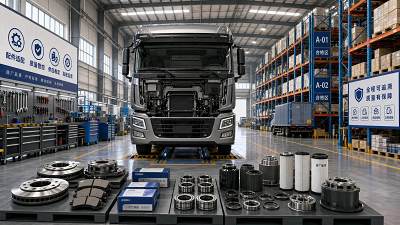
This is where a specialized industry platform creates an operational advantage. The Global Heavy Truck Industry Platform connects buyers with suppliers across heavy trucks, construction machinery, trailers, and spare parts categories. For maintenance professionals, that broader ecosystem matters because excavation equipment rarely operates in isolation; it supports logistics yards, infrastructure fleets, mining routes, and municipal projects that also depend on road transport equipment continuity.
What post-delivery support really affects uptime?
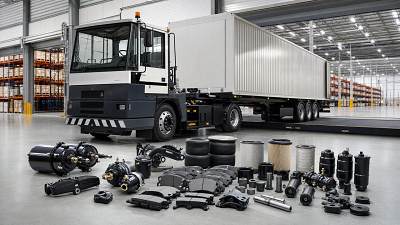
- Parts identification support, especially for filters, seals, hydraulic hoses, pumps, travel motors, track components, and electrical sensors.
- Response windows for urgent troubleshooting, including same-day acknowledgement and structured technical escalation within 24–48 hours.
- Availability of service manuals, maintenance intervals, and wiring or hydraulic diagrams that reduce diagnostic guesswork.
- Supplier coordination with spare parts logistics, especially when equipment is deployed in remote transport corridors or active infrastructure sites.
A reliable excavator supplier therefore affects uptime by reducing uncertainty. Maintenance teams work faster when they know which channel to use, which documents are available, and how long standard items typically take to ship. In heavy equipment operations, predictability is often as valuable as price.
Which supplier capabilities should after-sales maintenance personnel evaluate?
When maintenance teams review an excavator supplier, they should move beyond general claims and measure service readiness against specific checkpoints. The most useful evaluation method is to separate support into 4 layers: documentation, parts, diagnostics, and escalation. This approach helps maintenance departments compare suppliers before the next breakdown occurs.
Documentation is the first control point. A supplier should provide machine identification records, consumable references, scheduled maintenance intervals, and basic service instructions from day 1. Without those materials, even simple preventive tasks such as oil filter replacement or hydraulic line inspection can be delayed. For mixed fleets, the risk increases because technicians may apply the wrong replacement interval or order a near-match part that does not fit.
Parts support is the second control point. Many service delays come from incomplete parts systems rather than complex failures. Maintenance teams should ask whether the excavator supplier maintains stock for fast-moving items, what the usual dispatch cycle is, and whether alternative sourcing channels exist for common wear parts. A normal distinction is between same-day or 1–3 day dispatch for consumables and longer cycles for major components.
The table below helps maintenance personnel compare supplier capabilities in a more operational way rather than relying on broad sales language.
The most useful takeaway is that uptime risk often hides in administrative gaps. A technically capable excavator supplier still underperforms if there is no clear contact path, no part-number confirmation method, or no practical warranty workflow. Maintenance teams should therefore rate support quality through process visibility, not promises.
A 5-point screening checklist before you approve a supplier
- Confirm whether critical wear parts can be shipped within 1–3 working days under normal stock conditions.
- Ask for a sample service document set before purchase, not after delivery.
- Verify how technical issues are escalated from sales contact to service engineer.
- Check whether model variants share common parts or require variant-specific ordering.
- Review typical transport routes and customs implications if the machine will operate outside the supplier’s domestic market.
For international buyers, platforms with supplier comparison tools and category visibility are especially valuable. The Global Heavy Truck Industry Platform helps procurement and maintenance departments compare construction machinery suppliers in the same ecosystem where they also source trucks, trailers, and spare parts, making cross-category service planning more practical.
How does supplier performance change maintenance outcomes in real operating scenarios?
The impact of an excavator supplier becomes clearer when viewed by operating scenario. In municipal engineering, downtime may disrupt tightly scheduled street work windows. In mining or quarry logistics, an excavator stoppage can slow truck loading cycles for several shifts. In infrastructure construction, one hydraulic failure can affect both excavation progress and the dispatch timing of dump trucks waiting on site.
After-sales maintenance staff often work under time pressure, limited on-site storage, and mixed-brand fleets. In these conditions, supplier support should match the service environment. A remote project may need stronger spare parts planning, while an urban contractor may prioritize faster technical confirmation and easier consumable access. The wrong support model increases repair time even if the machine itself remains competitive on purchase price.
The following comparison shows how supplier capability changes results across common heavy equipment and road transport-linked applications.
This comparison shows that the best excavator supplier is not always the one offering the lowest initial quote. It is the supplier whose service structure fits the machine’s duty cycle, site access conditions, and repair urgency. Maintenance personnel should match supplier capability to operational reality rather than buying on specification sheets alone.
Where downtime often starts after delivery
1. Delayed fault identification
If service manuals or parts diagrams are missing, the first 12–24 hours after failure can be lost to basic confirmation. That delay is avoidable when the excavator supplier provides structured technical files from the beginning.
2. Slow-moving consumables and wear parts
Filters, hoses, seals, and electrical items should not become emergency purchases. A supplier that supports preventive stocking for monthly or quarterly maintenance intervals reduces unplanned stops.
3. Unclear service ownership
When buyers do not know whether to contact sales, parts, or technical support, response slows. The better model is a defined 4-step path: report, confirm, quote or approve, dispatch or escalate.
How should you select an excavator supplier for long-term serviceability?
Selecting an excavator supplier for uptime requires a procurement mindset that includes maintenance realities from the start. Instead of focusing only on machine price, maintenance personnel should join supplier evaluation early and define what serviceability means in measurable terms. In many B2B fleets, a machine that is 5% cheaper at purchase can become more expensive if it causes repeated waiting time for parts or technical support.
A practical selection method is to review 3 categories together: machine support package, logistics support package, and communication package. The machine support package covers manuals, parts references, and maintenance intervals. The logistics package covers dispatch timing, packaging, and route feasibility. The communication package covers contacts, language support, and escalation clarity for international procurement.
Maintenance teams should also ask whether the supplier can support mixed purchasing needs. In road transport equipment environments, buyers often source excavators, trucks, semi-trailers, and spare parts through related channels. A specialized B2B platform is useful here because it centralizes supplier discovery and comparison across those connected categories, reducing fragmented sourcing.
The table below can be used as a supplier selection worksheet during RFQ review or pre-order meetings.
These benchmarks are not guarantees, but they are useful discussion ranges. If a supplier cannot explain service windows, stock assumptions, or escalation timing, maintenance risk remains high. Clarity itself is a selection advantage.
Common procurement mistakes that hurt uptime later
- Buying by machine specification only and ignoring the parts support model.
- Assuming all model variants share the same consumables without checking serial or configuration differences.
- Failing to define a minimum stock list for the first 3–6 months of operation.
- Treating cross-border delivery as the end of the transaction instead of the start of service coordination.
For buyers using the Global Heavy Truck Industry Platform, one strong advantage is visibility across supplier profiles, product categories, and industry resources. That supports better pre-purchase screening, especially when maintenance and procurement teams need aligned decisions on machinery, transport equipment, and spare parts planning.
FAQ: what do maintenance teams usually ask about an excavator supplier?
How quickly should an excavator supplier respond after a breakdown is reported?
A reasonable expectation in B2B operations is acknowledgement within 24 hours on working days, followed by technical clarification or parts confirmation within the next 24–48 hours when the issue is documentable by photos, videos, or fault descriptions. For urgent fleet-impacting failures, maintenance teams should confirm escalation contacts before purchase rather than waiting for the first incident.
Which spare parts should be discussed before delivery?
At minimum, discuss filters, belts if applicable, seals, hoses, electrical sensors, common hydraulic fittings, and undercarriage wear items for demanding sites. A useful method is to divide parts into 3 groups: routine service parts, high-failure-risk parts, and long-lead major components. This gives maintenance staff a clearer stocking and budgeting plan for the first operating cycle.
Is the lowest-price excavator supplier always a higher lifecycle cost risk?
Not always, but it can be if low price is combined with weak service structure. The real question is whether the supplier can support stable operation after delivery. If maintenance teams must wait 2–4 weeks for basic technical clarification or repeatedly reorder incorrect parts, apparent savings disappear through idle equipment time, delayed truck loading, and additional labor.
What documents should maintenance teams request from an excavator supplier?
Request a basic documentation package that includes the machine model and serial identification method, consumable part references, preventive maintenance intervals, troubleshooting guidance, and key hydraulic or electrical diagrams where available. Even if full workshop manuals are not shared immediately, a workable service file set improves first-line diagnosis and reduces downtime.
Why choose us when evaluating excavator suppliers and post-delivery support?
The Global Heavy Truck Industry Platform is built for buyers and service teams working across the commercial vehicle and heavy equipment ecosystem. That matters because after-sales maintenance problems rarely stay inside one product category. An excavator failure may affect truck dispatch, trailer loading, site scheduling, and spare parts purchasing at the same time. Our platform helps users view suppliers in a broader operational context.
Instead of offering only isolated listings, we support more informed supplier comparison through access to construction machinery, heavy truck, trailer, and spare parts resources in one B2B environment. For maintenance personnel, this means easier coordination when you need to compare service capabilities, review product categories, and identify suppliers that fit your uptime targets, not just your initial budget.
You can contact us for practical procurement and service discussions, including parameter confirmation, excavator supplier screening, routine spare parts planning, delivery cycle review, cross-border sourcing questions, and support for matching machinery with related road transport equipment needs. If you are comparing multiple suppliers, we can also help you organize evaluation points around service response, maintenance intervals, and spare parts access.
If your team is preparing a purchase, replacement, or fleet support plan, reach out with your model range, application scenario, expected operating hours, and delivery location. That information helps narrow supplier options, clarify service expectations, discuss certification or compliance needs where relevant, and move faster toward a workable quotation and support strategy.
Trending News
- How to match lowbed trailer deck height to your hauling equipment
- What documents are needed to export a low bed trailer to Southeast Asia?
- What to verify before choosing a delivery truck supplier for school transportation
- What an excavator manufacturer catalog should show before you compare models
- What to check before appointing a bulldozer distributor
Tag
Recommended News
 Fleet ManagementHeavy Truck Specs That Matter Most for Long-Term Fleet PlanningHeavy truck specs that truly shape long-term fleet success: compare payload, torque, axle setup, fuel efficiency, and parts support to cut downtime and plan smarter.
 Fleet ManagementTruck Parts Supplier Risks That Affect Long-Term Fleet CostsTruck parts supplier risks can quietly increase long-term fleet costs through downtime, poor fitment, and supply delays. Learn how to choose smarter and protect uptime.
 Fleet ManagementSemi Trailer Distributor Red Flags That Can Delay Fleet ExpansionSemi trailer distributor warning signs can stall fleet expansion fast. Learn the key red flags in inventory, delivery, support, and compliance before you buy.
 Fleet ManagementLogistics Transportation Trends Reshaping Fleet Cost ControlLogistics transportation trends are redefining fleet cost control. Discover how data, sourcing, and equipment strategy help fleets cut risk, improve utilization, and stay competitive.
 Fleet ManagementOff Road Truck Safety Risks and Maintenance Checks Before DeploymentOff road truck safety starts before deployment. Learn key risks, maintenance checks, and inspection steps to reduce downtime, protect crews, and keep every jobsite moving.
 Fleet ManagementTruck Fleet Cost Control: 7 Metrics That Matter in 2026Truck fleet cost control in 2026 starts with 7 key metrics. Learn how fuel, uptime, utilization, downtime, and TCO reveal hidden costs and smarter sourcing decisions.
 Fleet ManagementHeavy Truck Fuel Efficiency: What Impacts Operating CostsHeavy truck fuel efficiency directly impacts operating costs. Learn how design, payload, maintenance, and driver behavior affect fuel use and smarter truck buying decisions.
 Fleet ManagementTruck Fleet Planning Tips for Lower DowntimeTruck fleet planning tips to cut downtime, improve uptime, optimize maintenance, manage spare parts, and build a more reliable, cost-efficient transport operation.
 Fleet ManagementTruck Tipper Safety Checks Before Daily OperationTruck tipper daily safety checks made simple: inspect hydraulics, brakes, tires, lights, loads, and tipping stability to reduce downtime and operate with confidence.
 Fleet ManagementDump Truck Supplier Risks in Mining ProjectsFind out how to choose a reliable dump truck supplier for mining industry projects, reduce sourcing risks, secure parts support, and improve uptime in harsh mining operations.
 Fleet ManagementBest Commercial Vehicle Parts for Warehouse Fleets with High Stop-Start UseCommercial vehicle parts for warehouse fleets should handle heavy stop-start use with fewer failures. Discover proven brake, battery, suspension, and steering choices that cut downtime.
 Fleet ManagementDelivery Truck Supplier in USA: What Matters Most for Fleet ExpansionDelivery truck supplier in USA selection impacts uptime, cost, and fleet growth. Learn how to compare suppliers by route needs, service support, and long-term scalability.
 Fleet ManagementHow to Choose Commercial Vehicle Parts for Warehouse Fleet UptimeCommercial vehicle parts for warehouse fleets directly impact uptime. Learn how to choose durable, accurate-fit parts and reliable suppliers to reduce downtime and control maintenance costs.
 Fleet ManagementWhy a Light Duty Truck Manufacturer in USA Still Matters for Fleet ReliabilityLight duty truck manufacturer in USA choices still shape fleet uptime, parts access, and lifecycle value. See what buyers should compare for more reliable operations.
 Fleet ManagementHow to Plan a Dump Truck Bulk Order for Multi-Site ProjectsDump truck bulk order planning for multi-site projects made simple. Learn how to balance specs, delivery, support, and total cost for smarter fleet decisions.
 Fleet ManagementWhat Makes a Delivery Truck Supplier Cost-Effective in Real OperationsDelivery truck supplier with cost-effective solutions: learn how to cut fuel, maintenance, and downtime costs with a practical checklist for smarter fleet purchasing.
 Fleet ManagementHow Low-Maintenance Truck Spare Parts Suppliers Help Cut DowntimeTruck spare parts supplier with low maintenance benefits help fleets cut downtime, speed repairs, and lower service costs. Discover how smarter sourcing boosts uptime.
 Fleet ManagementHow Commercial Vehicle Parts for Warehouse Improve Daily UptimeCommercial vehicle parts for warehouse operations help reduce downtime, improve safety, and keep trucks and trailers moving efficiently. Discover how the right parts boost daily uptime.
 Fleet ManagementCommercial Vehicle Parts for Cold Storage: Reducing Failure in Daily UseCommercial vehicle parts for cold storage help reduce daily failures, protect cargo quality, and improve fleet uptime. Discover scenario-based maintenance insights for refrigerated transport.
 Fleet ManagementDelivery Truck Supplier in USA: What to Compare Before Expanding a FleetDelivery truck supplier in USA comparison guide for fleet expansion. Learn how to evaluate quality, service, parts support, and lifecycle cost before you invest.
 Fleet ManagementBest Commercial Vehicle Parts for Warehouse OperationsCommercial vehicle parts for warehouse operations should boost safety, uptime, and load control. Explore the best brake, tire, steering, and lighting solutions for efficient fleet performance.
 Fleet ManagementTruck Cement Mixer Supplier: What to Check Before Fleet ExpansionTruck cement mixer supplier selection can make or break fleet expansion. Learn the key checks on quality, compliance, parts support, and total cost before you buy.
 Fleet ManagementTruck Trailer Supplier Checklist for Long-Haul Fleet ExpansionTruck trailer supplier checklist for long-haul fleet expansion: compare compliance, lifecycle cost, delivery, and support to reduce sourcing risk and scale with confidence.
 Fleet ManagementIs a Lightweight Semi Trailer Manufacturer the Right Fit for High-Frequency RoutesFind out if a semi trailer manufacturer with lightweight design is the smart choice for high-frequency routes, balancing payload, durability, compliance, and long-term fleet savings.
 Fleet ManagementDump Truck Wholesale for Growing Fleets: What to Watch FirstDump truck wholesale buyers: learn what to check first for growing fleets, from specs and compliance to supplier reliability, to cut risk, control costs, and buy with confidence.