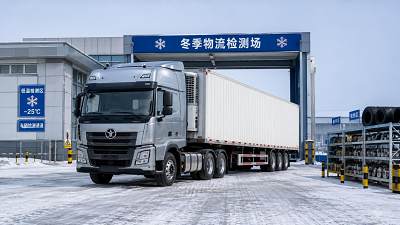
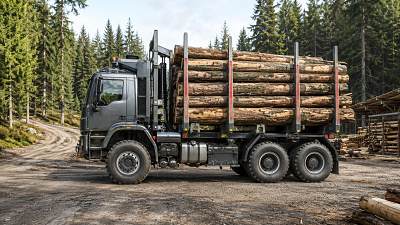
Semi Trailer Selection: Payload, Axle Layout, and Road Conditions
Selecting a semi trailer is rarely a simple equipment choice. It affects payload capacity, route planning, loading efficiency, compliance, and total transport cost across the life of a project.
That is why payload, axle layout, and road conditions need to be evaluated together. A trailer that performs well on paper may underperform on rough access roads, restricted bridges, or uneven loading cycles.
In road transport equipment markets, this topic matters even more now. Construction activity, cross-border logistics, mining support, and infrastructure work continue to push fleets toward more specialized trailer decisions.
A practical semi trailer strategy starts with real operating conditions, not catalog specifications alone. The goal is to match trailer structure and axle arrangement with the demands of the cargo and the route.
What semi trailer selection really involves
A semi trailer is not defined only by size or deck type. Its usable value comes from how it distributes load, transfers force to the tractor, and remains stable across variable road surfaces.
In practice, selection usually involves several linked questions. How much weight must be carried, how concentrated is that weight, how often will loading conditions change, and what road limitations apply?
For heavy or irregular cargo, the wrong axle configuration can create overloading on specific points even when gross weight appears acceptable. That can lead to tire wear, poor braking balance, and legal exposure.
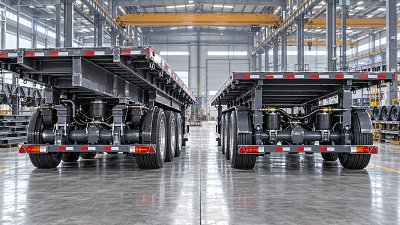
This is one reason the semi trailer category includes many layouts. Flatbed, low bed, skeletal, tipper, sidewall, and tanker structures all respond to different transport demands.
Why payload is more than a maximum number
Payload is often treated as the first filter, but the useful question is not only how much the trailer can carry. It is how safely and consistently that payload can be carried on actual routes.
A semi trailer moving palletized goods on highways faces a different stress pattern from one hauling aggregates, steel sections, precast elements, or construction machinery.
Load density matters. Two shipments with the same total weight may place very different pressure on the frame, floor, suspension, and axle group.
Concentrated loads often require stronger structure and more careful axle positioning. Distributed loads may allow more flexibility, but they still need proper balance to avoid instability during braking or cornering.
Key payload checks before comparing trailers
- Gross cargo weight and average trip weight
- Weight concentration per axle zone or deck section
- Cargo dimensions, center of gravity, and securing points
- Loading frequency and equipment used at site
- Legal weight limits by market or route segment
These details often determine whether a lighter trailer improves efficiency or whether a heavier-duty semi trailer is the safer long-term option.
How axle layout changes performance and compliance
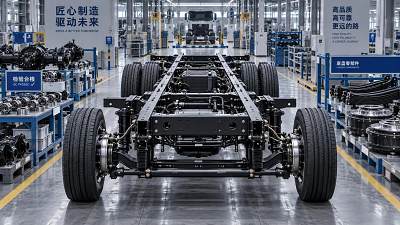
Axle layout has a direct effect on load distribution, tire life, maneuverability, and road legality. It also changes how a semi trailer behaves on uneven surfaces or under repeated start-stop operations.
A two-axle trailer may suit lighter, higher-frequency transport where turning radius and lower tare weight are important. A three-axle or multi-axle setup usually supports heavier loads and better distribution.
That said, more axles do not automatically mean a better result. Additional axles increase complexity, maintenance points, and sometimes acquisition cost. They must be justified by route demands and loading realities.
Suspension choice matters here as well. Mechanical suspension may be favored for durability in harsh work environments, while air suspension can improve ride stability for sensitive or high-value cargo.
When comparing suppliers, axle spacing, suspension type, brake system specification, and landing gear strength deserve close attention. These details shape the working life of the semi trailer more than brochure language does.
Road conditions should lead the decision
Road conditions are often underestimated during trailer selection. Yet they can override otherwise sound payload calculations.
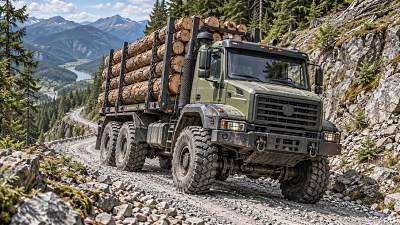
Highway transport usually rewards fuel efficiency, consistent tracking, and reduced rolling resistance. Unpaved or damaged routes place more importance on frame robustness, suspension durability, and ground clearance.
Project work often includes mixed conditions. A semi trailer may leave a paved logistics corridor and then enter soft ground, narrow access roads, temporary ramps, or steep grade changes near the delivery point.
In those cases, a route-compatible trailer can prevent downtime more effectively than a trailer with a higher nominal payload. Stability during offloading and resistance to structural fatigue become part of the economic calculation.
Route factors that deserve early review
- Bridge and axle load restrictions
- Turning space at loading and delivery points
- Gradient, camber, and seasonal surface changes
- Expected mud, gravel, or broken pavement exposure
- Distance between service support locations
A semi trailer that suits the entire route, including the final kilometer, usually delivers better project reliability than one chosen only for trunk-road performance.
Typical operating scenarios and trailer fit
Different transport tasks create different trailer priorities. Matching the semi trailer to the operating pattern reduces unnecessary compromise.
Infrastructure and construction supply
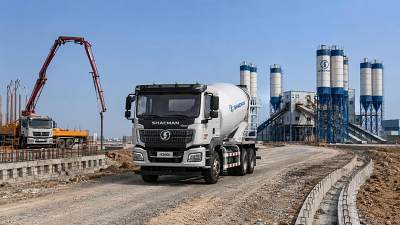
Steel sections, pipe, cement products, and modular materials often require stable deck access and practical securing arrangements. Flatbed or sidewall trailer formats are common, but axle capacity remains a decisive factor.
Machinery and equipment relocation
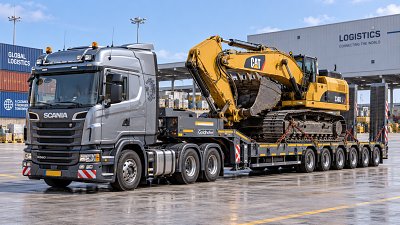
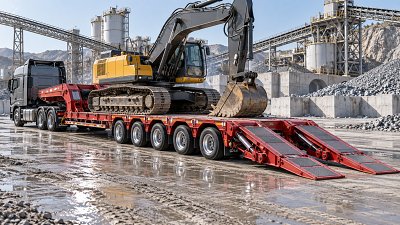
Excavators, rollers, loaders, and specialized machines usually call for a low bed semi trailer. Deck height, ramp design, concentrated load resistance, and multi-axle distribution become central selection points.
Bulk material and site circulation
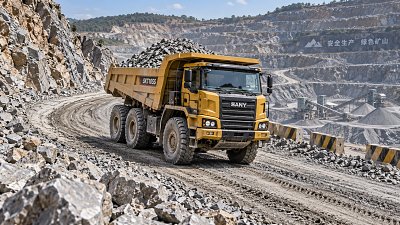
Tipper and heavy-duty transport arrangements need durability under repetitive loading cycles. Rough haul roads and uneven dumping areas increase the importance of frame reinforcement and suspension reliability.
Cross-border logistics and regional freight
For long-distance lanes, regulatory consistency and lifecycle efficiency often matter more than peak load claims. Here, a semi trailer with widely supported parts and clear compliance documentation has clear value.
Where buyers are placing more attention
The market is moving toward more data-driven trailer evaluation. Buyers increasingly compare not only price, but also structural specification, certification records, spare parts support, and supplier responsiveness.
This is where digital sourcing platforms are becoming more useful in the heavy truck sector. Access to trailer categories, supplier comparisons, market information, and buying guides shortens the early screening process.
Within a global B2B ecosystem focused on commercial vehicles and heavy equipment, it becomes easier to review semi trailer options alongside truck chassis, spare parts, and related transport solutions.
That broader view matters because a trailer decision is rarely isolated. Tractor compatibility, maintenance access, component availability, and supplier credibility all influence final performance in the field.
A practical way to narrow the options
A useful evaluation process starts with operating facts. List the actual payload range, cargo shape, route restrictions, loading method, and expected annual utilization.
Then compare semi trailer candidates against those conditions, not against generic rankings. A lower-cost option can become expensive if it adds tire failures, slower loading cycles, or route limitations.
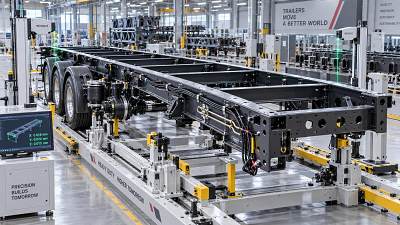
It also helps to request detailed specifications from suppliers. Frame material, axle brand, suspension design, brake configuration, kingpin rating, and floor structure should be reviewed in context.
If the transport profile is likely to change, flexibility should be priced in. A semi trailer that supports multiple cargo types or route conditions may deliver stronger value over time than a narrowly optimized model.
The strongest semi trailer choice usually comes from disciplined comparison rather than headline capacity figures. When payload, axle layout, and road conditions are assessed together, the result is a better fit for daily operations and fewer surprises later.
The next step is straightforward: map your route realities, define load behavior in detail, and compare supplier specifications against those conditions. That approach creates a clearer basis for selection and a more dependable transport plan.
Trending News
- How axle load limits affect low bed trailer exports to Southeast Asia
- How to locate a truck exhaust system leak before replacing parts
- When does heavy equipment transport require a lowboy trailer?
- When does a light commercial vehicle for urban delivery save fleet costs?
- How to choose an off road truck for steep and unstable job sites
Tag
Recommended News
 Buying GuideWhen does heavy equipment transport require a lowboy trailer?Does your heavy equipment need a lowboy trailer? Discover how loaded height, weight distribution, loading access, and route limits determine the right choice for safe transport.
 Buying GuideHow to choose an off road truck for steep and unstable job sitesChoose the right off road truck for steep, unstable job sites. Compare traction, braking, stability, clearance, payload, and route-test essentials.
 Buying GuideHow to match crane truck lifting capacity to your jobsite loadsCrane truck capacity planning made clear: calculate gross load, radius, rigging, outriggers, and ground conditions to select safer, job-ready lifting equipment.
 Buying GuideHow to match lowbed trailer deck height to your hauling equipmentLowbed trailer deck height guide: match equipment clearance, ramp geometry, axle loads, tractor fit, and route limits for safer, more efficient hauling.
 Buying GuideWhat to verify before choosing a delivery truck supplier for school transportationDelivery truck supplier for school transportation: verify route fit, payload, safety, compliance, service support, and total cost before choosing a reliable partner.
 Buying GuideWhat an excavator manufacturer catalog should show before you compare modelsExcavator manufacturer catalog guide: verify supplier identity, configurations, hydraulics, compliance, parts support, and delivery readiness before comparing models.
 Buying GuideWhat to check before appointing a bulldozer distributorBulldozer distributor selection guide: evaluate service, parts availability, warranty, pricing, compliance, and lifecycle value to reduce downtime and protect fleet investment.
 Buying GuideWhat to verify before choosing a truck cement mixer supplierTruck cement mixer supplier checklist: verify chassis fit, drum quality, hydraulics, compliance, spare parts, and after-sales support before you buy.
 Buying GuideHow to verify a truck spare parts supplier before placing a bulk orderTruck spare parts supplier verification made practical: learn how to check part specifications, factory control, test records, samples, pricing, and delivery capability before placing a bulk order.
 Buying GuideWhat size truck container is right for a typical freight load?Truck container sizing made simple: compare payload, volume, pallet layouts, route access, and loading needs to choose the most efficient freight solution.
 Buying GuideWhat drives semi trailer price differences between similar models?Semi trailer price differences come down to frame materials, axles, suspension, coating, and configuration. Compare specifications line by line to choose lasting value.
 Buying GuideHow to compare excavator manufacturer price lists before requesting quotesCompare an excavator manufacturer price list with confidence. Learn to normalize configurations, calculate landed costs, assess options and service, and create stronger RFQs.
 Buying GuideHow to choose a mixer truck drum capacity for your concrete pourMixer truck capacity guide: match drum size to pour rate, legal payload, site access, and delivery cycles for efficient, reliable concrete placement.
 Buying GuideHow to size a bulldozer for construction site grading workBulldozer for construction sizing guide: match weight, blade, traction, grade control, and transport needs to improve grading productivity and costs.
 Buying GuideHow to assess a truck cement manufacturer’s build quality before orderingTruck cement manufacturer build quality: assess tank steel, welding, chassis integration, pneumatic systems, factory QC, and inspection evidence before ordering.
 Buying GuideWhen does a truck trailer OEM make sense for private-label fleets?Truck trailer OEM programs help private-label fleets cut lifecycle costs, standardize operations, and improve uptime. Learn when customization delivers real commercial value.
 Buying GuideWhat to verify before choosing a water truck OEM for your fleetWater truck OEM selection guide: verify chassis compatibility, tank quality, pump performance, compliance, and service support to build a safer, more reliable fleet.
 Buying GuideHow to size a cab chassis truck for a fire department apparatusCab chassis truck for fire department sizing guide: balance GVWR, axle loads, wheelbase, water tank placement, and mission needs for safer apparatus design.
 Buying GuideWhat to verify before choosing a truck chassis supplierChoose the right truck chassis supplier with a practical checklist for application fit, axle ratings, body integration, quality control, delivery reliability, and after-sales support.
 Buying GuideHow to choose a logging truck for steep and rough forest roadsLogging truck selection for steep, rough forest roads: compare traction, braking, gearing, chassis strength, tires, and supplier support for safer, more reliable hauling.
 Buying GuideHow to choose a flatbed trailer deck length for oversized loadsFlatbed trailer deck length guide for oversized loads: balance cargo support, axle weight, securement space, overhang, and route access for safer transport.
 Buying GuideHow to assess a truck chassis supplier for trailer manufacturingTruck chassis supplier for trailer manufacturing: learn how to assess technical fit, quality control, engineering support, and delivery reliability for smarter sourcing.
 Buying GuideIs the SHACMAN H3000 6×4 Cement Mixer suitable for large projects?SHACMAN H3000 6×4 Cement Mixer: assess payload, cycle time, traction, and service support to see if it can keep large concrete projects moving efficiently.
 Buying GuideHow to evaluate heavy duty trucks for sale in Russia before buyingHeavy duty trucks for sale in Russia: learn how to compare specifications, winter readiness, service support, supplier reliability, and total ownership costs before buying.
 Buying GuideWhat to verify before choosing a logging truck producerChoose a logging truck producer with confidence: verify chassis strength, load security, compliance, service support, and delivery control for demanding forestry routes.