Crane Truck Distributor Selection: 5 Key Factors
Choosing a crane truck distributor is not just about price. It affects uptime, delivery schedules, spare parts access, operator safety, and how smoothly a project moves from plan to execution.
In road transport equipment and lifting operations, a weak distributor can create delays that spread across the whole job. A strong crane truck distributor helps control risk before the truck even reaches the site.
That is why evaluation should go beyond brochures. It should include supplier depth, after-sales response, technical matching, global sourcing capability, and visible proof of performance.
The Global Heavy Truck Industry Platform makes this process easier by connecting buyers with verified suppliers, product categories, market insights, and cross-border sourcing resources across the heavy truck supply chain.
Start with distributor credibility, not just product claims
When comparing options, the first question is simple: can this crane truck distributor deliver what it promises under real project pressure?
A polished quotation means little without business stability, export experience, and a clear service structure. In this market, reliability is often a better predictor than the lowest initial quote.
- Check how long the crane truck distributor has worked with lifting trucks, export orders, and road transport equipment. Stable history usually signals better process control and lower transaction risk.
- Ask for customer references in similar applications, such as municipal works, infrastructure jobs, or logistics yards. Relevant case experience matters more than broad but vague sales volume claims.
- Review whether the distributor can provide compliance documents, inspection records, and clear equipment specifications. Missing paperwork often creates delays at customs, registration, or project acceptance stages.
- Confirm who handles pre-sale communication, technical support, and delivery coordination. A dependable crane truck distributor usually has named contacts instead of shifting responsibility across departments.
- Use platforms with broader supplier visibility to compare credentials faster. The Global Heavy Truck Industry Platform helps screen suppliers across trucks, construction machinery, trailers, and spare parts ecosystems.
A common mistake is trusting a distributor that only resells equipment without technical understanding. That gap becomes expensive when boom configuration, axle load, or hydraulic setup needs adjustment.
Make sure the equipment fits the real job
Not every crane truck suits every route, load pattern, or worksite. A qualified crane truck distributor should ask detailed application questions before offering a model.
If the conversation stays at tonnage only, that is a warning sign. Good matching depends on lifting radius, chassis strength, road limits, body length, and working frequency.
Five practical checks during model selection
- Match lifting capacity with actual working radius, not only maximum rated tonnage. Many buying mistakes happen because real site conditions reduce usable lifting performance more than expected.
- Verify chassis engine power, axle layout, and suspension against route conditions. A crane truck distributor should explain how transport distance and terrain affect long-term performance.
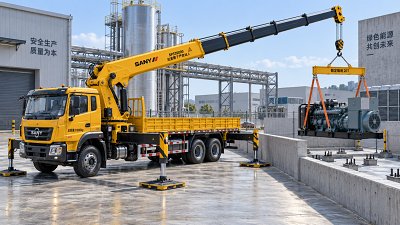
- Check body dimensions and stabilizer footprint before ordering. Tight urban roads, factory yards, and bridge access points can limit which crane truck configuration is practical.
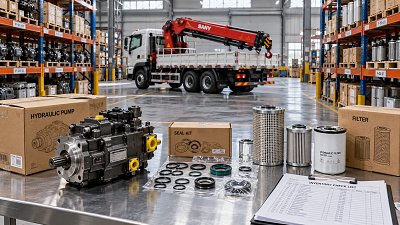
- Confirm hydraulic system brand, control method, and spare parts availability. These details strongly influence service speed, operator comfort, and maintenance cost over the equipment lifecycle.
- Ask whether optional accessories are factory-integrated or locally modified. Factory solutions are usually easier to certify, maintain, and support across international delivery channels.
For infrastructure projects, this step is especially important. A truck that looks ideal on paper may underperform if road permits, outriggers, or daily cycle demands were not considered early.
This is where a digital sourcing platform adds value. Comparing complete truck data, chassis options, and related machinery in one place shortens the time needed to validate fit.
After-sales support often decides the true cost
The real test of a crane truck distributor begins after delivery. When a hose fails, a control valve stops responding, or a part is delayed, support quality becomes visible immediately.
Cheap equipment with slow service can cost more than a higher-priced truck with strong parts coverage and faster technical response.
- Ask for a written parts and service process before placing the order. A serious crane truck distributor should explain lead times, warranty steps, and escalation contacts clearly.
- Check whether common service parts are shared across models or fully customized. Standardized parts usually reduce downtime and simplify maintenance planning for mixed fleets.
- Confirm training support for operators and maintenance teams. Even basic handover guidance can prevent misuse, lower safety risk, and improve crane truck service life.
- Review how the distributor handles cross-border support issues. Time zone gaps, language barriers, and unclear warranty channels can turn small faults into long stoppages.
- Use supplier platforms that also cover spare parts and related truck components. That wider ecosystem helps when future sourcing needs go beyond the original crane truck order.
One overlooked issue is local service adaptability. A distributor may be strong in exports but weak in post-delivery coordination inside your operating region. That difference shows up fast.
Global sourcing ability matters more than many expect
A capable crane truck distributor does more than sell one truck. It helps manage sourcing continuity across chassis, attachments, spare parts, and documentation in a global supply environment.
This matters when lead times shift or project scope changes. Distributors with broader supply chain connections usually adapt faster than those relying on one factory only.
- Evaluate whether the crane truck distributor works with multiple qualified factories or just one source. Broader supply options improve flexibility when production schedules suddenly tighten.
- Check export handling capability, including packing, customs paperwork, shipping coordination, and destination requirements. These steps are easy to ignore until they delay delivery.
- Look for distributors connected to wider heavy equipment categories. Access to trailers, chassis, light trucks, and spare parts supports future expansion and replacement planning.
- Use market intelligence when comparing offers. Platforms with supplier directories and industry news help identify whether a quotation reflects real market conditions or short-term pricing noise.
- Assess communication speed during quotation changes. Fast, accurate updates often reveal how well the distributor can manage schedule shifts once the order becomes operational.
For cross-border road transport equipment procurement, supply chain visibility is a major advantage. The Global Heavy Truck Industry Platform supports this by bringing products, supplier comparisons, and industry data together.
Compare total value, not only the purchase price
Price always matters, but the lowest quote is rarely the lowest operating cost. A better crane truck distributor helps reveal the full ownership picture early.
That includes maintenance intervals, fuel consumption, component durability, resale potential, and the cost of downtime if support is weak.
A simple decision view
- Request a cost breakdown covering equipment, shipping, parts support, optional features, and warranty terms. A transparent crane truck distributor makes comparisons far more accurate.
- Estimate downtime cost before deciding. If one lost workday is expensive, stronger support and faster spare parts can easily justify a higher purchase price.
- Compare long-term suitability, not just immediate availability. A quick delivery unit that poorly fits the job may create operational limits for years.
- Check resale and parts continuity for the proposed model. Widely supported configurations usually protect asset value better in changing transport and construction markets.
- Score each crane truck distributor using the same evaluation sheet. That keeps internal decisions consistent and reduces the chance of overreacting to one attractive quote.
In practice, the best choice is often the distributor that gives clear answers quickly, matches the truck correctly, and proves support capability with documents instead of claims.
What to do next before making the final decision
A smart crane truck distributor selection process does not need to be complicated. It just needs structure.
Start with two or three shortlisted suppliers. Compare them using the same technical, commercial, and service questions. Then verify which one responds with the most complete and consistent evidence.
If sourcing internationally, use a platform that combines supplier access, product visibility, and industry insight. The Global Heavy Truck Industry Platform is useful here because it connects heavy truck, construction machinery, trailer, and spare parts resources in one ecosystem.
The right crane truck distributor should make procurement feel clearer, not more complicated. When credibility, technical fit, support strength, global sourcing ability, and total value all line up, the decision becomes much easier to trust.
Trending News
- How order size affects wholesale pricing for cement mixer trucks
- Commercial Vehicle Leaders Hold Firm in Q1–Q3 2026 Automotive Influence Index
- How to choose a refrigerated truck for multi-stop urban deliveries
- Tata Motors Returns to Q2 Profit on Strong Commercial Vehicle Demand
- How to load an excavator onto a lowbed trailer without tipping
Tag
Recommended News
 Buying GuideHow order size affects wholesale pricing for cement mixer trucksExplore truck cement wholesale pricing by order size. Compare volume discounts, landed costs, and delivery terms to secure better value and avoid costly overbuying.
 Buying GuideHow to choose a refrigerated truck for multi-stop urban deliveriesKeep your truck refrigerated through every urban delivery stop. Learn how to compare cooling capacity, payload and door layouts to protect cargo and choose the right vehicle.
 Buying GuideHow much torque does a truck engine need for heavy-duty hauling?How much truck engine torque do you need? Explore the 1,250–2,050 lb-ft range and learn how load, gearing, and gradients shape the right choice for heavy-duty hauling.
 Buying GuideHow to assess a crane truck distributor's spare parts supportAssess a crane truck distributor's spare parts support with practical checks for stock, delivery, and technical expertise. Discover how to reduce downtime and buy with confidence.
 Buying GuideHow to verify spare parts availability with a crane truck supplierChoosing a crane truck supplier? Learn how to verify spare parts stock, compatibility, delivery times, and support commitments to reduce downtime and buy with confidence.
 Buying GuideHow to verify a truck trailer OEM's claimed payload capacityVerify a truck trailer OEM's payload claim with tare records, load calculations, and structural evidence. Learn key checks to avoid costly mistakes and buy with confidence.
 Buying GuideHow does operating weight affect the price of a new excavator?See how operating weight affects excavator price, transport costs, and productivity. Compare configurations and uncover the best value for your next equipment purchase.
 Buying GuideHow to compare concrete mixer truck suppliers by total landed costCompare truck cement mixer supplier quotes by total landed cost, including freight, duties, and delivery. Uncover hidden charges and choose the best-value truck for your fleet.
 Buying GuideWhen does heavy equipment transport require a lowboy trailer?Does your heavy equipment need a lowboy trailer? Discover how loaded height, weight distribution, loading access, and route limits determine the right choice for safe transport.
 Buying GuideHow to choose an off road truck for steep and unstable job sitesChoose the right off road truck for steep, unstable job sites. Compare traction, braking, stability, clearance, payload, and route-test essentials.
 Buying GuideHow to match crane truck lifting capacity to your jobsite loadsCrane truck capacity planning made clear: calculate gross load, radius, rigging, outriggers, and ground conditions to select safer, job-ready lifting equipment.
 Buying GuideHow to match lowbed trailer deck height to your hauling equipmentLowbed trailer deck height guide: match equipment clearance, ramp geometry, axle loads, tractor fit, and route limits for safer, more efficient hauling.
 Buying GuideWhat to verify before choosing a delivery truck supplier for school transportationDelivery truck supplier for school transportation: verify route fit, payload, safety, compliance, service support, and total cost before choosing a reliable partner.
 Buying GuideWhat an excavator manufacturer catalog should show before you compare modelsExcavator manufacturer catalog guide: verify supplier identity, configurations, hydraulics, compliance, parts support, and delivery readiness before comparing models.
 Buying GuideWhat to check before appointing a bulldozer distributorBulldozer distributor selection guide: evaluate service, parts availability, warranty, pricing, compliance, and lifecycle value to reduce downtime and protect fleet investment.
 Buying GuideWhat to verify before choosing a truck cement mixer supplierTruck cement mixer supplier checklist: verify chassis fit, drum quality, hydraulics, compliance, spare parts, and after-sales support before you buy.
 Buying GuideHow to verify a truck spare parts supplier before placing a bulk orderTruck spare parts supplier verification made practical: learn how to check part specifications, factory control, test records, samples, pricing, and delivery capability before placing a bulk order.
 Buying GuideWhat size truck container is right for a typical freight load?Truck container sizing made simple: compare payload, volume, pallet layouts, route access, and loading needs to choose the most efficient freight solution.
 Buying GuideWhat drives semi trailer price differences between similar models?Semi trailer price differences come down to frame materials, axles, suspension, coating, and configuration. Compare specifications line by line to choose lasting value.
 Buying GuideHow to compare excavator manufacturer price lists before requesting quotesCompare an excavator manufacturer price list with confidence. Learn to normalize configurations, calculate landed costs, assess options and service, and create stronger RFQs.
 Buying GuideHow to choose a mixer truck drum capacity for your concrete pourMixer truck capacity guide: match drum size to pour rate, legal payload, site access, and delivery cycles for efficient, reliable concrete placement.
 Buying GuideHow to size a bulldozer for construction site grading workBulldozer for construction sizing guide: match weight, blade, traction, grade control, and transport needs to improve grading productivity and costs.
 Buying GuideHow to assess a truck cement manufacturer’s build quality before orderingTruck cement manufacturer build quality: assess tank steel, welding, chassis integration, pneumatic systems, factory QC, and inspection evidence before ordering.
 Buying GuideWhen does a truck trailer OEM make sense for private-label fleets?Truck trailer OEM programs help private-label fleets cut lifecycle costs, standardize operations, and improve uptime. Learn when customization delivers real commercial value.
 Buying GuideWhat to verify before choosing a water truck OEM for your fleetWater truck OEM selection guide: verify chassis compatibility, tank quality, pump performance, compliance, and service support to build a safer, more reliable fleet.