Shatian Customs Releases May Transport Inspection Data
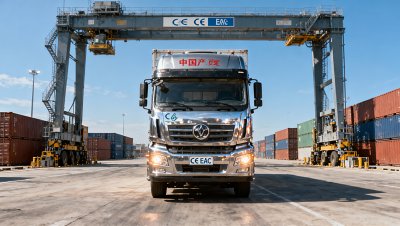
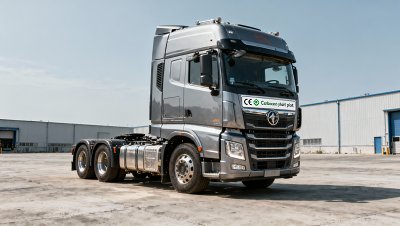
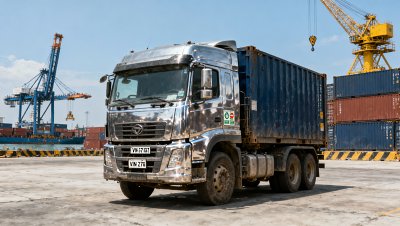
Shatian Customs publicly released inspection results for outbound heavy-duty trucks for the first half of May 2026 on 20 May 2026. The data reflects strengthened compliance performance in China’s heavy-truck export sector—particularly in documentation accuracy and dual-standard certification verification—impacting international trade efficiency, risk exposure for exporters, and downstream supply chain confidence.
Event Overview
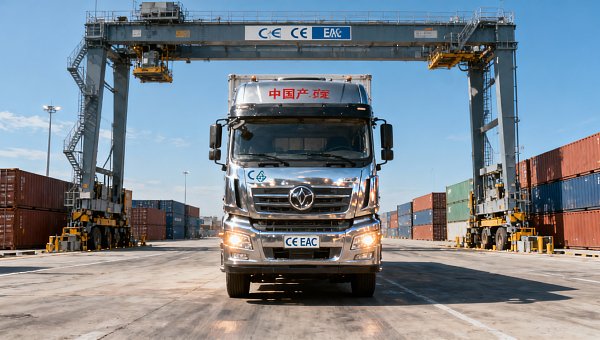
According to the official notice issued by Shatian Customs on 20 May 2026, a total of 47 batches of outbound heavy-duty trucks were inspected between 1–15 May 2026. The reported declaration accuracy rate was 98.6%, and the pass rate for CE and EAC dual-standard verification stood at 100%.
Industries Affected
Direct Trading Enterprises
Export-oriented truck manufacturers and trading companies face reduced operational friction in key markets such as the EU and Eurasian Economic Union (EAEU). Higher declaration accuracy directly lowers customs clearance delays and re-export penalties; 100% CE/EAC verification success signals improved pre-shipment compliance readiness—especially for firms managing multi-market certification portfolios.
Raw Material Procurement Enterprises
Suppliers of certified components (e.g., braking systems, lighting modules, or emission-control parts) experience growing demand for traceable, standard-aligned inputs. As OEMs tighten upstream compliance requirements to maintain export-grade documentation integrity, procurement teams must verify supplier certifications—not only for origin but also for conformity with both CE and EAC technical regulations.
Manufacturing Enterprises
Heavy-truck OEMs and Tier-1 assemblers benefit from enhanced predictability in export scheduling and regulatory feedback loops. The sustained >98.5% declaration accuracy suggests mature internal classification protocols and harmonized data flows between engineering, quality, and export departments—reducing post-shipment audit exposure and supporting just-in-time delivery commitments abroad.
Supply Chain Service Providers
Certification consultants, customs brokers, and logistics integrators see shifting service expectations: clients increasingly require integrated support covering dual-standard technical documentation, real-time tariff code validation, and pre-departure compliance audits—not just filing assistance. The 100% CE/EAC pass rate raises benchmark expectations for third-party verification rigor.
Key Focus Areas and Recommended Actions
Maintain Documentation Traceability Across Export Batches
Given the 98.6% declaration accuracy, enterprises should implement version-controlled digital records linking VINs, HS codes, and test reports—enabling rapid response to customs queries and facilitating internal root-cause analysis when discrepancies occur.
Validate Dual-Certification Readiness Before Final Assembly
With 100% CE/EAC verification success, manufacturers are advised to embed dual-standard checks into final QA gates—not as a post-production add-on. This includes verifying label placement, bilingual user manuals, and embedded conformity statements per directive Annexes.
Align Internal Training with Evolving Customs Feedback Loops
Shatian Customs’ transparent reporting implies increasing reliance on frontline staff competence. Export documentation teams should receive quarterly updates based on actual inspection findings—not generic compliance modules—to close recurring gaps in tariff classification or origin declaration.
Editorial Perspective / Industry Observation
Analysis shows that the consistency in both declaration accuracy and dual-standard verification is less about isolated procedural improvements and more indicative of systemic integration—between domestic regulatory guidance, industry self-auditing frameworks, and OEM-led supply chain governance. Observably, this trend reflects a maturing export compliance culture rather than a one-off performance spike. From an industry perspective, it signals growing capacity to manage overlapping regulatory regimes without compromising speed-to-market. Current data does not yet confirm whether similar rates hold across other vehicle categories (e.g., medium-duty trucks or electric variants), nor whether regional customs offices outside Guangdong report comparable outcomes.
Conclusion
This dataset reinforces a broader shift: China’s heavy-truck export ecosystem is transitioning from reactive compliance to proactive standard alignment. While not eliminating all cross-border friction, the demonstrated consistency offers tangible risk mitigation for stakeholders operating in regulated markets—and serves as a benchmark for other automotive export segments aiming to scale internationally with regulatory credibility.
Source Attribution
Official notice published by Shatian Customs on 20 May 2026 (reference number: STC-INS-20260520-01). Data covers inspection outcomes for 1–15 May 2026. Note: Full methodology—including sampling criteria, definition of ‘declaration accuracy’, and scope of CE/EAC verification—is pending public release. Continued observation is recommended for June 2026 data and comparative metrics from other major export ports (e.g., Qingdao, Tianjin).
Trending News
- Yangtze River Delta Rail-Sea Freight Exceeds 1M TEUs
- Zhengzhou-Moscow Postal Test Train Launches New 'Mail-Level' Clearance for Heavy-Duty CKD Exports
- Shatian Customs Releases May Transport Inspection Data
- Tianjin–Shanghai Express Multimodal Train Launches
- Tongjiang Waterway Port Resumes Summer Passenger-Cargo Transport to Russia
Tag
Recommended News
 Policy & RegulationsShatian Customs Releases May Transport Inspection DataShatian Customs May 2026 transport inspection data reveals 98.6% declaration accuracy & 100% CE/EAC pass rate for heavy-duty trucks—key insights for exporters, suppliers, and compliance teams.
 Policy & Regulations10-Dept Policy Pushes E-Documentation for Sea Freight & Origin Certs10-Dept Policy pushes e-documentation for sea freight & origin certs—boosting heavy-duty truck exports by 50%. Discover compliance steps, blockchain verification, and digital trade advantages now.
 Policy & RegulationsTIR International Road Transport Enters 'Fast Lane'TIR International Road Transport accelerates Eurasian logistics: new checkpoints like Białystok & Khorgos West boost speed, predictability, and cost-efficiency for heavy-duty truck exports, CKD assembly, and aftermarket parts.
 Policy & RegulationsUS EPA Exempts Zero-Emission Heavy-Duty Trucks from Annual Certification Fees Starting 2027Zero-emission heavy-duty trucks gain US EPA fee exemption from 2027—cutting $1,200/yr per model. Key for Chinese OEMs exporting to CARB states.
 Policy & RegulationsBrazil INMETRO Mandates EMI Testing for EV Heavy-Duty OBCsEMI testing now mandatory for EV heavy-duty OBCs in Brazil under INMETRO Portaria 188/2026 — ensure compliance by October 2026 to avoid certification delays and market access risks.
 Policy & RegulationsUAE RTA Launches AI-Based Heavy Vehicle Inspection SystemUAE RTA's new AI-based heavy vehicle inspection system mandates Digital Vehicle Health Reports (DVHR) for all imported used trucks — act now to ensure compliance and market access.
 Policy & RegulationsRussia EAC RoHS 3.0 to Cover Heavy-Duty Wire Harnesses from July 2026Russia EAC RoHS 3.0 now covers heavy-duty wire harnesses—compliance mandatory from July 2026. Avoid shipment rejections: verify, test & certify now.
 Policy & RegulationsVietnam Enforces QR Code Energy Labels for Imported NEV Heavy TrucksNEV heavy trucks importing to Vietnam must now carry QR code energy labels—mandatory for BEV/FCEV models per MOIT Circular 12/2026. Ensure API integration, CLTC compliance & real-time data sync to clear customs.
") Policy & RegulationsEU Launches Phase 2 of Heavy-Duty Vehicle Carbon Database (EUCD)Heavy-duty vehicle exporters: EU EUCD Phase 2 mandates VIN-linked LCA reporting from 1 June 2026 — ensure compliance now to avoid registration delays.
Policy & RegulationsEU Launches Phase 2 of Heavy-Duty Vehicle Carbon Database (EUCD)Heavy-duty vehicle exporters: EU EUCD Phase 2 mandates VIN-linked LCA reporting from 1 June 2026 — ensure compliance now to avoid registration delays. Policy & RegulationsSaudi SASO Mandates ISO 22513-2 RDI for Heavy Trucks from Aug 2026Saudi SASO mandates ISO 22513-2 RDI for heavy trucks from Aug 2026 — ensure compliance now to avoid shipment blocks & secure GCC market access.
 Policy & RegulationsUAE RTA Requires ISO 50001 for China-Remanufactured Used Heavy TrucksISO 50001 certification now mandatory for China-remanufactured used heavy trucks entering UAE via Jebel Ali—ensure compliance before August 1, 2026.
 Policy & RegulationsRussia Enforces Stricter NOx Limits for CNG/LNG Heavy-Duty TrucksRussia’s new NOx limits (0.2 g/kWh) for CNG/LNG heavy-duty trucks take effect Oct 1, 2026—urgent compliance action needed for exporters, engine & aftertreatment suppliers.
 Policy & RegulationsSASO Updates EMC Standard for Heavy-Duty TrucksSASO EMC standard update for heavy-duty trucks: New IEC 61000-4-23 testing mandatory for tractor cab harnesses & ADAS controllers—act now to avoid GCC shipment delays.
 Policy & RegulationsVietnam Requires Bilingual LCA Reports for NEV Heavy TrucksVietnam mandates bilingual LCA reports for NEV heavy trucks—key compliance update for Chinese exporters. Act now to avoid import delays.
 Policy & RegulationsEU Mandates UWB Modules for Heavy-Duty Trucks from July 2026UWB modules now mandatory for EU-bound heavy-duty trucks from July 2026 — ensure ECE R155 compliance, avoid customs rejection & secure port automation contracts.
 Policy & RegulationsEU Launches HCV Carbon Footprint Pilot for Chinese Tractor ExportsEU's HCV Carbon Footprint Pilot impacts Chinese tractor exports—learn compliance deadlines, LCA requirements, verifier list & strategic actions for 2026 market access.
 Policy & RegulationsVietnam Advances Used Truck Import Rules to Q3 2026Used truck import rules in Vietnam advance to Q3 2026 — learn how new remanufacturing certs & VINA-ISO 15222 compliance impact your陆路运输设备 supply chain.
 Policy & RegulationsIndonesia Enforces 90-Day Real-World Durability Test for Chinese NEV Heavy TrucksIndonesia's new 90-day real-world durability test for Chinese NEV heavy trucks reshapes market entry—learn compliance must-dos, BSN-accredited labs & tropicalization strategies.
 Policy & RegulationsKazakhstan Enforces GLONASS+BeiDou Dual-Mode Tracking for Heavy TrucksGLONASS+BeiDou dual-mode tracking is now mandatory for heavy trucks in Kazakhstan—ensuring compliance, avoiding border delays, and securing market access for exporters.
 Policy & RegulationsVietnam Advances Used Truck Import Rules to Q3 2026Used truck import rules in Vietnam advance to Q3 2026—key for exporters, logistics & distributors. Learn compliance must-haves, certified suppliers, and strategic responses now.
 Policy & RegulationsIndonesia Enforces 90-Day Heat/Humidity Test for Chinese NEV Heavy TrucksIndonesia's new 90-day heat/humidity test for Chinese NEV heavy trucks reshapes export strategy—learn compliance deadlines, LANMOT certification, and tropical durability prep.
 Policy & RegulationsKazakhstan Enforces GLONASS/BeiDou Dual-Mode Mandate for Chinese Tractor UnitsGLONASS/BeiDou dual-mode mandate for Chinese tractor units in Kazakhstan—key compliance insights, impact on exporters & OEMs, and actionable steps ahead of May 2026 enforcement.
 Policy & RegulationsEU Launches HCV Carbon Footprint Pilot for Chinese Tractor ExportsEU's new HCV carbon footprint pilot directly impacts Chinese tractor exports—learn mandatory LCA requirements, compliance deadlines & strategic response measures.
 Policy & RegulationsVietnam to Enforce Used Truck Import Rules in Q3 2026Used truck import rules in Vietnam tighten: Q3 2026 enforcement requires ISO 50001 & Chinese remanufacturing certification — act now to secure compliance and market access.
 Policy & RegulationsIndonesia Mandates Local Durability Testing for Imported Chinese NEV Heavy TrucksIndonesia mandates local durability testing for imported Chinese NEV heavy trucks—90-day real-world validation in tropical conditions. Ensure compliance & market access now.