China Launches Nationwide 'One-Bill' Customs Supervision for Multimodal Transport
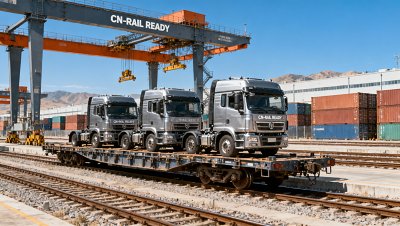
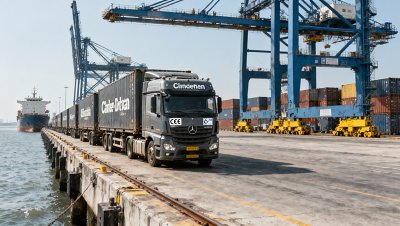
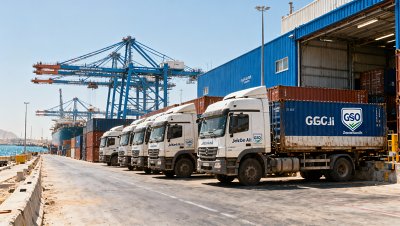
Starting May 1, 2026, China’s General Administration of Customs (GACC), in coordination with 24 other departments, launched a nationwide pilot of the ‘one-bill-to-destination’ customs supervision model for multimodal transport across 45 cities. This initiative directly impacts exporters of heavy-duty trucks, construction machinery, and other large-scale equipment targeting inland markets in Central Asia, ASEAN, and Eastern Europe — by streamlining cross-border clearance, reducing documentation errors, and improving delivery certainty for ‘Made-in-China’ industrial goods.
Event Overview
Effective May 1, 2026, the General Administration of Customs of the People’s Republic of China, together with 24 relevant departments, initiated a national pilot program for multimodal transport ‘one-bill’ customs supervision in 45 cities. Under this model, enterprises submit a single multimodal transport application form to complete full-process customs procedures — including declaration, inspection, and seal application — replacing traditional transshipment declarations. The pilot aims to improve efficiency in rail-water-road connectivity by 40%.
Industries Affected
Direct Exporters of Heavy-Duty Trucks and Construction Machinery
These enterprises face high logistical complexity when shipping oversized, high-value equipment to landlocked destinations. The new model reduces repeated customs handling at intermodal transfer points, shortening overall transit time and lowering risk of physical damage or documentation mismatch during handovers between rail, water, and road legs.
Supply Chain Service Providers (Freight Forwarders, NVOCCs, Logistics Integrators)
Service providers managing end-to-end multimodal shipments must now adapt internal systems and staff training to align with the standardized ‘one-bill’ process. Their role shifts from coordinating multiple fragmented customs filings to validating and submitting a unified application — increasing operational accountability and requiring tighter integration with carrier and terminal systems.
Manufacturers with Integrated Export Operations (e.g., OEMs with In-House Logistics)
For manufacturers managing their own export logistics, the model simplifies internal compliance workflows but increases dependency on accurate pre-declaration data input. Errors in cargo description, HS code classification, or consignee information on the single bill may delay the entire journey — making upstream data governance more critical.
What Enterprises and Practitioners Should Focus On Now
Monitor official implementation guidelines and city-specific rollout timelines
The pilot covers 45 cities, but not all will activate the model simultaneously or with identical procedural details. Enterprises should track GACC bulletins and local customs announcements to identify which ports, rail hubs, or inland container depots are live — especially those serving key export corridors to Central Asia (e.g., Khorgos) or ASEAN (e.g., Nanning–Hanoi routes).
Validate readiness for ‘one-bill’ data requirements in current export shipments
The single application replaces multiple forms — meaning all required data (e.g., origin, intermediate nodes, final destination, carrier IDs, seal numbers, cargo specs) must be consolidated upfront. Companies should audit existing ERP/TMS systems to ensure compatibility with the new data schema before initiating pilot-phase shipments.
Distinguish between policy signal and operational readiness
While the pilot is officially underway, full interoperability among rail operators, port authorities, and customs IT platforms may take time. Early adopters should treat initial runs as test cases — allocating buffer time, confirming seal-handling protocols at each node, and documenting handover points to identify friction before scaling.
Prepare documentation and cross-departmental alignment internally
Export compliance, logistics planning, and sales teams must coordinate earlier in the order cycle. For example, sales contracts now need to specify exact multimodal routing and intermediate handling locations — because those details feed directly into the single bill. Internal SOPs should reflect revised handoff responsibilities between departments.
Editorial Perspective / Industry Observation
Observably, this initiative signals a structural shift toward system-level integration in China’s cross-border trade infrastructure — not just incremental process optimization. Analysis shows it prioritizes predictability over speed: the 40% efficiency gain refers to intermodal衔接 (connection) reliability and administrative throughput, not necessarily raw transit time reduction. From an industry perspective, it functions less as an immediate operational upgrade and more as a foundational enabler for future digital trade corridors — particularly for capital goods exports where delivery certainty affects financing, warranty terms, and customer trust. Continued attention is warranted as interoperability standards, data-sharing protocols, and dispute resolution mechanisms evolve beyond the pilot phase.
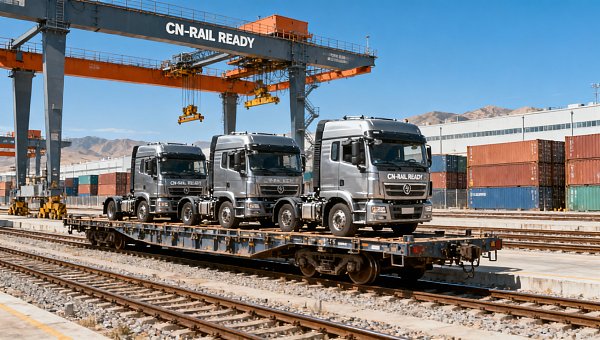
China’s ‘one-bill-to-destination’ customs pilot represents a targeted upgrade in regulatory coherence for multimodal freight — especially for industrial equipment exporters reliant on coordinated rail-water-road networks. Its significance lies not in replacing existing tools, but in reducing systemic friction at handover points. At this stage, it is best understood as an evolving framework for improved operational consistency — one that rewards preparation, data discipline, and early engagement with local customs implementation channels.
Source: General Administration of Customs of the People’s Republic of China (announced May 1, 2026); joint notice issued by GACC and 24 departments. Note: City-level implementation details, technical specifications for the ‘one-bill’ format, and timeline for potential nationwide rollout remain under observation.
Trending News
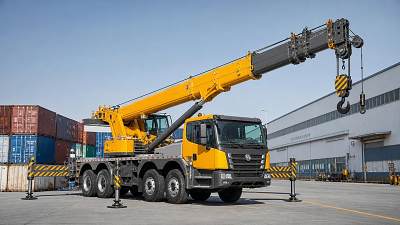
- Crane Truck for Sale: Key Checks Before Comparing Price and Load Capacity
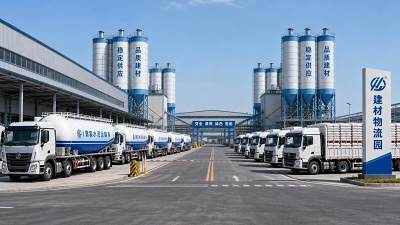
- How to Choose a Reliable Truck Cement Distributor for Stable Supply
- Truck Cement OEM vs Standard Supply: Which Lowers Quality Risk?
- Truck Cement Bulk Order: Cost Factors and Delivery Risks in 2026
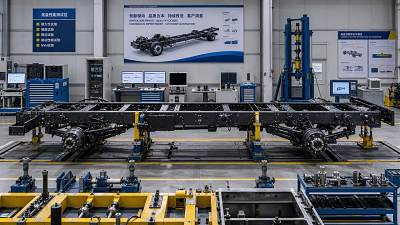
- How to Evaluate a Heavy Truck Chassis Manufacturer With R&D Capability
Tag
Recommended News
 Default CategoryEU REACH Adds Phthalates Restrictions Affecting Truck Wiring Harnesses and Interior MaterialsEU REACH phthalates restrictions (DEHP, BBP, DBP) take effect May 2026—impacting truck wiring harnesses, seals & interior materials. Act now to ensure compliance and avoid EU border rejections.
 Default CategoryChina Launches Nationwide 'One-Bill' Customs Supervision for Multimodal TransportOne-bill customs supervision for multimodal transport launches in China—streamlining cross-border clearance for heavy-duty trucks, construction machinery & industrial equipment exports to Central Asia, ASEAN and Eastern Europe.
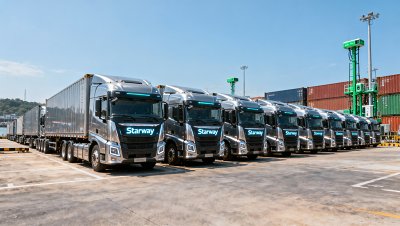
 Default CategoryDeepWay Delivers 50 Electric Heavy-Duty Trucks to YAZUIBEI for Digital Port Short-Haul OperationsDeepWay Starway-series BEVs: 50 electric heavy-duty trucks deployed for digital, zero-emission port short-haul logistics at Changxing Port.
 Default CategoryNew Maritime Code Shifts No-Collection Liability to ShippersNew Maritime Code shifts no-collection liability to shippers—critical for陆路运输设备 exporters, FOB/CIF traders, and logistics providers. Act before May 1, 2026.
 Default CategoryChina Imposes Zero Tariffs on Heavy-Duty Trucks for 20 African NationsHeavy-duty trucks from 20 African nations now enter China duty-free—boosting price competitiveness for exporters, EPC contractors & distributors in the陆路运输设备 sector.
 Buying GuideCrane Truck for Sale: Key Checks Before Comparing Price and Load CapacityCrane truck for sale buying guide: learn the key checks beyond price and load capacity, from structure and hydraulics to chassis fit and supplier credibility.
 Buying GuideHow to Choose a Reliable Truck Cement Distributor for Stable SupplyTruck cement distributor selection made simple: learn how to compare capacity, fleet reliability, response speed, and supply risk control to secure stable project delivery.
 Buying GuideTruck Cement OEM vs Standard Supply: Which Lowers Quality Risk?Truck cement OEM vs standard supply: discover which option lowers quality risk in heavy-duty trucks with better traceability, testing, and sourcing control.
 Transportation CostsTruck Cement Bulk Order: Cost Factors and Delivery Risks in 2026Truck cement bulk order in 2026: discover key cost factors, freight risks, fuel impacts, and supplier checks to cut delivered cost and avoid delays before you buy.
 Buying GuideHow to Evaluate a Heavy Truck Chassis Manufacturer With R&D CapabilityHeavy truck chassis manufacturer with R&D capability: learn how to assess engineering depth, testing, customization, compliance, and long-term reliability before choosing a supplier.
 Logistics & FreightTruck Cement Wholesale: What Determines Stable Delivery and Margin?Truck cement wholesale success depends on reliable supply, transport capacity, quality consistency, and landed cost control. Learn what protects delivery stability and margin.
 Transportation CostsTruck Trailer Bulk Order Cost Breakdown for 2026 Budget PlanningTruck trailer bulk order budgeting for 2026 starts with total cost, not unit price. Explore specs, logistics, compliance, and lifecycle expenses to plan smarter and cut risk.
 Buying GuideTruck Trailer Sourcing: 7 Checks Before You Compare SuppliersTruck trailer sourcing starts with the right checks. Discover 7 essential steps to verify compliance, quality, lead time, and after-sales support before comparing suppliers.
 Buying GuideTruck Trailer OEM vs ODM: Which Model Lowers Supply Risk?Truck trailer OEM vs ODM: learn which model better reduces supply risk, improves quality control, and protects long-term sourcing flexibility for global trailer buyers.
 Buying GuideHow to Evaluate a Heavy Truck Chassis Manufacturer With R&D Capability in 2026Heavy truck chassis manufacturer with R&D capability: learn how to evaluate engineering strength, validation, compliance, and long-term reliability in 2026 to choose the right supplier.
 Default CategoryYiyuan International Launches Heavy-Duty Truck Export End-to-End Support Program for Middle East & AfricaYiyuan International’s Heavy-Duty Truck Export End-to-End Support Program ensures freight stability, customs clearance & last-mile delivery for Middle East & Africa exports — lock rates now!
 Default CategoryNew Live-Commerce Rules for Jade & Antiques Drive Demand for Smart Heavy-Duty Truck BodiesSmart heavy-duty truck bodies surge in demand as new jade & antiques live-commerce rules mandate intelligent, climate-controlled transport for high-value cargo.
 Default CategoryCOSCO Shipping Specialized Launches 'SmartRo-Ro' for Real-Time Heavy-Duty Truck Export TrackingSmartRo-Ro by COSCO Shipping Specialized delivers real-time, blockchain-verified tracking for heavy-duty truck exports — boosting forecast accuracy to 94.7% and supply chain transparency.
 Default CategoryNew Maritime Code Shifts Unclaimed Cargo Liability to Exporters from May 1New Maritime Code shifts unclaimed cargo liability to exporters—critical for陆路运输设备 exporters using FOB/CIF. Act now to mitigate port storage, return freight & loss risks.
 Default CategoryEid al-Adha Holiday: GCC Customs & Logistics Pause from May 27, 48-Hour Clearance Window for Heavy-Duty Truck ImportsEid al-Adha holiday halts GCC customs & logistics from May 27, 2026—secure heavy-duty truck import clearance in the critical 48-hour window.
 Default Category2026 Xinjiang Agri-Machinery Expo Highlights Smart Farm Equipment and Rising Export Demand for Heavy-Duty ChassisHeavy-duty chassis demand surges at 2026 Xinjiang Agri-Machinery Expo—smart farm equipment drives export growth across Central Asia & Africa.
 Buying GuideHow to Compare Semi Trailer Distributors by Lead Time and SupportSemi trailer distributor comparison starts with lead time and support. Learn how to evaluate delivery reliability, technical response, and after-sales service for smarter sourcing.
 Truck ExportWhat Makes a Reliable Truck Trailer Distributor in Export MarketsTruck trailer distributor selection shapes export success. Learn how to assess compliance, supply stability, technical fit, and after-sales support for safer global sourcing.
 Buying GuideSemi Trailer Bulk Order Risks and Quality Checks Before SigningSemi trailer bulk order risks can quickly multiply without strict checks. Discover the key quality, compliance, and delivery points to verify before signing and protect your fleet investment.
 Transportation CostsSemi Trailer Wholesale: Cost Factors That Matter in 2026Semi trailer wholesale in 2026 goes beyond unit price. Discover the real cost factors, compare suppliers smarter, and reduce sourcing risk with this practical guide.