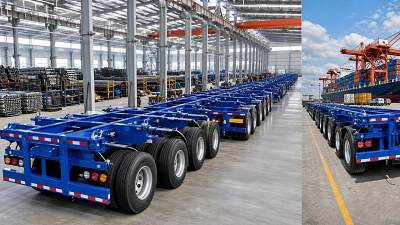
China Imposes Zero Tariffs on Heavy-Duty Trucks for 20 African Nations
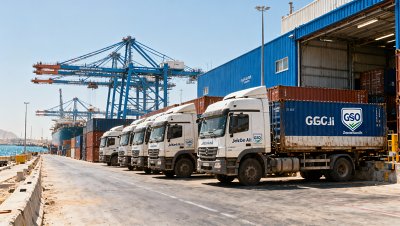
Effective May 1, 2026, China has implemented zero tariffs (within quota) on imported goods—including heavy-duty trucks, chassis, and special-purpose vehicles—from 20 African countries with which it maintains diplomatic relations. This policy directly reduces customs clearance costs and end-user pricing for road transport equipment, enhancing the price competitiveness of Chinese-made heavy vehicles in Africa’s infrastructure markets—particularly for overseas distributors and EPC contractors.
Event Overview
Starting May 1, 2026, China applies zero import tariffs (within established quotas) to engineering vehicles, chassis, and special-purpose road transport equipment originating from 20 African countries that have formal diplomatic ties with China. The measure covers non-Least Developed Countries (non-LDCs) among those African states. No further implementation details—such as country-specific lists, quota volumes, or product HS code classifications—have been publicly released as of the effective date.
Industries Affected
Direct Exporters & Trading Firms: Companies exporting heavy-duty trucks or specialized chassis to the 20 eligible African nations face lower tariff-related cost uncertainty and faster customs clearance. Impact manifests primarily in reduced landed cost per unit and improved margin visibility for fixed-price contracts.
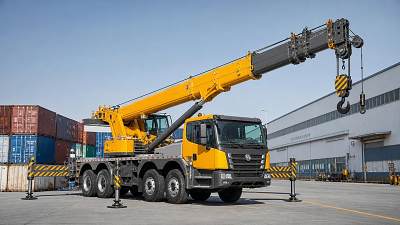
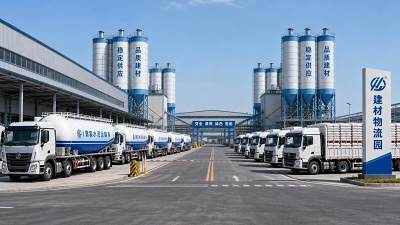
Manufacturers of Special-Purpose Vehicles: Producers of concrete mixers, dump trucks, crane carriers, and other infrastructure-supporting vehicles benefit from strengthened downstream demand signals in targeted African markets. However, this effect remains conditional on actual importer uptake and local regulatory alignment—not automatic demand growth.
Distribution & Aftermarket Networks: Overseas distributors—especially those operating under long-term supply agreements with Chinese OEMs—may see improved inventory turnover and financing terms due to lower upfront duty exposure. The policy does not alter local VAT, certification, or homologation requirements.
EPC Contractors & Infrastructure Project Developers: Entities procuring vehicles for turnkey projects in Africa gain more predictable total cost of ownership (TCO) for fleet procurement. This supports bid competitiveness in public tenders where equipment sourcing is a scoring criterion—but only where tender rules permit or incentivize China-sourced vehicles.
Key Considerations for Enterprises and Practitioners
Monitor official updates on country eligibility and quota administration
The list of 20 African countries and associated annual quota allocations has not yet been published by China’s Ministry of Commerce or General Administration of Customs. Enterprises should track official announcements before finalizing Q3–Q4 2026 export plans.
Verify applicability at product-level classification
Tariff elimination applies only to specific HS codes covering engineering vehicles, chassis, and special-purpose road transport equipment. Companies must confirm whether their exported models fall within the designated scope—e.g., standard cargo trucks or passenger buses are excluded unless explicitly listed.
Distinguish between tariff removal and full market access
Zero tariffs reduce one cost component but do not resolve non-tariff barriers such as local type-approval processes, spare parts logistics, or after-sales service capacity. Procurement decisions remain contingent on holistic TCO—not just import duty savings.
Prepare documentation and customs coordination workflows
Importers in beneficiary countries will require origin certification (e.g., Form A or China-Africa Preferential Certificate of Origin) to claim zero-tariff treatment. Exporters should align internal documentation systems and train freight forwarders accordingly ahead of May 2026.
Editorial Perspective / Industry Observation
Observably, this policy functions primarily as a trade facilitation signal—not an immediate volume driver. It reflects China’s broader strategic alignment with African infrastructure development priorities, particularly under frameworks like the Forum on China–Africa Cooperation (FOCAC). Analysis shows the impact will be most visible in procurement cycles tied to national infrastructure programs launched post-2026, rather than in spot-market transactions. From an industry perspective, the move is better understood as a structural enabler: it lowers one barrier to entry, but does not substitute for localized distribution capability, financing solutions, or compliance readiness. Sustained monitoring is warranted—not because the policy itself is complex, but because its real-world activation depends on parallel developments in African customs digitization and bilateral verification mechanisms.
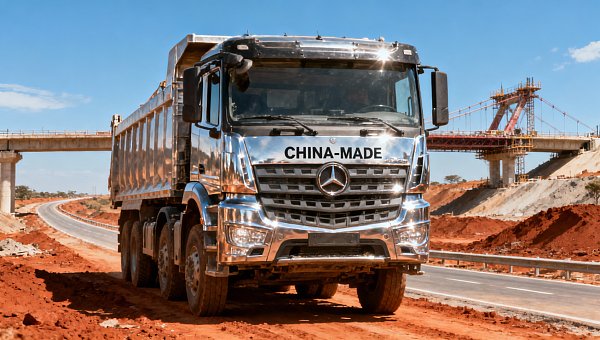
Conclusion: This zero-tariff arrangement marks a calibrated step toward deeper trade integration in a high-potential but operationally fragmented market segment. Its significance lies less in immediate revenue uplift and more in signaling long-term commercial intent—and in creating a margin buffer that may tip procurement decisions in competitive bidding environments. Currently, it is more appropriately understood as a cost-optimization lever for selective, well-prepared exporters—not a broad-based market expansion trigger.
Source Disclosure: Primary information derived from the official announcement issued by China’s Ministry of Commerce, effective May 1, 2026. The list of 20 beneficiary countries, applicable HS codes, and annual quota allocations remains pending public release and is therefore subject to ongoing observation.
Trending News
- Crane Truck for Sale: Key Checks Before Comparing Price and Load Capacity
- How to Choose a Reliable Truck Cement Distributor for Stable Supply
- Truck Cement OEM vs Standard Supply: Which Lowers Quality Risk?
- Truck Cement Bulk Order: Cost Factors and Delivery Risks in 2026
- How to Evaluate a Heavy Truck Chassis Manufacturer With R&D Capability
Tag
Recommended News
 Default CategoryEU REACH Adds Phthalates Restrictions Affecting Truck Wiring Harnesses and Interior MaterialsEU REACH phthalates restrictions (DEHP, BBP, DBP) take effect May 2026—impacting truck wiring harnesses, seals & interior materials. Act now to ensure compliance and avoid EU border rejections.
 Default CategoryChina Launches Nationwide 'One-Bill' Customs Supervision for Multimodal TransportOne-bill customs supervision for multimodal transport launches in China—streamlining cross-border clearance for heavy-duty trucks, construction machinery & industrial equipment exports to Central Asia, ASEAN and Eastern Europe.
 Default CategoryDeepWay Delivers 50 Electric Heavy-Duty Trucks to YAZUIBEI for Digital Port Short-Haul OperationsDeepWay Starway-series BEVs: 50 electric heavy-duty trucks deployed for digital, zero-emission port short-haul logistics at Changxing Port.
 Default CategoryNew Maritime Code Shifts No-Collection Liability to ShippersNew Maritime Code shifts no-collection liability to shippers—critical for陆路运输设备 exporters, FOB/CIF traders, and logistics providers. Act before May 1, 2026.
 Default CategoryChina Imposes Zero Tariffs on Heavy-Duty Trucks for 20 African NationsHeavy-duty trucks from 20 African nations now enter China duty-free—boosting price competitiveness for exporters, EPC contractors & distributors in the陆路运输设备 sector.
 Buying GuideCrane Truck for Sale: Key Checks Before Comparing Price and Load CapacityCrane truck for sale buying guide: learn the key checks beyond price and load capacity, from structure and hydraulics to chassis fit and supplier credibility.
 Buying GuideHow to Choose a Reliable Truck Cement Distributor for Stable SupplyTruck cement distributor selection made simple: learn how to compare capacity, fleet reliability, response speed, and supply risk control to secure stable project delivery.
 Buying GuideTruck Cement OEM vs Standard Supply: Which Lowers Quality Risk?Truck cement OEM vs standard supply: discover which option lowers quality risk in heavy-duty trucks with better traceability, testing, and sourcing control.
 Transportation CostsTruck Cement Bulk Order: Cost Factors and Delivery Risks in 2026Truck cement bulk order in 2026: discover key cost factors, freight risks, fuel impacts, and supplier checks to cut delivered cost and avoid delays before you buy.
 Buying GuideHow to Evaluate a Heavy Truck Chassis Manufacturer With R&D CapabilityHeavy truck chassis manufacturer with R&D capability: learn how to assess engineering depth, testing, customization, compliance, and long-term reliability before choosing a supplier.
 Logistics & FreightTruck Cement Wholesale: What Determines Stable Delivery and Margin?Truck cement wholesale success depends on reliable supply, transport capacity, quality consistency, and landed cost control. Learn what protects delivery stability and margin.
 Transportation CostsTruck Trailer Bulk Order Cost Breakdown for 2026 Budget PlanningTruck trailer bulk order budgeting for 2026 starts with total cost, not unit price. Explore specs, logistics, compliance, and lifecycle expenses to plan smarter and cut risk.
 Buying GuideTruck Trailer Sourcing: 7 Checks Before You Compare SuppliersTruck trailer sourcing starts with the right checks. Discover 7 essential steps to verify compliance, quality, lead time, and after-sales support before comparing suppliers.
 Buying GuideTruck Trailer OEM vs ODM: Which Model Lowers Supply Risk?Truck trailer OEM vs ODM: learn which model better reduces supply risk, improves quality control, and protects long-term sourcing flexibility for global trailer buyers.
 Buying GuideHow to Evaluate a Heavy Truck Chassis Manufacturer With R&D Capability in 2026Heavy truck chassis manufacturer with R&D capability: learn how to evaluate engineering strength, validation, compliance, and long-term reliability in 2026 to choose the right supplier.
 Default CategoryYiyuan International Launches Heavy-Duty Truck Export End-to-End Support Program for Middle East & AfricaYiyuan International’s Heavy-Duty Truck Export End-to-End Support Program ensures freight stability, customs clearance & last-mile delivery for Middle East & Africa exports — lock rates now!
 Default CategoryNew Live-Commerce Rules for Jade & Antiques Drive Demand for Smart Heavy-Duty Truck BodiesSmart heavy-duty truck bodies surge in demand as new jade & antiques live-commerce rules mandate intelligent, climate-controlled transport for high-value cargo.
 Default CategoryCOSCO Shipping Specialized Launches 'SmartRo-Ro' for Real-Time Heavy-Duty Truck Export TrackingSmartRo-Ro by COSCO Shipping Specialized delivers real-time, blockchain-verified tracking for heavy-duty truck exports — boosting forecast accuracy to 94.7% and supply chain transparency.
 Default CategoryNew Maritime Code Shifts Unclaimed Cargo Liability to Exporters from May 1New Maritime Code shifts unclaimed cargo liability to exporters—critical for陆路运输设备 exporters using FOB/CIF. Act now to mitigate port storage, return freight & loss risks.
 Default CategoryEid al-Adha Holiday: GCC Customs & Logistics Pause from May 27, 48-Hour Clearance Window for Heavy-Duty Truck ImportsEid al-Adha holiday halts GCC customs & logistics from May 27, 2026—secure heavy-duty truck import clearance in the critical 48-hour window.
 Default Category2026 Xinjiang Agri-Machinery Expo Highlights Smart Farm Equipment and Rising Export Demand for Heavy-Duty ChassisHeavy-duty chassis demand surges at 2026 Xinjiang Agri-Machinery Expo—smart farm equipment drives export growth across Central Asia & Africa.
 Buying GuideHow to Compare Semi Trailer Distributors by Lead Time and SupportSemi trailer distributor comparison starts with lead time and support. Learn how to evaluate delivery reliability, technical response, and after-sales service for smarter sourcing.
 Truck ExportWhat Makes a Reliable Truck Trailer Distributor in Export MarketsTruck trailer distributor selection shapes export success. Learn how to assess compliance, supply stability, technical fit, and after-sales support for safer global sourcing.
 Buying GuideSemi Trailer Bulk Order Risks and Quality Checks Before SigningSemi trailer bulk order risks can quickly multiply without strict checks. Discover the key quality, compliance, and delivery points to verify before signing and protect your fleet investment.
 Transportation CostsSemi Trailer Wholesale: Cost Factors That Matter in 2026Semi trailer wholesale in 2026 goes beyond unit price. Discover the real cost factors, compare suppliers smarter, and reduce sourcing risk with this practical guide.