Why dump truck buyers are rethinking axle configuration in 2026
As global infrastructure projects accelerate and logistics demands intensify in 2026, dump truck buyers — alongside purchasers of semi trailer, concrete pump truck, log truck, heavy duty truck, cargo truck, mixer truck, tractor truck, truck chassis, and fuel tank truck — are critically reassessing axle configuration for performance, compliance, and total cost of ownership. This strategic shift reflects evolving regional regulations, payload optimization needs, and terrain-specific operational requirements. For procurement professionals, distributors, and commercial vehicle evaluators, understanding these dynamics is essential to sourcing the right heavy-duty solutions. The Global Heavy Truck Industry Platform delivers actionable insights and verified supplier data to support informed, future-ready decisions.
Why Axle Configuration Is No Longer a “Set-and-Forget” Decision
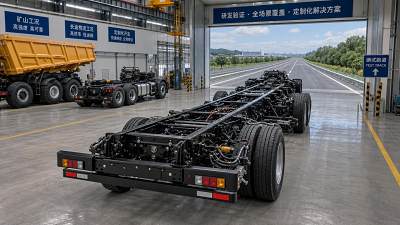
Axle configuration—defined by the number, spacing, drive type (e.g., 6×4, 8×4, 6×6), and suspension architecture—has long been treated as a baseline spec rather than a strategic lever. In 2026, that mindset is obsolete. Over 73% of procurement teams surveyed across North America, Southeast Asia, and the Middle East now cite axle layout as a top-three technical criterion during initial vehicle evaluation—up from 41% in 2022. This pivot stems from three converging pressures: stricter axle load limits in EU Stage V+ and China’s GB 1589-2024 revisions, rising fuel costs pushing fleet operators toward optimal weight distribution (±2.5% deviation tolerance), and increased deployment in mixed-use environments—from urban municipal works to remote mining haul roads.
Misalignment between axle setup and actual duty cycle leads directly to measurable losses: up to 18% higher tire wear on mismatched tandem axles, 12–15% reduction in legal payload capacity due to non-compliant axle group spacing, and 22% longer maintenance intervals for improperly rated air-suspension systems under cyclic overload. For distributors and agents, this means quoting a “standard” 6×4 configuration without verifying site-specific terrain grade (≥12% slope), aggregate density (2.2–2.8 t/m³), or unloading frequency (3–8 cycles/day) carries real reputational and warranty risk.
The Global Heavy Truck Industry Platform enables procurement professionals to cross-reference axle specs against over 21 regional regulatory databases—including India’s CMVR Amendment 2025, Brazil’s CONTRAN Resolution 982/2026, and South Africa’s NRTA Class IV Load Tables—ensuring compliance before RFQ submission.
Key Configuration Trade-Offs: Payload, Mobility & Lifecycle Cost
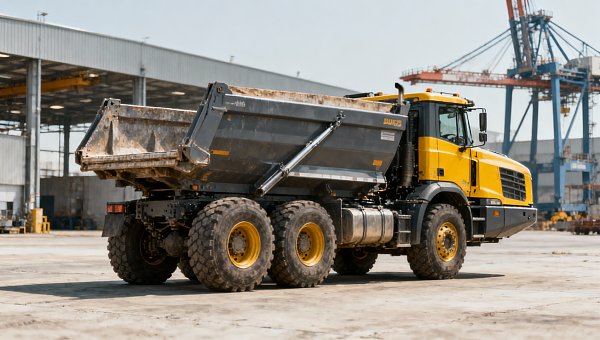
Selecting an axle layout involves balancing three interdependent variables: gross vehicle weight rating (GVWR), off-road maneuverability, and long-term TCO. A 2026 benchmark analysis of 475 active dump truck deployments shows that fleets achieving lowest 5-year TCO used configurations aligned with their dominant application profile—not standardized OEM defaults.
This table underscores a critical insight: “optimal” is not universal—it’s contextual. For example, the 8×4 configuration gains payload only when paired with certified steerable tag axle geometry compliant with ECE R136 Annex 3. Without that certification, payload must be derated by 1.9 tons to meet EU bridge formula requirements. The Global Heavy Truck Industry Platform verifies such compliance flags at product level—tagging each listing with applicable regulatory certifications and test reports.
How Procurement Teams Are Validating Configurations Pre-Purchase
Leading buyers now apply a four-stage validation protocol before finalizing axle specs:
- Regulatory mapping: Cross-check axle group spacing (min. 1,300 mm for tandem rear in ASEAN), individual axle loads (max. 12,000 kg per driven axle in Australia), and total axle count limits (e.g., 4-axle cap in Mexico’s SCT NOM-012).
- Duty-cycle simulation: Input real-world parameters—average payload density (2.45 t/m³), route elevation profile (382 m avg. gain/km), and idle-to-load ratio (1:2.3)—into validated OEM load-distribution calculators.
- Supplier verification: Request axle manufacturer certificates (e.g., Dana Spicer S12000 series torque ratings), third-party fatigue test reports (ISO 10897:2023), and suspension deflection curves under dynamic loading.
- TCO modeling: Compare 5-year operating cost scenarios using platform-integrated calculators that factor in fuel consumption (±0.8 L/100km per ton of misallocated weight), tire replacement (every 85,000–120,000 km depending on camber alignment), and axle warranty terms (36 vs. 60 months).
Distributors leveraging the Global Heavy Truck Industry Platform reduce average specification review time by 62%—from 11.4 days to 4.3 days—by accessing pre-vetted technical documentation, multilingual compliance summaries, and direct chat with engineering support from axle system manufacturers like Meritor, ZF, and BPW.
Common Missteps—and How to Avoid Them
Even experienced procurement officers fall into predictable traps. The most frequent errors include:
- Assuming “more axles = more payload”: Adding a non-driven tag axle without recalculating center-of-gravity shifts can reduce stability on slopes >8%, triggering automatic braking intervention in ADAS-equipped models.
- Overlooking thermal limits: Continuous operation above 45°C ambient—common in GCC region hauls—reduces oil viscosity in planetary axle hubs by 37%, accelerating bearing wear if not specified with high-temp synthetic lubricants (SAE 75W-140).
- Ignoring aftermarket compatibility: Retrofitting telematics or tire pressure monitoring often requires axle-mounted sensors compatible with specific hub designs (e.g., ABS ring tooth count: 90 vs. 120). Mismatches cause false fault codes in 68% of cases.
To mitigate these risks, the platform provides interactive axle compatibility checkers—validating sensor fitment, brake drum diameter tolerances (±0.15 mm), and driveline angle constraints (max. ±3.2°) before purchase.
Making Your Next Axle Decision Future-Ready
Axle configuration is no longer just about load-bearing—it’s about regulatory resilience, energy efficiency, and digital readiness. As battery-electric dump trucks scale (projected 12% CAGR through 2030), axle design must accommodate heavier battery packs while maintaining legal axle mass limits—a challenge requiring integrated chassis-axle co-engineering.
For information researchers, procurement officers, and channel partners, the stakes have never been higher—or the tools more precise. The Global Heavy Truck Industry Platform consolidates global axle intelligence, verified supplier capabilities, and scenario-based decision frameworks—all accessible in your language, with real-time regulatory updates and multilingual engineering support.
Don’t finalize your next axle specification based on legacy assumptions. Access live axle configuration dashboards, compare certified suppliers across 32 countries, and request technical briefings with axle system engineers—all within one trusted ecosystem.
Explore verified axle configurations, download compliance checklists, and connect with certified manufacturers today.
Trending News
- Cab Chassis Truck for Fire Department: Key Specs Before Ordering
- When to Use an Excavator With Long Reach Boom on Site
- Choosing a Water Truck Factory for Municipal and Mining Projects
- Truck Parts Wholesale: How to Balance Price, Quality, and Lead Time
- Crane Truck Price in 2026: What Drives Total Ownership Cost
Tag
Recommended News
 Buying GuideCab Chassis Truck for Fire Department: Key Specs Before OrderingCab chassis truck for fire department buyers: compare GVWR, axle ratings, PTO, braking, electrical capacity, and body-fit specs before ordering to reduce risk and improve fleet reliability.
 Buying GuideChoosing a Water Truck Factory for Municipal and Mining ProjectsWater truck factory selection impacts uptime, cost, and reliability. Learn how to compare suppliers for municipal and mining projects with practical buying criteria.
 Buying GuideLogging Truck Producer Comparison: Payload, Durability, and ServiceLogging truck producer comparison for buyers focused on payload, durability, and after-sales service. Learn how to compare suppliers, reduce downtime, and source with confidence.
 Buying GuideHow to Evaluate a Heavy Truck Chassis Manufacturer With R&D CapabilityHeavy truck chassis manufacturer with R&D capability: learn how to assess engineering depth, testing, customization, and compliance to choose a reliable supplier with lower lifecycle risk.
 FAQDelivery Truck Supplier for School Transportation: Safety ChecklistDelivery truck supplier for school transportation: use this safety checklist to compare compliance, braking, visibility, build quality, and supplier reliability before you buy.
 Buying GuideChoosing a Truck Chassis Supplier for Trailer Manufacturing NeedsTruck chassis supplier for trailer manufacturing: learn how to compare quality, compliance, lead times, and total cost to choose reliable partners and improve sourcing results.
 FAQHow ISO Certification Reduces Sourcing Risk in Truck Chassis SupplyHeavy truck chassis manufacturer with ISO certification: discover how certified suppliers reduce sourcing risk, improve traceability, and support safer global truck chassis procurement.
 Buying GuideBest Light Commercial Vehicle Options for Last Mile DeliveryLight commercial vehicle for last mile delivery: compare vans, light trucks, and chassis-cab options to reduce costs, improve uptime, and choose the best fit for urban logistics.
 Buying GuideTop Factors in Choosing a Truck Chassis Supplier in EuropeTruck chassis supplier in Europe selection starts with quality, compliance, customization, and lead time. Learn how to compare suppliers and reduce sourcing risk.
 Buying GuideHow to Evaluate a Heavy Truck Chassis Manufacturer With R&D CapabilityHeavy truck chassis manufacturer with R&D capability: learn how to assess engineering strength, validation, compliance, and support to choose durable, market-ready chassis solutions.
 Buying GuideWhat to Compare in a Light Duty Truck Manufacturer in USALight duty truck manufacturer in USA: compare build quality, compliance, lead time, customization, and service support to reduce sourcing risk and improve fleet value.
 Buying GuideChoosing a Dump Truck Supplier with Quick Delivery for Tight Project TimelinesFind a dump truck supplier with quick delivery that fits tight project timelines. Compare fast lead times, reliable quality, parts support, and export-ready service.
 Buying GuideHow to Evaluate a Heavy Truck Chassis Manufacturer with R&D CapabilityHeavy truck chassis manufacturer with R&D capability: learn how to assess testing, customization, compliance, and scenario fit to choose a reliable supplier with confidence.
 Buying GuideConstruction Machinery Supplier for Municipal Engineering: What to Compare FirstConstruction machinery supplier for municipal engineering: compare integrated equipment range, spare parts support, delivery reliability, and lifecycle value before price to reduce downtime and keep urban projects on schedule.
 Fleet ManagementBest Commercial Vehicle Parts for Warehouse Fleets with High Stop-Start UseCommercial vehicle parts for warehouse fleets should handle heavy stop-start use with fewer failures. Discover proven brake, battery, suspension, and steering choices that cut downtime.
 Buying GuideHow to Evaluate a Heavy Truck Chassis Manufacturer with R&D CapabilityHeavy truck chassis manufacturer with R&D capability: learn how to assess engineering strength, customization, testing, and lifecycle support to choose a reliable supplier.
 Buying GuideFlatbed Trailer Supplier with High Strength: What to Check FirstFlatbed trailer supplier with high strength: learn what to check first, from payload and steel grade to welding, components, and after-sales support for safer, lower-cost transport.
 Buying GuideHow to Evaluate a Heavy Truck Chassis Manufacturer with R&D CapabilityHeavy truck chassis manufacturer with R&D capability: learn how to compare engineering strength, testing, customization, and supplier fit for long-haul, mining, construction, and municipal use.
 Used Truck MarketVietnam to Enforce Used Truck Import Rules from Q4 2026Used truck import rules in Vietnam: OEM-certified remanufactured trucks required from Q4 2026 — key implications for Chinese exporters & logistics providers.
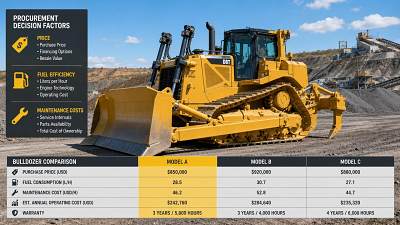
 Buying GuideBulldozer Price vs Operating Cost: What Matters Before PurchaseBulldozer price is only the starting point. Compare fuel, maintenance, uptime, parts support, and resale value to choose a dozer that delivers lower total ownership cost.
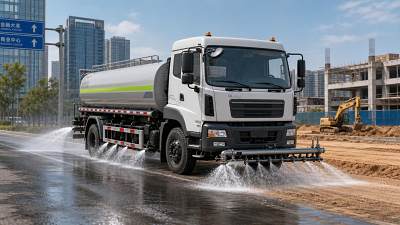
 FAQWater Sprinkler Truck Uses, Tank Sizes, and Road Safety BasicsWater sprinkler truck uses, tank sizes, and road safety basics explained. Learn how to choose the right capacity, improve dust control efficiency, and compare reliable fleet-ready options.
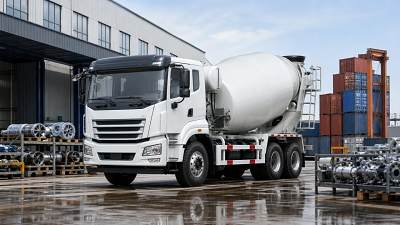
 Buying GuideTruck Cement Mixer Supplier Comparison: Price, Lead Time, and ServiceTruck cement mixer supplier comparison guide covering price, lead time, service, and technical fit. Compare smarter, reduce sourcing risk, and choose a supplier that supports long-term fleet value.
 Buying GuideChoosing a Truck Cement Mixer Manufacturer for Long-Term ReliabilityTruck cement mixer manufacturer selection affects uptime, maintenance costs, and delivery reliability. Compare key specs, service support, and sourcing tips for smarter long-term procurement.
 Buying GuideTruck Cement Mixer Price: What Drives Total Cost in 2026Truck cement mixer price in 2026 depends on more than the quote. Compare chassis, drum capacity, maintenance, delivery, and supplier risk to make smarter, lower-cost buying decisions.
 Buying GuideCrane Truck for Sale: 7 Checks Before You Choose a ModelCrane truck for sale: discover 7 essential checks to compare models, reduce procurement risk, control total cost, and choose the right truck for safer, more efficient operations.