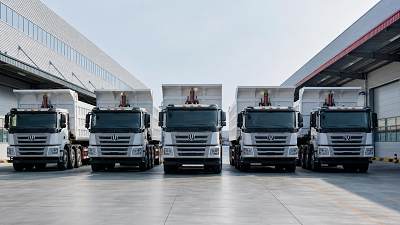
When Truck Trailer Wholesale Makes More Sense Than Small Orders
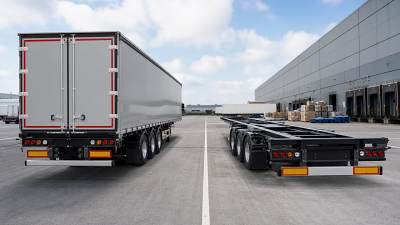
For buyers comparing truck trailer for sale options, choosing truck trailer wholesale often delivers better value than repeated small orders. From more competitive truck trailer price and semi trailer price levels to stronger support from a reliable semi trailer supplier or semi trailer exporter, bulk purchasing can improve planning, margins, and supply stability. This guide explains when wholesale purchasing makes the most sense for global transport equipment sourcing.
Why do wholesale truck trailer orders often outperform small purchases?
In road transport equipment sourcing, the order size affects far more than unit cost. A truck trailer wholesale decision can influence factory scheduling, component allocation, shipping consolidation, payment structure, and after-sales responsiveness. For procurement teams, business evaluators, and distributors, this matters because repeated small orders may look flexible at first, but they often create unstable pricing and fragmented delivery planning over 3–12 months.
Wholesale becomes more sensible when the buyer already has predictable fleet expansion, regional resale demand, or project-based transport contracts. In these situations, comparing only the visible truck trailer price is not enough. The real question is whether the sourcing model can support lead time control, spare parts continuity, technical consistency, and cross-border document efficiency. That is where a capable semi trailer supplier creates measurable value.
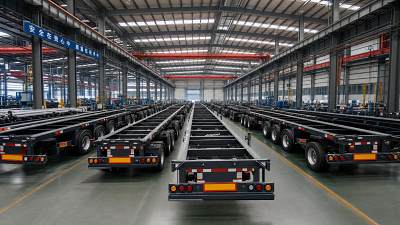
In the heavy vehicle trade, common purchasing bands can be viewed in 3 levels: pilot orders, mid-volume replenishment, and wholesale framework buying. A pilot order may test 1–3 units. A mid-volume cycle may cover 5–15 units. A wholesale arrangement often starts making commercial sense when the buyer needs stable repeat supply across multiple months, especially if trailer specifications remain within a controlled configuration range.
The Global Heavy Truck Industry Platform supports this process by helping buyers compare suppliers, product categories, and market insights across the commercial vehicle chain. Instead of sourcing in isolation, users can review trailers, semi-trailers, truck chassis, and spare parts together. That broader visibility helps buyers identify whether a wholesale strategy fits their operational model, resale channel, or project timeline.
- Wholesale usually improves cost visibility across 4 linked areas: unit price, ocean freight allocation, documentation handling, and future spare parts support.
- Small orders remain useful for market testing, but they can weaken negotiating power on axle brands, tire specifications, landing gear options, and paint or branding customization.
- For distributors and agents, larger volume planning also improves inventory rhythm and reduces the risk of mixed specifications arriving in different batches.
What changes when order volume increases?
As volume rises, the supplier can usually coordinate raw material preparation and production sequencing more efficiently. That may include grouped steel procurement, repeated jig use, and batch assembly for similar trailer structures. These factors do not guarantee the lowest semi trailer price in every case, but they often create more stable quotations and fewer cost surprises than fragmented purchasing over several quarters.
Buyers also gain stronger leverage in confirming technical details before production. Instead of negotiating one unit at a time, they can lock 5–8 core specifications in advance, such as suspension type, axle load class, floor thickness, brake configuration, and king pin standard. This reduces variation, simplifies operator training, and improves maintenance stocking after delivery.
A practical threshold for evaluation
A practical way to judge truck trailer wholesale feasibility is to compare total ownership and supply costs over 2 sourcing cycles rather than 1 shipment. If your team expects repeat demand within 6–9 months, needs consistent trailer specifications, or faces regional resale pressure, wholesale discussions should start early. Waiting until the next small order is urgent often weakens your negotiating position.
Which buying scenarios make wholesale the smarter option?
Not every buyer should move directly into truck trailer wholesale. The best fit depends on operating frequency, route conditions, resale strategy, and budget structure. In road transport equipment, wholesale tends to work best when usage is recurring, not one-time. That includes logistics fleets expanding lane capacity, contractors supporting multi-phase infrastructure projects, and distributors building local stock for recurring retail demand.
If a company serves mining support routes, container haulage, fuel distribution, or municipal engineering transport, trailer demand often follows a repeatable pattern. In these environments, small orders may create mismatched specs between batches. That inconsistency increases maintenance complexity and can delay deployment. Wholesale helps standardize product structure and support planning over 2–4 procurement cycles.
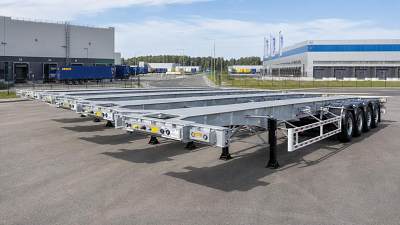
Distributors and agents also benefit when they need stock diversity but still want cost discipline. For example, a combined wholesale order may include flatbed, low bed, or tipper trailer variants under one negotiation framework. This can be more efficient than handling separate small deals with different documentation, payment timing, and inspection arrangements.
The table below outlines common situations where wholesale offers stronger commercial logic than small repeat buying. It helps information researchers and procurement teams connect sourcing scale with actual business conditions rather than relying on price alone.
These scenarios show that truck trailer for sale decisions should be tied to business rhythm, not just immediate cash flow. If your operation has recurring equipment demand, a structured wholesale plan may reduce commercial friction even when the upfront order looks larger than usual.
When are small orders still the better choice?
Small orders still have value in 3 common cases. First, you are testing a new market or a new trailer type. Second, local road regulations may still change, making final configuration uncertain. Third, cash flow or storage space does not support grouped arrivals. In such cases, starting small is rational, but buyers should still request a future wholesale quotation ladder to prepare for scale.
Even during trial buying, it helps to engage a semi trailer exporter that can document optional configurations clearly. That way, if the first batch performs well, the next order can transition into a wholesale framework without restarting technical confirmation from zero.
How does truck trailer wholesale affect price, margin, and total sourcing cost?
A lower truck trailer price is often the first reason buyers explore wholesale, but the real economic impact is broader. Total sourcing cost includes product cost, inland transport to port, export packing or preparation, shipping utilization, customs documentation, inspection coordination, and the cost of delayed replacement if stock runs short. Small orders can push these costs higher on a per-unit basis, even when the quoted trailer price appears acceptable.
In many commercial vehicle transactions, the difference between small order and wholesale economics comes from fixed cost distribution. Documentation, communication cycles, and loading coordination usually consume similar effort whether you buy 2 units or 10 units. When spread across a larger shipment, those fixed costs become more manageable, and the buyer gains better visibility on resale margin or project cost recovery.
Semi trailer price also depends on specification discipline. A wholesale order with standardized axle count, suspension choice, brake system, and tire size is easier for a supplier to quote than several small orders with changing details. Standardization can reduce redesign, sourcing variability, and rework risk. That is why smart buyers compare not only the first quotation but also the cost stability over the next 2–3 batches.
The following comparison helps procurement teams evaluate where wholesale tends to create economic advantages beyond the visible unit price.
For distributors, the margin effect can be especially important. If a buyer can secure a more predictable semi trailer supplier arrangement, local resale pricing becomes easier to manage. Margin planning is not only about buying lower; it is about reducing costly inconsistency across delivery, branding, parts matching, and warranty communication.
What hidden costs do buyers often miss?
Many buyers focus only on the listed truck trailer for sale quotation and overlook 5 hidden cost areas: repeated bank charges, inspection scheduling delays, mixed parts inventory, urgent reorder freight, and internal time spent reconfirming specs. Over a 6–12 month purchasing period, these factors can erode the apparent savings of small orders.
This is where a platform-based sourcing approach becomes practical. The Global Heavy Truck Industry Platform helps buyers review supplier capabilities, related equipment categories, and supporting market information in one place. That saves research time and makes it easier to compare long-term sourcing models rather than isolated quotes.
What should procurement teams check before placing a wholesale trailer order?
A successful wholesale purchase depends on preparation. Before confirming a truck trailer wholesale order, buyers should align technical, commercial, and compliance requirements in one review process. In practice, this often means 3 stages: requirement definition, supplier verification, and shipment execution planning. Skipping any stage can create cost overruns or delivery disputes later.
Technical matching comes first. Procurement teams should define load category, road conditions, cargo type, expected operating frequency, and tractor compatibility. For semi-trailers, common checkpoints include axle arrangement, suspension system, braking setup, king pin standard, deck or body dimensions, and tire specification. If 2 or more of these details remain unclear, asking for a firm wholesale quote may be premature.
Commercial review comes next. Buyers need clarity on lead time, payment terms, packaging or shipping method, document set, spare parts inclusion, and after-sales communication path. Typical lead times may vary by model complexity and production load, but planning should account for factory preparation, port handling, and sea transit as separate time blocks rather than one generic promise.
The checklist below gives procurement officers and evaluators a practical structure before engaging a semi trailer exporter for wholesale discussion.
- Confirm 5 core operating factors: cargo type, payload target, route condition, annual usage intensity, and tractor head compatibility.
- Lock 4 specification groups before quotation comparison: structure, running gear, braking system, and electrical or lighting arrangement.
- Review 3 delivery items in writing: production period, inspection point, and export document list.
- Check whether spare parts support covers wear items needed in the first operating cycle, such as brake components, air system fittings, or suspension-related items.
How to evaluate supplier reliability for wholesale?
Supplier evaluation should go beyond sales response speed. Ask whether the semi trailer supplier can maintain consistent configuration across batches, provide clear drawings or specification sheets, support pre-shipment inspection, and coordinate export documentation correctly. For international buying, communication quality is not a soft issue; it directly affects delivery accuracy and customs readiness.
The Global Heavy Truck Industry Platform is useful here because it brings together product discovery, supplier comparison, and industry resources within one professional B2B environment. Buyers can compare categories, understand sourcing options, and shortlist partners more efficiently. That reduces the risk of making a volume commitment based only on fragmented online information.
Compliance and document points to verify
For cross-border orders, buyers should verify applicable import and road-use requirements in the destination market. Depending on region, this may include dimensions, lighting, reflective markings, axle load conformity, brake arrangements, and documentation needed for customs or registration. If local regulations are strict, a sample-unit review or detailed drawing confirmation before batch production can save weeks of correction time.
Common mistakes, risk signals, and FAQ for wholesale trailer sourcing
Even experienced buyers can misjudge wholesale opportunities if they focus on only one factor. The most common mistake is assuming that a lower semi trailer price automatically means a better deal. In reality, the wrong specification, unclear spare parts plan, or weak export coordination can erase the value of a discounted quotation. Risk control should be built into the sourcing process from the first inquiry.
Another mistake is ordering too many configuration variants in one shipment. Variety may help distributors, but excessive customization can slow production and complicate after-sales support. A more practical approach is to group trailers into 2–3 standardized configurations aligned with your main operating scenarios.
Buyers also underestimate internal coordination. Finance, operations, and technical teams may use different decision criteria. A wholesale purchase works best when all three sides agree on unit target, delivery timing, and acceptable specification range before final negotiation.
The questions below address frequent concerns raised by information researchers, sourcing managers, and distributors exploring truck trailer for sale opportunities at wholesale scale.
How many units usually justify truck trailer wholesale discussions?
There is no universal number because trailer type, shipping method, and market conditions vary. In many practical cases, buyers begin wholesale discussions once they move beyond a 1–3 unit trial and can forecast repeat demand within 6–9 months. The key indicator is not just quantity, but whether the order can be standardized and repeated.
Is wholesale always better for semi trailer price?
Not always. If the order includes too many non-standard features, urgent delivery pressure, or unstable configuration changes, wholesale may not produce the expected price advantage. However, wholesale often delivers better total value when specifications are clear, delivery planning is realistic, and future batches are likely.
What lead time should buyers expect?
Lead time usually needs to be split into 3 parts: production scheduling, pre-shipment handling, and international logistics. The exact timing depends on model complexity, order volume, and port conditions. Buyers should request a stage-based timeline rather than a single vague estimate, especially when planning project deployment or distributor inventory arrival.
Should buyers request spare parts together with wholesale trailer orders?
Yes, in most cases. For fleets and distributors, ordering core wear items with the first batch can reduce downtime during the first service cycle. The parts list should match the confirmed trailer configuration, especially for axle-related items, brake components, suspension parts, and electrical fittings.
Why work with a specialized global platform when planning wholesale purchases?
Truck trailer wholesale decisions involve more than contacting a single factory. Buyers often need to compare multiple suppliers, review adjacent product categories, validate market direction, and understand how trailers fit broader commercial vehicle procurement plans. A specialized industry platform helps connect these steps so the sourcing process becomes clearer and more efficient.
The Global Heavy Truck Industry Platform is built for the global commercial vehicle and heavy equipment supply chain. It connects manufacturers, suppliers, distributors, and buyers across segments such as Truck Chassis & Cab, Complete Trucks, Construction Machinery, Trailers & Semi-Trailers, and Spare Parts. For users evaluating truck trailer for sale options, that integrated view is valuable because trailer buying often depends on related equipment compatibility and future service planning.
The platform also supports smarter business evaluation by combining product sourcing with industry insights, supplier comparison, and professional buying guidance. Instead of making decisions from scattered data points, procurement teams can assess product availability, supplier positioning, and sourcing direction in one place. That is especially useful for distributors and agents building long-term regional channels.
If you are comparing small orders against truck trailer wholesale, we can help you move from general research to practical decision-making. You can consult on trailer configuration confirmation, product matching by transport scenario, expected delivery cycle, spare parts planning, export document requirements, and quotation comparison across suitable suppliers. This makes the next step concrete: define your target model, expected quantity band, and destination market requirements, then start a focused sourcing discussion with clearer data and lower risk.
- Ask about parameter confirmation if you need support on axle layout, suspension choice, dimensions, or intended payload range.
- Discuss product selection if you are comparing flatbed, low bed, tipper, tanker, or other semi-trailer categories for different transport tasks.
- Request delivery planning guidance if your project has phased arrival needs over several weeks or months.
- Consult on customization, certification-related documentation, sample support, and quotation communication before locking a wholesale order.
Trending News
- Nanjing Launches First Wind Power Equipment Shipping Route to Pakistan
- Irkeshtam Port’s 24-Hour Freight Clearance Boosts Exports to Kyrgyzstan
- Erenhot-Mongolia 24-Hour Freight Clearance Marks First Anniversary
- China-Europe Railway Express Surpasses 130,000 Trains
- Iran-Pakistan Launch 6 Cross-Border Roads, 3 New Land Ports
Tag
Recommended News
 Fleet ManagementDelivery Truck Supplier in USA: What Matters Most for Fleet ExpansionDelivery truck supplier in USA selection impacts uptime, cost, and fleet growth. Learn how to compare suppliers by route needs, service support, and long-term scalability.
 Buying GuideCost-Effective Delivery Truck Supply: What Low Price May Leave OutDelivery truck supplier with cost-effective solutions: learn what low prices may leave out, from compliance and after-sales support to lifecycle value, so you can source smarter and avoid hidden costs.
 FAQDelivery Truck for School Transportation: Safety Points Before OrderingDelivery truck supplier for school transportation: review key safety points before ordering, from braking and visibility to compliance and passenger protection.
 Buying GuideHow to Choose a Truck Trailer Distributor for Stable After-Sales SupportTruck trailer distributor selection starts with after-sales strength. Learn how to compare service networks, parts support, warranty response, and technical help for long-term uptime.
 Buying GuideWhat to Check Before Choosing a Truck Cement Mixer SupplierTruck cement mixer supplier selection starts with the right checks. Learn how to compare quality, compliance, delivery, and after-sales support to reduce risk and choose with confidence.
 Buying GuideBulldozer Price Guide: What Affects Cost Across Jobsite TypesBulldozer price guide for construction, mining, roadwork, and municipal projects. Compare key cost drivers, avoid overbuying, and source the right dozer with confidence.
 Buying GuideHow to Evaluate a Heavy Truck Chassis Manufacturer with R&D CapabilityHeavy truck chassis manufacturer with R&D capability: learn how to assess engineering strength, validation, compliance, and customization support to choose a reliable supplier.
 Fleet ManagementHow to Choose Commercial Vehicle Parts for Warehouse Fleet UptimeCommercial vehicle parts for warehouse fleets directly impact uptime. Learn how to choose durable, accurate-fit parts and reliable suppliers to reduce downtime and control maintenance costs.
 Buying GuideLogging Truck Supplier Selection: Durability Points That Matter in Tough TerrainLogging truck supplier selection starts with durability. Discover the key strength, traction, braking, and support factors that reduce downtime in tough terrain.
 FAQDump Truck Sourcing Mistakes That Delay Construction ProjectsDump truck sourcing mistakes can delay construction projects, raise hidden costs, and disrupt site schedules. Learn the key risks to avoid and source smarter for faster, more reliable project delivery.
 Buying GuideWhat Makes a Delivery Truck Supplier Suitable for School TransportationDelivery truck supplier for school transportation: learn how to assess safety, compliance, body design, and after-sales support for urban, rural, and school logistics needs.
 Buying GuideHow to Plan a Semi Trailer Bulk Order Without Costly Specification MistakesSemi trailer bulk order planning starts with the right specs. Learn how to avoid costly mistakes, compare suppliers wisely, and secure compliant, fleet-ready trailers.
 Fleet ManagementWhy a Light Duty Truck Manufacturer in USA Still Matters for Fleet ReliabilityLight duty truck manufacturer in USA choices still shape fleet uptime, parts access, and lifecycle value. See what buyers should compare for more reliable operations.
![]() Buying GuideFlatbed Trailer Supplier for Logistics Transportation: What to Check Before OrderingFlatbed trailer supplier for logistics transportation: learn what to check before ordering, from load capacity and compliance to customization and supplier reliability.
Buying GuideFlatbed Trailer Supplier for Logistics Transportation: What to Check Before OrderingFlatbed trailer supplier for logistics transportation: learn what to check before ordering, from load capacity and compliance to customization and supplier reliability. FAQIs a Bulldozer for Construction the Right Fit for Your Site ConditionsBulldozer for construction: learn how terrain, soil, slope, and job size determine the right machine fit. Compare site conditions, avoid costly mismatches, and choose with confidence.
![]() Buying GuideBulldozer Price Guide: What Changes the Final Cost MostBulldozer price explained for finance buyers: compare size, brand, used vs. new, shipping, and service factors that shape total cost and smarter budget decisions.
Buying GuideBulldozer Price Guide: What Changes the Final Cost MostBulldozer price explained for finance buyers: compare size, brand, used vs. new, shipping, and service factors that shape total cost and smarter budget decisions. Buying GuideChoosing a Truck Cement Mixer Supplier for Stable Long-Term OperationTruck cement mixer supplier selection affects uptime, parts access, and lifecycle cost. Use this practical checklist to compare suppliers and choose reliable equipment for stable long-term operation.
 Buying GuideHow to Evaluate a Heavy Truck Chassis Manufacturer With R&D CapabilityHeavy truck chassis manufacturer with R&D capability: learn how to assess engineering strength, testing standards, customization, and reliability to choose the right supplier.
 Buying GuideHow to Shortlist a Water Truck Supplier for Municipal ContractsWater truck supplier shortlist guide for municipal contracts: compare compliance, chassis reliability, service support, and lifecycle value to choose with confidence.
 FAQTruck Trailer Bulk Order: How to Avoid Spec Drift Across BatchesTruck trailer bulk order quality can fail when specs drift across batches. Learn how to lock standards, align suppliers, and protect safety, compliance, and delivery consistency.
 Used Truck MarketSemi Trailer Wholesale: Which Specs Matter Most for Resale ValueSemi trailer wholesale buyers: learn which specs most influence resale value, from axle layout to payload, materials, and parts compatibility—make smarter, higher-margin sourcing decisions.
 FAQWhat a Dump Truck Distributor Should Offer After Vehicle DeliveryDump truck distributor support matters after delivery. Learn what to expect in spare parts, warranty, training, and technical service to reduce downtime and protect your investment.
 Fleet ManagementHow to Plan a Dump Truck Bulk Order for Multi-Site ProjectsDump truck bulk order planning for multi-site projects made simple. Learn how to balance specs, delivery, support, and total cost for smarter fleet decisions.
 Buying GuideDump Truck Wholesale: How to Balance Price, Spec, and Lead TimeDump truck wholesale buyers must balance price, spec, and lead time. Learn how to compare suppliers, reduce sourcing risk, and secure trucks that fit project demands.
 Buying GuideTruck Tipper Wholesale vs Direct Factory Supply: A Practical ComparisonTruck tipper wholesale vs direct factory supply: compare cost, lead time, customization, and risk to choose the best sourcing model for reliable, high-value fleet procurement.