Dump Truck Bulk Order Cost Factors and Delivery Risks
Why does a dump truck bulk order cost more or less than expected?
A dump truck bulk order rarely follows the simple logic of unit price multiplied by quantity.
In real sourcing work, the final budget is shaped by truck configuration, production timing, logistics, compliance, and post-delivery support.
That is why two offers with similar vehicle photos can produce very different landed costs.
The more practical question is not only “Which supplier is cheaper?” but also “Which quotation is complete enough to trust?”
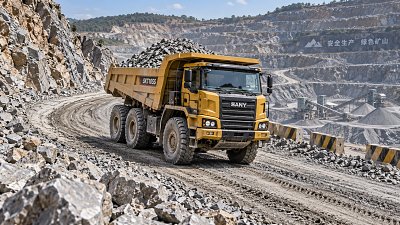
This matters even more in road transport equipment, where dump trucks may serve mining roads, urban construction, quarry hauling, or infrastructure projects.
Each use case changes axle load, body material, tire choice, hydraulic system, and emissions requirements.
A global B2B platform focused on heavy trucks can help narrow options faster.
It becomes easier to compare suppliers, review product categories, and cross-check market information before placing a large order.
Which cost factors usually drive a dump truck bulk order?
Specification is usually the first cost driver.
Engine power, payload rating, drive type, dump body volume, steel thickness, and hydraulic brand can change pricing quickly.
A 6x4 tipper for standard construction work is priced very differently from an 8x4 unit built for overloaded quarry routes.
The second factor is production scale and factory capacity.
A supplier may offer a lower initial figure, then extend lead time because chassis, axles, or cylinders are not available in volume.
That delay can create idle equipment gaps on site, which is a hidden cost.
Shipping terms also shape the true cost.
FOB, CIF, and DDP are not small contract details.
They change freight responsibility, insurance, customs handling, and risk transfer points.
A lower ex-factory quote may become less attractive after sea freight, inland delivery, port charges, and destination taxes.
Another common driver is technical localization.
Different regions require different emission levels, steering positions, warning devices, lighting standards, and homologation documents.
If those items are added late, the dump truck bulk order often becomes more expensive than planned.
A quick comparison helps expose hidden gaps
Before making a shortlist, it helps to review offers side by side.
How can you tell whether a low quote is actually competitive?
A low quote only works if the specification is truly aligned.
In practice, some quotations reduce cost by simplifying the body structure, changing tire brands, or omitting maintenance kits.
Those changes may not appear obvious in a short proforma invoice.
A better comparison method is to normalize the offers.
Use the same baseline for payload, wheelbase, engine standard, body dimensions, and included accessories.
Then review what remains different.
This is also where supplier transparency matters.
On an industry platform with broad heavy truck coverage, it is easier to compare product lines, supplier history, and adjacent categories such as spare parts or trailer systems.
That wider view often reveals whether a supplier is a long-term equipment source or only a trading contact with limited technical control.
Another clue is how the supplier handles technical questions.
If responses about chassis origin, steel grade, emissions certification, or lead time are vague, the low price may carry execution risk.
- Ask for a detailed configuration sheet, not only a model number.
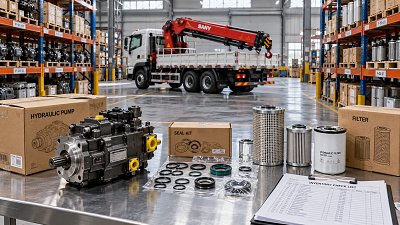
- Request the standard spare parts package for the dump truck bulk order.
- Confirm whether inspection, testing videos, or third-party checks are included.
- Review whether the quoted lead time matches actual component availability.
Where do delivery risks usually appear in a dump truck bulk order?
Delivery risk starts long before the trucks reach the port.
The first weak point is material and component scheduling.
If a supplier depends on outside chassis allocation or imported hydraulic parts, delays can cascade through the whole order.
Another issue is production consistency.
Large lots need stable welding quality, paint treatment, and final assembly control.
One sample truck may look excellent, while batch quality varies later.
Documentation risk is just as serious.
Missing certificates, incorrect HS codes, inconsistent VIN records, or weak export packing documents can hold cargo at customs.
Then there is shipping risk.
Ro-ro and container arrangements follow different schedules, loading methods, and port limitations.
For some markets, inland delivery after arrival is the real bottleneck, not ocean transit itself.
A practical way to reduce uncertainty is to divide the timeline into checkpoints.
- Order confirmation and technical sign-off
- Key parts availability verification
- Mid-production inspection
- Pre-shipment test and photo record
- Original document review before vessel departure
These checkpoints make a dump truck bulk order easier to manage across borders and time zones.
What should be checked before choosing a supplier for repeated orders?
The first order tests price and delivery.
Repeated orders test reliability.
That means looking beyond one shipment and asking whether the supplier can support fleet continuity.
A reliable supplier should provide stable parts supply, predictable specification control, and clear communication on production changes.
This is especially important when dump trucks operate alongside other heavy equipment.
If a platform already covers complete trucks, construction machinery, trailers, and spare parts, it becomes easier to build a more complete sourcing picture.
That ecosystem view supports better planning for maintenance, expansion, and mixed fleet compatibility.
The most useful pre-order checks usually include the following points.
How can a dump truck bulk order be planned with fewer surprises?
The safest approach is to build the order around operating reality, not brochure language.
Start with route conditions, expected payload, unloading frequency, and local compliance needs.
That makes it easier to define the right truck before discussing price.
Next, compare at least several suppliers on the same technical basis.
A specialized heavy truck marketplace can support this step by bringing together supplier information, product categories, and market references in one place.
That does not remove all risk, but it improves visibility and shortens the gap between inquiry and judgment.
For a dump truck bulk order, the best decisions usually come from balancing four points together.
- Technical fit for the job
- Transparent total landed cost
- Realistic delivery schedule
- Support after the trucks enter service
If any one of those is weak, the lowest offer may become the most expensive choice later.
A useful next step is to prepare a specification checklist, a landed cost sheet, and a delivery milestone plan before confirming the supplier.
That simple structure turns a dump truck bulk order into a more controlled and comparable sourcing process.
Trending News
- How order size affects wholesale pricing for cement mixer trucks
- Commercial Vehicle Leaders Hold Firm in Q1–Q3 2026 Automotive Influence Index
- How to choose a refrigerated truck for multi-stop urban deliveries
- Tata Motors Returns to Q2 Profit on Strong Commercial Vehicle Demand
- How to load an excavator onto a lowbed trailer without tipping
Tag
Recommended News
 Buying GuideHow order size affects wholesale pricing for cement mixer trucksExplore truck cement wholesale pricing by order size. Compare volume discounts, landed costs, and delivery terms to secure better value and avoid costly overbuying.
 Buying GuideHow to choose a refrigerated truck for multi-stop urban deliveriesKeep your truck refrigerated through every urban delivery stop. Learn how to compare cooling capacity, payload and door layouts to protect cargo and choose the right vehicle.
 Buying GuideHow much torque does a truck engine need for heavy-duty hauling?How much truck engine torque do you need? Explore the 1,250–2,050 lb-ft range and learn how load, gearing, and gradients shape the right choice for heavy-duty hauling.
 Buying GuideHow to assess a crane truck distributor's spare parts supportAssess a crane truck distributor's spare parts support with practical checks for stock, delivery, and technical expertise. Discover how to reduce downtime and buy with confidence.
 Buying GuideHow to verify spare parts availability with a crane truck supplierChoosing a crane truck supplier? Learn how to verify spare parts stock, compatibility, delivery times, and support commitments to reduce downtime and buy with confidence.
 Buying GuideHow to verify a truck trailer OEM's claimed payload capacityVerify a truck trailer OEM's payload claim with tare records, load calculations, and structural evidence. Learn key checks to avoid costly mistakes and buy with confidence.
 Buying GuideHow does operating weight affect the price of a new excavator?See how operating weight affects excavator price, transport costs, and productivity. Compare configurations and uncover the best value for your next equipment purchase.
 Buying GuideHow to compare concrete mixer truck suppliers by total landed costCompare truck cement mixer supplier quotes by total landed cost, including freight, duties, and delivery. Uncover hidden charges and choose the best-value truck for your fleet.
 Buying GuideWhen does heavy equipment transport require a lowboy trailer?Does your heavy equipment need a lowboy trailer? Discover how loaded height, weight distribution, loading access, and route limits determine the right choice for safe transport.
 Buying GuideHow to choose an off road truck for steep and unstable job sitesChoose the right off road truck for steep, unstable job sites. Compare traction, braking, stability, clearance, payload, and route-test essentials.
 Buying GuideHow to match crane truck lifting capacity to your jobsite loadsCrane truck capacity planning made clear: calculate gross load, radius, rigging, outriggers, and ground conditions to select safer, job-ready lifting equipment.
 Buying GuideHow to match lowbed trailer deck height to your hauling equipmentLowbed trailer deck height guide: match equipment clearance, ramp geometry, axle loads, tractor fit, and route limits for safer, more efficient hauling.
 Buying GuideWhat to verify before choosing a delivery truck supplier for school transportationDelivery truck supplier for school transportation: verify route fit, payload, safety, compliance, service support, and total cost before choosing a reliable partner.
 Buying GuideWhat an excavator manufacturer catalog should show before you compare modelsExcavator manufacturer catalog guide: verify supplier identity, configurations, hydraulics, compliance, parts support, and delivery readiness before comparing models.
 Buying GuideWhat to check before appointing a bulldozer distributorBulldozer distributor selection guide: evaluate service, parts availability, warranty, pricing, compliance, and lifecycle value to reduce downtime and protect fleet investment.
 Buying GuideWhat to verify before choosing a truck cement mixer supplierTruck cement mixer supplier checklist: verify chassis fit, drum quality, hydraulics, compliance, spare parts, and after-sales support before you buy.
 Buying GuideHow to verify a truck spare parts supplier before placing a bulk orderTruck spare parts supplier verification made practical: learn how to check part specifications, factory control, test records, samples, pricing, and delivery capability before placing a bulk order.
 Buying GuideWhat size truck container is right for a typical freight load?Truck container sizing made simple: compare payload, volume, pallet layouts, route access, and loading needs to choose the most efficient freight solution.
 Buying GuideWhat drives semi trailer price differences between similar models?Semi trailer price differences come down to frame materials, axles, suspension, coating, and configuration. Compare specifications line by line to choose lasting value.
 Buying GuideHow to compare excavator manufacturer price lists before requesting quotesCompare an excavator manufacturer price list with confidence. Learn to normalize configurations, calculate landed costs, assess options and service, and create stronger RFQs.
 Buying GuideHow to choose a mixer truck drum capacity for your concrete pourMixer truck capacity guide: match drum size to pour rate, legal payload, site access, and delivery cycles for efficient, reliable concrete placement.
 Buying GuideHow to size a bulldozer for construction site grading workBulldozer for construction sizing guide: match weight, blade, traction, grade control, and transport needs to improve grading productivity and costs.
 Buying GuideHow to assess a truck cement manufacturer’s build quality before orderingTruck cement manufacturer build quality: assess tank steel, welding, chassis integration, pneumatic systems, factory QC, and inspection evidence before ordering.
 Buying GuideWhen does a truck trailer OEM make sense for private-label fleets?Truck trailer OEM programs help private-label fleets cut lifecycle costs, standardize operations, and improve uptime. Learn when customization delivers real commercial value.
 Buying GuideWhat to verify before choosing a water truck OEM for your fleetWater truck OEM selection guide: verify chassis compatibility, tank quality, pump performance, compliance, and service support to build a safer, more reliable fleet.