What Affects Fuel Tank Truck Pricing Across Markets
Fuel tank truck pricing varies widely across regions, shaped by chassis specifications, tank capacity, safety standards, material costs, and supplier capabilities. For buyers comparing a fuel tank truck with options like a construction truck, refrigerated truck, mixer truck, or truck mounted crane, understanding these cost drivers is essential. This guide helps procurement teams, distributors, and market researchers evaluate price differences across markets and identify reliable sourcing opportunities.
Why does fuel tank truck pricing differ so much across markets?
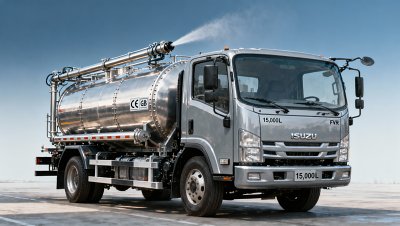
In the road transport equipment industry, a fuel tank truck is not priced as a simple commodity. Buyers usually see wide quotation gaps because the vehicle combines a commercial truck chassis, a hazardous liquid tank body, pumping or metering systems, and market-specific compliance requirements. Even when two units look similar on paper, their final cost can differ based on axle layout, payload class, steel or aluminum tank material, and destination regulations.
Across export markets, one of the first pricing variables is tank capacity. Common ranges such as 5,000 liters to 30,000 liters affect not only material consumption but also chassis selection, suspension strength, and braking requirements. A smaller urban refueling truck may prioritize maneuverability, while a long-haul fuel tanker for industrial distribution often requires higher gross vehicle weight capacity and stronger safety systems, which raises the procurement budget.
Another major factor is manufacturing depth. Some suppliers offer standard fuel tank truck configurations with limited customization, while others provide 3-stage solution development covering chassis matching, tank layout, and discharge system integration. The more project-specific the configuration becomes, the more engineering time, production coordination, and pre-delivery inspection are needed. This directly influences ex-works pricing and lead times that commonly fall within 4–12 weeks depending on specification complexity.
For procurement teams, the real question is not only “What is the price?” but “What is included in the price?” This is especially important when comparing a fuel tank truck with other special vehicles such as a refrigerated truck, mixer truck, construction truck, or truck mounted crane. Different truck types may share a chassis family, but their superstructure cost logic, compliance burden, and operating risk profile are very different.
Core market variables that move quotes up or down
- Chassis origin and driveline specification, including 4x2, 6x4, or 8x4 layouts for different payload and route conditions.
- Tank volume and compartment count, since multi-compartment designs often add fabrication time and valve complexity.
- Material choice such as carbon steel, stainless steel, or aluminum alloy, each with different cost, corrosion behavior, and tare weight implications.
- Required accessories, including pumps, flow meters, bottom loading, vapor recovery interfaces, and anti-overflow devices.
- Destination market certification, inspection, and documentation needs that can extend delivery by 1–3 weeks.
For distributors and agents, these variables also affect resale positioning. A low-entry quotation may look competitive at first, but if it excludes critical export packaging, parts support, or technical documents, the total acquisition cost can rise after contract signing. That is why price benchmarking must be paired with specification matching and supplier verification.
Which technical and cost elements have the biggest impact on a fuel tank truck quote?
When buyers compare fuel tank truck pricing across countries, technical configuration usually explains more of the gap than headline negotiation. A truck built for municipal fuel delivery may use a simpler setup, while a unit intended for mining support, depot transfer, or cross-regional petroleum distribution may require reinforced structure, higher-capacity pumping, and stricter safety arrangements. These details raise both production cost and pre-shipment inspection effort.
Tank material is one of the clearest examples. Carbon steel remains a common choice because of its practical balance between cost and durability, but it increases vehicle weight compared with aluminum in many applications. Aluminum alloy may reduce tare weight and improve payload efficiency, yet its fabrication and repair requirements are more demanding. For fleets working under axle load restrictions, lower dead weight can justify a higher initial price over a 3–5 year operating cycle.
The same applies to pumping and discharge systems. A basic gravity discharge arrangement costs less than a package with pump, meter, hose reel, and control valves. If the truck must support retail-style delivery or accurate volume transfer, metering equipment and line layout become more important. In these cases, buyers should review calibration approach, maintenance access, and spare part replacement intervals rather than focusing only on the vehicle shell.
Below is a practical breakdown of common pricing drivers in fuel tank truck sourcing. The ranges are indicative of industry decision factors rather than fixed market quotations, and they help procurement teams compare offers on a like-for-like basis.
This comparison shows why two fuel tank truck offers with similar gross appearance can still be priced far apart. For business evaluators, the most useful approach is to separate the quote into 5 core cost layers: chassis, tank body, transfer system, safety equipment, and export service scope. That makes cross-market comparisons more transparent and reduces the risk of under-specifying the truck.
How fuel tank trucks compare with other special trucks
Many buyers also evaluate a fuel tank truck against other commercial vehicle categories when planning inventory, dealership strategy, or fleet expansion. While a construction truck, refrigerated truck, mixer truck, or truck mounted crane may use related truck platforms, the body system and regulatory requirements differ significantly. This affects not only purchase cost but also after-sales support, driver training, and parts planning over the first 12–24 months of operation.
The table below helps buyers compare operational and sourcing logic across common special vehicle categories. This is particularly useful for distributors deciding which product lines to prioritize in a regional market.
The comparison makes one thing clear: fuel tank truck pricing is strongly shaped by risk control and fluid handling functionality. Buyers who ignore those differences may compare special-purpose trucks on chassis price alone and end up selecting the wrong product strategy for their market.
How should procurement teams evaluate quotations before making a decision?
A practical procurement review should move through 4 steps: define application, confirm configuration, check compliance scope, and verify supplier support. This framework helps buyers avoid the common mistake of approving a low quotation before confirming whether the truck can legally and safely operate in the destination market. In fuel tank truck sourcing, missing one technical detail can create expensive rework after delivery.
Start with route and cargo conditions. A distributor supplying fuel stations in urban zones may need a compact wheelbase and easier unloading arrangement. An industrial buyer moving diesel to construction or mining sites may need stronger ground clearance, more robust suspension, and larger compartment volume. These differences affect chassis class, tank shape, and accessory selection. They also influence whether a 4x2, 6x4, or heavier platform is more economical over time.
Then review the supplier offer line by line. Ask whether the quotation includes tank testing, pipeline layout, standard tool kit, spare seals, manuals, and export preparation. In many cross-border deals, technical omissions create more cost than the initial price difference. A 7–15 day delay caused by incomplete documents or missing inspection details can disrupt project schedules, especially when tenders or seasonal fuel demand are involved.
The most reliable procurement decisions usually balance three dimensions: vehicle fit for use, compliance fit for market, and supplier fit for long-term support. This is where a specialized industry platform becomes valuable, because sourcing is not only about finding a manufacturer but also about comparing options across categories, specifications, and market requirements in one place.
A practical checklist for fuel tank truck sourcing
- Confirm the required liquid type, daily delivery frequency, and target volume range before requesting a quote.
- Match tank capacity and compartment count to local route limits, axle loads, and unloading practice.
- Review whether safety devices, grounding parts, emergency shut-off functions, and labeling are included.
- Check lead time, spare parts planning, and whether technical documents will be delivered in the required language.
- Compare at least 3 supplier offers using the same specification sheet to reduce hidden price distortion.
What buyers often overlook
Procurement teams often spend most of their attention on the visible tank body and too little on serviceability. Yet maintenance access to valves, pumps, and bottom-loading hardware matters across the first 6–18 months of use. If replacement parts are difficult to source, a lower-priced truck can become a higher-cost asset through downtime and slower field repair.
Another overlooked issue is platform compatibility for multi-product distributors. Companies selling both fuel tank trucks and products such as trailers, construction machinery, or spare parts benefit from sourcing through a specialized B2B ecosystem that helps them compare product families, evaluate suppliers, and build broader commercial relationships instead of making isolated purchases.
What role do compliance, documentation, and supplier capability play in pricing?
In hazardous liquid transport, compliance is not a secondary issue added after production. It shapes design, fabrication, inspection, and delivery cost from the beginning. Different countries or regions may ask for different documents, testing evidence, plate markings, or safety component arrangements. Even when a supplier offers a competitive fuel tank truck price, the value of that quote depends on whether it aligns with destination requirements.
Common checkpoints include tank weld quality records, pressure or leak testing routines, axle and load suitability, and documentation for installed components. In export business, buyers should also verify packing method, shipment preparation, and whether the supplier can support pre-shipment communication with freight forwarders or inspection agencies. These process details may not look like product cost, but they affect total landed cost and delivery certainty.
Supplier capability also influences pricing consistency. A manufacturer with mature production coordination, stable parts sourcing, and structured documentation can usually provide clearer quotation boundaries. By contrast, a supplier that prices aggressively without disciplined technical confirmation may later request changes because valves, pumps, or special materials were not fully considered in the first round.
For this reason, many buyers now rely on specialized industry platforms rather than fragmented sourcing channels. A professional heavy truck marketplace helps users compare manufacturers, browse truck categories, review industry insights, and shorten supplier screening cycles from several weeks to a more manageable research window. This is especially useful for distributors and commercial evaluators handling multiple product lines and multiple destination markets at the same time.
Common compliance and documentation points buyers should verify
- Tank fabrication records and inspection scope, including leak checks and compartment verification where applicable.
- Vehicle labeling, safety signage, and operating manuals aligned with destination usage needs.
- Accessory list confirmation for pumps, valves, meters, hose assemblies, and emergency devices.
- Delivery schedule milestones such as drawing confirmation, production, inspection, and shipping release.
A buyer does not need every supplier to offer the same service package. But each quote should clearly show what is included, what is optional, and which items may affect the final shipment date. In fuel tank truck procurement, visibility reduces risk more effectively than headline discounting.
Frequently asked questions buyers ask about fuel tank truck pricing
Search intent around fuel tank truck pricing often comes from buyers who are still narrowing their specification. The questions below address common commercial concerns from information researchers, procurement staff, and channel partners comparing cross-market supply options.
How many supplier quotations should I compare?
Comparing at least 3 quotations is a practical starting point, but only if the specification sheet is consistent. If one offer includes a pump and metering system while another covers only basic discharge, the price difference is not meaningful. Standardize 5–8 key items first, such as chassis layout, tank volume, compartment count, material, and required safety devices.
Is a lower fuel tank truck price always better for distributors?
Not necessarily. A lower purchase price can help market entry, but distributors also need predictable spare parts, repeatable build quality, and technical documents for local sales support. If after-sales capability is weak, the distributor may spend more on troubleshooting and customer retention during the first 12 months than was saved in the initial deal.
What is a typical lead time for a fuel tank truck order?
Lead time depends on chassis availability, tank complexity, and destination documentation. For standard configurations, buyers often see production windows around 4–8 weeks. Customized units with special compartment design, aluminum tanks, or added transfer systems may require 8–12 weeks, excluding shipping transit. Early confirmation of drawings and accessories helps prevent avoidable delay.
What are the most common pricing mistakes in cross-border sourcing?
The most common mistakes are comparing non-equivalent specifications, ignoring compliance scope, and failing to define delivery inclusions. Buyers also overlook operating factors such as road conditions, unloading method, and service parts availability. A quote should be evaluated as a full operational package, not just as a tank body mounted on a truck chassis.
Why work with a specialized heavy truck B2B platform for fuel tank truck sourcing?
For international buyers, the challenge is rarely limited to finding one fuel tank truck supplier. The bigger challenge is screening the right manufacturers, comparing technical options efficiently, and understanding how one product fits a larger fleet or dealership strategy. The Global Heavy Truck Industry Platform supports this process by connecting buyers, suppliers, manufacturers, and distributors across the commercial vehicle and heavy equipment supply chain.
Because the platform covers truck chassis and cab, complete trucks, construction machinery, trailers and semi-trailers, light trucks, and spare parts, buyers can compare product categories within one professional ecosystem. This is valuable for companies deciding between a fuel tank truck and other special-purpose vehicles, or for distributors who plan to expand from one truck line into adjacent equipment segments over the next 6–24 months.
The platform also helps reduce sourcing uncertainty by combining product discovery with industry insights, supplier comparison, and global trade collaboration. Instead of relying on isolated quotations, buyers can review broader market options, identify suitable partners, and prepare more informed purchasing decisions. That is especially useful when certification expectations, delivery schedules, and customization needs vary from market to market.
If you are evaluating fuel tank truck pricing across markets, you can use the platform to discuss parameter confirmation, product selection, delivery cycles, customization scope, documentation needs, spare parts planning, and quotation alignment. For distributors and project buyers, this creates a clearer path from initial inquiry to supplier shortlisting and commercial negotiation.
What you can consult before requesting a formal quote
- Recommended tank capacity and chassis type based on road conditions, route length, and payload goals.
- Comparison of standard versus customized fuel tank truck configurations for your target market.
- Typical delivery cycle, production checkpoints, and export document preparation requirements.
- Supplier matching for dealerships, distribution projects, fleet procurement, or tender preparation.
- Cross-category sourcing support if you also need trailers, construction equipment, truck parts, or related commercial vehicles.
If your team is comparing multiple fuel tank truck offers, planning a dealership line, or assessing market entry opportunities, now is the right time to submit your target parameters. Share your preferred capacity range, chassis layout, application scenario, compliance expectations, and delivery timeline, and you can move faster toward a supplier list and quotation set that is relevant, comparable, and commercially actionable.
Trending News
- China's MW-Class Hydrogen Aviation Turboprop Engine First Flight
- Oil Prices Rise, Airlines Cut Capacity, Land Freight Costs Pressure
- Henan's 2026 Key Projects List: RMB 1 Trillion Investment Drives Heavy-Duty & Special Vehicle Demand
- Guangxi Xijiang Waterway Enforces Zero Discharge for Vessel Pollutants
- China Accelerates Low-Altitude Economy Clusters, Boosting Demand for Smart Airport Tugs
Tag
Recommended News
 Market AnalysisChina Accelerates Low-Altitude Economy Clusters, Boosting Demand for Smart Airport TugsSmart airport tugs surge as China accelerates low-altitude economy clusters — boosting demand for electric, AGV-integrated, and ISO/IEC 27001-certified ground support equipment.
 Market AnalysisShanxi Launches 3-Year Beautiful Highway Initiative with EV Freight IncentivesEV freight incentives drive Shanxi's 3-year Beautiful Highway Initiative — boosting demand for electric light/micro-trucks in rural logistics.
 Market AnalysisHormuz Strait Blockade Spurs Global Logistics Costs, Accelerates Shift to Chinese New Energy TrailersThe Hormuz Strait blockade has skyrocketed global logistics costs, driving demand for Chinese new energy trailers. Discover how battery-swapping & hydrogen trailers offer cost-efficient alternatives for EU/US operators facing fuel volatility.
 Market AnalysisGlobal Oil Price Surge Drives Up Diesel Truck Costs, Accelerating Shift to Chinese New Energy AlternativesGlobal oil price surge drives diesel truck costs up, accelerating shift to Chinese new energy alternatives. Learn how logistics firms are adopting electric & hydrogen trucks amid record fuel prices.
 Market AnalysisChina's Logistics Prosperity Index Rebounds in March, Stabilizing Land Transport Equipment DeliveryChina's Logistics Prosperity Index (LPI) rebounds to 53.2% in March 2026, stabilizing land transport equipment delivery cycles (28-35 days) for export orders. Manufacturers, supply chain firms, and traders should monitor this recovery for optimized operations.
 Market AnalysisWhen Does a Truck Mounted Crane Make More SenseTruck mounted crane vs construction truck, lowbed trailer, and mixer truck: discover when self-loading transport cuts costs, boosts site efficiency, and improves fleet ROI.
 Market AnalysisWhat Affects Fuel Tank Truck Pricing Across MarketsFuel tank truck pricing across markets depends on chassis, tank capacity, materials, and compliance. Compare with construction truck, refrigerated truck, mixer truck, and truck mounted crane to source smarter.
 Market AnalysisCommercial Vehicle Parts Market Trends for 2026Commercial vehicle parts trends for 2026: compare truck cylinder, truck injector, bulk cement trailer and bulk cement tanker solutions from a trusted construction machinery supplier and truck spare parts supplier.
 Market AnalysisTruck Cement Price Keeps Shifting: What Is Driving the Change?Truck cement price is shifting fast. Learn what affects truck trailer price, semi trailer price, and how to choose a reliable semi trailer supplier for smarter sourcing and better deals.
 Market AnalysisTruck Trailer Price in 2026: What Is Changing and WhyTruck trailer price in 2026 is shifting fast. Explore truck trailer for sale trends, semi trailer price factors, and how a trusted semi trailer supplier helps buyers source smarter.
 Market AnalysisDump truck price inflation isn’t uniform — here’s which components drove the biggest hikesDump truck for sale & truck tipper price insights: discover which components drove 73% of recent inflation—and how to source smartly from top dump truck manufacturers.
 Market AnalysisTruck trailer price jumps in Q1 2026 — what caused the sudden shift?Dump truck price & truck trailer price surged in Q1 2026. Discover why — steel costs, emissions rules, supply delays — and compare dump truck for sale, semi trailer for sale, bulldozer for land clearing & more with verified manufacturers.
 Market AnalysisWhy dump truck prices vary so much between models in 2026Dump truck for sale? Explore why dump truck price, truck tipper price & truck trailer price vary in 2026—specs, use case & region drive real value. Get certified quotes now!
 Market Analysis2025 China Freight Volume Hits 587B Tonnes, Boosting Heavy-Duty Truck ExportsHeavy-duty truck exporters gain credibility as China’s 2025 road freight hits 312B tonnes — boosting global demand, supply chain confidence, and export opportunities.
 Market AnalysisHow to Compare an Excavator Manufacturer Beyond Price ListsExcavator manufacturer selection goes beyond price. Compare quality, lead time, service, and parts support across wing van truck, light duty truck, and heavy duty trucks for sale.
 Market AnalysisBulldozer supplier reliability vs. lead time — what’s the real trade-off in 2026?Bulldozer supplier reliability vs. lead time: Discover how top bulldozer manufacturers & excavator suppliers balance speed, compliance, and uptime for road construction, Canada, South Africa & Australia.
 Market AnalysisWhy curtain side trailers outperform flatbeds in multi-stop urban freight — real-world data from BerlinCurtain side trailer advantages over flatbed, stake, gooseneck & bulk trailers—real Berlin fleet data on speed, security & compliance. Discover why van trailer buyers choose them.
 Market AnalysisStake trailer wood decking alternatives gaining traction in North America — 2025 adoption trendsStake trailer, van trailer & flatbed trailer operators: Discover durable, lightweight wood decking alternatives—aluminum, FRP & composite—boosting ROI in 2025.
 Market AnalysisExcavator for sale in 2026: What’s changed in dealer inventory and pricing tiers?Excavator for sale in 2026: Real-time dealer inventory, excavator price trends, EXCAVATOR for demolition configs, and attachment-ready models — all verified on the Global Heavy Truck Industry Platform.
 Market AnalysisExcavator price inflation slowed in Q2 2026 — but only for models under 12 tonsExcavator for sale at stabilized prices: Q2 2026 brings relief for sub-12-ton models. Compare excavator price, attachment options & OEM quotes—get real-time construction machinery quotation now.
 Market AnalysisWater truck bulk order MOQs are rising — but not for the reasons you thinkWater truck bulk order MOQs are rising—driven by OEM capacity, compliance, and consolidation. Compare construction machinery, crane & logging truck bulk order costs intelligently.
 Market AnalysisWheel loader tire selection shifts as quarry surfaces get more abrasiveOptimize wheel loader, dump truck & heavy duty truck tire selection for abrasive quarries—boost traction, durability & TCO savings. Explore verified truck parts now.
 Market AnalysisTruck suspension airbag lifespan varies by regional road conditions — not just load weightTruck suspension airbags for refrigerator truck, wing van truck & SHACMAN F2000 6x4 Sprinkler — lifespan hinges on regional road conditions, not just load. Discover data-backed selection insights.
 Market AnalysisBulldozer producer vs. excavator manufacturer in USA: How supply chain resilience differs by originBULLDOZER for road construction vs. excavator manufacturer in USA: Compare supply chain resilience, ISO certification, and global exporters—optimize sourcing now.
 Market AnalysisChina's Vehicle Ownership Hits 469M, Driver Training System Gains Global EdgeChina's 469M vehicles & advanced driver training system create global export opportunities. Learn how A2/A1 license programs give commercial vehicle makers an edge in emerging markets.