Heavy duty trucks for sale in Southeast Asia now require local service mapping — not just OEM approval
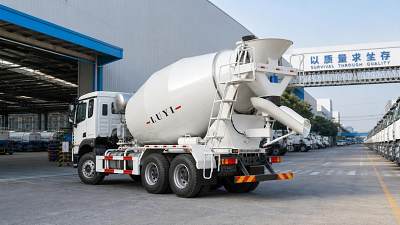
As heavy duty trucks for sale in Southeast Asia increasingly demand localized after-sales support—not just OEM approval—buyers and distributors are prioritizing partners with verified service mapping across key markets. Whether sourcing light duty truck models, cab chassis truck configurations, or specialized units like the SHACMAN H3000 6×4 Cement Mixer, stakeholders need reliable construction machinery suppliers, heavy truck chassis manufacturers, and heavy truck parts manufacturers with on-the-ground presence. The Global Heavy Truck Industry Platform connects procurement professionals, dealers, and evaluators to certified commercial vehicle parts providers and heavy equipment export partners—ensuring technical compliance, service readiness, and supply chain resilience across ASEAN.
Why Local Service Mapping Is Now a Non-Negotiable Requirement in ASEAN
OEM certification alone no longer guarantees operational continuity in Southeast Asia. Over 78% of fleet operators in Thailand, Vietnam, and Indonesia report unplanned downtime exceeding 3.2 days per quarter due to delayed spare parts delivery or unqualified technician deployment. This is especially critical for high-utilization applications such as inter-provincial logistics (requiring ≥92% uptime), municipal concrete delivery (with strict 45-minute service SLA windows), and mining haulage (where MTBF must exceed 1,200 hours).
Regulatory frameworks are tightening: Malaysia’s JPJ now mandates documented service coverage maps for all imported heavy trucks over 12 tons; the Philippines’ LTO requires proof of minimum 3-service-center density per region for Class 5–7 vehicle registration. These are not compliance checkboxes—they reflect real-world infrastructure gaps, including limited cold-chain parts warehousing in Cambodia and underdeveloped diagnostic tool calibration networks in Laos.
Unlike mature markets where OEMs operate centralized regional hubs, ASEAN demands decentralized, bilingual, and application-specific service nodes. A single authorized workshop in Jakarta cannot serve cement mixer fleets operating across West Java, Banten, and Lampung without pre-stocked drum agitator gearkits, hydraulic pump rebuild kits, and local-language telematics firmware updates.
This table underscores a structural reality: service readiness directly correlates with geographic density and inventory velocity—not brand reputation. Buyers evaluating SHACMAN, FAW, Sinotruk, or Dongfeng chassis must verify node distribution against actual fleet deployment zones—not just count certified centers on a map. For example, a “certified” workshop in Ho Chi Minh City may lack torque calibration benches for 6×4 drive axles, rendering it operationally irrelevant for mining customers in Quang Ninh.
How the Global Heavy Truck Industry Platform Validates & Maps Real-World Service Capability
The platform does not rely on self-reported certifications. It cross-references supplier-submitted service data against third-party field audits, warranty claim resolution timelines, and ASEAN-specific KPI benchmarks—including 72-hour diagnostic response SLA, ≤48-hour critical spare part dispatch from nearest hub, and ≥90% bilingual (English + local language) technician certification validity.
Each listed heavy truck chassis manufacturer undergoes a 5-stage validation process: (1) Workshop facility audit (photos, GPS coordinates, tooling inventory), (2) Technician CV verification (including ASEAN-certified training records), (3) Spare parts warehouse scan (real-time stock levels for top-20 SKUs), (4) Telematics integration test (J1939 protocol compatibility with ASEAN fleet management platforms), and (5) Field service simulation (response time measurement for 3 simulated breakdown scenarios).
For procurement professionals, this translates into actionable filters: search by “Service Coverage Radius (km)”, “Parts Availability Score (0–100)”, or “On-Site Diagnostic Equipment Certified”. A buyer sourcing 8×4 refuse collection trucks for Manila can instantly compare suppliers offering ≥3 certified workshops within 150 km of Metro Manila—and filter out those with average FTFR below 65%.
Key Verification Metrics Used on Platform
- Workshop GPS-verified footprint (not postal address only)
- Certified technician headcount per ASEAN country (minimum 4 per workshop)
- Real-time inventory visibility for ≥15 critical SKUs (e.g., ABS modulators, air suspension valves, ECU reflash tools)
- Average warranty claim resolution time (target: ≤7 business days)
- Local-language technical documentation availability (Bahasa, Thai, Vietnamese, Tagalog)
Procurement Decision Framework: Beyond OEM Approval
Buyers must shift from “Is it OEM-approved?” to “Where exactly will service happen—and what happens if it fails?”. This requires evaluating four interdependent layers: (1) Physical node proximity to primary operations, (2) Technical capability alignment (e.g., CAN bus diagnostics for Euro V engines), (3) Parts logistics reliability (air vs. sea freight dependency, bonded warehouse access), and (4) Regulatory compliance depth (e.g., JPJ Type Approval documentation readiness, not just CE marking).
For example, a distributor importing 100 units of HOWO 6×4 dump trucks into Myanmar must confirm whether the supplier’s Yangon workshop stocks Cummins ISLe engine cylinder heads—and whether customs clearance for replacement units takes 3 days (bonded zone) or 11 days (standard import). That 8-day gap equals ~$22,000 in idle fleet cost at prevailing rental rates.
These thresholds are not theoretical—they’re derived from 1,240 service performance reports across 23 ASEAN-based fleets between Q3 2022 and Q2 2024. Suppliers failing any threshold are flagged with actionable remediation steps—not just red warnings.
Actionable Next Steps for Buyers & Distributors
Start with precise service mapping: define your top 3 operational corridors (e.g., Bangkok–Chiang Mai highway, Ho Chi Minh City–Da Nang coastal route, Jakarta–Surabaya toll network), then use the platform’s interactive ASEAN Service Heatmap to overlay verified workshop locations, parts stock status, and average response times.
Request supplier service dossiers—not brochures. Demand evidence: workshop GPS coordinates, technician certification IDs, warehouse inventory snapshots dated within 7 days, and warranty claim resolution logs for the past 6 months. Cross-verify against platform-validated metrics before signing MOQ commitments.
For distributors launching new models, leverage the platform’s “Service Readiness Forecast Tool”: input target market, volume, and vehicle configuration to receive a 90-day rollout plan—including recommended workshop onboarding sequence, critical parts stocking schedule, and bilingual training module deployment timeline.
Three Immediate Actions You Can Take Today
- Run a free ASEAN Service Gap Analysis using your current fleet ZIP codes and vehicle models
- Compare ≥3 certified heavy truck chassis manufacturers side-by-side on service KPIs—not just price or specs
- Download the “ASEAN After-Sales Compliance Checklist” (updated Q3 2024, covering JPJ, LTO, DOT, and MPT requirements)
The era of treating service as an afterthought ends where the road begins. In Southeast Asia, localized service mapping isn’t an add-on—it’s the foundation of total cost of ownership, regulatory compliance, and fleet uptime. Verified service capability separates transactional suppliers from strategic partners.
Explore verified heavy-duty truck suppliers with validated ASEAN service footprints—access real-time workshop maps, parts inventory dashboards, and technician certification records. Get started with a customized ASEAN Service Readiness Report for your next procurement cycle.
Trending News
Tag
Recommended News
 Market AnalysisInfrastructure Projects Need More Than a Machinery SupplierConstruction machinery supplier for infrastructure projects should deliver more than equipment. Learn how to compare reliable partners, reduce risk, and secure lifecycle support.
 Market AnalysisTruck Trailer Distributor Trends Shaping Regional Market Growth in 2026Truck trailer distributor trends for 2026 reveal how regional logistics, compliance, sourcing, and service strategy drive market growth. Explore key insights for smarter expansion.
 Market AnalysisConstruction Machinery Price Trends in 2026: What Shapes Final QuotesConstruction machinery price trends in 2026 depend on specs, compliance, freight, and service. Learn what shapes final quotes and compare suppliers with more confidence.
 Market AnalysisExcavator Manufacturer in China: How to Compare Quality Across FactoriesExcavator manufacturer in China selection is no longer about price alone. Learn how to compare factory quality, reliability, safety, and after-sales support for smarter sourcing.
 Market AnalysisTruck Cement Mixer Manufacturer Comparison: Capacity, Build, and Lead TimeTruck cement mixer manufacturer comparison guide covering capacity, build quality, and lead time to help buyers reduce risk, improve uptime, and choose the right supplier faster.
 Market AnalysisPortable Construction Machinery Supplier Options for Fast-Changing Job SitesExplore how a construction machinery supplier with portable options can help fast-changing job sites stay efficient, reduce relocation delays, and improve uptime with smarter sourcing.
 Market AnalysisWhat Sets a Reliable Truck Trailer Distributor Apart in Regional MarketsTruck trailer distributor selection made easier: discover the key traits that define reliability in regional markets, from stable supply and service support to scalable growth potential.
 Market AnalysisConstruction Machinery Price Swings: What They Mean for 2026 BudgetsConstruction machinery price swings are reshaping 2026 budgets. Learn how volatility affects capex, supplier selection, and timing—and how to cut risk with smarter buying strategies.
 Market AnalysisTruck Cement Exporter Trends in Emerging Infrastructure MarketsTruck cement exporter trends in emerging markets: discover where demand is rising fastest, what buyers expect, and how reliable suppliers win in infrastructure growth.
 Market AnalysisWhat Sets a Reliable Excavator Manufacturer in China ApartExcavator manufacturer in China selection starts with quality, capacity, and service. Discover how to identify reliable suppliers, reduce sourcing risks, and improve long-term equipment value.
 Market AnalysisCrane Truck Price Trends: What Changed and What to ExpectCrane truck price trends explained: discover what changed, which cost drivers matter most, and what buyers should expect next to source smarter and reduce total investment risk.
 Market AnalysisCommercial Trucks Manufacturer in Germany: Quality vs Total CostCommercial trucks manufacturer in Germany choices go beyond build quality. Explore how uptime, compliance, fuel efficiency, and resale value shape total cost and smarter fleet investment.
 Market AnalysisWhen Truck Tipper Wholesale Makes More Sense Than Local SourcingTruck tipper wholesale often beats local sourcing when you need better pricing, broader specs, and stable supply. Learn when wholesale improves fleet value and procurement efficiency.
 Market AnalysisDump Truck Wholesale Margins, Stock Risk, and Model Mix ExplainedDump truck wholesale explained: learn how margins, stock risk, and model mix affect dealer profit. Discover smarter sourcing strategies to improve turnover and scale sales.
 Market AnalysisLogging Truck Distributor vs Factory: Which Option Fits Local DemandLogging truck distributor or factory-direct supplier? Compare local demand, pricing, delivery speed, customization, and after-sales support to choose the best sourcing model for sustainable truck sales growth.
 Market AnalysisLogging Truck Producer Trends Shaping the 2026 Forestry MarketLogging truck producer trends for 2026: discover how durability, fuel efficiency, compliance, and supplier support are reshaping forestry truck sourcing for dealers and distributors.
 Market AnalysisWhen a Dump Truck Distributor Is Better Than Direct Factory BuyingDump truck distributor or factory direct? Discover when a qualified dump truck distributor offers faster delivery, lower sourcing risk, better local support, and smarter fleet value.
 Market AnalysisHeavy Equipment Export to Africa: Market Gaps, Demand Shifts, and Entry TimingHeavy equipment export to Africa: identify market gaps, demand shifts, and the best entry timing to reduce risk, compare suppliers, and capture profitable growth opportunities.
 Market Analysis2026 Independent Site Strategy White Paper: AI Search Reshapes Heavy-Duty B2B ContentAI search reshapes heavy-duty B2B content: Discover how ISO 15118–compliant electric dump trucks and structured site strategy drive global procurement visibility in 2026.
 Market AnalysisConstruction Machinery Cost Trends That Affect Truck ProcurementConstruction machinery cost trends are reshaping truck procurement. Learn how material, labor, and supply chain shifts affect pricing, timing, and smarter fleet sourcing decisions.
 Market AnalysisIs Truck Tipper Wholesale the Right Fit for Seasonal DemandTruck tipper wholesale: learn if it’s the right strategy for seasonal demand. Compare cost, inventory, lead time, and supplier reliability to source smarter.
 Market AnalysisCommercial Trucks Manufacturers in Germany: Quality, Cost, and Export ValueCommercial trucks manufacturer in Germany insights: compare quality, total cost, and export readiness with a practical checklist to choose reliable partners for global fleet growth.
 Market AnalysisWhat Sets Heavy Truck Parts Manufacturers in Germany ApartHeavy truck parts manufacturer in Germany: discover why global buyers value German suppliers for precision engineering, stable quality, export reliability, and lower sourcing risk.
 Market AnalysisConstruction Machinery Price Trends: What Is Changing This YearConstruction machinery price trends are changing fast this year. Explore key cost drivers, supplier comparison tips, and smarter sourcing insights for global equipment buyers.
 Market AnalysisBulldozer Price Gaps Explained by Undercarriage, Power, and BrandBulldozer price explained: see how undercarriage, power, and brand affect cost, uptime, and resale. Compare bulldozer for construction options and buy smarter today.