Huanggang Port Freight Closure Shapes Shenzhen-HK Logistics新格局
On December 20, 2026, the freight function of Huanggang Port was officially discontinued — marking the full operational shift to the ‘east-in-east-out, west-in-west-out’ cross-border logistics framework between Shenzhen and Hong Kong. This adjustment directly affects international trade enterprises, supply chain service providers, and manufacturers relying on land-based ASEAN export routes, as it reshapes transit efficiency, customs clearance capacity, and regional cargo distribution patterns.
Event Overview
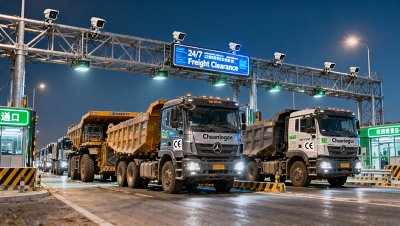
On December 20, 2026, the cross-border freight channel at Huanggang Port ceased operations. As confirmed in official updates, its freight volume had already been fully redistributed to Shenzhen Bay, Liantang, and Wenjindu ports since May 2026. Among them, Liantang Port’s dedicated heavy-truck clearance lane achieved a daily handling capacity of 1,800 vehicle trips. This reallocation reduced average overland transit time for heavy-duty trucks and special-purpose vehicles exported from South China to ASEAN markets by 1.8 days.
Industries Affected by Segment
Direct Trading Enterprises
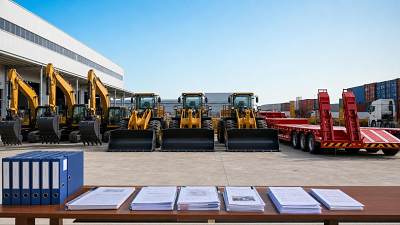
These enterprises — especially those exporting machinery, construction equipment, or industrial vehicles to ASEAN via land routes — face revised transit timelines and port-specific documentation requirements. The consolidation into three designated ports means stricter adherence to each port’s operating hours, inspection protocols, and electronic declaration systems.
Raw Material Procurement Enterprises
Procurement entities sourcing components or semi-finished goods from Hong Kong or Guangdong for onward export may experience tighter inland coordination windows. With freight now concentrated at fewer checkpoints, any delay at Liantang or Shenzhen Bay Port has amplified ripple effects across just-in-time inbound logistics schedules.
Manufacturing Enterprises
Manufacturers shipping finished goods (e.g., electric buses, modular housing units, or agricultural machinery) via road to ASEAN must adapt to new routing logic and documentation flows. The 1.8-day reduction in transit time is contingent on consistent utilization of Liantang’s high-capacity lane — making slot booking and pre-clearance coordination more critical than before.
Supply Chain Service Providers
Freight forwarders, customs brokers, and integrated logistics operators now manage higher throughput concentration at three ports instead of four. This increases demand for real-time visibility tools, bilingual documentation support (CN/EN), and contingency planning for congestion at Liantang — currently the sole heavy-truck-dedicated facility among the three.
What Relevant Enterprises or Practitioners Should Monitor and Do Now
Track official guidance on port-specific operational rules
Monitor announcements from the General Administration of Customs of China and the Hong Kong Customs and Excise Department regarding updated clearance procedures, permitted vehicle types, and required digital filing formats at Shenzhen Bay, Liantang, and Wenjindu ports — particularly for heavy-duty and oversized cargo.
Validate current routing plans against actual throughput data
Assess whether existing transport schedules align with Liantang Port’s confirmed 1,800-vehicle-per-day capacity — especially during peak export months (Q3–Q4). Consider staggered departure times or alternate port combinations (e.g., Wenjindu for lighter loads, Liantang for heavy trucks) to avoid bottlenecks.
Distinguish policy implementation from procedural readiness
While the ‘east-in-east-out, west-in-west-out’ framework is now formally in place, some supporting systems — such as unified EDI interfaces across all three ports or harmonized ASEAN certificate-of-origin verification — remain under phased rollout. Treat early-stage announcements as directional signals, not fully operational mandates.
Update internal logistics SOPs and vendor agreements
Revise standard operating procedures for cross-border documentation, driver training, and carrier selection criteria to reflect the three-port model. Where applicable, renegotiate service-level agreements with logistics partners to include Liantang-specific performance benchmarks (e.g., gate-in-to-clearance time).
Editorial Perspective / Industry Observation
Observably, this port restructuring is less a sudden disruption and more the formalization of an ongoing structural shift — one driven by infrastructure optimization and regional integration goals. Analysis shows the 1.8-day transit improvement is a measurable outcome, but its sustainability depends on continued investment in Liantang’s supporting road networks and digital customs infrastructure. From an industry perspective, the closure of Huanggang’s freight function signals that the Shenzhen–Hong Kong corridor is prioritizing specialization (e.g., Liantang for heavy trucks) over redundancy — suggesting future adjustments will likely focus on functional calibration rather than geographic expansion. Current attention should therefore center on execution fidelity, not strategic direction.
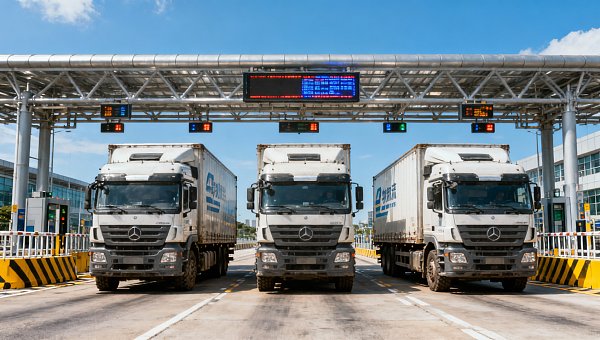
Conclusion: The discontinuation of Huanggang Port’s freight function does not represent a logistical contraction, but a recalibration toward higher-capacity, functionally differentiated border crossings. It is best understood not as an isolated administrative change, but as an operational milestone confirming the maturation of the ‘east-in-east-out, west-in-west-out’ logistics architecture — with tangible implications for lead time planning, port selection strategy, and cross-border compliance workflows.
Information Sources: Official notices issued by the General Administration of Customs of China (2026); public operational data released by Shenzhen Municipal Transport Bureau (May–December 2026). Ongoing monitoring is advised for updates on digital customs integration across the three designated ports.
Trending News
- Truck Trailer Exporter Comparison: Pricing, Certification, and After-Sales
- Truck Cement Exporter Selection: Compliance Points for Cross-Border Deals
- Dump Truck Distributor Trends in 2026: Margin, Stock, and Service
- How a Truck Cement Manufacturer Ensures Consistent Load Quality
- Dump Truck Bulk Order Risks: What to Confirm Before Signing
Tag
Recommended News
 Truck ExportTruck Trailer Exporter Comparison: Pricing, Certification, and After-SalesTruck trailer exporter comparison guide covering pricing, certification, factory capability, and after-sales support. Learn how to compare suppliers smarter and reduce sourcing risk.
 Truck ExportTruck Cement Exporter Selection: Compliance Points for Cross-Border DealsTruck cement exporter selection starts with compliance. Learn how to verify documents, technical standards, and service terms to reduce cross-border risk and secure smoother deals.
 Truck ExportCrane Truck Exporter Options: Matching Lifting Capacity to Project NeedsCrane truck exporter insights for matching lifting capacity to real project needs. Compare specs, reduce risk, control costs, and choose the right truck with confidence.
 Truck ExportDump Truck Exporter Costs Explained: Shipping, Duties, and Hidden FeesDump truck exporter costs go far beyond the factory price. Learn how shipping, duties, compliance paperwork, and hidden fees affect landed cost and smarter sourcing decisions.
 Truck ExportTruck Tipper Exporter Review: What to Check Before Signing an Overseas OrderTruck tipper exporter review guide: learn what to check before signing an overseas order, from compliance and specs to inspection, shipping, and after-sales support.
 Truck ExportCodelco Launches Tender for 200 L4 Autonomous Mining TrucksCodelco's L4 autonomous mining trucks tender: 200 units, 90t payload—key opportunity for Chinese OEMs & Chilean integrators. Act now!
 Truck ExportChina-Laos Cross-Border Heavy Truck Transport Pilot LaunchedChina-Laos heavy truck transport pilot launched: 'single inspection, mutual recognition' slashes clearance to 2.8 hours — boost exports, streamline logistics & unlock ASEAN road freight opportunities.
 Truck ExportWater Truck Exporter Selection: Key Delivery and Compliance RisksWater truck exporter selection now demands more than price checks. Learn the key delivery, compliance, and after-sales risks that can delay projects and raise total costs.
 Truck ExportHow to Verify a Reliable Truck Parts Exporter Before OrderingTruck parts exporter verification starts with legal compliance, quality control, and export capability. Learn practical checks to reduce sourcing risk and order with confidence.
 Truck ExportErenhot Highway Port Launches 24/7 Freight ClearanceErenhot Highway Port now offers 24/7 freight clearance — boosting efficiency for heavy-duty vehicle exports, cutting clearance time by 40% and enabling component-level customs processing.
 Truck ExportIran Launches Rail-Based Crude Oil Containerized Transport with Chinese-Made Tank Semi-TrailersIran launches rail-based crude oil containerized transport using Chinese-made tank semi-trailers—key for narrow-gauge rail equipment suppliers, energy logistics & multimodal integrators.
 Truck ExportWuhan Central Asia Railway Express Hits 103 Trains in April 2026Wuhan Central Asia Railway Express hits 103 trains in April 2026 — traction vehicles & specialized semi-trailers drive 37% of cargo. Discover logistics insights for陆路运输设备 exporters.
 Truck ExportHow to Vet a Construction Machinery Exporter for Overseas OrdersConstruction machinery exporter selection made easier: learn how to verify compliance, quality control, delivery reliability, and after-sales support for safer overseas orders.
 Truck ExportPakistan Opens 6 Land Routes to Iran, Cutting China Heavy-Truck Transit to 6 HoursPakistan opens 6 land routes to Iran—cutting China heavy-truck transit from Gwadar to Iranian sites to just 6 hours. Game-changer for陆路运输设备 exporters, OEMs & logistics firms.
 Truck ExportIran Launches Rail-Based Crude Oil Containerization with Chinese-Made Tank TrailersIran adopts Chinese-made 40-ft rail tank trailers for crude oil containerization—enhancing safety, bypassing Hormuz risks, and setting new standards in陆路运输设备 logistics.
 Truck ExportPakistan Opens 6 Land Corridors to Iran, Cutting China-Iran Heavy-Truck Transit to 6 HoursPakistan opens 6 land corridors to Iran—cutting China-Iran heavy-truck transit to just 6 hours. Boost reliability, bypass Hormuz risks & optimize logistics now.
 Truck ExportLow Bed Trailer Export with Waterproof Features: What Buyers Often MissLow bed trailer export with waterproof features: discover the hidden sealing, drainage, wiring, and coating details buyers often miss to reduce corrosion, downtime, and costly post-delivery issues.
 Truck ExportHeavy Equipment Export to Mexico: Key Compliance and Import RisksHeavy equipment export to Mexico demands strict compliance. Learn key import risks, document checks, and supplier evaluation tips to avoid delays, reduce costs, and enter the market with confidence.
 Truck ExportWuhan Central Asia Railway Express Hits 103 Trains in April 2026Wuhan Central Asia Railway Express hits 103 trains in April 2026 — traction vehicles & specialized trailers drive 37% of export value. Key insight for heavy equipment exporters and rail logistics providers.
 Truck ExportLow Bed Trailer Export to Southeast Asia: Specs That Avoid Clearance DelaysLow bed trailer export to Southeast Asia starts with the right specs. Learn which dimensions, axle setups, deck heights, and documents help avoid clearance delays and cut costly port risks.
 Truck ExportHeavy Equipment Export for Mining Operations: Key Cost and Delivery RisksHeavy equipment export for mining operations: uncover total landed cost, delivery risks, and supplier reliability to avoid delays, control budgets, and source smarter for mining projects.
 Truck ExportWuhan Central Asia Railway Hits 102 Trains in One MonthWuhan Central Asia Railway hits 102 trains in April 2026 — a record boost for land transport equipment exports, especially tractor units and semi-trailers. Discover key compliance & logistics insights.
 Truck ExportDelivery Truck Supplier in USA: Cost, Lead Time, and ComplianceDelivery truck supplier in USA: compare total cost, lead time, and compliance requirements to choose a reliable partner, reduce fleet risk, and source trucks with greater confidence.
 Truck ExportIran Customs Launches New HS Code System for TrailersIran Customs' new 2026 HS code system for trailers introduces smart coupling and new-energy subcodes — vital for China-based陆路运输设备 exporters seeking faster clearance & tariff advantages.
 Truck ExportErenhot Highway Port Switches to 24-Hour Freight ClearanceErenhot Highway Port now offers 24-hour freight clearance—boosting efficiency for land transport equipment exports to Mongolia, Russia & Central Asia.