Guangxi Advances Sino-Vietnamese Smart Border Crossing
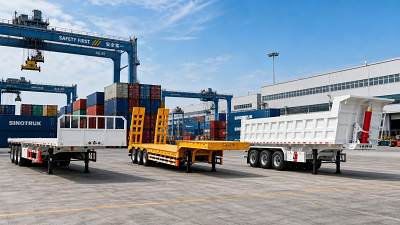
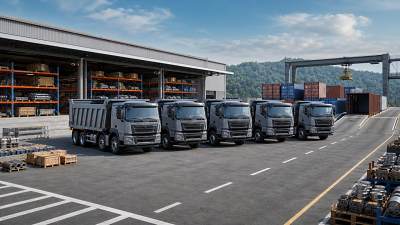
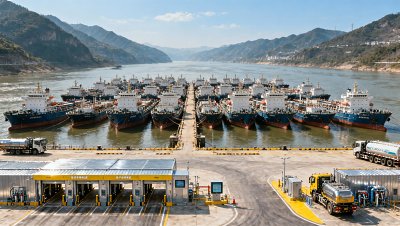
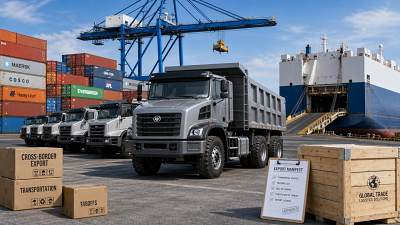
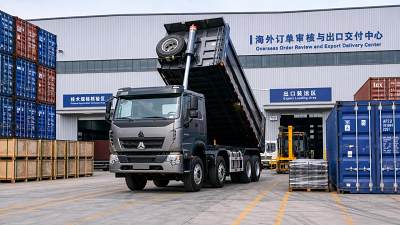
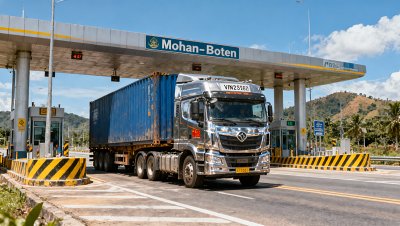
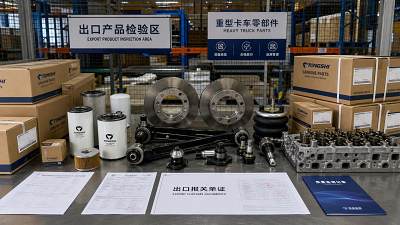
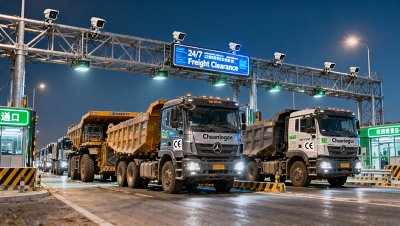
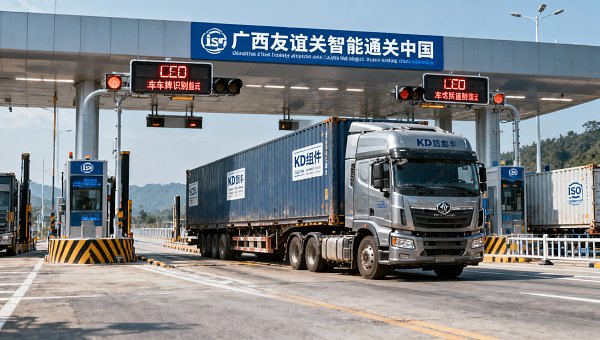
On April 1, 2026, Guangxi is accelerating the construction of a China–Vietnam cross-border smart port, with the Youyiguan (Friendship Pass) smart port’s Chinese section set to enter trial operation. This development directly impacts heavy-duty truck KD kit exporters, logistics service providers, and ASEAN-based assembly and distribution enterprises — as it enables a streamlined ‘factory-out → port-inspection → Vietnam-factory-installation’ flow for KD components.
Event Overview
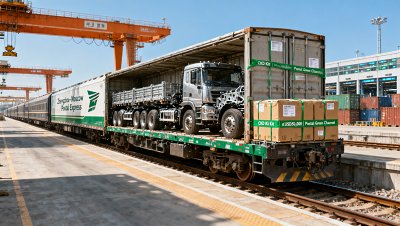
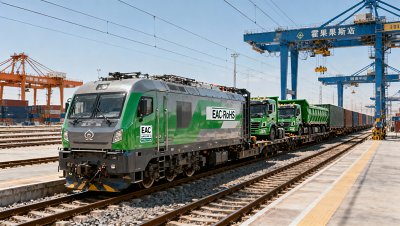
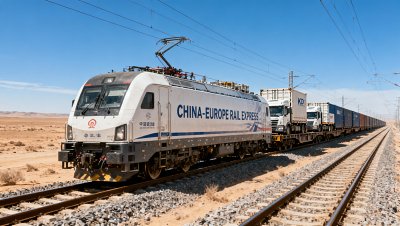
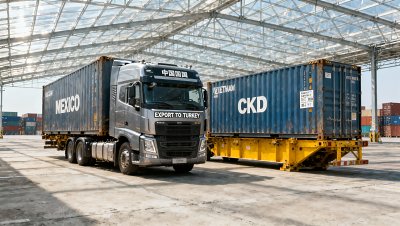
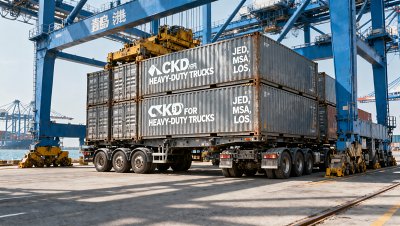
As of April 1, 2026, the Chinese segment of the Youyiguan cross-border smart port is scheduled to begin trial operation. Concurrently, Guangxi is upgrading its ‘highway port + direct local clearance’ model to support end-to-end delivery of heavy-duty truck KD (knock-down) kits from Chinese factories to Vietnamese assembly plants within 24 hours via the Nanning–Bac Ninh corridor. According to publicly released information, China–Vietnam rail freight in 2024 already carried high-value goods including premium electronics and precision machinery; by 2026, heavy-duty truck KD exports are emerging as a new growth driver. The KD model offers tariff advantages and reduced working capital requirements for Vietnamese assembly facilities and ASEAN regional distributors, supporting higher localization rates and faster market responsiveness.
Industries Affected
Heavy-Duty Truck OEMs & KD Kit Exporters
These manufacturers face direct operational implications: the 24-hour Nanning–Bac Ninh transit window tightens lead-time expectations and increases demand for just-in-time documentation, pre-clearance coordination, and standardized packaging/labeling aligned with Vietnamese customs protocols. Impact manifests in export scheduling rigor, inland transport integration, and real-time customs status tracking capability.
Vietnamese Assembly Plants & ASEAN Regional Distributors
For these downstream recipients, the shift means more predictable inbound material flows and lower landed costs due to reduced tariffs and minimized capital tied up in inventory. However, it also raises dependency on consistent cross-border performance — any delay at Youyiguan or mismatch in documentation could disrupt production lines. Impact centers on supply continuity planning, local compliance readiness, and vendor coordination across the China–Vietnam corridor.
Logistics & Cross-Border Supply Chain Service Providers
Firms offering bonded warehousing, customs brokerage, last-mile drayage, or digital freight visibility tools must adapt to tighter time windows and integrated checkpoint handoffs. The ‘factory–port–factory’ model reduces intermediate handling but increases demand for interoperable data exchange (e.g., electronic cargo manifests synchronized between Chinese and Vietnamese systems). Impact appears in service design, system compatibility, and regulatory familiarity across both jurisdictions.
What Relevant Enterprises or Practitioners Should Focus On
Monitor official rollout timelines and procedural guidance
While trial operation begins April 1, 2026, full operational parameters — including accepted document formats, inspection frequency, and contingency protocols — remain subject to announcement by Guangxi Customs and Vietnam’s General Department of Vietnam Customs. Stakeholders should track updates from both agencies rather than assume current pilot rules will apply unchanged at scale.
Validate alignment of KD kit classifications and HS codes
The tariff advantage of KD kits depends on correct product classification under both China’s and Vietnam’s tariff schedules. Misclassification may trigger re-inspection, duty reassessment, or rejection at Bac Ninh. Exporters should proactively verify code consistency with licensed customs brokers familiar with both markets — especially for newly introduced heavy-truck component categories.
Assess inland transport capacity and documentation readiness
A 24-hour Nanning–Bac Ninh transit target requires seamless coordination between factory dispatch, domestic haulage, border pre-notification, and Vietnamese receiving logistics. Companies should stress-test their current processes — particularly electronic data interchange (EDI) readiness with designated ports and proof-of-compliance documentation (e.g., origin certificates, technical conformity statements) — before relying on the accelerated timeline.
Clarify responsibility boundaries in multi-party handoffs
The ‘factory–port–factory’ chain involves at least three distinct operational domains: Chinese factory logistics, Guangxi smart port clearance, and Vietnamese receiving operations. Contracts and SLAs should explicitly define liability for delays, damage, or documentation failure at each stage — especially where digital handoff mechanisms (e.g., e-ATA carnets, blockchain-enabled cargo records) are still being piloted.
Editorial Perspective / Industry Observation
From an industry perspective, this initiative is better understood as a policy signal than an immediately scalable outcome. While the April 1, 2026 trial date is confirmed, the extent to which the 24-hour Nanning–Bac Ninh promise translates into consistent, repeatable performance across varying cargo volumes and seasons remains untested. Analysis来看, the emphasis on KD kits — rather than fully built units — suggests Guangxi is prioritizing trade facilitation for high-value, modular industrial goods over mass-consumption items. Observation来看, the focus aligns with broader national goals to deepen manufacturing integration across the Greater Mekong Subregion, but actual throughput gains will depend less on infrastructure and more on bilateral customs harmonization and data interoperability. Current more appropriate interpretation is that this marks the formal start of a phased capability buildout — not the achievement of a mature cross-border logistics standard.
In summary, the Guangxi smart port advancement represents a targeted infrastructure and process upgrade aimed at reducing friction for specific B2B industrial trade flows — particularly heavy-duty vehicle assembly supply chains linking southern China and northern Vietnam. Its significance lies not in broad-sector transformation, but in enabling measurable efficiency gains for tightly coordinated, documentation-ready participants. At present, it is best interpreted as an operational enabler in early deployment — valuable for those already active in the corridor, but requiring verification of reliability before strategic expansion decisions are made.
Source: Official announcements regarding the Youyiguan cross-border smart port trial operation timeline and the Nanning–Bac Ninh 24-hour KD kit corridor, issued by Guangxi Zhuang Autonomous Region authorities. Note: Full operational procedures, performance benchmarks, and long-term scalability remain under observation and are not yet publicly finalized.
Trending News
- Crane Truck for Sale: Key Checks Before Comparing Price and Load Capacity
- How to Choose a Reliable Truck Cement Distributor for Stable Supply
- Truck Cement OEM vs Standard Supply: Which Lowers Quality Risk?
- Truck Cement Bulk Order: Cost Factors and Delivery Risks in 2026
- How to Evaluate a Heavy Truck Chassis Manufacturer With R&D Capability
Tag
Recommended News
 Truck ExportWhat Makes a Reliable Truck Trailer Distributor in Export MarketsTruck trailer distributor selection shapes export success. Learn how to assess compliance, supply stability, technical fit, and after-sales support for safer global sourcing.
 Truck ExportZhengzhou-Moscow Postal Test Train Launches New 'Mail-Level' Clearance for Heavy-Duty CKD ExportsZhengzhou-Moscow postal test train enables 'mail-level' clearance for heavy-duty CKD exports — faster, cheaper, and simpler customs for SMEs targeting Eurasia.
 Truck ExportHorgos Port Handles Over 3,000 China-Europe & Central Asia Trains in 2026Horgos Port handled 3,000+ China–Europe & Central Asia trains in early 2026 — 37% carried new-energy heavy trucks. Discover logistics, compliance & market insights.
 Truck ExportChina-Europe Railway Express Surpasses 130,000 TrainsChina-Europe Railway Express surpasses 130,000 trains — boosting reliability for heavy-duty truck exporters, KD kit suppliers & specialized vehicle firms.
 Truck ExportWhat Makes a Reliable Truck Tipper Distributor in New Export MarketsTruck tipper distributor selection can define export success. Learn how to assess local reach, compliance, parts support, and service strength before entering new markets.
 Truck ExportShatian Customs Releases May H1 Transport Vehicle Inspection ResultsShatian Customs' May 2026 transport vehicle inspection reveals 98.7% HS code accuracy for heavy-duty trucks & KD kits — critical insights for exporters, forwarders, and compliance teams targeting Turkey, Mexico, Vietnam.
 Truck ExportShengsi Customs Clears 4 Ro-Ro Vessels for EAC/CE Dual ComplianceShengsi Customs clears 4 Ro-Ro vessels for EAC/CE dual compliance — streamlining heavy-truck exports to Russia, Kazakhstan & EAEU markets with 'one inspection, two certificates' efficiency.
 Truck ExportQingdao Port Adds 13 Foreign Trade Routes, Boosts CKD Export to MEAQingdao Port adds 13 foreign trade routes & CKD dedicated customs channel — accelerating heavy-duty truck CKD exports to Middle East and Africa with 48-hour clearance.
 Truck ExportYichang Hazardous Cargo Waiting Anchorage LaunchedYichang Hazardous Cargo Waiting Anchorage launched—supports 28 vessels, smart inspection & e-waybill verification. Critical for chemical logistics, trucking & Yangtze supply chains.
 Truck ExportTruck Trailer Exporter Comparison: Pricing, Certification, and After-SalesTruck trailer exporter comparison guide covering pricing, certification, factory capability, and after-sales support. Learn how to compare suppliers smarter and reduce sourcing risk.
 Truck ExportTruck Cement Exporter Selection: Compliance Points for Cross-Border DealsTruck cement exporter selection starts with compliance. Learn how to verify documents, technical standards, and service terms to reduce cross-border risk and secure smoother deals.
 Truck ExportCrane Truck Exporter Options: Matching Lifting Capacity to Project NeedsCrane truck exporter insights for matching lifting capacity to real project needs. Compare specs, reduce risk, control costs, and choose the right truck with confidence.
 Truck ExportDump Truck Exporter Costs Explained: Shipping, Duties, and Hidden FeesDump truck exporter costs go far beyond the factory price. Learn how shipping, duties, compliance paperwork, and hidden fees affect landed cost and smarter sourcing decisions.
 Truck ExportTruck Tipper Exporter Review: What to Check Before Signing an Overseas OrderTruck tipper exporter review guide: learn what to check before signing an overseas order, from compliance and specs to inspection, shipping, and after-sales support.
 Truck ExportCodelco Launches Tender for 200 L4 Autonomous Mining TrucksCodelco's L4 autonomous mining trucks tender: 200 units, 90t payload—key opportunity for Chinese OEMs & Chilean integrators. Act now!
 Truck ExportChina-Laos Cross-Border Heavy Truck Transport Pilot LaunchedChina-Laos heavy truck transport pilot launched: 'single inspection, mutual recognition' slashes clearance to 2.8 hours — boost exports, streamline logistics & unlock ASEAN road freight opportunities.
 Truck ExportWater Truck Exporter Selection: Key Delivery and Compliance RisksWater truck exporter selection now demands more than price checks. Learn the key delivery, compliance, and after-sales risks that can delay projects and raise total costs.
 Truck ExportHow to Verify a Reliable Truck Parts Exporter Before OrderingTruck parts exporter verification starts with legal compliance, quality control, and export capability. Learn practical checks to reduce sourcing risk and order with confidence.
 Truck ExportErenhot Highway Port Launches 24/7 Freight ClearanceErenhot Highway Port now offers 24/7 freight clearance — boosting efficiency for heavy-duty vehicle exports, cutting clearance time by 40% and enabling component-level customs processing.
 Truck ExportIran Launches Rail-Based Crude Oil Containerized Transport with Chinese-Made Tank Semi-TrailersIran launches rail-based crude oil containerized transport using Chinese-made tank semi-trailers—key for narrow-gauge rail equipment suppliers, energy logistics & multimodal integrators.
 Truck ExportWuhan Central Asia Railway Express Hits 103 Trains in April 2026Wuhan Central Asia Railway Express hits 103 trains in April 2026 — traction vehicles & specialized semi-trailers drive 37% of cargo. Discover logistics insights for陆路运输设备 exporters.
 Truck ExportHow to Vet a Construction Machinery Exporter for Overseas OrdersConstruction machinery exporter selection made easier: learn how to verify compliance, quality control, delivery reliability, and after-sales support for safer overseas orders.
 Truck ExportPakistan Opens 6 Land Routes to Iran, Cutting China Heavy-Truck Transit to 6 HoursPakistan opens 6 land routes to Iran—cutting China heavy-truck transit from Gwadar to Iranian sites to just 6 hours. Game-changer for陆路运输设备 exporters, OEMs & logistics firms.
 Truck ExportIran Launches Rail-Based Crude Oil Containerization with Chinese-Made Tank TrailersIran adopts Chinese-made 40-ft rail tank trailers for crude oil containerization—enhancing safety, bypassing Hormuz risks, and setting new standards in陆路运输设备 logistics.
 Truck ExportPakistan Opens 6 Land Corridors to Iran, Cutting China-Iran Heavy-Truck Transit to 6 HoursPakistan opens 6 land corridors to Iran—cutting China-Iran heavy-truck transit to just 6 hours. Boost reliability, bypass Hormuz risks & optimize logistics now.