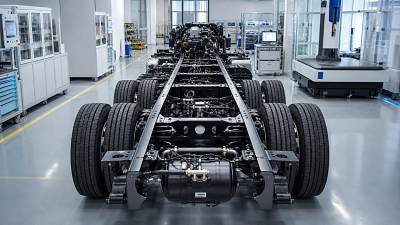
Heavy Truck Parts Manufacturer Lead Time Variance Between Cast and Forged Components
Understanding lead time variance between cast and forged components is critical for heavy truck parts manufacturers, semi trailer manufacturers, and truck spare parts suppliers aiming to optimize procurement planning and delivery reliability. Whether sourcing for SHACMAN L3000 4×2 Dump Trucks, SHACMAN X5000 6×4 Dump Trucks, or low bed trailer export projects, material selection directly impacts production cycles, quality consistency, and supply chain resilience. This article compares casting vs. forging—highlighting implications for flatbed trailer suppliers, delivery truck suppliers, and SHACMAN F2000 6x4 Sprinkler component buyers—helping procurement professionals, distributors, and business evaluators make data-driven sourcing decisions on the Global Heavy Truck Industry Platform.
Why Lead Time Variance Matters in Heavy Truck Component Sourcing
Lead time variance isn’t just a scheduling concern—it’s a strategic risk multiplier across the heavy truck supply chain. For distributors managing regional inventory for SHACMAN, SINOTRUK, or HOWO chassis components, a ±12-day swing between quoted and actual delivery can trigger production line stoppages or missed tender deadlines on infrastructure projects.
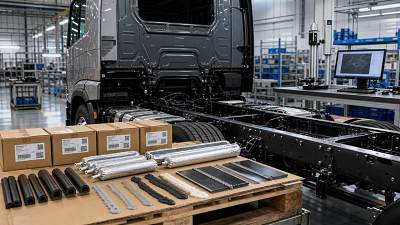
Casting typically requires 6–10 weeks from pattern approval to first-article shipment, while forging—especially for high-strength axle housings or fifth-wheel couplers—can compress that to 4–7 weeks when tooling is standardized. But this advantage disappears if custom die design is needed, adding 3–5 weeks to the timeline.
Procurement teams evaluating suppliers on the Global Heavy Truck Industry Platform must distinguish between *inherent process variance* (e.g., mold cooling time fluctuations in sand casting) and *supplier-specific delays* (e.g., raw material stockouts or heat treatment queue bottlenecks). The former is predictable; the latter is mitigatable through supplier vetting and real-time capacity visibility.
Casting vs. Forging: Process Timelines & Key Dependencies
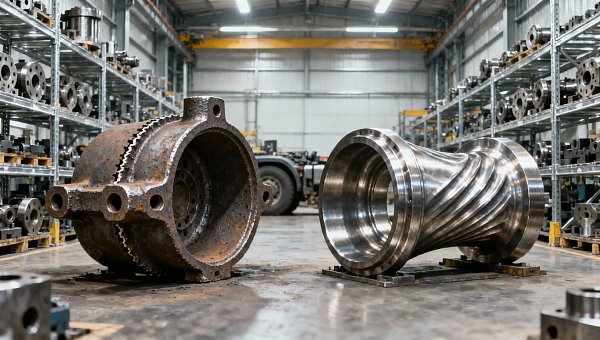
The table below outlines typical time allocations across six core stages for both processes—based on industry benchmarks from Tier-1 suppliers serving OEMs like Dongfeng Commercial Vehicle and CAMC. All durations assume medium-batch orders (500–2,000 units) and standard-grade materials (ASTM A48 Class 30 for cast iron; ASTM A668 Class D for forged steel).
Note the trade-off: forging demands longer upfront tooling investment but delivers faster per-unit throughput once running. Casting offers lower initial tooling cost but higher per-part variability—requiring more inspection time (typically +1.5 days/unit for dimensional validation). For SHACMAN F2000 suspension brackets or trailer landing gear assemblies, this means forging becomes cost-competitive at volumes above 800 units/year.
Critical Procurement Checkpoints
- Verify whether the supplier maintains in-house heat treatment capacity—external outsourcing adds 5–9 days and increases rejection risk by up to 22% (per 2023 Global Heavy Truck Supplier Audit Report).
- Confirm mold/die ownership terms: Cast suppliers often retain patterns; forged part buyers usually own dies after full amortization (typically by order #3).
- Request documented cycle time logs for last three production runs—not just theoretical best-case figures.
How Application Requirements Shape Your Choice
Not all truck components are created equal—and neither are their manufacturing requirements. Axle shafts, kingpins, and brake camshafts demand directional grain flow and fatigue resistance only achievable via hot forging (ASTM A105 or A668 compliance mandatory). In contrast, complex cab mounting brackets or air reservoir housings benefit from casting’s design freedom and lower weight penalty.
For flatbed trailer suppliers delivering to mining clients in Australia or South Africa, forged drawbars show 30% longer service life under cyclic overload conditions (>120% GVWR), justifying the +18% unit cost premium. Meanwhile, cast spring hangers remain standard for municipal refuse trucks where load profiles stay within 85% of rated capacity.
On the Global Heavy Truck Industry Platform, filter results by “Forged Only” or “Casting Certified” tags—and cross-reference with supplier capability badges indicating ISO/TS 16949 certification, in-house NDT labs, or OEM-approved process audits.
Actionable Next Steps for Buyers & Distributors
You don’t need to choose one process universally—you need to match process capability to your operational reality. Start by mapping your top 5 SKUs by annual volume and failure-criticality:
- High-volume, safety-critical (e.g., SHACMAN X5000 front axle spindles): Prioritize forging-capable suppliers with ≤7-day quoted lead time variance.
- Low-volume, geometry-complex (e.g., custom trailer lighting brackets): Cast suppliers with rapid prototyping (3D-printed sand molds) cut first-article time by 40%.
- Export-sensitive (e.g., low-bed trailer components for EU tenders): Require EN 15085-2 CL1 certification documentation—available on supplier profiles in the Platform’s Compliance Hub.
Access real-time lead time dashboards, compare certified suppliers side-by-side, and request validated production schedules—all within the Global Heavy Truck Industry Platform’s Sourcing Intelligence Suite. No registration required to view lead time transparency metrics.
Get Started Today
Contact our platform specialists for: • Custom lead time benchmarking against your current suppliers • Verified forging/casting supplier shortlists (pre-vetted for ISO/TS 16949, heat treat traceability, and export documentation) • Sample validation support—including dimensional reports and metallurgical test certificates • Delivery assurance options: fixed-date shipping windows, buffer stock agreements, or dual-source coordination
Trending News
- Crane Truck for Sale: Key Checks Before Comparing Price and Load Capacity
- How to Choose a Reliable Truck Cement Distributor for Stable Supply
- Truck Cement OEM vs Standard Supply: Which Lowers Quality Risk?
- Truck Cement Bulk Order: Cost Factors and Delivery Risks in 2026
- How to Evaluate a Heavy Truck Chassis Manufacturer With R&D Capability
Tag
Recommended News
 Buying GuideCrane Truck for Sale: Key Checks Before Comparing Price and Load CapacityCrane truck for sale buying guide: learn the key checks beyond price and load capacity, from structure and hydraulics to chassis fit and supplier credibility.
 Buying GuideHow to Choose a Reliable Truck Cement Distributor for Stable SupplyTruck cement distributor selection made simple: learn how to compare capacity, fleet reliability, response speed, and supply risk control to secure stable project delivery.
 Buying GuideTruck Cement OEM vs Standard Supply: Which Lowers Quality Risk?Truck cement OEM vs standard supply: discover which option lowers quality risk in heavy-duty trucks with better traceability, testing, and sourcing control.
 Transportation CostsTruck Cement Bulk Order: Cost Factors and Delivery Risks in 2026Truck cement bulk order in 2026: discover key cost factors, freight risks, fuel impacts, and supplier checks to cut delivered cost and avoid delays before you buy.
 Buying GuideHow to Evaluate a Heavy Truck Chassis Manufacturer With R&D CapabilityHeavy truck chassis manufacturer with R&D capability: learn how to assess engineering depth, testing, customization, compliance, and long-term reliability before choosing a supplier.
 Logistics & FreightTruck Cement Wholesale: What Determines Stable Delivery and Margin?Truck cement wholesale success depends on reliable supply, transport capacity, quality consistency, and landed cost control. Learn what protects delivery stability and margin.
 Transportation CostsTruck Trailer Bulk Order Cost Breakdown for 2026 Budget PlanningTruck trailer bulk order budgeting for 2026 starts with total cost, not unit price. Explore specs, logistics, compliance, and lifecycle expenses to plan smarter and cut risk.
 Buying GuideTruck Trailer Sourcing: 7 Checks Before You Compare SuppliersTruck trailer sourcing starts with the right checks. Discover 7 essential steps to verify compliance, quality, lead time, and after-sales support before comparing suppliers.
 Buying GuideTruck Trailer OEM vs ODM: Which Model Lowers Supply Risk?Truck trailer OEM vs ODM: learn which model better reduces supply risk, improves quality control, and protects long-term sourcing flexibility for global trailer buyers.
 Buying GuideHow to Evaluate a Heavy Truck Chassis Manufacturer With R&D Capability in 2026Heavy truck chassis manufacturer with R&D capability: learn how to evaluate engineering strength, validation, compliance, and long-term reliability in 2026 to choose the right supplier.
 默认分类Yiyuan International Launches Heavy-Duty Truck Export End-to-End Support Program for Middle East & AfricaYiyuan International’s Heavy-Duty Truck Export End-to-End Support Program ensures freight stability, customs clearance & last-mile delivery for Middle East & Africa exports — lock rates now!
 默认分类沙田海关公示5月上半月运输工具检查结果:重卡出口申报准确率超98.5%,CE/EAC双标核查100%Land transportation equipment exporters: Shatian Customs' May 1–15 inspection shows >98.5% heavy-duty truck declaration accuracy & 100% CE/EAC dual-certification compliance—verify your shipment now!
 默认分类济南产业链供应链生态大会举行:陆海联动升级,重卡出口‘铁海联运一单制’试点扩至12省陆路运输设备行业聚焦济南产业链大会:'铁海联运一单制'重卡出口试点扩至12省,加速陆海联动升级与全球化物流效率提升!
 默认分类New Live-Commerce Rules for Jade & Antiques Drive Demand for Smart Heavy-Duty Truck BodiesSmart heavy-duty truck bodies surge in demand as new jade & antiques live-commerce rules mandate intelligent, climate-controlled transport for high-value cargo.
 默认分类COSCO Shipping Specialized Launches 'SmartRo-Ro' for Real-Time Heavy-Duty Truck Export TrackingSmartRo-Ro by COSCO Shipping Specialized delivers real-time, blockchain-verified tracking for heavy-duty truck exports — boosting forecast accuracy to 94.7% and supply chain transparency.
 默认分类中俄元首联合声明签署:卡车出口政策适配加速,EAC认证与本地化生产合作获高层背书EAC认证与本地化生产合作获中俄元首联合声明背书!卡车出口政策加速适配,助力陆路运输设备企业抢占俄市场先机。
 默认分类中国对所有非洲建交国实施零关税:重卡整车及底盘出口至南非、埃及等20国关税归零Zero-tariff access for Chinese heavy-duty trucks and chassis to 20 African countries—including South Africa and Egypt—boosting export opportunities and cost efficiency.
 默认分类New Maritime Code Shifts Unclaimed Cargo Liability to Exporters from May 1New Maritime Code shifts unclaimed cargo liability to exporters—critical for陆路运输设备 exporters using FOB/CIF. Act now to mitigate port storage, return freight & loss risks.
 默认分类Eid al-Adha Holiday: GCC Customs & Logistics Pause from May 27, 48-Hour Clearance Window for Heavy-Duty Truck ImportsEid al-Adha holiday halts GCC customs & logistics from May 27, 2026—secure heavy-duty truck import clearance in the critical 48-hour window.
 默认分类2026 Xinjiang Agri-Machinery Expo Highlights Smart Farm Equipment and Rising Export Demand for Heavy-Duty ChassisHeavy-duty chassis demand surges at 2026 Xinjiang Agri-Machinery Expo—smart farm equipment drives export growth across Central Asia & Africa.
 Buying GuideHow to Compare Semi Trailer Distributors by Lead Time and SupportSemi trailer distributor comparison starts with lead time and support. Learn how to evaluate delivery reliability, technical response, and after-sales service for smarter sourcing.
 Truck ExportWhat Makes a Reliable Truck Trailer Distributor in Export MarketsTruck trailer distributor selection shapes export success. Learn how to assess compliance, supply stability, technical fit, and after-sales support for safer global sourcing.
 Buying GuideSemi Trailer Bulk Order Risks and Quality Checks Before SigningSemi trailer bulk order risks can quickly multiply without strict checks. Discover the key quality, compliance, and delivery points to verify before signing and protect your fleet investment.
 Transportation CostsSemi Trailer Wholesale: Cost Factors That Matter in 2026Semi trailer wholesale in 2026 goes beyond unit price. Discover the real cost factors, compare suppliers smarter, and reduce sourcing risk with this practical guide.
 Buying GuideHow to Evaluate a Heavy Truck Chassis Manufacturer With R&D CapabilityHeavy truck chassis manufacturer with R&D capability: learn how to verify engineering, testing, customization, and quality control to reduce sourcing risk and choose a reliable supplier.