How to Budget for Dump Truck Price
Planning for dump truck price involves more than checking a listing. Buyers comparing a dump truck for sale, truck tipper for sale, or even related options like truck cement mixer units and excavator for sale need to weigh total cost, application, and supplier reliability. This guide helps procurement teams, dealers, and market researchers build a practical budget while evaluating truck parts manufacturer support, excavator parts availability, and long-term operating value.
What Buyers Really Need to Budget for a Dump Truck
If you are budgeting for a dump truck, the key question is not simply “What is the purchase price?” but “What will this truck cost our business over its working life?” For procurement teams, distributors, and business evaluators, the smartest budget includes acquisition cost, operating cost, maintenance support, compliance requirements, and resale potential.
In practical terms, dump truck price can vary widely based on payload capacity, drivetrain configuration, body material, hydraulic system, engine power, brand reputation, and country of origin. A low quoted price may look attractive at first, but if spare parts are hard to source or after-sales support is weak, the real cost can rise quickly.
For B2B buyers, a good budget should answer four questions:
- What type of dump truck fits the job?
- What is the realistic total cost of ownership?
- Which supplier can support long-term operation?
- How do we compare offers beyond the sticker price?
Start With Application: The Right Truck Type Changes the Budget
The first step in estimating dump truck price is defining the operating scenario. Different applications need different truck configurations, and that directly affects budget.
Construction and municipal work: These users often need medium-duty dump trucks with strong maneuverability, moderate payload, and easy maintenance. Budget planning should focus on durability in stop-start conditions and local service support.
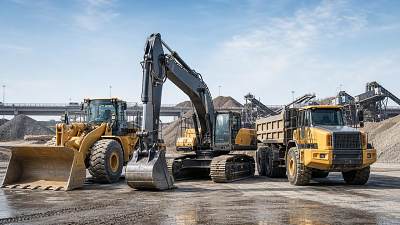
Mining and heavy industrial transport: These operations usually require larger payloads, stronger frames, higher horsepower, and reinforced dump bodies. The upfront price is much higher, but so is the revenue potential per load.
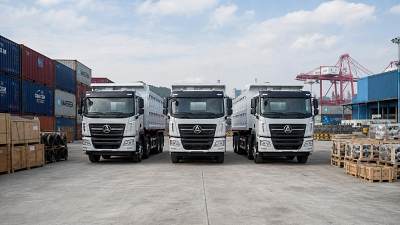
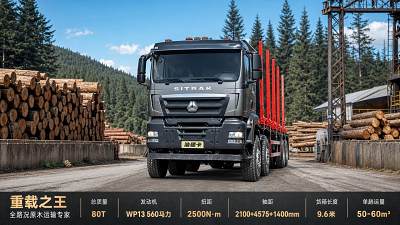
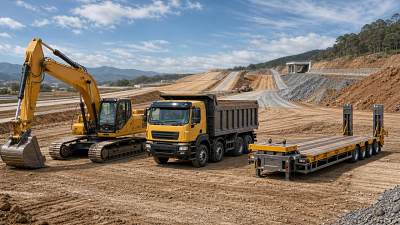
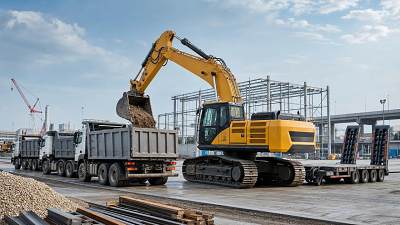
Road infrastructure and aggregate hauling: Here, buyers often compare a truck tipper for sale based on body volume, axle layout, and loading efficiency. Fuel economy and cycle time matter as much as purchase price.
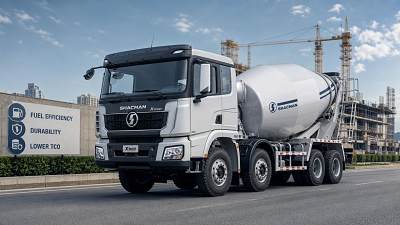
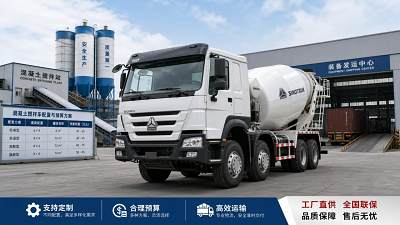
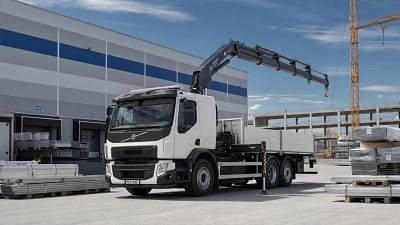
Mixed fleet operations: Some buyers also compare dump trucks with related equipment such as a truck cement mixer or even an excavator for sale when planning integrated site operations. In these cases, the budget should consider how each machine contributes to the overall workflow rather than evaluating each asset in isolation.
If the truck specification is too small, productivity suffers. If it is too large, capital is wasted and operating costs increase. That is why application fit should come before quote comparison.
What Factors Have the Biggest Impact on Dump Truck Price?
Once the use case is clear, buyers should break down the main price drivers. These are the factors that usually explain why one dump truck for sale costs significantly more than another.
- Payload capacity: Higher-tonnage trucks cost more because they require stronger chassis, axles, suspension, and lifting systems.
- Drive configuration: 4x2, 6x4, 8x4, and all-wheel-drive layouts come with different purchase and maintenance costs. Heavier-duty configurations generally mean higher budget requirements.
- Engine and transmission: Power output, emissions standard, and gearbox type all affect upfront cost and fuel performance.
- Dump body material: Steel bodies are common and durable, while lightweight materials may improve payload efficiency but increase acquisition cost.
- Hydraulic system quality: Reliable tipping performance matters in harsh work environments. Cheaper hydraulic systems can create downtime risk.
- Brand and manufacturing quality: Established brands may charge more, but often provide more stable quality control, better documentation, and stronger parts support.
- New vs. used condition: A used truck may reduce initial investment, but buyers must account for inspection, repair, and parts replacement.
- Import and logistics costs: For international procurement, freight, customs duty, inland transport, and certification can materially affect the final price.
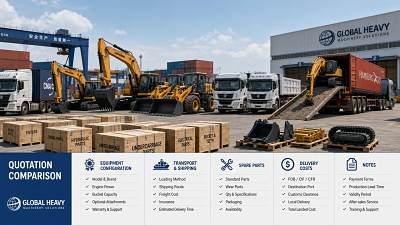
When evaluating quotations, buyers should ask suppliers to separate vehicle price, optional configurations, shipping cost, and after-sales support so the comparison is transparent.
Build a Budget Around Total Cost of Ownership, Not Just Purchase Price
This is where many buying decisions go wrong. A dump truck price quote is only one part of the real investment. For a more accurate business case, use total cost of ownership, or TCO, as the budgeting framework.
Your TCO should typically include:
- Initial purchase price
- Freight, import duty, taxes, and registration
- Insurance and financing cost
- Fuel consumption over expected usage
- Tires and wear parts
- Scheduled maintenance
- Repair downtime risk
- Operator training
- Spare parts availability
- Residual value or resale value
For example, a lower-cost truck may seem attractive, but if it consumes more fuel, needs more frequent repairs, and has limited resale demand, it may become more expensive than a higher-priced alternative over three to five years.
This is especially important for fleet buyers and distributors. A truck that is cheap to buy but difficult to support can create service issues that affect customer satisfaction and future sales.
How to Estimate a Practical Dump Truck Budget Step by Step
For procurement professionals, the most useful method is to create a structured budgeting model instead of relying on a single quote.
Step 1: Define operating requirements.
List the expected load type, average haul distance, road condition, daily operating hours, climate, and compliance standards.
Step 2: Choose the target truck specification.
Set a specification range for payload, engine power, axle layout, body volume, and safety features.
Step 3: Collect multiple supplier quotations.
Compare at least three offers for similar configurations. Make sure each quote includes the same baseline equipment.
Step 4: Add landed cost.
If sourcing internationally, include port charges, shipping, customs clearance, inland transport, and local taxes.
Step 5: Estimate annual operating cost.
Calculate fuel, maintenance, tires, labor impact, and expected repairs based on actual duty cycle.
Step 6: Review supplier support.
Check whether the supplier has strong cooperation with a truck parts manufacturer network and whether common wear items are readily available.
Step 7: Estimate downtime risk.
A truck with slower parts delivery can cost far more in lost operating time than its initial savings justify.
Step 8: Model resale value.
Some brands and specifications retain value better in secondary markets. This matters for long-term budget recovery.
Step 9: Add contingency.
A realistic equipment budget usually includes a contingency reserve for price fluctuations, repairs, or specification changes.
This process gives buyers a more reliable range rather than a single number, which is far better for internal approvals and supplier negotiations.
Supplier Evaluation Is a Budget Decision, Not Just a Sourcing Task
Many buyers focus on truck specifications and overlook supplier capability. In reality, supplier quality directly affects the financial outcome of the purchase.
When evaluating a dump truck for sale, ask these questions:
- Can the supplier provide full technical specifications and compliance documents?
- Do they have export experience in your target market?
- What warranty terms are included?
- How quickly can they deliver spare parts?
- Do they work with reliable truck parts manufacturer partners?
- Can they support remote troubleshooting or service training?
- Do they have references from similar buyers or projects?
This matters even more when your fleet includes adjacent equipment such as excavators or truck cement mixer units. Buyers often gain efficiency when they source from suppliers who understand equipment ecosystems and can coordinate support for multiple machine categories, including excavator parts and heavy truck components.
In short, supplier reliability reduces operating uncertainty, and that should be treated as part of the budget logic.
Common Budget Mistakes Buyers Should Avoid
Even experienced buyers can underestimate the real cost of a dump truck purchase. The most common mistakes include:
- Choosing on price alone: A lower initial quote may hide weaker steel quality, lower-grade hydraulics, or poor service support.
- Ignoring duty cycle: A truck that works well in one environment may perform poorly in steep, rough, or overloaded conditions.
- Underestimating parts costs: Inadequate planning for filters, tires, cylinders, suspension parts, and brake components can distort the budget.
- Overlooking downtime: Lost productivity from breakdowns is often more expensive than maintenance itself.
- Not checking local regulation: Axle limits, emissions rules, and road legality can affect whether a truck is usable in your market.
- Failing to compare equivalent specs: Quotes must be normalized before making a decision.
A disciplined comparison process prevents these errors and helps buyers defend their decision internally.
When It Makes Sense to Pay More for a Better Dump Truck
Not every higher-priced truck is a better deal, but in many cases, paying more is justified. A higher dump truck price may be worth it when the truck offers:
- Better fuel efficiency over heavy annual mileage
- Longer service intervals
- Higher structural durability in severe applications
- Stronger after-sales support and faster parts supply
- Better operator safety and comfort
- Higher resale value in your regional market
For dealers, distributors, and fleet investors, these factors can improve lifecycle profitability and customer satisfaction. The best purchase is not necessarily the cheapest truck tipper for sale, but the option with the strongest balance of price, productivity, reliability, and support.
Final Thoughts on Budgeting for Dump Truck Price
To budget well for dump truck price, buyers should move beyond headline pricing and assess the full business impact of the purchase. The right approach starts with the application, continues with a realistic total cost of ownership model, and ends with careful supplier evaluation.
Whether you are reviewing a dump truck for sale, comparing a truck tipper for sale, or evaluating related assets such as a truck cement mixer or excavator for sale, the same rule applies: budget for operational value, not just acquisition cost. Buyers who also verify truck parts manufacturer support and excavator parts availability will be in a stronger position to reduce risk and protect long-term returns.
For procurement teams, market researchers, and commercial decision-makers, a good budget is not just a number. It is a decision framework that helps identify the right equipment, the right supplier, and the right long-term investment.
Trending News
- Are Energy-Saving Excavators Worth It for Long-Term Operations?
- Dump Truck Supplier With Quick Delivery: What to Verify First
- Choosing Commercial Vehicle Parts for Cold Storage Reliability
- How ISO Certification Reduces Supplier Risk in Heavy Truck Chassis
- Cab Chassis Truck for Fire Department: Key Fitment Points
Tag
Recommended News
 Transportation CostsCrane Truck Price Breakdown: Capacity, Boom Type, and Operating CostCrane truck price explained by capacity, boom type, and operating cost. Compare key cost drivers, ownership value, and smart buying tips to choose the right crane truck.
 Transportation CostsTruck Cement Mixer Price in 2026: What Changes Total Ownership CostTruck cement mixer price in 2026 depends on fuel, compliance, maintenance, financing, and resale—not just the quote. Discover how to compare real ownership cost and choose smarter.
 Transportation CostsHeavy Equipment Export to Mexico: Cost Factors Beyond Shipping RatesHeavy equipment export to Mexico involves more than freight rates. Discover hidden cost factors, customs, taxes, inland delivery, and compliance tips to reduce risk and improve ROI.
 Transportation CostsWhen Bulk Discounts From a Truck Spare Parts Supplier Really Save MoneyDiscover when a truck spare parts supplier with bulk order discounts truly cuts fleet costs—compare total cost, compatibility, inventory risk, and supplier reliability before you buy.
 Transportation CostsTruck Cement Mixer Price in 2026: What Buyers Should Budget ForTruck cement mixer price in 2026 depends on more than the base quote. Discover key cost drivers, landed cost factors, and smart sourcing tips to budget better and buy with confidence.
 Transportation CostsTruck Trailer OEM for Custom Loads: Where the Real Cost BeginsTruck trailer OEM costs start beyond the quote. Learn how custom loads, compliance, delivery, and maintenance shape true ROI—and how to choose a supplier that protects long-term fleet value.
 Transportation CostsTruck Tipper Bulk Order: Cost Factors Often Missed in Early QuotesTruck tipper bulk order costs go far beyond the first quote. Discover hidden factors in specs, shipping, compliance, parts, and support to avoid budget surprises.
![]() Transportation CostsTruck Cement Wholesale: What Impacts Margin More Than Purchase PriceTruck cement wholesale margins depend on more than purchase price. Discover how fuel use, payload, uptime, compliance, and supplier stability shape long-term profitability.
Transportation CostsTruck Cement Wholesale: What Impacts Margin More Than Purchase PriceTruck cement wholesale margins depend on more than purchase price. Discover how fuel use, payload, uptime, compliance, and supplier stability shape long-term profitability. Transportation CostsCrane Truck Cost: A Practical Guide to Total Ownership ExpenseCrane truck cost explained beyond the sticker price—compare financing, maintenance, fuel, compliance, downtime, and resale value to make smarter, lower-risk fleet investment decisions.
 Transportation CostsConstruction Machinery Cost Breakdown for Better Project BudgetingConstruction machinery cost explained clearly: compare purchase, rental, fuel, maintenance, and downtime to budget smarter, control risk, and improve project profitability.
 Transportation CostsLogging Truck Price: What Drives Cost Up or DownLogging truck price depends on configuration, payload, compliance, brand, and market timing. Learn how to compare true cost, reduce risk, and choose higher-value trucks.
 Transportation CostsCrane Truck Cost: What Affects Ownership Beyond the Purchase PriceCrane truck cost goes beyond the sticker price. Discover how fuel, maintenance, training, financing, compliance, and resale value shape true ownership costs and smarter buying decisions.
 Transportation CostsConstruction Machinery Cost Breakdown for Better Project PlanningConstruction machinery cost explained for smarter project planning. Learn key cost drivers, reduce downtime, control budgets, and choose equipment with better lifecycle value.
 Transportation CostsLogging Truck Price Guide: What Drives the Final CostLogging truck price depends on far more than chassis cost. Discover what drives total ownership cost, compare specs smarter, and choose the right truck for long-term ROI.
 Transportation CostsTruck Cement Wholesale: How Bulk Pricing Changes by Order SizeTruck cement wholesale pricing changes with order size. Learn how small, mid, and bulk purchases affect total cost, cash flow, and supplier terms to secure smarter deals.
 Transportation CostsBulldozer Price in 2026: What Actually Drives the Cost UpBulldozer price in 2026 is driven by steel, emissions rules, digital features, freight, and brand support. Learn what really raises costs and compare suppliers with confidence.
 Transportation CostsTruck Trailer Bulk Order: 7 Cost Factors That Change the Final QuoteTruck trailer bulk order pricing can change fast. Discover 7 key cost factors that affect the final quote and learn how to compare suppliers, control budget risk, and buy smarter.
 Transportation CostsConstruction Machinery Cost Planning for Multi-Stage ProjectsConstruction machinery cost planning for multi-stage projects: learn how to control equipment, transport, maintenance, and supplier costs to protect margins and improve project performance.
 Transportation CostsConstruction Machinery Price: How to Compare Quotes Without Missing Hidden CostsConstruction machinery price comparison made smarter: uncover hidden costs in freight, duties, warranty, parts, and downtime to choose the best supplier with confidence.
 Transportation CostsCrane Truck Cost Breakdown: What Drives the Final PriceCrane truck cost explained: discover the real price drivers behind capacity, chassis, safety, compliance, and support so you can compare suppliers wisely and avoid hidden ownership costs.
 Transportation CostsAre Energy-Saving Excavators Worth the Higher Price UpfrontExcavator manufacturer with energy-saving features: learn if the higher upfront cost pays off through lower fuel use, less downtime, and stronger long-term fleet ROI.
 Transportation CostsCost-Effective Delivery Truck Supply: Where Savings Are Real and Where They Are NotDelivery truck supplier with cost-effective solutions: learn where fleet savings are real, where hidden costs appear, and how to compare suppliers for smarter truck sourcing.
 Transportation CostsHow Bulk Order Discounts Affect the Real Cost of Truck Spare Parts SupplyTruck spare parts supplier with bulk order discounts: learn how volume pricing impacts total supply cost, inventory risk, lead time, and fleet uptime—so you can buy smarter.
 Transportation CostsLogging Truck Price: Which Configurations Raise Cost the MostLogging truck price depends heavily on axle setup, crane integration, engine power, and payload upgrades. Learn which specs raise costs most and compare smarter before you buy.
 Transportation CostsSemi Trailer Wholesale: When Lower Unit Price Becomes a Hidden CostSemi trailer wholesale can lower upfront costs, but hidden expenses in maintenance, compliance, and downtime may hurt ROI. Learn how to compare real long-term value before buying.