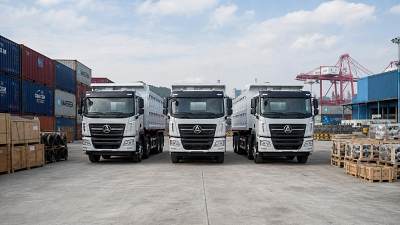
Dump Truck Price: What Drives the Cost?
Understanding dump truck price is essential for buyers comparing a dump truck for sale, truck tipper for sale, or even related equipment like excavator for sale and truck cement mixer options. From payload capacity and engine performance to brand reputation, configuration, and after-sales support, multiple factors shape total cost. This guide helps procurement teams, distributors, and market researchers evaluate pricing more accurately and make smarter sourcing decisions.
In the road transport equipment sector, a dump truck is not priced as a single commodity. Two vehicles that look similar on paper can differ substantially in acquisition cost, lifecycle expense, delivery schedule, and operational value. For B2B buyers, the more useful question is not only “What is the dump truck price?” but also “What is included, what affects the quote, and what will the truck cost over 3–5 years of service?”
This matters even more in cross-border sourcing. Importers, distributors, contractors, and fleet managers often compare suppliers across multiple regions, evaluate chassis and body combinations, and balance budget limits with payload targets, local regulations, and uptime requirements. A structured understanding of price drivers helps reduce procurement risk and improve supplier selection.
What a Dump Truck Price Usually Includes
A dump truck price normally reflects far more than the base vehicle. In most B2B quotations, the final figure may include the chassis, cab, engine, transmission, axle configuration, hydraulic tipping system, cargo body, tire specification, and optional safety or telematics features. Depending on the supplier and trade term, freight, export packaging, and spare parts kits may also be included or quoted separately.
One of the first distinctions buyers should make is between ex-factory price and landed cost. Ex-factory pricing may look attractive, but it does not cover inland transport, port charges, customs duties, marine insurance, or destination handling. A truck quoted at one level can become 10%–25% more expensive after logistics and import-related costs are added, depending on the destination market.
Another pricing issue is whether the quote is for a standard dump truck or a project-specific configuration. A standard 4x2 or 6x4 tipper used for urban construction usually costs less than a reinforced mining tipper with heavy-duty suspension, higher ground clearance, abrasion-resistant steel body, and larger payload capacity. Even a 5–8 ton increase in intended payload can affect axle rating, frame thickness, hydraulic cylinder size, and tire class.
Core elements commonly included in the quotation
- Chassis and cab specification, including seating layout and basic electrical system.
- Powertrain package, such as engine horsepower range, gearbox type, and drive axle ratio.
- Dump body design, including body volume, steel grade, floor thickness, and sidewall thickness.
- Hydraulic system components, including pump, cylinder, reservoir, and lifting geometry.
- Standard accessories, tool kit, spare tire, warning lamps, and in some cases 6–12 months of basic parts support.
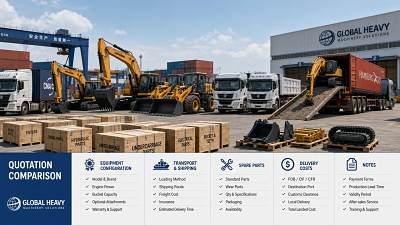
The table below shows how pricing scope changes depending on the quotation basis. This is important when comparing a dump truck for sale from multiple suppliers on a global B2B platform, because two offers may differ not by product quality alone, but by what each quotation actually covers.
For procurement teams, the main takeaway is simple: compare prices on the same commercial basis. A lower quote is not necessarily a lower total cost if it excludes key elements needed for deployment, compliance, or service readiness.
The Main Factors That Drive Dump Truck Cost
Payload capacity is one of the strongest cost drivers. As payload increases from light-duty urban use to medium or heavy-duty construction and mining operations, the vehicle requires stronger frame rails, larger axles, heavier suspension, and often higher horsepower. A truck designed for 10–15 tons will be priced very differently from one built to carry 25–40 tons under rough site conditions.
Engine and drivetrain selection also have a direct influence. In general, higher horsepower engines, such as 300–430 hp for many on-road and off-road tippers, increase initial purchase price but may offer better gradeability and productivity on steep construction routes. Manual transmissions remain common in many markets, while automated or heavy-duty transmission options add cost but can reduce driver fatigue and clutch wear.
The dump body itself can create a major price spread. Body volume may range from 10 cubic meters to over 20 cubic meters, while steel thickness varies by material type and application. For example, a body optimized for sand, gravel, or municipal debris is often less expensive than a reinforced body designed for rock, ore, or demolition waste. Wear-resistant liners and upgraded floor plates can raise the upfront quote but improve service life.
Brand reputation and manufacturing consistency matter as well. Buyers often pay a premium for better process control, more stable parts supply, stronger export experience, and clearer technical documentation. For distributors and agents, a supplier with consistent quality across 20 or 50 units can be more valuable than the lowest-price offer on a single unit.
How configuration changes price level
The table below outlines common configuration variables that influence dump truck price in practical sourcing discussions. These are not fixed market prices, but they show where cost pressure usually comes from during technical comparison.
In real procurement, cost should be linked to duty cycle. A truck cement mixer or excavator for sale may be evaluated by output per hour; dump trucks should be assessed the same way. If a higher-priced tipper moves 15% more material per shift and reduces unplanned downtime, its commercial value may be stronger than a cheaper model with limited site durability.
Additional cost variables buyers often overlook
- Emission level requirements that change engine system complexity and maintenance needs.
- Cab comfort packages for fleets running 8–12 hour shifts in high-temperature or high-dust environments.
- Seasonal procurement timing, especially when steel cost, tire availability, or freight rates fluctuate.
- Localization needs such as left-hand or right-hand drive, language labeling, and country-specific lighting standards.
How Application Scenario Affects Price and Specification
Dump truck price cannot be assessed without considering where and how the truck will operate. Road transport equipment used in municipal engineering, highway construction, quarry transport, and mining support can require very different technical setups. The most efficient buying process starts with the jobsite, not the brochure.
For urban construction, buyers often prioritize maneuverability, fuel economy, and lower axle load. In this scenario, body volume may remain moderate, and the truck may run frequent short-distance cycles of 5–20 km. A supplier can often optimize cost by balancing body capacity with legal road compliance, rather than simply maximizing payload.
In quarry or mining support operations, the priority shifts toward structural strength, climbing ability, and resistance to shock loading. The truck may face uneven roads, steep grades, and abrasive material every day. This usually increases the dump truck price because buyers need stronger springs, reinforced subframes, more robust body floors, and sometimes special tires with higher cut resistance.
Cross-equipment comparison also matters. A buyer reviewing a truck tipper for sale may also be sourcing excavators, loaders, or truck cement mixer units for the same project. In such cases, the right evaluation method is system productivity. A mismatched tipper body size, loading height, or cycle time can reduce the efficiency of the entire fleet.
Typical scenario-based specification logic
The matrix below helps buyers align price expectations with actual use conditions. It is especially useful for distributors and procurement managers screening multiple suppliers on an international B2B platform.
The key lesson is that over-specification and under-specification both create waste. A heavy mining body used only on paved city routes adds unnecessary cost. At the same time, a low-cost standard body in a rock-hauling application may lead to accelerated wear within 6–12 months.
Questions to define the correct application profile
- What material will be transported: sand, soil, aggregate, demolition waste, ore, or mixed load?
- What is the average trip distance: under 20 km, 20–80 km, or longer regional haul?
- How many cycles per day are expected: 6–8, 10–15, or more than 15?
- Is the route mostly paved road, mixed terrain, or highly uneven off-road access?
How to Evaluate Total Cost Beyond the Purchase Price
The purchase quote is only the first layer of cost. For a professional buyer, total cost of ownership often matters more than initial acquisition price. Fuel consumption, maintenance interval, parts availability, tire wear, downtime risk, and resale value all influence the actual economics of a dump truck over 24–60 months.
Maintenance structure deserves close attention. A lower-priced truck can become expensive if routine service parts are hard to source or if hydraulic failures create long stoppages. For fleets operating 200–300 hours per month, even 2–3 days of downtime can disrupt project schedules and raise subcontracting costs.
Fuel economy should be linked to payload and route. A truck with a larger engine may consume more fuel per hour, but if it completes more cycles or handles steeper terrain without overload stress, it can still deliver lower cost per ton-kilometer. That is why procurement teams should compare cost per transported ton, not just fuel use alone.
Practical total-cost checklist
- Estimate annual working distance or operating hours and link this to planned maintenance frequency.
- Confirm availability of filters, brake components, seals, hydraulic hoses, and suspension parts within 7–15 days.
- Review warranty scope carefully, including what is excluded under heavy-load or harsh-site use.
- Ask for recommended spare parts lists for the first 6–12 months of operation.
- Check expected tire replacement cycle under actual material and road conditions.
The following table can be used during supplier comparison to prevent a narrow focus on purchase price alone.
A disciplined total-cost model helps commercial evaluation teams make better sourcing decisions, especially when comparing multiple dump truck for sale offers from different regions. It also gives distributors stronger arguments when presenting a product line to downstream buyers.
Supplier Comparison, Delivery Risk, and Procurement Best Practices
A competitive dump truck price is only valuable if the supplier can deliver the required specification on time and support the unit after sale. For international sourcing, buyers should verify technical drawings, production capability, export documentation experience, and communication responsiveness before making a decision.
Lead time can change the real cost of a project. A standard configuration may be available in 20–45 days, while customized body design, special axle ratios, or non-standard tire sizes can stretch delivery to 45–90 days or more. For project-based procurement, delays can affect site startup, contract milestones, and cash flow planning.
After-sales support should be reviewed in operational terms. Buyers should ask whether the supplier provides parts manuals, service videos, remote technical support, and recommended initial spare packages. In many heavy truck transactions, a practical service response framework is more important than a generic promise of support.
Five-point supplier evaluation process
- Confirm specification accuracy, including axle layout, body dimensions, and hydraulic arrangement.
- Check quotation transparency so that optional items, freight terms, and warranty scope are clearly separated.
- Review manufacturing and export readiness, including production lead time and packing method.
- Assess spare parts support, ideally with a 6-month starter list and response target for urgent items.
- Compare communication quality, because technical clarification speed often predicts post-sale service quality.
The Global Heavy Truck Industry Platform can support this process by helping buyers compare suppliers, screen product categories, and access broader industry information across truck chassis, complete trucks, construction machinery, trailers, and spare parts. For procurement teams handling dump trucks alongside excavator for sale or truck cement mixer inquiries, centralized sourcing visibility improves both efficiency and risk control.
Common procurement mistakes to avoid
- Selecting purely on the lowest quote without checking steel thickness, cylinder brand level, or axle rating.
- Ignoring local road regulations and later facing registration or payload compliance issues.
- Ordering custom units without freezing specifications, which can cause production delays and dispute risk.
- Failing to purchase initial wear parts, increasing downtime during the first 3–6 months of operation.
For distributors, one additional rule applies: standardization matters. If 70%–80% of ordered units share the same core components, stocking, service training, and parts turnover become easier to manage. That consistency can be more profitable than chasing isolated one-off configurations.
FAQ: Practical Questions Buyers Ask About Dump Truck Price
How do I compare two dump truck quotations fairly?
Use the same trade term, the same payload target, and the same configuration baseline. Compare body dimensions, steel thickness, horsepower, axle capacity, tire size, warranty scope, and delivery lead time line by line. A fair comparison requires at least 8–10 technical checkpoints, not just one final number.
Is a lower dump truck price always better for distributors?
Not necessarily. A lower entry price may help short-term sales, but inconsistent quality, slow parts supply, or unclear documentation can damage downstream customer trust. Distributors often benefit more from stable quality and repeatable delivery than from the lowest unit price on the first order.
What specifications have the biggest effect on resale value?
Commonly accepted configurations, mainstream engine output ranges, serviceable hydraulic systems, and strong parts availability usually support better resale after 3–5 years. Extremely customized trucks can be harder to remarket unless the local demand profile matches that specification closely.
How many spare parts should be ordered with a new dump truck?
For cross-border procurement, many buyers prepare a 6–12 month starter package covering filters, seals, brake consumables, hoses, and high-wear suspension or hydraulic items. The right quantity depends on fleet size, working intensity, and expected replenishment lead time.
What is the best approach for first-time international buyers?
Start with clear application data, request detailed specifications, and compare at least 3 qualified suppliers. Then review delivery terms, after-sales process, and spare parts planning before placing the order. This approach reduces hidden cost and helps buyers move from simple price inquiry to confident procurement execution.
Dump truck price is shaped by a combination of payload, powertrain, body design, application environment, logistics terms, supplier reliability, and after-sales readiness. For buyers in construction, logistics, municipal engineering, quarry support, or distribution, the best decision comes from comparing total operational value rather than headline price alone.
If you are evaluating a dump truck for sale, truck tipper for sale, or related commercial vehicle and heavy equipment options, a professional sourcing platform can help you compare products, identify reliable suppliers, and reduce procurement uncertainty. Contact us today to discuss your requirements, request product details, or get a tailored sourcing solution for your target market and application scenario.
Trending News
- Heavy Equipment Export to Africa: Cost Risks and Market Priorities
- Low Bed Trailer Export for Mining: Load Limits and Route Planning
- Construction Machinery for Mining: Key Specs That Affect Output
- Bulldozer Price vs Operating Cost: What Matters Before Purchase
- Truck Cement Mixer Supplier Comparison: Price, Lead Time, and Service
Tag
Recommended News
 Transportation CostsTruck Cement Bulk Order: Cost Factors That Change Final PricingTruck cement bulk order pricing depends on route, payload, compliance, and supplier terms. Discover the key cost factors to compare quotes, cut hidden expenses, and buy with confidence.
 Transportation CostsCrane Truck Cost Breakdown: Chassis, Crane Unit, and Compliance FeesCrane truck cost explained: compare chassis, crane unit, taxes, and compliance fees to avoid hidden expenses, approve budgets faster, and choose the right truck with confidence.
 Transportation CostsCrane Truck Price Breakdown: Capacity, Boom Type, and Operating CostCrane truck price explained by capacity, boom type, and operating cost. Compare key cost drivers, ownership value, and smart buying tips to choose the right crane truck.
 Transportation CostsTruck Cement Mixer Price in 2026: What Changes Total Ownership CostTruck cement mixer price in 2026 depends on fuel, compliance, maintenance, financing, and resale—not just the quote. Discover how to compare real ownership cost and choose smarter.
 Transportation CostsHeavy Equipment Export to Mexico: Cost Factors Beyond Shipping RatesHeavy equipment export to Mexico involves more than freight rates. Discover hidden cost factors, customs, taxes, inland delivery, and compliance tips to reduce risk and improve ROI.
 Transportation CostsWhen Bulk Discounts From a Truck Spare Parts Supplier Really Save MoneyDiscover when a truck spare parts supplier with bulk order discounts truly cuts fleet costs—compare total cost, compatibility, inventory risk, and supplier reliability before you buy.
 Transportation CostsTruck Cement Mixer Price in 2026: What Buyers Should Budget ForTruck cement mixer price in 2026 depends on more than the base quote. Discover key cost drivers, landed cost factors, and smart sourcing tips to budget better and buy with confidence.
 Transportation CostsTruck Trailer OEM for Custom Loads: Where the Real Cost BeginsTruck trailer OEM costs start beyond the quote. Learn how custom loads, compliance, delivery, and maintenance shape true ROI—and how to choose a supplier that protects long-term fleet value.
 Transportation CostsTruck Tipper Bulk Order: Cost Factors Often Missed in Early QuotesTruck tipper bulk order costs go far beyond the first quote. Discover hidden factors in specs, shipping, compliance, parts, and support to avoid budget surprises.
![]() Transportation CostsTruck Cement Wholesale: What Impacts Margin More Than Purchase PriceTruck cement wholesale margins depend on more than purchase price. Discover how fuel use, payload, uptime, compliance, and supplier stability shape long-term profitability.
Transportation CostsTruck Cement Wholesale: What Impacts Margin More Than Purchase PriceTruck cement wholesale margins depend on more than purchase price. Discover how fuel use, payload, uptime, compliance, and supplier stability shape long-term profitability. Transportation CostsCrane Truck Cost: A Practical Guide to Total Ownership ExpenseCrane truck cost explained beyond the sticker price—compare financing, maintenance, fuel, compliance, downtime, and resale value to make smarter, lower-risk fleet investment decisions.
 Transportation CostsConstruction Machinery Cost Breakdown for Better Project BudgetingConstruction machinery cost explained clearly: compare purchase, rental, fuel, maintenance, and downtime to budget smarter, control risk, and improve project profitability.
 Transportation CostsLogging Truck Price: What Drives Cost Up or DownLogging truck price depends on configuration, payload, compliance, brand, and market timing. Learn how to compare true cost, reduce risk, and choose higher-value trucks.
 Transportation CostsCrane Truck Cost: What Affects Ownership Beyond the Purchase PriceCrane truck cost goes beyond the sticker price. Discover how fuel, maintenance, training, financing, compliance, and resale value shape true ownership costs and smarter buying decisions.
 Transportation CostsConstruction Machinery Cost Breakdown for Better Project PlanningConstruction machinery cost explained for smarter project planning. Learn key cost drivers, reduce downtime, control budgets, and choose equipment with better lifecycle value.
 Transportation CostsLogging Truck Price Guide: What Drives the Final CostLogging truck price depends on far more than chassis cost. Discover what drives total ownership cost, compare specs smarter, and choose the right truck for long-term ROI.
 Transportation CostsTruck Cement Wholesale: How Bulk Pricing Changes by Order SizeTruck cement wholesale pricing changes with order size. Learn how small, mid, and bulk purchases affect total cost, cash flow, and supplier terms to secure smarter deals.
 Transportation CostsBulldozer Price in 2026: What Actually Drives the Cost UpBulldozer price in 2026 is driven by steel, emissions rules, digital features, freight, and brand support. Learn what really raises costs and compare suppliers with confidence.
 Transportation CostsTruck Trailer Bulk Order: 7 Cost Factors That Change the Final QuoteTruck trailer bulk order pricing can change fast. Discover 7 key cost factors that affect the final quote and learn how to compare suppliers, control budget risk, and buy smarter.
 Transportation CostsConstruction Machinery Cost Planning for Multi-Stage ProjectsConstruction machinery cost planning for multi-stage projects: learn how to control equipment, transport, maintenance, and supplier costs to protect margins and improve project performance.
 Transportation CostsConstruction Machinery Price: How to Compare Quotes Without Missing Hidden CostsConstruction machinery price comparison made smarter: uncover hidden costs in freight, duties, warranty, parts, and downtime to choose the best supplier with confidence.
 Transportation CostsCrane Truck Cost Breakdown: What Drives the Final PriceCrane truck cost explained: discover the real price drivers behind capacity, chassis, safety, compliance, and support so you can compare suppliers wisely and avoid hidden ownership costs.
 Transportation CostsAre Energy-Saving Excavators Worth the Higher Price UpfrontExcavator manufacturer with energy-saving features: learn if the higher upfront cost pays off through lower fuel use, less downtime, and stronger long-term fleet ROI.
 Transportation CostsCost-Effective Delivery Truck Supply: Where Savings Are Real and Where They Are NotDelivery truck supplier with cost-effective solutions: learn where fleet savings are real, where hidden costs appear, and how to compare suppliers for smarter truck sourcing.
 Transportation CostsHow Bulk Order Discounts Affect the Real Cost of Truck Spare Parts SupplyTruck spare parts supplier with bulk order discounts: learn how volume pricing impacts total supply cost, inventory risk, lead time, and fleet uptime—so you can buy smarter.