Construction Machinery Cost Breakdown: Purchase, Fuel, and Maintenance
Understanding construction machinery cost is essential for financial decision-making in road transport and heavy equipment operations.
The purchase price is only one part of the equation.
Fuel use, service intervals, spare parts, downtime, and resale value often decide whether an asset performs well over time.
For fleets supporting logistics, infrastructure, mining, and municipal projects, a clear construction machinery cost breakdown improves budgeting accuracy and supplier comparison.
It also helps align equipment choices with transport cycles, site conditions, and long-term operating targets.
Construction Machinery Cost: Core Definition and Structure
Construction machinery cost refers to the total expense required to acquire, operate, maintain, and eventually replace equipment.
In practical terms, this includes both visible and hidden cost items.
Visible costs include equipment purchase, taxes, freight, registration, and attachments.
Hidden costs include fuel efficiency loss, idle time, breakdown frequency, operator misuse, and delayed parts supply.
A useful cost framework separates expenses into three major blocks: acquisition, fuel, and maintenance.
Other items such as financing, insurance, storage, and depreciation should also be reviewed.
Main cost categories
- Initial purchase and delivery cost
- Fuel consumption during daily operation
- Routine maintenance and wear parts replacement
- Unplanned repairs and downtime losses
- Residual value at disposal or trade-in
This structure makes construction machinery cost easier to compare across excavators, loaders, cranes, dump trucks, and transport-linked equipment.
Industry Context and Current Cost Drivers
Across the global heavy truck and equipment market, cost pressure has become more complex.
Infrastructure expansion increases equipment demand, yet fuel prices, shipping rates, and parts lead times remain volatile.
At the same time, buyers expect higher efficiency, stronger uptime, and better lifecycle visibility.
These signals matter especially where construction machinery and heavy transport assets operate together.
A machine with lower sticker price may create a higher lifecycle burden if fuel use and repairs are frequent.
Purchase Cost Breakdown and Capital Planning
The first layer of construction machinery cost begins before the machine reaches the site.
Quoted price should never be treated as the final acquisition figure.
What belongs in purchase cost
- Base machine price
- Optional attachments and tool packages
- International freight or inland transport
- Import duty, taxes, inspection, and documentation
- Commissioning, training, and initial setup
Different brands may bundle these elements differently, making direct comparison difficult.
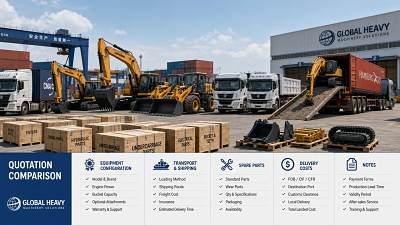
A reliable cost review should normalize all quotations into a landed cost figure.
Capital planning should also consider financing terms and expected residual value.
A higher purchase price can still support a lower long-term construction machinery cost if depreciation remains stable.
Important comparison factors
- Engine power matched to actual workload
- Compatibility with existing trailers or truck transport units
- Dealer service coverage in operating regions
- Availability of standard and fast-moving spare parts
Fuel Cost as a Long-Term Operating Variable
Fuel is often the most sensitive variable in construction machinery cost.
Even small differences in hourly consumption can create major annual cost gaps.
Fuel consumption depends on engine technology, machine size, load factor, operator habits, terrain, and idle ratio.
For mixed operations, transport coordination also affects fuel results.
When trucks, trailers, and machines are poorly scheduled, idle running increases across the whole fleet.
To estimate fuel-driven construction machinery cost, combine hourly burn rate with annual utilization and local fuel pricing.
This method supports more realistic budgeting than relying on brochure averages.
Maintenance, Repair, and Downtime Impact
Maintenance is the third major pillar of construction machinery cost.
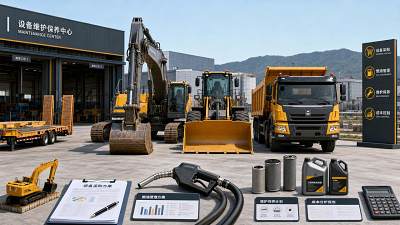
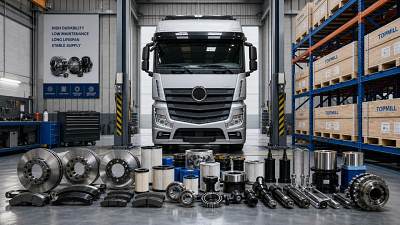
It includes scheduled service, wear components, lubricants, tires or tracks, filters, and technician labor.
Unplanned repair cost is often more damaging because it interrupts project flow.
Typical maintenance cost elements
- Periodic engine and hydraulic service
- Undercarriage or tire replacement
- Brake, transmission, and cooling system work
- Electronic diagnostics and sensor replacement
- Emergency field repairs
Maintenance planning should focus on uptime, not only workshop expense.
A cheaper spare part may fail sooner and create a larger construction machinery cost through lost operating hours.
For transport-linked projects, downtime can also delay loading, delivery, and site coordination.
Application Value Across Road Transport and Construction Operations
A detailed construction machinery cost model has direct business value.
It improves supplier evaluation, equipment allocation, and total project forecasting.
It also supports decisions between buying new, buying used, leasing, or redeploying existing units.
Within the global heavy truck ecosystem, machinery and road transport assets are closely connected.
Excavators, loaders, cranes, and concrete equipment rely on trucks, low-bed trailers, and spare parts logistics.
When cost analysis covers both machinery and transport support, asset planning becomes more accurate.
Typical Cost Scenarios by Equipment Type
This comparison shows why construction machinery cost should be tracked by equipment category, not by one average fleet number.
Practical Recommendations for Better Cost Control
- Calculate total ownership cost before approving any purchase.
- Request fuel data under realistic workload conditions.
- Review service intervals, warranty scope, and parts lead times.
- Track machine utilization, idle hours, and repair frequency monthly.
- Compare supplier support networks across target operating regions.
- Use telematics where available to reduce avoidable construction machinery cost.
Good cost control does not always mean choosing the lowest initial quote.
It means choosing equipment that delivers stable output, manageable service needs, and efficient integration with transport resources.
Next-Step Evaluation Framework
To assess construction machinery cost effectively, build a comparison sheet covering purchase, fuel, maintenance, downtime risk, and resale outlook.
Then compare suppliers, models, and support capabilities on the same basis.
A specialized global B2B platform for heavy trucks and equipment can simplify this process.
It provides access to product categories, supplier information, market insights, and sourcing references across construction machinery and road transport equipment.
With a structured cost review, equipment selection becomes more transparent, practical, and financially sustainable.
Trending News
- Cab Chassis Truck for Fire Department: Key Specs Before Ordering
- When to Use an Excavator With Long Reach Boom on Site
- Choosing a Water Truck Factory for Municipal and Mining Projects
- Truck Parts Wholesale: How to Balance Price, Quality, and Lead Time
- Crane Truck Price in 2026: What Drives Total Ownership Cost
Tag
Recommended News
 Transportation CostsCrane Truck Price in 2026: What Drives Total Ownership CostCrane truck price in 2026 goes beyond the sticker cost. Learn what drives total ownership cost, compare suppliers smarter, and reduce fleet risk with practical buyer insights.
 Transportation CostsConstruction Machinery Cost Breakdown: Purchase, Fuel, and MaintenanceConstruction machinery cost explained: compare purchase, fuel, and maintenance to reduce lifecycle expense, improve fleet budgeting, and choose equipment with better long-term value.
 Transportation CostsSemi Trailer Manufacturer with Lightweight Design: What Cuts Fleet CostsSemi trailer manufacturer with lightweight design choices can cut fleet costs through better payload, fuel savings, and durability. See which trailer strategy fits your routes.
 Transportation CostsLow-Maintenance Truck Spare Parts: Long-Term Cost BreakdownTruck spare parts supplier with low maintenance: discover how durable parts cut downtime, labor, and lifecycle costs for fleets. Compare smarter sourcing strategies now.
 Transportation CostsTruck Cement Bulk Order: Cost Factors That Change Final PricingTruck cement bulk order pricing depends on route, payload, compliance, and supplier terms. Discover the key cost factors to compare quotes, cut hidden expenses, and buy with confidence.
 Transportation CostsCrane Truck Cost Breakdown: Chassis, Crane Unit, and Compliance FeesCrane truck cost explained: compare chassis, crane unit, taxes, and compliance fees to avoid hidden expenses, approve budgets faster, and choose the right truck with confidence.
 Transportation CostsCrane Truck Price Breakdown: Capacity, Boom Type, and Operating CostCrane truck price explained by capacity, boom type, and operating cost. Compare key cost drivers, ownership value, and smart buying tips to choose the right crane truck.
 Transportation CostsTruck Cement Mixer Price in 2026: What Changes Total Ownership CostTruck cement mixer price in 2026 depends on fuel, compliance, maintenance, financing, and resale—not just the quote. Discover how to compare real ownership cost and choose smarter.
 Transportation CostsHeavy Equipment Export to Mexico: Cost Factors Beyond Shipping RatesHeavy equipment export to Mexico involves more than freight rates. Discover hidden cost factors, customs, taxes, inland delivery, and compliance tips to reduce risk and improve ROI.
 Transportation CostsWhen Bulk Discounts From a Truck Spare Parts Supplier Really Save MoneyDiscover when a truck spare parts supplier with bulk order discounts truly cuts fleet costs—compare total cost, compatibility, inventory risk, and supplier reliability before you buy.
 Transportation CostsTruck Cement Mixer Price in 2026: What Buyers Should Budget ForTruck cement mixer price in 2026 depends on more than the base quote. Discover key cost drivers, landed cost factors, and smart sourcing tips to budget better and buy with confidence.
 Transportation CostsTruck Trailer OEM for Custom Loads: Where the Real Cost BeginsTruck trailer OEM costs start beyond the quote. Learn how custom loads, compliance, delivery, and maintenance shape true ROI—and how to choose a supplier that protects long-term fleet value.
 Transportation CostsTruck Tipper Bulk Order: Cost Factors Often Missed in Early QuotesTruck tipper bulk order costs go far beyond the first quote. Discover hidden factors in specs, shipping, compliance, parts, and support to avoid budget surprises.
![]() Transportation CostsTruck Cement Wholesale: What Impacts Margin More Than Purchase PriceTruck cement wholesale margins depend on more than purchase price. Discover how fuel use, payload, uptime, compliance, and supplier stability shape long-term profitability.
Transportation CostsTruck Cement Wholesale: What Impacts Margin More Than Purchase PriceTruck cement wholesale margins depend on more than purchase price. Discover how fuel use, payload, uptime, compliance, and supplier stability shape long-term profitability. Transportation CostsCrane Truck Cost: A Practical Guide to Total Ownership ExpenseCrane truck cost explained beyond the sticker price—compare financing, maintenance, fuel, compliance, downtime, and resale value to make smarter, lower-risk fleet investment decisions.
 Transportation CostsConstruction Machinery Cost Breakdown for Better Project BudgetingConstruction machinery cost explained clearly: compare purchase, rental, fuel, maintenance, and downtime to budget smarter, control risk, and improve project profitability.
 Transportation CostsLogging Truck Price: What Drives Cost Up or DownLogging truck price depends on configuration, payload, compliance, brand, and market timing. Learn how to compare true cost, reduce risk, and choose higher-value trucks.
 Transportation CostsCrane Truck Cost: What Affects Ownership Beyond the Purchase PriceCrane truck cost goes beyond the sticker price. Discover how fuel, maintenance, training, financing, compliance, and resale value shape true ownership costs and smarter buying decisions.
 Transportation CostsConstruction Machinery Cost Breakdown for Better Project PlanningConstruction machinery cost explained for smarter project planning. Learn key cost drivers, reduce downtime, control budgets, and choose equipment with better lifecycle value.
 Transportation CostsLogging Truck Price Guide: What Drives the Final CostLogging truck price depends on far more than chassis cost. Discover what drives total ownership cost, compare specs smarter, and choose the right truck for long-term ROI.
 Transportation CostsTruck Cement Wholesale: How Bulk Pricing Changes by Order SizeTruck cement wholesale pricing changes with order size. Learn how small, mid, and bulk purchases affect total cost, cash flow, and supplier terms to secure smarter deals.
 Transportation CostsBulldozer Price in 2026: What Actually Drives the Cost UpBulldozer price in 2026 is driven by steel, emissions rules, digital features, freight, and brand support. Learn what really raises costs and compare suppliers with confidence.
 Transportation CostsTruck Trailer Bulk Order: 7 Cost Factors That Change the Final QuoteTruck trailer bulk order pricing can change fast. Discover 7 key cost factors that affect the final quote and learn how to compare suppliers, control budget risk, and buy smarter.
 Transportation CostsConstruction Machinery Cost Planning for Multi-Stage ProjectsConstruction machinery cost planning for multi-stage projects: learn how to control equipment, transport, maintenance, and supplier costs to protect margins and improve project performance.
 Transportation CostsConstruction Machinery Price: How to Compare Quotes Without Missing Hidden CostsConstruction machinery price comparison made smarter: uncover hidden costs in freight, duties, warranty, parts, and downtime to choose the best supplier with confidence.