What Shortens the Lead Time for a Cab Chassis Truck Build?
For buyers evaluating a cab chassis truck build, lead time often depends on component availability, production scheduling, and supplier coordination. From truck engine parts and truck brake system readiness to platform sourcing efficiency, every step matters. Whether you also compare wing van truck, light duty truck, or heavy duty trucks for sale, understanding what accelerates delivery helps procurement teams make faster, smarter decisions.
In the road transport equipment industry, a cab chassis truck is rarely a simple off-the-shelf purchase. Build speed is influenced by chassis specification, axle configuration, cab options, emissions requirements, body integration planning, and the ability of suppliers to align documentation and inventory. For procurement teams, shortening lead time is not only about receiving a truck earlier; it also affects contract execution, fleet deployment, cash flow, and customer service performance.
For distributors, project buyers, and commercial evaluators, the most useful question is not “What is the fastest build?” but “What practical factors reduce delays without creating downstream risk?” The answer usually lies in standardization, supplier readiness, accurate technical communication, and digital sourcing visibility across the heavy truck supply chain.
Why Cab Chassis Truck Lead Time Varies So Much
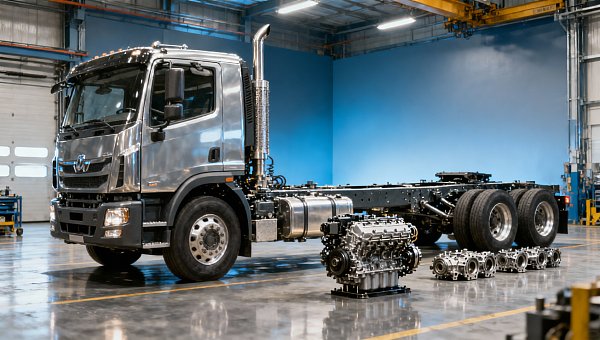
Lead time for a cab chassis truck build can range from 2–4 weeks for standard, in-stock configurations to 8–16 weeks or longer for customized orders. The gap is usually created by three variables: parts availability, factory slot allocation, and the complexity of final application requirements. Even when the base chassis is ready, one delayed component can affect the entire production sequence.
In many international sourcing cases, truck engine parts, transmission matching components, steering assemblies, wiring harnesses, and truck brake system modules have different replenishment cycles. A common issue is that the cab shell and frame may be available, while a specific axle ratio, suspension package, or brake valve set is still pending. That mismatch can add 7–21 days before assembly even begins.
Another major factor is the build profile. A standard 4x2 or 6x4 cab chassis intended for municipal or logistics use is typically easier to schedule than a vehicle requiring PTO preparation, reinforced frame sections, cold-climate electrical upgrades, or special wheelbase dimensions. The more non-standard requirements added after quotation approval, the more likely the order will move out of an existing factory window.
Cross-border procurement adds one more layer. Buyers often evaluate suppliers in different regions, and each supplier may follow a different production calendar, export preparation process, or inspection workflow. A truck that can be assembled in 30 days may still need another 5–10 days for document confirmation, pre-shipment inspection, and container or Ro-Ro booking.
Typical Sources of Delay
- Low-rotation parts such as special suspensions, export-spec lighting, and non-standard tire sizes may require 10–30 extra days.
- Late changes to wheelbase, GVW, cab trim, or engine emission level often force engineering review and schedule reset.
- Body-builder coordination can slow down the process if mounting drawings, subframe requirements, or interface points are not confirmed early.
- Incomplete technical documents, such as unclear homologation needs or destination-country compliance notes, can delay shipment release.
What buyers should watch first
The earliest warning sign is usually not the final quoted delivery time, but the number of undefined specifications in the RFQ stage. If 4–6 key items remain open—such as axle layout, horsepower band, brake type, fuel tank size, and intended body application—the supplier cannot reserve the right production resources with confidence.
The Fastest Way to Shorten Build Time: Standardize Before You Order
The single most effective way to reduce cab chassis truck lead time is to standardize the build specification before purchase order release. In practical terms, this means choosing proven component combinations that the manufacturer already assembles regularly. A standard engine-transmission-axle package can cut engineering friction and parts waiting time by 15%–30% compared with a fragmented custom build.
Buyers often focus on price comparison first, but lead time savings usually come from specification discipline. For example, selecting one of the supplier’s regular wheelbase ranges, one cab roof version, and one approved brake system layout allows the factory to move the order into an existing production family. That is much easier than creating a low-volume build with unique mounting points or mixed-market electrical standards.
This is especially important for fleets purchasing more than 5–10 units. If all trucks share the same chassis architecture, truck brake system parts, filters, wear items, and service procedures are also easier to manage later. Procurement efficiency and aftersales efficiency often improve together when the build is standardized early.
For distributors and agents, standardization also lowers quotation turnaround time. A well-defined package can often be confirmed within 24–72 hours, while a highly customized configuration may require multiple rounds of factory review, body-builder consultation, and export compliance checks.
Configuration choices that usually accelerate production
The table below shows how typical specification decisions influence build speed in road transport equipment procurement.
The key takeaway is that lead time is not shortened by choosing the cheapest option, but by choosing the most repeatable option. Buyers who align with current factory production patterns usually receive faster confirmation, fewer revisions, and more predictable shipment dates.
Pre-order checklist for buyers
- Confirm application category: cargo, municipal, tanker, dump, refrigerated, or special body interface.
- Freeze 6 core specifications: drive type, wheelbase, engine range, transmission, axle rating, and cab type.
- Clarify destination-market requirements within the first 48 hours of supplier discussion.
- Request a component availability review before issuing deposit or final PO.
How Supplier Coordination and Digital Sourcing Platforms Reduce Delays
A cab chassis truck build moves faster when buyers can evaluate supplier readiness in one place instead of collecting disconnected offers. In a fragmented sourcing process, procurement teams often spend 1–2 weeks just comparing technical replies, stock status, and export capabilities. A professional B2B platform focused on heavy trucks helps compress this timeline by improving supplier visibility and communication efficiency.
For example, when buyers search across truck chassis & cab, complete trucks, spare parts, and related heavy equipment categories on a dedicated industry platform, they can compare suppliers on criteria that actually affect delivery: product coverage, responsiveness, configuration range, regional shipping support, and component sourcing depth. This is particularly useful when engine parts, brake assemblies, cabs, and chassis are supplied through linked manufacturing networks rather than a single integrated plant.
The Global Heavy Truck Industry Platform supports this kind of sourcing efficiency by connecting manufacturers, suppliers, distributors, and buyers across the commercial vehicle supply chain. For international buyers, this can reduce early-stage supplier identification time and make it easier to match a purchasing requirement with suppliers that already handle similar road transport equipment projects.
The practical benefit is not only speed, but better decision quality. If a supplier can show consistent capability in truck chassis, complete vehicle supply, spare parts support, and export coordination, the buyer has a better chance of avoiding the common problem of placing an order with a vendor that quotes fast but cannot maintain component readiness through final shipment.
What to compare when qualifying suppliers
Before choosing a supplier for a time-sensitive build, use a structured evaluation model rather than a price-only comparison.
A structured comparison often reveals that the fastest supplier is the one with balanced strengths: stable production rhythm, realistic delivery promises, and enough supply chain depth to support both truck assembly and aftersales parts demand.
Platform-based procurement advantages
- Faster supplier discovery across multiple heavy truck categories and application sectors.
- Better comparison of standard versus customized options for cab chassis truck projects.
- Improved access to market insight, buying guides, and product directories that support technical screening.
- Stronger cross-border sourcing transparency for buyers, dealers, and regional distributors.
Parts Availability: The Components That Commonly Decide Build Speed
Not all parts influence lead time equally. In many cab chassis truck builds, a small group of components determines whether production starts on schedule. These are usually powertrain parts, brake system assemblies, axle and suspension modules, electrical control units, and cab interior sets linked to a specific trim or regulatory package. Buyers who ask only for “overall lead time” may miss where the real bottleneck sits.
Truck engine parts are often critical because they affect both assembly and testing. If the selected engine variant is tied to a less common horsepower output or a destination-specific emissions setting, the delay may not be in the engine block itself but in supporting parts such as ECUs, cooling modules, sensors, and calibration-linked harnesses. A 3-day component gap can easily become a 10-day testing shift if the build queue moves ahead.
The truck brake system is another high-impact area. Air brake chambers, ABS or EBS components, valves, lines, and axle-specific brake fitments must be matched correctly. If the truck is intended for a municipal body, dump application, or export market with different braking requirements, availability can vary significantly. Standard brake packages are usually easier to source than mixed or upgraded systems requested late.
For buyers comparing a cab chassis truck with a wing van truck or other complete truck options, this distinction matters. A complete vehicle may appear slower at first glance, but if the body integration is already standardized and the chassis package is built in higher volume, the real delivery date can sometimes be more reliable than a custom cab chassis ordered with unresolved interface details.
Components to verify before production booking
- Engine family, horsepower band, and emissions matching requirements.
- Brake architecture, including ABS/EBS, air tank layout, and axle compatibility.
- Suspension and frame reinforcement needs for the intended body application.
- Cab trim level, HVAC package, seat configuration, and electrical options.
- Tire specification, fuel tank capacity, and export-market mandatory fittings.
A practical rule for procurement teams
If 2 or more critical components are on extended supply status, request either an equivalent standard configuration or a phased delivery plan. In many cases, adjusting one non-essential option can save 1–3 weeks without affecting the truck’s operational suitability.
Build Planning, Body Integration, and Approval Workflow
A cab chassis truck build is only part of the full delivery timeline. Many road transport projects require the chassis to be matched with a cargo body, tanker system, box van, municipal attachment, or specialized equipment. If the body-builder and chassis supplier are not aligned from the start, even a quickly assembled chassis may sit idle while interface issues are solved.
The best practice is to treat the process as a 4-step workflow: technical definition, component confirmation, production scheduling, and final inspection/shipment preparation. Each stage needs documented approval. When buyers skip one stage to save time, they often create rework later. A missing mounting drawing or an unverified rear overhang dimension can add 7–14 days after the truck leaves the main assembly line.
Dealers and distributors should also pay attention to approval authority. If technical approval sits with one team, commercial approval with another, and shipping approval with a third, the project can lose several days at every handoff. In B2B truck procurement, slow internal decision-making is often as damaging as supplier delay.
For larger projects, especially batches of 10 units or more, building a milestone calendar is more effective than relying on a single promised delivery date. A calendar with specification freeze date, parts readiness date, line-in date, inspection date, and shipping booking date creates much better visibility for both sides.
Recommended lead-time control process
This workflow shows that the fastest builds are usually the best-managed builds. Short lead time comes from early clarity and disciplined approvals, not from compressing every stage unrealistically.
Common mistakes that lengthen delivery
- Approving commercial terms before confirming the final application specification.
- Changing body-interface requirements after the chassis enters production.
- Ignoring export document preparation until the truck is already completed.
- Failing to assign one project owner for supplier communication and milestone tracking.
How Buyers Can Make Faster, Lower-Risk Procurement Decisions
A faster cab chassis truck build starts with better buying behavior. Information researchers, procurement teams, business evaluators, and distributors all benefit from the same principle: define operational need first, then match it to the most deliverable configuration. That is true whether you are sourcing one heavy-duty chassis, evaluating light duty truck options for urban distribution, or comparing heavy duty trucks for sale across several suppliers.
In practical terms, buyers should separate “must-have” specifications from “nice-to-have” options. A fleet that needs 6x4 chassis with a defined payload band and brake package should not delay a project for cosmetic cab trim changes that have no impact on operation. In many cases, removing 2–3 non-essential options is enough to bring an order back into a regular production cycle.
It also helps to source through industry-focused channels that combine product discovery, supplier comparison, and market information. A specialized heavy truck platform gives buyers a more efficient path to shortlist suppliers, compare categories such as truck chassis & cab, complete trucks, trailers, and spare parts, and identify partners with stronger delivery coordination capabilities.
The most resilient procurement strategy is one that balances speed, technical fit, and future support. A truck delivered 10 days earlier but built on an unstable supply base can create more downtime later. By contrast, a supplier with stronger documentation discipline, component visibility, and aftersales alignment often produces a better total outcome for B2B fleet and project buyers.
FAQ: common buyer questions
How long does a standard cab chassis truck build usually take?
For common configurations, production can often be completed in about 2–6 weeks, depending on stock status and factory scheduling. Custom builds with special wheelbase, brake, or powertrain requirements may take 8–16 weeks or more.
Which parts most often delay delivery?
The most common delay points are truck engine parts linked to specific output or emissions settings, truck brake system modules, special suspension packages, electronic control components, and export-specific cab equipment.
Is a complete truck sometimes faster than a cab chassis build?
Yes. If the complete truck, such as a wing van truck, is already produced in a standard volume with fixed body integration, it can sometimes have a more predictable lead time than a customized chassis waiting for body-builder confirmation.
What should distributors and agents ask suppliers first?
Ask for four things immediately: available standard configurations, current component supply status, nearest production slot, and average export release timeline. These answers are often more useful than a headline delivery promise.
Shortening the lead time for a cab chassis truck build depends on disciplined specification planning, realistic supplier evaluation, component availability control, and coordinated production workflow. Buyers who standardize key configurations, verify critical parts early, and use a focused heavy truck sourcing platform can reduce delays and improve delivery confidence across the project lifecycle.
If you are comparing truck chassis & cab solutions, complete trucks, spare parts, or related road transport equipment for cross-border procurement, the Global Heavy Truck Industry Platform can help you identify suitable suppliers, compare product options, and streamline your sourcing process. Contact us today to discuss your requirements, request a tailored sourcing plan, or explore more heavy truck solutions for your market.
Tag
Recommended News
 Truck ExportTIR Road Freight Expansion Opens China-Central Asia-Russia Truck RouteTIR road freight expansion opens a faster China-Central Asia-Russia truck route, cutting sea transit by 12–18 days and reshaping vehicle export planning, procurement, and delivery execution.
 Truck ExportChina Pilots Single-Document Multimodal Customs for Truck ExportsChina Pilots Single-Document Multimodal Customs for Truck Exports: learn how the new pilot can speed truck chassis filings, cut delays, and lower compliance costs for global buyers.
 Truck ExportEast Corridor Rail Volume Tops 3,000, Lifting Truck Export ReliabilityEast Corridor rail volume tops 3,000, boosting China-Europe Railway Express reliability for truck export, chassis and parts delivery. Explore how steadier routes and smoother customs can improve Europe-bound logistics planning.
 Truck ExportSemi Trailer Supplier Checklist for Export OrdersSemi trailer supplier checklist for export orders: verify quality, documents, pricing risks, and after-sales support to choose a reliable partner and avoid costly delays.
 Truck ExportDalian–Middle East Route Opens for Truck ExportsDalian–Middle East Route Opens for Truck Exports: explore a new direct option for heavy-duty trucks, special vehicles, and KD kits with more flexible multimodal delivery planning.
 Truck ExportTruck Tipper Distributor Selection: Margin, Support, TerritoryTruck tipper distributor selection starts with margin, after-sales support, and territory protection. Learn how to compare suppliers, reduce risk, and choose a profitable long-term partner.
 Truck ExportDump Truck Exporter Checklist: Cost, Lead Time, ComplianceDump truck exporter checklist covering total landed cost, realistic lead time, and compliance essentials. Compare suppliers smarter, reduce delivery risk, and source with confidence.
 Truck ExportChina’s Zero-Tariff Move Cuts Africa Truck Import CostsChina’s Zero-Tariff Move Cuts Africa Truck Import Costs. Learn how lower duties on trucks, chassis, axles, and braking systems may reshape African sourcing, pricing, and delivery plans.
![]() Truck ExportWhat to Check Before Choosing a Truck Tipper ExporterTruck tipper exporter selection starts with the right checks. Learn how to compare quality, compliance, customization, and after-sales support before placing an order.
Truck ExportWhat to Check Before Choosing a Truck Tipper ExporterTruck tipper exporter selection starts with the right checks. Learn how to compare quality, compliance, customization, and after-sales support before placing an order. Truck ExportChina Opens U.S. Trade Barrier Probe on Green RulesChina Opens U.S. Trade Barrier Probe on Green Rules: discover how this China-U.S. trade review could affect new energy heavy-duty truck batteries, electronic control systems, compliance, and export market access.
 Truck ExportChina Share Rises as Indonesia Trailer Imports JumpChina’s share rises as Indonesia trailer imports jump 41.2%, boosting opportunities in semi-trailers, refrigerated trailers, logistics fleets, and supply-chain services.
 Truck ExportHow to Choose a Reliable Dump Truck Exporter in 2026Find a reliable dump truck exporter in 2026 with tips on compliance, specs, delivery, after-sales support, and scenario-based sourcing for global projects.
 Truck ExportRCEP E-Certs Speed China-Vietnam Vehicle ClearanceRCEP e-certs accelerate China-Vietnam vehicle clearance with real-time origin checks, helping exporters cut delays, align VIN data, and move land transport equipment faster.
 Truck ExportVietnam Requires Local After-Sales Pledge for TrucksVietnam’s new local after-sales pledge for imported heavy trucks reshapes compliance, warranty, parts response, and port acceptance for exporters and importers.
 Truck ExportLow Bed Trailer Export to Southeast Asia: 2026 Cost RisksLow bed trailer export to Southeast Asia in 2026 faces freight, duty, compliance, and supplier cost risks. Learn how to control landed cost and source smarter.
 Truck ExportTruck Trailer Wholesale Risks to Check Before OrderingTruck trailer wholesale can boost margins, but hidden risks matter. Review supplier credibility, specs, compliance, payment, inspection, and shipping before you order.
 Truck ExportWhat Makes a Reliable Truck Trailer Distributor in Export MarketsTruck trailer distributor selection shapes export success. Learn how to assess compliance, supply stability, technical fit, and after-sales support for safer global sourcing.
 Truck ExportZhengzhou-Moscow Postal Test Train Launches New 'Mail-Level' Clearance for Heavy-Duty CKD ExportsZhengzhou-Moscow postal test train enables 'mail-level' clearance for heavy-duty CKD exports — faster, cheaper, and simpler customs for SMEs targeting Eurasia.
 Truck ExportHorgos Port Handles Over 3,000 China-Europe & Central Asia Trains in 2026Horgos Port handled 3,000+ China–Europe & Central Asia trains in early 2026 — 37% carried new-energy heavy trucks. Discover logistics, compliance & market insights.
 Truck ExportChina-Europe Railway Express Surpasses 130,000 TrainsChina-Europe Railway Express surpasses 130,000 trains — boosting reliability for heavy-duty truck exporters, KD kit suppliers & specialized vehicle firms.
 Truck ExportWhat Makes a Reliable Truck Tipper Distributor in New Export MarketsTruck tipper distributor selection can define export success. Learn how to assess local reach, compliance, parts support, and service strength before entering new markets.
 Truck ExportShatian Customs Releases May H1 Transport Vehicle Inspection ResultsShatian Customs' May 2026 transport vehicle inspection reveals 98.7% HS code accuracy for heavy-duty trucks & KD kits — critical insights for exporters, forwarders, and compliance teams targeting Turkey, Mexico, Vietnam.
 Truck ExportShengsi Customs Clears 4 Ro-Ro Vessels for EAC/CE Dual ComplianceShengsi Customs clears 4 Ro-Ro vessels for EAC/CE dual compliance — streamlining heavy-truck exports to Russia, Kazakhstan & EAEU markets with 'one inspection, two certificates' efficiency.
 Truck ExportQingdao Port Adds 13 Foreign Trade Routes, Boosts CKD Export to MEAQingdao Port adds 13 foreign trade routes & CKD dedicated customs channel — accelerating heavy-duty truck CKD exports to Middle East and Africa with 48-hour clearance.
 Truck ExportYichang Hazardous Cargo Waiting Anchorage LaunchedYichang Hazardous Cargo Waiting Anchorage launched—supports 28 vessels, smart inspection & e-waybill verification. Critical for chemical logistics, trucking & Yangtze supply chains.