2026 China Old Freight Truck Scrappage Subsidy Launched
On April 26, 2026, China’s Ministry of Transport and four other national departments jointly launched a new round of subsidies for scrapping old operational freight trucks — with explicit support for electric heavy-duty trucks and their core powertrain systems. This policy shift is drawing attention from battery manufacturers, electric drive system suppliers, OEMs serving export markets, and logistics equipment integrators.
Event Overview
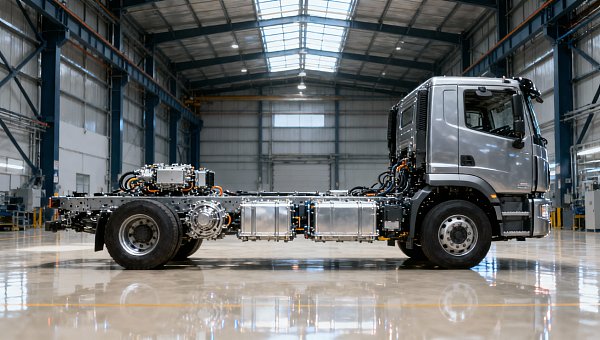
On April 26, 2026, the Ministry of Transport, the Ministry of Finance, the National Railway Administration, the Civil Aviation Administration of China, and the State Post Bureau jointly issued an official notice to launch the upgraded national comprehensive freight hub chain-strengthening initiative. Concurrently, the notice expanded and reinforced the national subsidy program for scrapping outdated operational freight trucks. The policy specifically prioritizes procurement of new energy heavy-duty trucks and their key components: high-efficiency motors, motor controllers, and battery systems.
Industries Affected
Export-Oriented Powertrain Component Manufacturers
These firms supply batteries, motors, and controllers to overseas OEMs and vehicle integrators. The subsidy accelerates domestic demand for high-specification tri-power (‘three-electric’) systems, prompting scale-up in production capacity and downward pressure on unit costs. As a result, export-oriented manufacturers may face intensified pricing competition and tighter delivery timelines starting in H2 2026.
Overseas OEMs and Vehicle Integrators Sourcing from China
International truck OEMs and e-truck system integrators relying on Chinese tri-power suppliers are likely to benefit from improved price competitiveness and enhanced supply stability beginning in late 2026. However, this assumes continued alignment between subsidy-driven domestic production ramp-ups and export compliance requirements (e.g., UN ECE R100/R136, ISO 26262).
Domestic Battery & Electric Drive System Producers
Manufacturers supplying to China’s domestic commercial vehicle market will see increased order volume and accelerated validation cycles for high-voltage, heavy-duty battery packs and integrated axle-drive systems. Their ability to meet both domestic subsidy-driven specs and international certification standards will determine export readiness.
Supply Chain Service Providers (Logistics, Certification, Testing)
Third-party testing labs, certification bodies, and cross-border logistics providers specializing in automotive-grade battery shipments may experience rising demand for EV component compliance verification and export documentation support — particularly for shipments targeting ASEAN, LATAM, and Middle Eastern markets where Chinese e-truck exports are expanding.
What Relevant Enterprises or Practitioners Should Focus On
Monitor official implementation guidelines and provincial rollout details
The national notice sets the framework, but eligibility criteria, subsidy amounts per vehicle, and application procedures will be defined at provincial level. Export-oriented suppliers should track announcements from key provinces (e.g., Guangdong, Jiangsu, Shandong) where tri-power manufacturing clusters are concentrated.
Track procurement focus on specific subsystems — not just whole vehicles
The policy explicitly names ‘efficient motors, controllers, and battery systems’ as subsidized items. Companies should prioritize technical documentation and test reports aligned with GB/T standards for these components — especially those relevant to heavy-duty applications (e.g., GB/T 31467.3, GB/T 18488.1–2023) — to qualify for downstream buyer qualification processes.
Distinguish between policy signal and actual procurement momentum
While the subsidy creates a structural incentive, fleet operators’ adoption pace depends on total cost of ownership (TCO), charging infrastructure availability, and residual value guarantees. Suppliers should avoid overestimating near-term volume; instead, align production planning with confirmed purchase orders tied to subsidy-eligible vehicle deliveries — not policy announcements alone.
Prepare for concurrent domestic and export compliance workflows
Manufacturers scaling output for both domestic subsidy programs and overseas clients must maintain parallel documentation: CNAS-accredited test reports for domestic use, plus IEC/UN/ECE-compliant certifications for export. Early engagement with dual-certification service providers is advisable to avoid bottlenecks in H2 2026.
Editorial Perspective / Industry Observation
Observably, this policy functions primarily as a demand catalyst — not an immediate market transformation. It signals stronger institutional backing for domestic tri-power system maturity and export-readiness, but actual export price competitiveness and delivery reliability will depend on how quickly manufacturers translate scaled production into certified, field-proven subsystems. Analysis shows the subsidy is accelerating capacity utilization and driving down average bill-of-materials costs — however, that effect remains largely confined to the China domestic supply chain for now. From an industry perspective, this is best understood as a mid-cycle inflection point: it validates current technology roadmaps but does not replace the need for sustained investment in global certification, thermal management robustness, and long-haul durability validation.
Concluding, this policy marks a coordinated step to strengthen China’s position in the global electric heavy-duty transport value chain — particularly at the subsystem level. Its significance lies less in immediate revenue impact and more in its role as a structural enabler: it reinforces manufacturing discipline, incentivizes standardization, and narrows the gap between domestic deployment scale and international market readiness. Currently, it is more appropriately understood as a reinforcing signal — one that gains material weight only as provincial implementation, OEM procurement decisions, and export shipment data begin to converge in Q3–Q4 2026.
Source: Joint notice issued on April 26, 2026 by the Ministry of Transport of the People’s Republic of China, the Ministry of Finance, the National Railway Administration, the Civil Aviation Administration of China, and the State Post Bureau. Implementation details at provincial level remain pending and require ongoing monitoring.
Trending News
- Cab Chassis Truck for Fire Department: Key Specs Before Ordering
- When to Use an Excavator With Long Reach Boom on Site
- Choosing a Water Truck Factory for Municipal and Mining Projects
- Truck Parts Wholesale: How to Balance Price, Quality, and Lead Time
- Crane Truck Price in 2026: What Drives Total Ownership Cost
Tag
Recommended News
 Truck ExportHow to Vet a Construction Machinery Exporter for Overseas OrdersConstruction machinery exporter selection made easier: learn how to verify compliance, quality control, delivery reliability, and after-sales support for safer overseas orders.
 Truck ExportPakistan Opens 6 Land Routes to Iran, Cutting China Heavy-Truck Transit to 6 HoursPakistan opens 6 land routes to Iran—cutting China heavy-truck transit from Gwadar to Iranian sites to just 6 hours. Game-changer for陆路运输设备 exporters, OEMs & logistics firms.
 Truck ExportIran Launches Rail-Based Crude Oil Containerization with Chinese-Made Tank TrailersIran adopts Chinese-made 40-ft rail tank trailers for crude oil containerization—enhancing safety, bypassing Hormuz risks, and setting new standards in陆路运输设备 logistics.
 Truck ExportPakistan Opens 6 Land Corridors to Iran, Cutting China-Iran Heavy-Truck Transit to 6 HoursPakistan opens 6 land corridors to Iran—cutting China-Iran heavy-truck transit to just 6 hours. Boost reliability, bypass Hormuz risks & optimize logistics now.
 Truck ExportLow Bed Trailer Export with Waterproof Features: What Buyers Often MissLow bed trailer export with waterproof features: discover the hidden sealing, drainage, wiring, and coating details buyers often miss to reduce corrosion, downtime, and costly post-delivery issues.
 Truck ExportHeavy Equipment Export to Mexico: Key Compliance and Import RisksHeavy equipment export to Mexico demands strict compliance. Learn key import risks, document checks, and supplier evaluation tips to avoid delays, reduce costs, and enter the market with confidence.
 Truck ExportWuhan Central Asia Railway Express Hits 103 Trains in April 2026Wuhan Central Asia Railway Express hits 103 trains in April 2026 — traction vehicles & specialized trailers drive 37% of export value. Key insight for heavy equipment exporters and rail logistics providers.
 Truck ExportLow Bed Trailer Export to Southeast Asia: Specs That Avoid Clearance DelaysLow bed trailer export to Southeast Asia starts with the right specs. Learn which dimensions, axle setups, deck heights, and documents help avoid clearance delays and cut costly port risks.
 Truck ExportHeavy Equipment Export for Mining Operations: Key Cost and Delivery RisksHeavy equipment export for mining operations: uncover total landed cost, delivery risks, and supplier reliability to avoid delays, control budgets, and source smarter for mining projects.
 Truck ExportWuhan Central Asia Railway Hits 102 Trains in One MonthWuhan Central Asia Railway hits 102 trains in April 2026 — a record boost for land transport equipment exports, especially tractor units and semi-trailers. Discover key compliance & logistics insights.
 Truck ExportDelivery Truck Supplier in USA: Cost, Lead Time, and ComplianceDelivery truck supplier in USA: compare total cost, lead time, and compliance requirements to choose a reliable partner, reduce fleet risk, and source trucks with greater confidence.
 Truck ExportIran Customs Launches New HS Code System for TrailersIran Customs' new 2026 HS code system for trailers introduces smart coupling and new-energy subcodes — vital for China-based陆路运输设备 exporters seeking faster clearance & tariff advantages.
 Truck ExportErenhot Highway Port Switches to 24-Hour Freight ClearanceErenhot Highway Port now offers 24-hour freight clearance—boosting efficiency for land transport equipment exports to Mongolia, Russia & Central Asia.
 Truck ExportIran Eases Hormuz Strait Passage, Boosting Heavy Transport Equipment ExportsHeavy transport equipment exporters gain reliability: Iran eases Hormuz Strait passage, cutting delays, insurance costs, and demurrage for GCC-bound shipments.
 Truck ExportPakistan Opens 6 Land Freight Corridors to IranPakistan opens 6 land freight corridors to Iran—key opportunity for heavy-duty truck manufacturers, semi-trailer exporters & logistics providers leveraging China–Iran transit via Gwadar.
 Truck ExportHeavy Equipment Export to Africa: Cost Risks and Market PrioritiesHeavy equipment export to Africa starts with market fit. Discover cost risks, priority sectors, and smarter sourcing strategies for trucks, trailers, and machinery.
 Truck ExportExcavator Exporter Checklist for Delivery, Parts, and ComplianceExcavator exporter checklist for delivery, parts, and compliance—learn how to reduce risk, avoid delays, and choose a reliable supplier for global equipment sourcing.
 Truck ExportErenhot-Mongolia Highway Port Hits 24-Hour Freight Clearance MilestoneErenhot-Mongolia Highway Port achieves 24-hour freight clearance — heavy-duty trucks now clear customs in just 18 minutes. Boost cross-border logistics efficiency today.
 Truck ExportIran Customs Launches 2026 HS Code System, Affecting Trailer Exports from ChinaIran's 2026 HS Code update speeds trailer exports from China—skeletal & low-bed semi-trailers now cleared 22% faster. Act now to ensure compliance & avoid delays.
 Truck Export24-Hour Full-Load Transport Covers 92% of China’s Prefectural Cities24-hour full-load transport now covers 92% of China’s prefectural cities — enabling next-day factory-to-port delivery for trailers, chassis & heavy-duty equipment.
 Truck ExportIran-Pakistan Launch 6 Round-the-Clock Land Border CrossingsIran-Pakistan launch 6 round-the-clock land border crossings—cutting heavy truck & semi-trailer clearance from 72h to <6h. Boost reliability, bypass Hormuz risks, and accelerate China-to-Middle East land freight.
 Truck ExportTruck Tipper Exporter Compliance Risks in Cross-Border DeliveriesTruck tipper exporter compliance risks can delay cross-border deliveries and raise liability. Learn key controls for safety, customs, and documentation to protect shipments.
 Truck ExportIran Launches New HS Code System, Boosting Trailer Export EfficiencyIran's new 2026 HS code system boosts trailer export efficiency—key for Chinese exporters targeting the Middle East with intelligent air-suspension and aluminum trailers.
 Truck ExportErlianhot 24-Hour Freight Clearance for Mongolia Marks One YearErlianhot 24-hour freight clearance boosts Mongolia truck exports — customs time slashed to 18 mins, lead times down 40%. Optimize your陆路运输设备 supply chain now.
 Truck ExportWater Truck Exporter Checklist for Harsh Climate and Road ConditionsWater truck exporter checklist for harsh climates and rough roads. Learn how to compare durability, compliance, chassis fit, and support to reduce risk and choose with confidence.