Erenhot Highway Port Launches 24-Hour Freight Clearance
Starting April 1, 2026, Erenhot Highway Port in Inner Mongolia has formally implemented year-round 24-hour freight clearance—transitioning from a six-month trial period. This development directly affects cross-border road freight operators, Mongolian importers, Chinese commercial vehicle exporters, and supply chain service providers serving the China–Mongolia corridor.
Event Overview
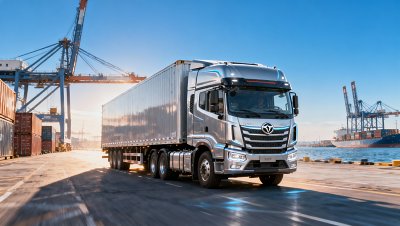
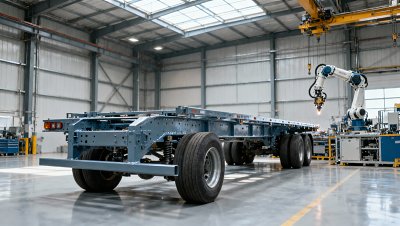
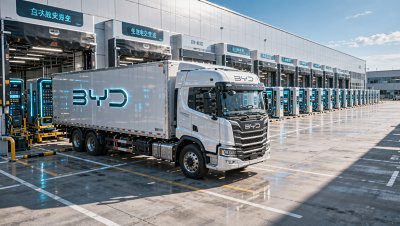
Effective April 1, 2026, Erenhot Highway Port officially commenced常态化 24-hour freight clearance for cargo vehicles. During the preceding six-month trial phase, the port handled 2.038 million metric tons of regulated freight—a 57.3% increase year-on-year—and processed 70.1% more inbound and outbound heavy-duty trucks. The port serves over 70% of Mongolia’s daily consumer goods arriving by land and functions as China’s primary export channel for heavy-duty trucks, chassis, semi-trailers, and new-energy commercial vehicles to Mongolia.
Industries Affected by This Change
Direct Trading Enterprises (China–Mongolia Cross-Border Exporters)
These enterprises—particularly those exporting heavy-duty trucks, chassis, and semi-trailers—face reduced transit time and lower customs-related uncertainty. With round-the-clock clearance, scheduled deliveries become more predictable, and inventory turnover at border warehouses may improve. However, tighter operational windows also mean less margin for documentation delays or vehicle non-compliance.
Commercial Vehicle Manufacturers & OEMs
Manufacturers supplying chassis, fully built trucks, or battery-electric commercial vehicles to Mongolia now benefit from faster border throughput. This supports just-in-time delivery models and reduces working capital tied up in border-stalled units. Yet increased volume also raises scrutiny on conformity with Mongolian vehicle standards and type-approval requirements—especially for new-energy models.
Logistics & Border Agency Service Providers
Firms offering customs brokerage, truck dispatching, temporary storage, or driver support services near Erenhot will see higher demand for night-shift capacity and real-time coordination tools. The shift to 24-hour operations increases labor scheduling complexity and infrastructure load (e.g., weighbridge usage, inspection bay availability), making system integration and regulatory compliance tracking more critical.
Domestic Raw Material & Component Suppliers (to Exporters)
Suppliers feeding into final-assembled exports (e.g., axles, braking systems, EV battery packs) may experience compressed lead time expectations from downstream exporters. While not directly crossing the border, their production planning must now align more closely with tighter border clearance cycles—especially if exporters adopt leaner buffer stock policies post-implementation.
What Relevant Enterprises or Practitioners Should Monitor and Act On
Track official implementation guidelines beyond the headline
While 24-hour clearance is now formalized, operational details—including allowable vehicle types per shift, documentation verification timelines, and inspection frequency—are still being refined. Enterprises should monitor announcements from the General Administration of Customs (GACC) and the Inner Mongolia Entry-Exit Inspection and Quarantine Bureau for updates before adjusting staffing or routing plans.
Validate readiness for priority export categories
Heavy-duty trucks, semi-trailers, and new-energy commercial vehicles are explicitly named as core export categories. Firms shipping these products should confirm current Mongolian import permits, homologation status, and bilingual labeling compliance—not assuming that faster clearance implies relaxed regulatory review.
Distinguish policy launch from actual throughput stability
The 70.1% growth in vehicle volume during the trial reflects pent-up demand and early adoption—not yet sustained peak capacity. Current infrastructure (e.g., inspection lanes, parking zones, fueling stations) remains a bottleneck. Operators should treat initial months as a calibration phase, not a signal of unlimited scalability.
Adjust pre-clearance coordination protocols now
With 24-hour operation, discrepancies in documentation or vehicle registration are less likely to be resolved overnight. Exporters and agents should implement mandatory pre-submission checks—at least 48 hours ahead—and designate night-shift contacts for urgent queries, rather than relying on daytime-only coordination.
Editorial Perspective / Industry Observation
From an industry perspective, this move is best understood not as a standalone upgrade but as an infrastructural enabler tightly coupled with Mongolia’s domestic logistics modernization efforts—and China’s broader push to consolidate overland trade routes under standardized, high-frequency clearance regimes. Analysis来看, the 57.3% freight tonnage growth during trial suggests strong underlying demand, but it does not yet indicate full absorption of capacity constraints. Observation来看, the emphasis on heavy-duty and new-energy vehicles signals a strategic alignment between China’s industrial export priorities and Mongolia’s infrastructure upgrade cycle. Current更值得关注的是 how consistently the port maintains clearance speed across shifts—and whether parallel upgrades (e.g., digital customs declaration platforms, inter-agency data sharing) follow in tandem. It is更适合理解为 a foundational step toward predictability, not an immediate guarantee of scalability.

In summary, the formalization of 24-hour freight clearance at Erenhot Highway Port marks a structural improvement in China–Mongolia road freight reliability—particularly for time-sensitive, high-value commercial vehicle exports. Its significance lies less in novelty and more in consistency: it converts a temporary operational adjustment into a repeatable, schedule-based process. For stakeholders, the key takeaway is not that bottlenecks have disappeared, but that planning horizons have lengthened—and responsiveness requirements have intensified.
Source: Official announcement by the General Administration of Customs of the People’s Republic of China (GACC), April 2026; Inner Mongolia Autonomous Region Department of Commerce release, March 2026. Note: Ongoing monitoring is advised for implementation details—including night-shift staffing levels, inspection equipment deployment, and Mongolian-side coordination mechanisms—which remain subject to further clarification.
Trending News
- Weichai's DPF Clogging Detection Patent Boosts Heavy Truck Reliability
- China's Freight Hub Upgrade to Boost Heavy Truck Exports
- Foton Motor's Stock Surge Highlights Export Growth and New Energy Transition
- Global Oil Price Surge Drives Up Diesel Truck Costs, Accelerating Shift to Chinese New Energy Alternatives
- BYD Dominates Singapore's Electric Truck Market, T5D Model Boosts Green Urban Logistics
Tag
Recommended News
 Company NewsFoton Motor's Stock Surge Highlights Export Growth and New Energy TransitionFoton Motor's stock surge reflects 42% overseas order growth and rising新能源重卡 exports, signaling China's commercial vehicle export upgrade. Discover key impacts on新能源供应链 and global trade strategies.
![]() Company NewsShandong Builds 9,200-km EV Heavy-Truck Charging CorridorEV heavy-truck charging corridor in Shandong: 9,200 km deployed across expressways & hubs—supporting GB/T, ChaoJi, CCS2 for faster EU WVTA compliance.
Company NewsShandong Builds 9,200-km EV Heavy-Truck Charging CorridorEV heavy-truck charging corridor in Shandong: 9,200 km deployed across expressways & hubs—supporting GB/T, ChaoJi, CCS2 for faster EU WVTA compliance.![]() Company NewsChina-Laos Railway Hits 800,000 Cross-Border Passengers, KD Parts Rail Test LaunchedChina-Laos Railway hits 800,000 cross-border passengers; KD parts rail test launched — unlocking cost-efficient, 72-hour freight for automotive OEMs and logistics providers.
Company NewsChina-Laos Railway Hits 800,000 Cross-Border Passengers, KD Parts Rail Test LaunchedChina-Laos Railway hits 800,000 cross-border passengers; KD parts rail test launched — unlocking cost-efficient, 72-hour freight for automotive OEMs and logistics providers.![]() Company NewsHubei’s 60 Highway Projects Drive Demand for Smart Trailers & Heavy-Duty TractorsSmart trailers & heavy-duty tractors surge in demand as Hubei’s 60 highway projects enter critical bridge-tunnel and paving phase — secure 'Hubei-project-spec' units now.
Company NewsHubei’s 60 Highway Projects Drive Demand for Smart Trailers & Heavy-Duty TractorsSmart trailers & heavy-duty tractors surge in demand as Hubei’s 60 highway projects enter critical bridge-tunnel and paving phase — secure 'Hubei-project-spec' units now.![]() Company NewsQinghai Rural Road Funding Boosts Demand for Light NEV Logistics VehiclesLight NEV logistics vehicles surge in Qinghai’s rural road funding drive—CCC-certified, high-altitude adapted models in high demand for last-mile delivery.
Company NewsQinghai Rural Road Funding Boosts Demand for Light NEV Logistics VehiclesLight NEV logistics vehicles surge in Qinghai’s rural road funding drive—CCC-certified, high-altitude adapted models in high demand for last-mile delivery.![]() Company NewsTianjin Port’s 15th Five-Year Plan Boosts Heavy-Duty Truck Multimodal Export CapacityHeavy-duty truck exporters: Tianjin Port’s 15th Five-Year Plan unlocks new ro-ro routes & smart multimodal capacity—boosting exports to Russia, Mongolia & Central Asia by 35% by 2027.
Company NewsTianjin Port’s 15th Five-Year Plan Boosts Heavy-Duty Truck Multimodal Export CapacityHeavy-duty truck exporters: Tianjin Port’s 15th Five-Year Plan unlocks new ro-ro routes & smart multimodal capacity—boosting exports to Russia, Mongolia & Central Asia by 35% by 2027.![]() Company NewsChangzhou Economic Zone Launches 24-Hour Oversize Transport for Wind GearboxesChangzhou ETDZ now offers 24-hour oversize transport for wind gearboxes—eliminating night bans & holiday delays. Boost export reliability & cut demurrage risk.
Company NewsChangzhou Economic Zone Launches 24-Hour Oversize Transport for Wind GearboxesChangzhou ETDZ now offers 24-hour oversize transport for wind gearboxes—eliminating night bans & holiday delays. Boost export reliability & cut demurrage risk.![]() Company NewsIrkeshtam Port Launches 24/7 Freight Clearance for China-Kyrgyzstan Heavy-Duty TrucksIrkeshtam Port now offers 24/7 freight clearance for China-Kyrgyzstan heavy-duty trucks — cutting border wait times to just 15 minutes. Boost efficiency, cut demurrage, and accelerate deliveries.
Company NewsIrkeshtam Port Launches 24/7 Freight Clearance for China-Kyrgyzstan Heavy-Duty TrucksIrkeshtam Port now offers 24/7 freight clearance for China-Kyrgyzstan heavy-duty trucks — cutting border wait times to just 15 minutes. Boost efficiency, cut demurrage, and accelerate deliveries.![]() Company NewsErenhot Highway Port Launches 24-Hour Freight ClearanceErenhot Highway Port now offers 24-hour freight clearance—boosting efficiency for China–Mongolia road freight, heavy-duty truck exports, and cross-border logistics.
Company NewsErenhot Highway Port Launches 24-Hour Freight ClearanceErenhot Highway Port now offers 24-hour freight clearance—boosting efficiency for China–Mongolia road freight, heavy-duty truck exports, and cross-border logistics. Company NewsDelivery truck supplier scalability challenges: What happens when order volume jumps from 5 to 50 units per quarter?Truck spare parts supplier & dump truck supplier scalability tested: Can your SHACMAN L3000/X5000 partner handle 5→50 units/quarter? Discover proven export-ready solutions.
 Company NewsBulldozer OEM partnerships: When co-branding signals shared IP—and when it’s just a rebadge dealDiscover genuine bulldozer OEM partnerships vs. rebadge deals—verify excavator manufacturer in USA/Germany, ISO certification, R&D capability & price transparency.
 Company NewsHow Semi Trailer Manufacturer Production Capacity Affects Custom Order FlexibilityDiscover how a semi trailer manufacturer's production capacity boosts custom order flexibility—ideal for flatbed trailer supplier, low bed trailer export & SHACMAN truck integration needs.
 Company NewsExcavator manufacturer catalog updates you missed in Q2 2026 — hydraulic coupler revisions includedExcavator manufacturer catalog updates for Q2 2026 — featuring excavator bucket, parts, mining & pipeline models, CE-certified OEMs, and hydraulic coupler revisions. Act now!
 Company NewsBulldozer manufacturer lead times jumped 42% in early 2026 — but not for all modelsExcavator rental, for sale & construction options—plus bulldozer manufacturer lead times up 42%. Discover delay-resilient excavator attachments, suppliers & sourcing strategies now.
 Company NewsBulldozer manufacturer vs. bulldozer factory: Why the distinction changes warranty coverage and service lead timesBulldozer manufacturer vs. factory: Discover how OEM engineering control impacts warranty, service lead times, and TCO—critical for excavator rental, sale, or construction sourcing.
 Company NewsBYD's Qianyuan Heavy Truck Unit Reports Q1 Revenue Surge of 97% but Net Loss Widens to RMB420 MillionBYD's Qianyuan Heavy Truck reports 97% revenue surge to RMB2.86B in Q1 2026, driven by electric tractors, but net loss widens to RMB420M due to R&D costs. Key focus: upcoming battery-swap network launch for heavy trucks. Essential read for EV commercial vehicle stakeholders.