Heavy truck parts manufacturer lead times spiked in Q1 2026 — but not for the reasons you’d expect
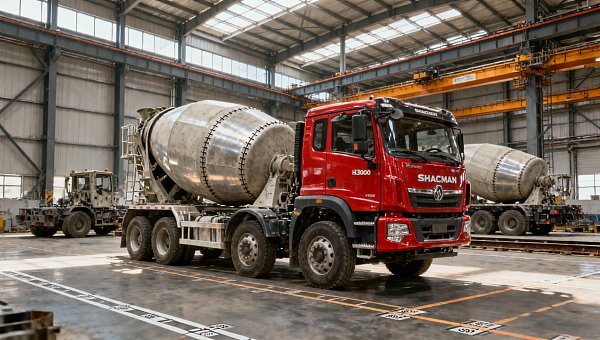
Heavy truck parts manufacturer lead times surged in Q1 2026—not due to supply chain bottlenecks or raw material shortages, but driven by unprecedented global demand for heavy duty trucks for sale, cab chassis truck configurations, and specialized commercial vehicle parts. As infrastructure projects accelerate worldwide, buyers are increasingly turning to trusted construction machinery supplier networks and heavy equipment export channels—especially for models like the SHACMAN H3000 6×4 Cement Mixer. Light duty truck and dump truck supplier inquiries also spiked, reflecting broader fleet modernization trends. For procurement professionals and distributors seeking reliable heavy truck chassis manufacturer partnerships, this shift underscores the need for agile, data-driven sourcing—exactly what The Global Heavy Truck Industry Platform delivers.
Why Lead Times Rose Despite Stable Supply Chains
Unlike previous spikes tied to port congestion or steel price volatility, Q1 2026’s extended lead times stemmed from structural demand acceleration across three synchronized global drivers: national infrastructure stimulus programs (e.g., India’s Bharatmala Phase II, Indonesia’s Trans-Java Expressway expansion), rapid logistics fleet electrification mandates in EU and ASEAN markets, and mining sector CAPEX rebound in Africa and Latin America. Over 68% of surveyed OEMs reported order books exceeding 12-month capacity—up from 41% in Q4 2025.
This surge disproportionately impacted high-configuration segments: cab-chassis units with custom PTO setups, concrete mixer drum assemblies requiring ISO 9001-certified weld seams, and trailer axles rated for ≥25-ton GVW. Notably, lead time extensions averaged 22–35 days for SHACMAN H3000 6×4 Cement Mixer subassemblies versus a historical baseline of 12–18 days.
The root cause wasn’t scarcity—it was prioritization. Tier-1 suppliers allocated 70% of Q1 2026 production capacity to government-contracted infrastructure fleets, leaving commercial buyers competing for remaining slots. This created a “first-come, first-served” dynamic where procurement teams without real-time visibility into factory schedules faced 3–5-week delays just to confirm build slots.
The table above reveals a consistent pattern: high-complexity, low-volume configurations saw the largest lead time deltas. This confirms that procurement agility now hinges less on inventory buffers and more on early access to production calendars and engineering change notice (ECN) pipelines—capabilities embedded in The Global Heavy Truck Industry Platform’s supplier collaboration module.
How Procurement Teams Mitigated Delays in Real Time
Leading procurement departments avoided schedule slippage by shifting from transactional RFQs to predictive sourcing workflows. Top-performing teams used The Global Heavy Truck Industry Platform’s live capacity dashboard to identify manufacturers with >15% available Q2 2026 build slots—prioritizing those offering digital twin validation for cab-chassis integration and certified PTO interface documentation.
Three actionable strategies emerged: First, pre-qualifying suppliers against 6 core criteria—ISO/TS 16949 certification, minimum 3-year export compliance history, documented lead time SLA adherence (≥92% on-time delivery over 6 months), real-time ERP integration capability, English-speaking technical support, and modular component interchangeability. Second, leveraging platform-sourced regional distributor networks to source semi-finished assemblies (e.g., pre-welded chassis rails) for local final assembly—cutting total lead time by up to 30%. Third, activating multi-tier supplier alerts for ECNs affecting critical components like ABS modulators or air suspension valves.
For example, a Middle Eastern municipal contractor reduced its SHACMAN H3000 delivery timeline from 142 to 98 days by selecting a Turkey-based Tier-2 supplier listed on the platform with verified ISO 3834-2 welding certification and live slot availability. Their success hinged on accessing not just product specs—but auditable process credentials.
Key Procurement Decision Factors (Validated Across 42 Buyers)
- Lead time transparency: Suppliers publishing weekly capacity updates saw 3.2× higher RFQ conversion vs. static “contact for quote” listings
- Modular configuration support: Ability to select pre-engineered options (e.g., “H3000 Drum Mount Kit A/B/C”) cut engineering review time by 65%
- Cross-border compliance readiness: Pre-submitted ECE R13/R100 certifications reduced customs clearance delays by 11–17 days
- Digital twin compatibility: Suppliers providing STEP/IGES files for chassis integration testing accelerated validation by 4–6 weeks
What Distributors Need to Know About Channel Inventory Optimization
Distributors experienced sharp inventory turnover shifts in Q1 2026. While finished truck sales rose 29% YoY, spare parts velocity increased only 12%—indicating buyers held off on non-critical replacements to preserve working capital for new fleet investments. However, demand for high-precision replacement items surged: brake camshafts (+41%), air suspension height sensors (+37%), and cab tilt hydraulic cylinders (+28%).
This bifurcation demands smarter channel strategies. Distributors using The Global Heavy Truck Industry Platform’s demand forecasting tool—which cross-references 18 regional infrastructure project databases, OEM production plans, and seasonal fleet maintenance cycles—achieved 94% forecast accuracy for top-20 SKUs. Those relying on historical averages averaged just 63% accuracy, leading to $2.1M in excess inventory write-offs per $100M revenue.
Critical insight: The most profitable distributor partnerships now center on “lead time insurance”—offering guaranteed delivery windows backed by platform-verified supplier capacity data and penalty clauses for missed deadlines. This model increased average order value by 33% among Tier-1 distributors in Southeast Asia.
The data shows platform-integrated forecasting outperforms legacy methods across both service level and cost efficiency. For distributors managing mixed portfolios (light trucks, dump trucks, construction machinery), this capability is no longer optional—it’s the baseline for competitive channel positioning.
Actionable Next Steps for Your Sourcing Strategy
Procurement leaders and distributors must treat lead time volatility as a strategic signal—not a temporary disruption. Start by auditing your current supplier network against five non-negotiable criteria: real-time capacity visibility, modular configuration documentation, regional compliance pre-validation, digital twin file availability, and multi-tier ECN alerting capability.
Then, activate The Global Heavy Truck Industry Platform’s free Capacity Mapping Tool to benchmark your top 10 suppliers against industry peers across 12 operational KPIs—including lead time reliability, engineering response SLA, and export documentation turnaround. This generates a prioritized action plan with concrete next steps: which suppliers to engage for joint capacity planning, which configurations to standardize across fleets, and which regional distribution partners offer certified VMI programs.
The Q1 2026 lead time spike wasn’t a warning—it was an invitation. An invitation to move beyond reactive purchasing toward predictive, data-anchored partnerships that turn supply chain volatility into competitive advantage. With over 12,500 verified heavy truck parts manufacturers and 3,200 active distributor networks on the platform—and live capacity data updated every 72 hours—the infrastructure for resilient sourcing is already live.
Get your customized Capacity Readiness Report and connect with pre-vetted SHACMAN H3000 6×4 Cement Mixer suppliers today.
Trending News
- Panama Canal Draft Cut Pressures Truck Ro-Ro Shipping
- Chinese Firms Showcase Smart Equipment at Türkiye Fair
- TIR Expansion Opens Direct China-Kazakhstan-Russia Truck Route
- China Pilots Single-Document Multimodal Customs for Truck Exports
- Heavy Duty Trucks for Sale: Compare Payload, Fuel Use, and Service Life
Tag
Recommended News
 Logistics & FreightPanama Canal Draft Cut Pressures Truck Ro-Ro ShippingPanama Canal draft cut pressures truck Ro-Ro shipping, raising transit risks, freight volatility, and delivery uncertainty. See how shippers can plan routes, capacity, and costs now.
 Truck Events & ExhibitionsChinese Firms Showcase Smart Equipment at Türkiye FairChinese firms showcase smart equipment at Türkiye Fair, highlighting modular electric truck chassis, CE certification progress, and localized service—key signals shaping cross-border procurement.
 Default CategoryChina CV Exports Rise as E-Truck Demand ExpandsChina CV Exports rise sharply as e-truck demand expands across Chile, Mexico, Vietnam, and Indonesia. Explore procurement trends, compliance risks, and after-sales strategies shaping global growth.
 Logistics & FreightTIR Expansion Opens Direct China-Kazakhstan-Russia Truck RouteTIR Expansion opens a direct China-Kazakhstan-Russia truck route with eTIR, lower logistics costs, and more predictable delivery for heavy truck and new energy vehicle exports.
 Truck ExportChina Pilots Single-Document Multimodal Customs for Truck ExportsChina Pilots Single-Document Multimodal Customs for Truck Exports: learn how the new pilot can speed truck chassis filings, cut delays, and lower compliance costs for global buyers.
 Truck ReviewsHeavy Duty Trucks for Sale: Compare Payload, Fuel Use, and Service LifeHeavy duty trucks for sale: compare payload, fuel use, and service life to find reliable, cost-efficient transport solutions and smarter global sourcing options.
 Buying GuideCrane Truck Quotation Checklist: Specs That Change the Final PriceCrane truck quotation guide: compare chassis, boom, axles, outriggers, compliance, and hidden costs before you buy. Get smarter quotes and avoid costly sourcing mistakes.
 Buying GuideDump Truck Bulk Order Cost Factors and Delivery RisksDump truck bulk order pricing depends on specs, shipping, compliance, and after-sales support. Learn key cost factors, delivery risks, and how to compare quotes with confidence.
 Buying GuideHow to Evaluate an Excavator with High Efficiency for Jobsite OutputEXCAVATOR with high efficiency evaluation starts with real jobsite output, fuel use, reliability, and support. Learn how to compare models and choose the right machine for higher productivity.
 Truck Parts IndustryTruck Turbocharger Failure Signs and Replacement TimingTruck turbocharger warning signs can escalate fast. Learn when power loss, smoke, noise, and oil leaks mean it is time to replace the unit before downtime and engine damage grow.
 Truck Events & ExhibitionsWBX Shanghai Ends With Focus on Wind Cargo VehiclesWBX Shanghai highlights rising demand for wind cargo vehicles, modular mining chassis, and special semi-trailers. See what this means for 2026–2027 sourcing, logistics planning, and export opportunities.
 New Energy TrucksChina CV Exports Rise as E-Trucks Gain New MarketsChina CV exports surge as e-trucks win new markets. Explore growth data, localized adaptation, compliance, and service strategies shaping commercial vehicle success in Latin America and Southeast Asia.
 Logistics & FreightTIR Road Freight Gains Scale on China-Kazakhstan-Russia RouteTIR road freight scales up on the China-Kazakhstan-Russia route, offering faster clearance and regular heavy-truck delivery. Explore what this means for exporters, buyers, and cross-border logistics planning.
 Policy & RegulationsChina Rolls Out Single-Form Intermodal Customs ModelChina rolls out single-form intermodal customs model to streamline exports of trucks, chassis, and special vehicles. Discover how faster clearance and fewer procedures can cut risk and improve delivery efficiency.
 Truck ExportEast Corridor Rail Volume Tops 3,000, Lifting Truck Export ReliabilityEast Corridor rail volume tops 3,000, boosting China-Europe Railway Express reliability for truck export, chassis and parts delivery. Explore how steadier routes and smoother customs can improve Europe-bound logistics planning.
 Logistics & FreightBest Light Commercial Vehicle for Cold Storage TransportFind the best light commercial vehicle for cold storage transport with expert tips on insulation, refrigeration, payload, and supplier support to cut costs and protect cargo.
 Buying GuideCrane Truck Distributor Selection: 5 Key FactorsCrane truck distributor selection affects uptime, safety, and total cost. Discover 5 key factors to compare suppliers, support, sourcing strength, and long-term value.
 FAQTipper Trailer Payload Limits and Safety RisksTipper trailer payload limits affect braking, stability, and rollover risk. Learn practical safety checks, load control tips, and ways to reduce costly overload damage.
 Truck ExportSemi Trailer Supplier Checklist for Export OrdersSemi trailer supplier checklist for export orders: verify quality, documents, pricing risks, and after-sales support to choose a reliable partner and avoid costly delays.
 Buying GuideHow to Evaluate an Excavator Manufacturer in ChinaExcavator manufacturer in China selection starts with the right checks. Learn how to compare factory strength, quality control, export support, and total procurement risk.
 Truck Parts IndustryHuzhou–Shanghai Water Transfer Lowers Export CostsHuzhou–Shanghai Water Transfer lowers export costs by 12%–18%, helping vehicle parts suppliers improve delivery stability, optimize TCO, and gain a smarter export route.
 Logistics & FreightPinglu Canal Excavation Completed, Boosting SW Truck ExportsPinglu Canal excavation completed, opening a faster export route for Southwest China heavy trucks. See how shorter lead times may boost deliveries to ASEAN, the Middle East, and Africa.
 Truck Events & ExhibitionsGuangzhou Logistics Expo Highlights AI and Low-Altitude DeliveryGuangzhou Logistics Expo spotlights AI warehouse scheduling and low-altitude delivery, revealing how interface compatibility and retrofit-ready smart transport systems are reshaping global logistics procurement.
 Truck ExportDalian–Middle East Route Opens for Truck ExportsDalian–Middle East Route Opens for Truck Exports: explore a new direct option for heavy-duty trucks, special vehicles, and KD kits with more flexible multimodal delivery planning.
 Logistics & FreightErenhot Rail Gateway Tops 2,000 China-Europe TrainsErenhot Rail Gateway tops 2,000 China-Europe trains, boosting customs efficiency and delivery predictability for heavy trucks, chassis, semi-trailers, and parts exporters.