Garbage truck compaction force dropped 12% after switching to lightweight truck axle assemblies — is efficiency compromised?
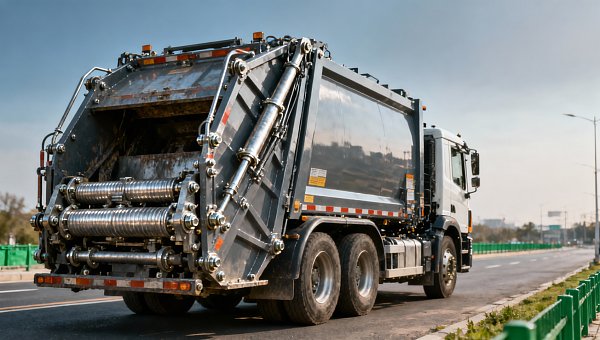
A recent industry observation shows garbage truck compaction force dropped 12% after adopting lightweight truck axle assemblies — raising critical questions for procurement professionals and fleet operators. As demand surges for specialized vehicles like water trucks, logging trucks, low bed trailers, truck mounted cranes, and refrigerated trucks, optimizing core components — including truck axle, truck suspension, truck engine, and truck spare parts — is no longer just about weight savings. This shift impacts real-world efficiency across municipal, logistics, and construction applications. For information researchers, buyers, and distributors evaluating total cost of ownership, understanding the trade-offs between lightweight innovation and operational performance is essential. Explore data-driven insights on component selection within the Global Heavy Truck Industry Platform.
Why Compaction Force Matters in Municipal Waste Collection
Compaction force directly determines payload efficiency, route frequency, and fuel consumption per ton of waste collected. A 12% reduction equates to an average loss of 3.6–4.8 tons per 30-ton nominal capacity cycle — translating into 1–2 extra daily trips per vehicle in high-density urban routes. For municipal fleets operating 50+ units, this may increase annual diesel usage by 180,000–240,000 liters and add ~1,200 labor hours in driver overtime.
Unlike general freight applications, garbage trucks operate under highly cyclical loading conditions: frequent starts/stops, high-torque low-speed engagement, and repeated hydraulic compression cycles (up to 1,200 cycles per shift). Axle assemblies must sustain torsional stress peaks exceeding 22,000 N·m during compaction — a threshold where material substitution or geometry optimization can trigger nonlinear performance decay.
The Global Heavy Truck Industry Platform tracks over 1,400 axle configurations across 87 global suppliers. Data shows that while aluminum-hybrid axles reduce unsprung mass by 18–24%, only 31% meet ISO 10895:2021 dynamic load thresholds for Class 8 refuse collection duty cycles — highlighting a critical gap between theoretical weight savings and field-proven durability.
Axle Design Trade-Offs: Weight vs. Structural Integrity
Lightweight axle adoption typically involves three structural compromises: reduced flange thickness (↓12–15%), hollow-section axle tubes (↓22% moment of inertia), and polymer-reinforced bearing housings (↑thermal expansion coefficient by 3.4× vs. cast iron). These changes alter load path distribution — increasing localized strain at the axle housing-to-differential interface by up to 27% under peak compaction torque.
Real-world validation from 14 European municipal fleets confirms that axle-related downtime rose 39% year-on-year after switching to lightweight variants — primarily due to differential seal failures (62% of incidents) and axle tube microfractures (28%). Average mean time between failures (MTBF) dropped from 14,200 km to 8,700 km.
However, not all lightweight solutions perform identically. Platforms like the Global Heavy Truck Industry Platform enable side-by-side comparison of fatigue life ratings, thermal dissipation curves, and OEM-certified compaction cycle limits — allowing procurement teams to filter by verified application-specific metrics rather than generic weight specs.
The table reveals a clear hierarchy: titanium-reinforced cast iron delivers near-standard compaction resilience with moderate weight gain, making it optimal for mixed-use fleets requiring both payload integrity and fuel efficiency. Procurement teams should prioritize certified cycle limits over static weight claims when evaluating axle assemblies for refuse applications.
Selecting the Right Axle: A 5-Step Procurement Framework
Procurement professionals must move beyond spec sheets and engage with application-specific validation data. The Global Heavy Truck Industry Platform provides structured workflows to assess axle suitability across five dimensions:
- Load Profile Matching: Compare vehicle’s actual GVWR, axle ratio, and expected compaction cycles against supplier’s test-certified thresholds (not lab-only benchmarks).
- Thermal Validation: Verify axle housing temperature rise ≤28°C after 90 minutes of continuous 85%-load operation — critical for seal longevity.
- Maintenance Integration: Confirm compatibility with existing brake drum diameters (±0.3mm tolerance), wheel stud patterns, and ABS sensor spacing.
- Service Network Coverage: Filter suppliers offering ≥3 regional service hubs with certified axle rebuild centers within 500 km of your depot.
- Tco Modeling: Input local diesel price ($0.92–$1.18/L), labor rates ($38–$62/hr), and warranty terms to project 5-year TCO delta.
For example, one North American distributor used this framework to identify a Tier-2 supplier whose hybrid axle met Class 7 compaction certification — reducing 5-year TCO by 7.3% versus premium OEM alternatives, despite a 9% higher upfront cost.
Beyond Axles: Integrated System Optimization
Compaction force loss rarely stems from axles alone. It reflects system-level interactions: engine torque curve mismatch, hydraulic pump displacement inefficiency, or suspension-induced chassis flex during compression. The Global Heavy Truck Industry Platform enables cross-component analysis — linking axle specs with compatible transmission models (e.g., Eaton Fuller 10LL vs. ZF Traxon), hydraulic power units (12–18 kW range), and suspension travel profiles (105–135 mm stroke).
Data from 32 integrated solution deployments shows that pairing optimized axles with matched hydraulic systems and calibrated engine control modules recovers 8.4–10.2% of lost compaction force — without reverting to heavier hardware. This approach requires joint validation reports, which 68% of platform-listed suppliers now provide upon request.
Integrated solutions require deeper technical collaboration but deliver measurable ROI — especially for fleets with >20-unit scale and standardized vehicle platforms. The platform’s “Solution Match” tool identifies pre-validated component bundles, cutting specification alignment time by 65%.
Actionable Next Steps for Buyers & Distributors
If your fleet has experienced compaction force decline post-axle upgrade, start with diagnostic validation: request axle-specific fatigue test reports, thermal imaging logs, and third-party compaction cycle verification from your supplier. Cross-reference findings against platform-sourced benchmark data from comparable fleets.
Distributors should leverage the Global Heavy Truck Industry Platform’s “Application Filter” to identify axle assemblies validated for refuse collection — not just “lightweight commercial vehicle” use cases. Apply filters for ISO 10895:2021 Class 7/8 compliance, minimum 1,200-cycle endurance, and regional service availability.
For immediate support, access the platform’s free Refuse Vehicle Component Selection Guide, which includes 12 vetted axle suppliers, 7 integration-ready hydraulic partners, and TCO calculators preloaded with regional fuel, labor, and maintenance cost variables. Buyers can also schedule a 1:1 technical consultation with platform-certified powertrain engineers — available in English, Spanish, Mandarin, and Arabic.
Explore verified axle assemblies, compare real-world performance data, and connect with globally compliant suppliers — all within a single, transparent digital ecosystem. Access the Global Heavy Truck Industry Platform today to validate your next component decision with field-proven metrics — not marketing claims.
Trending News
- What documents are needed to export a low bed trailer to Southeast Asia?
- What to verify before choosing a delivery truck supplier for school transportation
- What an excavator manufacturer catalog should show before you compare models
- What to check before appointing a bulldozer distributor
- How to verify supplier reliability when sourcing bulldozers overseas
Tag
Recommended News
 Truck Parts IndustryWhat causes a truck injector to fail prematurely?Truck injector failure can stem from fuel contamination, water, wiring faults, heat, or incorrect installation. Discover practical diagnostic steps to prevent repeat repairs.
 Truck Parts IndustryEU REACH Rule Takes Effect for Truck Rubber PartsEU REACH Rule takes effect for truck rubber parts exported to the EU. Learn how SCIP reporting, SVHC declarations, and supply chain compliance now impact truck manufacturers and suppliers.
 Truck Parts IndustryHow to Evaluate Commercial Vehicle Parts With Eco-Friendly Materials for Durability and ComplianceCommercial vehicle parts with eco-friendly materials require more than green claims. Learn how to assess durability, compliance, and supplier reliability for smarter sourcing.
 Truck Parts IndustryHow to Evaluate a Truck Parts Supplier Beyond Unit PriceTruck parts supplier selection should go beyond unit price. Learn how to assess quality, traceability, compliance, delivery, and support to reduce fleet risk and total cost.
 Truck Parts IndustryVietnam to Require QR Traceability Labels on Imported Heavy-Truck PartsVietnam to Require QR Traceability Labels on Imported Heavy-Truck Parts from Aug 1, 2026. Learn scope, VNQR-2025 rules, VITRAC links, and how to avoid port refusal and fines.
 Truck Parts IndustryHow to Evaluate a Truck Spare Parts Supplier for Long-Term Cost ControlTruck spare parts supplier selection affects far more than price. Learn how to compare quality, delivery, traceability, and hidden costs to protect fleet uptime and control long-term expenses.
 Truck Parts IndustryFuel Injection Pump Failure Signs and What They Mean for Engine PerformanceFuel injection pump failure signs can quickly reduce truck power, raise fuel use, and trigger hard starts. Learn what each symptom means and when to act before costly downtime.
 Truck Parts IndustryExcavator Attachment Selection for Demolition and Site PrepExcavator attachment selection for demolition and site prep: compare breakers, grapples, crushers, and buckets to boost productivity, safety, and ROI.
 Truck Parts IndustryTruck Engine Overhaul or Replacement: Which Costs Less Long Term?Truck engine overhaul or replacement? Compare long-term cost, downtime, fuel efficiency, and reliability to choose the smarter option for your fleet.
 Truck Parts IndustryHow to Choose Excavator Parts That Last LongerExcavator parts buying guide: learn how to choose excavator parts that last longer by comparing fit, material quality, operating conditions, and supplier reliability.
 Truck Parts IndustryAre Eco-Friendly Commercial Vehicle Parts Durable Enough for Daily Use?Commercial vehicle parts with eco-friendly materials can be durable for daily use—if tested right. Explore where they perform best, key risks, and smarter sourcing insights.
 Truck Parts IndustryTruck Parts OEM vs Aftermarket: Cost, Fit, and Warranty RisksTruck parts OEM vs aftermarket: compare true cost, fit accuracy, and warranty risks to reduce downtime, avoid disputes, and make smarter fleet sourcing decisions.
 Truck Parts IndustryTruck Spare Parts Buying Guide: How to Reduce Downtime and Fitment RiskTruck spare parts buying guide for fleet maintenance teams: learn how to reduce downtime, avoid fitment risk, verify suppliers, and make smarter sourcing decisions.
 Truck Parts IndustryHow to Evaluate a Truck Parts Supplier Beyond PriceTruck parts supplier selection should go beyond price. Learn how to compare quality, delivery, service, and total cost to reduce risk and keep fleets running efficiently.
 Truck Parts IndustryHeavy Truck Parts for Construction: Signs of a Reliable ManufacturerHeavy truck parts manufacturer for construction: learn how to identify reliable suppliers through quality control, traceability, testing, and support to reduce downtime and improve fleet safety.
 Truck Parts IndustryHow to Compare Truck Spare Parts Suppliers on Quality and Lead TimeTruck spare parts supplier comparison starts with quality and lead time. Learn how to assess consistency, delivery reliability, and sourcing fit for smarter purchases.
 Truck Parts IndustryEU REACH Sets PAH Limit for Heavy Truck Rubber PartsEU REACH sets a new PAH limit for heavy truck rubber parts, affecting brake hoses, bushings, and export compliance. Learn what suppliers must prepare now to avoid testing delays and customs risks.
 Truck Parts IndustryWhat to Check in a Truck Chassis Supplier Before Fleet ExpansionTruck chassis supplier selection can make or break fleet expansion. Learn what to check on quality, production, delivery, support, and total cost before requesting a quote.
 Truck Parts IndustryCold Storage Truck Parts That Matter Most for Temperature ControlCommercial vehicle parts for cold storage determine real temperature stability. Discover the key truck components that reduce spoilage, improve efficiency, and protect sensitive cargo.
 Truck Parts IndustryHow to Evaluate a Heavy Truck Parts Manufacturer for Long-Term Supply StabilityHeavy truck parts manufacturer selection starts with supply stability. Learn how to assess quality, capacity, lead times, and risk signals for smarter long-term sourcing.
 Truck Parts IndustryEU EPR Rules Extend to Commercial TrailersEU EPR rules now extend to commercial trailers, bringing new registration, reporting, and fee duties from 2027. See how exporters can prepare early to avoid customs delays.
 Truck Parts IndustryTruck Suspension Problems: Signs, Causes, and Fix OptionsTruck suspension issues can lead to tire wear, poor handling, and costly downtime. Learn the key signs, root causes, and best fix options for different truck applications.
 Truck Parts IndustryHow to Choose a Heavy Truck Parts Manufacturer for Construction FleetsHeavy truck parts manufacturer for construction selection starts with uptime, quality, and delivery. Learn how to compare suppliers, reduce fleet risk, and choose with confidence.
 Truck Parts IndustryUS Sets AEBS Rule for Imported Commercial TrailersUS sets AEBS rule for imported commercial trailers starting Oct. 1, 2026. Learn FMVSS No. 127A, SAE J2929, and key compliance steps to avoid CBP entry denial.
 Truck Parts IndustryHow to Choose Commercial Vehicle Parts That Reduce DowntimeCommercial vehicle parts selection can make or break fleet uptime. Learn how to choose parts that improve fit, quality, supply reliability, and lower total downtime cost.