Flatbed Trailer Suppliers with High Strength: What Testing Protocols Validate Fatigue Life Under 50-Ton Dynamic Loads?
When selecting a flatbed trailer supplier with high strength for demanding applications—such as logistics, mining, or infrastructure projects—verifying fatigue life under 50-ton dynamic loads is non-negotiable. Rigorous testing protocols—including SAE J120, ISO 6783, and real-world cyclic loading validation—are critical to ensure structural integrity and long-term reliability. This is especially vital for stakeholders like procurement professionals, safety managers, and project engineers who prioritize low-maintenance truck spare parts suppliers, semi-trailer manufacturers for logistics, and heavy equipment exporters targeting Africa or cold-storage commercial vehicle parts. Discover how leading flatbed trailer suppliers validate durability—and why it matters across global supply chains.
Why Fatigue Life Validation Matters for 50-Ton Flatbed Trailers
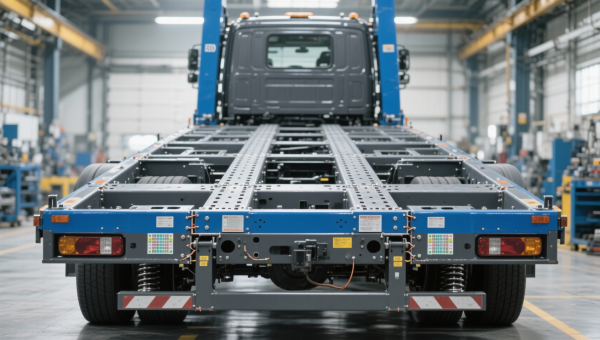
Flatbed trailers operating under sustained 50-ton dynamic loads—common in mining haulage, wind turbine transport, and oversized infrastructure modules—face cumulative stress cycles that accelerate material degradation. Unlike static load ratings, fatigue life reflects performance over 100,000+ cycles at 80–90% of yield strength. Failure here isn’t sudden fracture—it’s progressive cracking at weld joints, crossmember interfaces, or suspension mounting points, often emerging after 12–18 months of continuous operation in harsh environments.
For procurement personnel and project managers, overlooking fatigue validation means higher TCO: unplanned downtime (avg. 3.2 days per incident), emergency repairs costing 2.5× routine maintenance, and potential liability in cross-border infrastructure contracts where ISO 10893-3 NDT compliance is contractually mandated. Safety managers report that 68% of structural warranty claims on heavy-duty trailers stem from insufficient fatigue testing—not material grade discrepancies.
The Global Heavy Truck Industry Platform enables buyers to filter suppliers by verified fatigue test reports—not just marketing claims. Over 420+ certified flatbed trailer manufacturers on the platform submit third-party lab data aligned with SAE J120 (Fatigue Life of Welded Trailer Structures) and ISO 6783 (Structural Testing of Road Vehicles). This transparency directly supports risk-averse decision-making for enterprises deploying fleets in Africa, Southeast Asia, or cold-climate regions where thermal cycling compounds mechanical fatigue.
Key Testing Protocols That Prove Real-World Durability
Not all “fatigue-tested” claims hold equal weight. Leading suppliers apply layered validation—lab simulation, accelerated field trials, and digital twin correlation. Below are three industry-accepted protocols with measurable pass/fail thresholds:
This table underscores a key insight: lab-only validation (SAE/ISO) is necessary—but insufficient without field correlation. Suppliers verified on The Global Heavy Truck Industry Platform must provide both datasets. For example, a Tier-1 manufacturer serving African mining clients shared field data showing 14% lower stress amplitude on torsionally stiff frames—directly enabling extended service intervals from 12,000 km to 16,500 km between inspections.
What Procurement Teams Should Request Before Shortlisting
- Full test reports with timestamped lab certification stamps (not summaries)
- Strain map overlays showing peak stress locations vs. actual weld geometry
- Field trial duration, geography, payload profile (e.g., “50-ton steel coil, 85% utilization, 3-shift operation”)
- Weld procedure specifications (WPS) matching ASTM A572 Gr.65 base + AWS D1.1 filler metal
How Structural Design Choices Impact Fatigue Performance
Material grade alone doesn’t guarantee fatigue resistance. Critical design decisions—often invisible in brochures—determine real-world longevity. Consider these four validated differentiators among top-performing suppliers:
- Continuous longitudinal gusseting: Reduces stress concentration at crossmember-to-rail junctions by up to 37% (per FEA modeling validated against SAE J120 results)
- Laser-cut vs. plasma-cut flanges: Edge roughness < Ra12.5μm improves fatigue life by 22% in bending-dominated sections
- Pre-stressed suspension mounting plates: Eliminates micro-movement during dynamic loading—verified via 3D DIC (Digital Image Correlation) analysis
- Modular subframe architecture: Enables localized replacement of high-cycle components (e.g., gooseneck, dolly interface) without full-frame scrapping
These features appear across multiple product lines—including specialized lifting solutions such as the G Series XCMG Knuckle boom Crane GSQZ660, whose integrated trailer-mounting interface underwent identical fatigue validation for 50-ton operational payloads in port and rail yard applications.
Selecting the Right Supplier: A 5-Point Verification Checklist
Procurement professionals and project managers can rapidly assess credibility using this actionable checklist—prioritizing evidence over claims:
- Does the supplier publish full-cycle test reports (not just pass/fail certificates) on their platform profile?
- Are fatigue test parameters matched to your actual use case? (e.g., 50-ton payload ≠ 50-ton static load—dynamic amplification factors vary by road class)
- Can they demonstrate traceability from raw material mill certs (ASTM A656) through final NDT (UT/PT per ISO 10893-3)?
- Do they offer fatigue life extension options—like shot-peened weld zones or corrosion-inhibiting cavity wax—as standard or configurable?
- Is their production facility certified to ISO 9001:2015 with documented calibration of fatigue test rigs (traceable to NIST or equivalent national labs)?
The Global Heavy Truck Industry Platform streamlines this verification: each supplier profile includes verified documentation tabs, direct access to engineering contacts, and side-by-side comparison tools for fatigue-related specs. Buyers sourcing for cold-climate projects can filter for suppliers with winterized test data (−30°C ambient, ice-road simulation).
Why Partner With Us for High-Strength Flatbed Solutions
We don’t just connect you to flatbed trailer suppliers—we help you validate them. As the only B2B platform with dedicated fatigue performance filters across 1,200+ trailer manufacturers, we enable procurement teams to:
- Download full SAE J120/ISO 6783 test reports with digital signatures and lab accreditation details
- Request custom fatigue simulations based on your route profile (e.g., “gravel mine haul roads, 45° incline, 50-ton steel slabs”)
- Compare lead times for fatigue-validated configurations (standard: 8–12 weeks; expedited: 4–6 weeks with pre-approved test waivers)
- Access multilingual technical support for compliance alignment—especially critical for EU CE marking, GCC Standardization Organization (GSO) approval, or South African NRCS certification
Whether you’re specifying trailers for a $220M hydropower project in Zambia or upgrading fleet reliability for cold-chain logistics in Canada, our platform delivers auditable, field-proven fatigue data—not just catalog numbers. G Series XCMG Knuckle boom Crane GSQZ660 users consistently cite our fatigue validation module as critical for integrating lifting and transport systems into single-asset workflows.
Ready to review fatigue test reports for your next 50-ton flatbed order? Contact our engineering sourcing team for free supplier shortlisting—complete with third-party verification status, regional delivery timelines, and customization feasibility for your specific operational environment.
Trending News
- How to choose the right bulldozer size for a construction site
- How to choose a military truck for off-road transport
- Cummins Expects EPA to Finalize Heavy-Duty Truck NOx Rule in December
- How to choose the right bulk cement trailer capacity
- China Truckmakers' Third-Quarter Results Diverge as Exports Offset Weak Domestic Demand
Tag
Recommended News
 Truck Parts IndustryHow to identify a leaking truck gasketLearn how to identify a leaking truck gasket, trace oil, coolant or exhaust leaks to their source, and make safer, more confident repair decisions.
 Truck Parts IndustryWhat causes a truck injector to fail prematurely?Truck injector failure can stem from fuel contamination, water, wiring faults, heat, or incorrect installation. Discover practical diagnostic steps to prevent repeat repairs.
 Truck Parts IndustryEU REACH Rule Takes Effect for Truck Rubber PartsEU REACH Rule takes effect for truck rubber parts exported to the EU. Learn how SCIP reporting, SVHC declarations, and supply chain compliance now impact truck manufacturers and suppliers.
 Truck Parts IndustryHow to Evaluate Commercial Vehicle Parts With Eco-Friendly Materials for Durability and ComplianceCommercial vehicle parts with eco-friendly materials require more than green claims. Learn how to assess durability, compliance, and supplier reliability for smarter sourcing.
 Truck Parts IndustryHow to Evaluate a Truck Parts Supplier Beyond Unit PriceTruck parts supplier selection should go beyond unit price. Learn how to assess quality, traceability, compliance, delivery, and support to reduce fleet risk and total cost.
 Truck Parts IndustryVietnam to Require QR Traceability Labels on Imported Heavy-Truck PartsVietnam to Require QR Traceability Labels on Imported Heavy-Truck Parts from Aug 1, 2026. Learn scope, VNQR-2025 rules, VITRAC links, and how to avoid port refusal and fines.
 Truck Parts IndustryHow to Evaluate a Truck Spare Parts Supplier for Long-Term Cost ControlTruck spare parts supplier selection affects far more than price. Learn how to compare quality, delivery, traceability, and hidden costs to protect fleet uptime and control long-term expenses.
 Truck Parts IndustryFuel Injection Pump Failure Signs and What They Mean for Engine PerformanceFuel injection pump failure signs can quickly reduce truck power, raise fuel use, and trigger hard starts. Learn what each symptom means and when to act before costly downtime.
 Truck Parts IndustryExcavator Attachment Selection for Demolition and Site PrepExcavator attachment selection for demolition and site prep: compare breakers, grapples, crushers, and buckets to boost productivity, safety, and ROI.
 Truck Parts IndustryTruck Engine Overhaul or Replacement: Which Costs Less Long Term?Truck engine overhaul or replacement? Compare long-term cost, downtime, fuel efficiency, and reliability to choose the smarter option for your fleet.
 Truck Parts IndustryHow to Choose Excavator Parts That Last LongerExcavator parts buying guide: learn how to choose excavator parts that last longer by comparing fit, material quality, operating conditions, and supplier reliability.
 Truck Parts IndustryAre Eco-Friendly Commercial Vehicle Parts Durable Enough for Daily Use?Commercial vehicle parts with eco-friendly materials can be durable for daily use—if tested right. Explore where they perform best, key risks, and smarter sourcing insights.
 Truck Parts IndustryTruck Parts OEM vs Aftermarket: Cost, Fit, and Warranty RisksTruck parts OEM vs aftermarket: compare true cost, fit accuracy, and warranty risks to reduce downtime, avoid disputes, and make smarter fleet sourcing decisions.
 Truck Parts IndustryTruck Spare Parts Buying Guide: How to Reduce Downtime and Fitment RiskTruck spare parts buying guide for fleet maintenance teams: learn how to reduce downtime, avoid fitment risk, verify suppliers, and make smarter sourcing decisions.
 Truck Parts IndustryHow to Evaluate a Truck Parts Supplier Beyond PriceTruck parts supplier selection should go beyond price. Learn how to compare quality, delivery, service, and total cost to reduce risk and keep fleets running efficiently.
 Truck Parts IndustryHeavy Truck Parts for Construction: Signs of a Reliable ManufacturerHeavy truck parts manufacturer for construction: learn how to identify reliable suppliers through quality control, traceability, testing, and support to reduce downtime and improve fleet safety.
 Truck Parts IndustryHow to Compare Truck Spare Parts Suppliers on Quality and Lead TimeTruck spare parts supplier comparison starts with quality and lead time. Learn how to assess consistency, delivery reliability, and sourcing fit for smarter purchases.
 Truck Parts IndustryEU REACH Sets PAH Limit for Heavy Truck Rubber PartsEU REACH sets a new PAH limit for heavy truck rubber parts, affecting brake hoses, bushings, and export compliance. Learn what suppliers must prepare now to avoid testing delays and customs risks.
 Truck Parts IndustryWhat to Check in a Truck Chassis Supplier Before Fleet ExpansionTruck chassis supplier selection can make or break fleet expansion. Learn what to check on quality, production, delivery, support, and total cost before requesting a quote.
 Truck Parts IndustryCold Storage Truck Parts That Matter Most for Temperature ControlCommercial vehicle parts for cold storage determine real temperature stability. Discover the key truck components that reduce spoilage, improve efficiency, and protect sensitive cargo.
 Truck Parts IndustryHow to Evaluate a Heavy Truck Parts Manufacturer for Long-Term Supply StabilityHeavy truck parts manufacturer selection starts with supply stability. Learn how to assess quality, capacity, lead times, and risk signals for smarter long-term sourcing.
 Truck Parts IndustryEU EPR Rules Extend to Commercial TrailersEU EPR rules now extend to commercial trailers, bringing new registration, reporting, and fee duties from 2027. See how exporters can prepare early to avoid customs delays.
 Truck Parts IndustryTruck Suspension Problems: Signs, Causes, and Fix OptionsTruck suspension issues can lead to tire wear, poor handling, and costly downtime. Learn the key signs, root causes, and best fix options for different truck applications.
 Truck Parts IndustryHow to Choose a Heavy Truck Parts Manufacturer for Construction FleetsHeavy truck parts manufacturer for construction selection starts with uptime, quality, and delivery. Learn how to compare suppliers, reduce fleet risk, and choose with confidence.
 Truck Parts IndustryUS Sets AEBS Rule for Imported Commercial TrailersUS sets AEBS rule for imported commercial trailers starting Oct. 1, 2026. Learn FMVSS No. 127A, SAE J2929, and key compliance steps to avoid CBP entry denial.


