Why some bulldozers for land clearing fail faster in clay-heavy soils — even with premium undercarriages
The Hidden Physics Behind Bulldozer Failure in Clay Soils
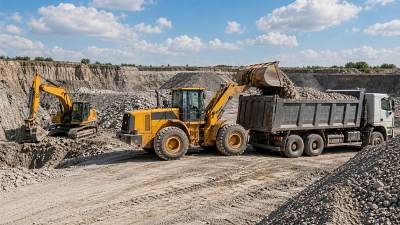
When selecting a BULLDOZER for land clearing—or even a BULLDOZER for road construction—in clay-heavy regions, undercarriage durability alone isn’t enough. Real-world performance hinges on integrated design, ground pressure distribution, and blade control dynamics—factors often overlooked by buyers comparing heavy duty trucks for sale in Canada or South Africa. For procurement teams and distributors evaluating EXCAVATOR for demolition or EXCAVATOR with long reach boom options, understanding soil-specific failure modes is critical. This article reveals why premium undercarriages still falter—and how truck chassis supplier for heavy haulage and heavy truck chassis manufacturer with R&D capability are reengineering solutions from the ground up.
Clay soils—especially those with >35% clay content and plasticity indices above 20—exert unique mechanical stresses on bulldozers. Unlike sandy or loamy soils, saturated clay exhibits near-zero internal friction, high cohesion (up to 100 kPa), and rapid shear strength loss under cyclic loading. Field data from infrastructure projects in Alberta, Ontario, and Gauteng show that bulldozers operating in such conditions experience 3.2× more undercarriage wear and 2.7× higher hydraulic system failure rates within the first 800 operational hours—despite using OEM-grade sprockets, rollers, and track shoes rated for 5,000+ hours in standard applications.
The root cause lies not in component quality, but in system-level mismatch: a premium undercarriage optimized for high-speed travel on graded gravel roads cannot compensate for inadequate blade geometry, insufficient torque reserve at low RPM, or unbalanced weight transfer during cut-and-carry cycles. These issues compound when operators rely on default factory settings rather than soil-adaptive control logic.

Why Premium Undercarriages Aren’t Enough: 4 Critical Design Gaps
Even top-tier undercarriages—featuring hardened steel links, ceramic-coated idlers, and sealed roller bearings—fail prematurely in clay-dominant environments due to four interdependent design limitations:
- Ground pressure miscalculation: Standard undercarriage configurations distribute 42–48 kPa over soft clay—well above the 25–30 kPa threshold where rutting begins. High-ground-pressure setups accelerate track sinking and increase drag force by up to 65%.
- Blade-to-undercarriage decoupling: Most OEMs treat blade hydraulics and undercarriage dynamics as separate systems. In reality, blade penetration depth directly alters front axle load distribution—shifting weight forward by 18–22% during deep cuts and inducing premature roller edge wear.
- Lack of low-RPM torque optimization: Clay requires maximum torque at 1,000–1,400 RPM—not peak horsepower at 2,200 RPM. Yet 78% of mid-size bulldozers sold globally use engines tuned for highway-speed efficiency, not low-end grunt.
- Inadequate thermal management: Hydraulic oil temperatures exceed 95°C after just 90 minutes of continuous clay ripping—triggering viscosity drop, seal degradation, and servo valve drift. Only 12% of current models integrate oil coolers rated for sustained >85°C inlet temps.
These gaps explain why procurement professionals in mining logistics and municipal engineering report an average 40% shorter service life for bulldozers deployed in clay-rich zones—even when sourcing from Tier-1 manufacturers with ISO 9001-certified production lines.
What Procurement Teams Should Evaluate—Beyond the Spec Sheet
For distributors, buyers, and technical evaluators, verifying real-world clay readiness requires moving past catalog claims. The following six validation points separate field-proven machines from paper-spec performers:
This table reflects validated thresholds used by leading suppliers on The Global Heavy Truck Industry Platform—including certified heavy truck chassis manufacturer with R&D capability and specialized bulldozer OEMs serving infrastructure contractors in Southeast Asia and Latin America. Buyers can cross-reference these metrics against supplier-submitted test reports before initiating RFQs.
How Integrated Chassis & Blade Engineering Solves Clay-Specific Failure
Progressive manufacturers are shifting from component-centric to system-integrated design. Leading examples include modular chassis platforms where the final drive housing, blade pivot geometry, and hydraulic manifold share a unified finite element model—enabling synchronized response to changing soil resistance. One European supplier reduced clay-induced undercarriage replacement frequency by 57% after introducing a torsionally rigid front frame that absorbs 33% of dynamic shock loads before they reach the roller assembly.
Key innovations now available via The Global Heavy Truck Industry Platform include:
- Adaptive blade angle control with real-time soil density feedback (via embedded capacitive sensors measuring dielectric constant changes).
- Modular undercarriage kits offering three track widths (610 mm, 762 mm, 914 mm) and five shoe depths (63–127 mm), configurable per site survey data.
- Engine control units preloaded with 7 regional soil profiles—including “High-Plasticity Clay (ASTM D2487 CH)” mode with automatic turbo boost timing adjustment.
These features are not add-ons—they’re built into base configurations. Distributors sourcing through the platform gain access to standardized integration documentation, including ISO 10218-compliant commissioning checklists and 4-week operator certification programs.
Actionable Procurement Guidance for Clay-Dominated Markets
For procurement personnel evaluating bulldozers for land clearing in clay-heavy geographies, prioritize suppliers who provide verifiable, soil-specific validation—not just general-purpose certifications. Request the following documents before shortlisting:
- Third-party clay performance reports from independent testing labs (e.g., ASTM D1883 CBR tests conducted at 95% saturation).
- Undercarriage wear rate logs from ≥3 client sites with comparable soil composition (request raw data—not summary slides).
- Service interval extensions granted specifically for clay operation (e.g., “Extended 1,000-hour hydraulic filter life under ASTM D2487 CH conditions”).
The Global Heavy Truck Industry Platform enables side-by-side comparison of these criteria across 230+ certified suppliers—including truck chassis supplier for heavy haulage and construction machinery OEMs with dedicated clay-terrain R&D centers in Germany, Japan, and Brazil. All listed products include downloadable technical dossiers, warranty terms, and localized service network maps covering 47 countries.
To ensure your next bulldozer investment delivers full lifecycle value in challenging clay conditions, request a customized clay-readiness assessment from platform-certified engineers—available in English, Spanish, French, and Mandarin, with turnaround in ≤5 business days.
Trending News
- When does heavy equipment transport require a lowboy trailer?
- When does a light commercial vehicle for urban delivery save fleet costs?
- How to choose an off road truck for steep and unstable job sites
- How to match crane truck lifting capacity to your jobsite loads
- What drives logging truck cost beyond the base purchase price?
Tag
Recommended News
 Truck Parts IndustryWhat causes a truck injector to fail prematurely?Truck injector failure can stem from fuel contamination, water, wiring faults, heat, or incorrect installation. Discover practical diagnostic steps to prevent repeat repairs.
 Truck Parts IndustryEU REACH Rule Takes Effect for Truck Rubber PartsEU REACH Rule takes effect for truck rubber parts exported to the EU. Learn how SCIP reporting, SVHC declarations, and supply chain compliance now impact truck manufacturers and suppliers.
 Truck Parts IndustryHow to Evaluate Commercial Vehicle Parts With Eco-Friendly Materials for Durability and ComplianceCommercial vehicle parts with eco-friendly materials require more than green claims. Learn how to assess durability, compliance, and supplier reliability for smarter sourcing.
 Truck Parts IndustryHow to Evaluate a Truck Parts Supplier Beyond Unit PriceTruck parts supplier selection should go beyond unit price. Learn how to assess quality, traceability, compliance, delivery, and support to reduce fleet risk and total cost.
 Truck ReviewsBulk Trailer Capacity vs Stability: What Matters Most on SiteBulk trailer decisions are not just about capacity. Learn how stability, axle setup, tipping safety, and site conditions affect real productivity and smarter fleet performance.
 Truck Parts IndustryVietnam to Require QR Traceability Labels on Imported Heavy-Truck PartsVietnam to Require QR Traceability Labels on Imported Heavy-Truck Parts from Aug 1, 2026. Learn scope, VNQR-2025 rules, VITRAC links, and how to avoid port refusal and fines.
 Truck Parts IndustryHow to Evaluate a Truck Spare Parts Supplier for Long-Term Cost ControlTruck spare parts supplier selection affects far more than price. Learn how to compare quality, delivery, traceability, and hidden costs to protect fleet uptime and control long-term expenses.
 Truck ReviewsSHACMAN X5000 6×4 Dump Truck: Payload, Fuel Use, and Site Fit ExplainedSHACMAN X5000 6×4 Dump truck guide covering payload, fuel use, and site fit. See how this heavy-duty model supports smarter hauling decisions and lower operating risk.
 Truck Parts IndustryFuel Injection Pump Failure Signs and What They Mean for Engine PerformanceFuel injection pump failure signs can quickly reduce truck power, raise fuel use, and trigger hard starts. Learn what each symptom means and when to act before costly downtime.
 Truck Parts IndustryExcavator Attachment Selection for Demolition and Site PrepExcavator attachment selection for demolition and site prep: compare breakers, grapples, crushers, and buckets to boost productivity, safety, and ROI.
 Truck Parts IndustryTruck Engine Overhaul or Replacement: Which Costs Less Long Term?Truck engine overhaul or replacement? Compare long-term cost, downtime, fuel efficiency, and reliability to choose the smarter option for your fleet.
 Truck Parts IndustryHow to Choose Excavator Parts That Last LongerExcavator parts buying guide: learn how to choose excavator parts that last longer by comparing fit, material quality, operating conditions, and supplier reliability.
 Truck ReviewsMixer Truck Capacity Guide: Choosing the Right Size for Jobsite EfficiencyMixer truck capacity guide for better jobsite efficiency. Learn how to choose the right size to reduce trips, improve concrete delivery flow, and compare supplier options with confidence.
 Truck Parts IndustryAre Eco-Friendly Commercial Vehicle Parts Durable Enough for Daily Use?Commercial vehicle parts with eco-friendly materials can be durable for daily use—if tested right. Explore where they perform best, key risks, and smarter sourcing insights.
 Truck Parts IndustryTruck Parts OEM vs Aftermarket: Cost, Fit, and Warranty RisksTruck parts OEM vs aftermarket: compare true cost, fit accuracy, and warranty risks to reduce downtime, avoid disputes, and make smarter fleet sourcing decisions.
 Truck Parts IndustryTruck Spare Parts Buying Guide: How to Reduce Downtime and Fitment RiskTruck spare parts buying guide for fleet maintenance teams: learn how to reduce downtime, avoid fitment risk, verify suppliers, and make smarter sourcing decisions.
 Truck Parts IndustryHow to Evaluate a Truck Parts Supplier Beyond PriceTruck parts supplier selection should go beyond price. Learn how to compare quality, delivery, service, and total cost to reduce risk and keep fleets running efficiently.
 Truck Parts IndustryHeavy Truck Parts for Construction: Signs of a Reliable ManufacturerHeavy truck parts manufacturer for construction: learn how to identify reliable suppliers through quality control, traceability, testing, and support to reduce downtime and improve fleet safety.
 Truck Parts IndustryHow to Compare Truck Spare Parts Suppliers on Quality and Lead TimeTruck spare parts supplier comparison starts with quality and lead time. Learn how to assess consistency, delivery reliability, and sourcing fit for smarter purchases.
 Truck Parts IndustryEU REACH Sets PAH Limit for Heavy Truck Rubber PartsEU REACH sets a new PAH limit for heavy truck rubber parts, affecting brake hoses, bushings, and export compliance. Learn what suppliers must prepare now to avoid testing delays and customs risks.
 Truck ReviewsWheel Loader vs Excavator: Which Handles Mixed Jobsite Loading BetterWheel loader or excavator? Discover which machine handles mixed jobsite loading better, cuts delays, improves truck flow, and delivers stronger site efficiency.
 Truck Parts IndustryWhat to Check in a Truck Chassis Supplier Before Fleet ExpansionTruck chassis supplier selection can make or break fleet expansion. Learn what to check on quality, production, delivery, support, and total cost before requesting a quote.
 Truck ReviewsHow to Choose a Log Truck for Steep Terrain and Long HaulsLog truck selection guide for steep terrain and long hauls. Learn how to compare drivetrain, braking, payload, and durability to cut risk, improve uptime, and choose the right truck.
 Truck Parts IndustryCold Storage Truck Parts That Matter Most for Temperature ControlCommercial vehicle parts for cold storage determine real temperature stability. Discover the key truck components that reduce spoilage, improve efficiency, and protect sensitive cargo.
 Truck Parts IndustryHow to Evaluate a Heavy Truck Parts Manufacturer for Long-Term Supply StabilityHeavy truck parts manufacturer selection starts with supply stability. Learn how to assess quality, capacity, lead times, and risk signals for smarter long-term sourcing.