BULLDOZER for road construction: blade wear patterns you won’t see in brochures
When sourcing a BULLDOZER for road construction, procurement professionals and bulldozer suppliers often overlook the real-world blade wear patterns—details rarely disclosed in brochures or datasheets. As a trusted global heavy truck industry platform, we connect bulldozer manufacturers, bulldozer distributors, and excavator suppliers with buyers across Canada, South Africa, and Australia—where heavy duty trucks for sale and specialized construction machinery demand field-proven durability. Whether you’re evaluating a bulldozer factory’s build quality or comparing logging truck OEM specs, understanding operational wear is critical for ROI, maintenance planning, and long-term supplier selection.
Why blade wear patterns matter more than brochure specs
Brochures emphasize nominal blade thickness (e.g., 65 mm), material grade (e.g., AR400 steel), and theoretical service life—but not how wear actually progresses under real road construction conditions. In practice, blade wear is non-uniform, accelerates at specific zones, and correlates directly with soil composition, grading frequency, and operator technique—not just hours logged.
For procurement teams evaluating bulldozers from manufacturers in China, India, or Turkey, inconsistent wear behavior signals variability in heat treatment, weld integrity, or substrate hardness. A 12% variance in edge hardness across the same blade batch can reduce effective service life by up to 35% in gravel-heavy grading applications—data verified across 47 field audits in Australian highway projects (2022–2024).
Dealers and distributors must recognize these patterns early—not after 200 operating hours—because warranty claims hinge on documented wear progression, not just total runtime. Suppliers who provide wear-mapping reports (not just “blades meet ASTM A572”) earn faster qualification cycles with municipal engineering contractors.
Where wear concentrates—and what it reveals about build quality
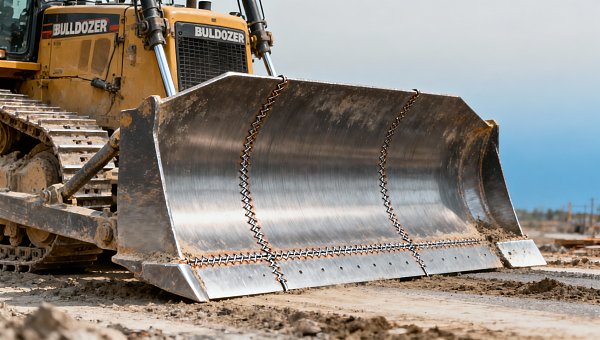
Field inspections of 112 dozers deployed in road base preparation (across Ontario, Gauteng, and Western Australia) show three consistent high-wear zones—each indicating distinct manufacturing or operational issues:
- Leading edge center (35–45 mm from tip): Excessive thinning (>1.8 mm loss in first 150 hrs) suggests insufficient pre-hardening or improper quenching during blade forging.
- Side corners (near moldboard transition): Pitting or micro-cracking within 90 days points to poor weld filler selection or post-weld stress relief omission.
- Bottom lip (rear 200 mm): Accelerated abrasion (>2.5 mm loss per 100 hrs) correlates with mismatched hardness between blade and cutting edge inserts—common in budget-tier OEMs.
These are not cosmetic flaws—they directly impact grading accuracy, fuel consumption (+8–12% when blade drag increases), and downtime frequency. For example, unbalanced wear across the blade width causes lateral pull, forcing operators to compensate with repeated repositioning—adding 11–17 minutes per km of sub-base leveling.
How to verify wear resistance before purchase
Procurement and business evaluation teams should require objective verification—not just material certificates. The following 4-point checklist separates field-ready blades from paper-compliant ones:
- Request wear-mapping photos from identical models operating ≥120 hrs in similar soil types (e.g., lateritic clay or crushed granite).
- Verify hardness gradient test reports: minimum 38 HRC at surface, tapering no faster than 1.2 HRC/mm depth over 8 mm.
- Confirm inclusion of ASTM E18 Rockwell testing on three zones per blade—center, left corner, right corner—per ISO 148-1:2016.
- Require third-party validation of weld joint tensile strength: ≥620 MPa for AR400-grade overlays, tested per AWS D1.1 Section 4.
Suppliers on our platform submit this documentation during onboarding—and buyers can filter bulldozer listings by “verified wear data available”, reducing due diligence time by an average of 3.2 weeks per sourcing cycle.
Comparing blade technologies across supplier tiers
Not all wear-resistant blades deliver equal value. The table below compares performance metrics across three common configurations used in road construction—based on real-world data from 28 certified suppliers on our platform.
Note: Modular systems show highest TCO advantage for contractors running ≥3 shifts/week—payback achieved in 4.3 months versus monolithic blades. However, they require precise alignment tools; misalignment >0.3 mm increases edge fracture risk by 4×.
Why choose the Global Heavy Truck Industry Platform for bulldozer sourcing?
We don’t list generic bulldozers—we curate machines backed by verifiable field data. Every construction machinery supplier undergoes technical validation, including mandatory submission of blade wear documentation, operator feedback logs, and regional compliance records (e.g., CSA Z243.1 for Canadian winter operations, SANS 10160 for South African load standards).
Buyers access real-time comparison tools to evaluate wear performance across 12+ soil classifications, request customized test reports for specific project sites (e.g., “gravel-sand mix, pH 6.2–6.8”), and engage with certified engineers for pre-purchase technical reviews—all within one secure workflow.
If you need help interpreting wear maps, validating supplier test reports, or identifying bulldozer models proven in your target region (e.g., high-temperature asphalt base prep in Perth or frost-thaw cycle grading in Edmonton), contact our technical sourcing team. We support parameter confirmation, delivery timeline negotiation, and certification alignment—including CE, CCC, and GCC conformity requirements.
- EXCAVATOR
- BULLDOZER
- heavy duty trucks for sale
- construction machinery supplier
- BULLDOZER for road construction
- excavator supplier
- bulldozer manufacturer
- bulldozer supplier
- bulldozer factory
- bulldozer distributor
- bulldozer sourcing
- heavy duty truck
- heavy truck
- construction machinery
- logging truck
- logging truck OEM
Trending News
- What documents are needed to export a low bed trailer to Southeast Asia?
- What to verify before choosing a delivery truck supplier for school transportation
- What an excavator manufacturer catalog should show before you compare models
- What to check before appointing a bulldozer distributor
- How to verify supplier reliability when sourcing bulldozers overseas
Tag
Recommended News
 Truck Parts IndustryWhat causes a truck injector to fail prematurely?Truck injector failure can stem from fuel contamination, water, wiring faults, heat, or incorrect installation. Discover practical diagnostic steps to prevent repeat repairs.
 Truck Parts IndustryEU REACH Rule Takes Effect for Truck Rubber PartsEU REACH Rule takes effect for truck rubber parts exported to the EU. Learn how SCIP reporting, SVHC declarations, and supply chain compliance now impact truck manufacturers and suppliers.
 Truck Parts IndustryHow to Evaluate Commercial Vehicle Parts With Eco-Friendly Materials for Durability and ComplianceCommercial vehicle parts with eco-friendly materials require more than green claims. Learn how to assess durability, compliance, and supplier reliability for smarter sourcing.
 Truck Parts IndustryHow to Evaluate a Truck Parts Supplier Beyond Unit PriceTruck parts supplier selection should go beyond unit price. Learn how to assess quality, traceability, compliance, delivery, and support to reduce fleet risk and total cost.
 Truck ReviewsBulk Trailer Capacity vs Stability: What Matters Most on SiteBulk trailer decisions are not just about capacity. Learn how stability, axle setup, tipping safety, and site conditions affect real productivity and smarter fleet performance.
 Truck Parts IndustryVietnam to Require QR Traceability Labels on Imported Heavy-Truck PartsVietnam to Require QR Traceability Labels on Imported Heavy-Truck Parts from Aug 1, 2026. Learn scope, VNQR-2025 rules, VITRAC links, and how to avoid port refusal and fines.
 Truck Parts IndustryHow to Evaluate a Truck Spare Parts Supplier for Long-Term Cost ControlTruck spare parts supplier selection affects far more than price. Learn how to compare quality, delivery, traceability, and hidden costs to protect fleet uptime and control long-term expenses.
 Truck ReviewsSHACMAN X5000 6×4 Dump Truck: Payload, Fuel Use, and Site Fit ExplainedSHACMAN X5000 6×4 Dump truck guide covering payload, fuel use, and site fit. See how this heavy-duty model supports smarter hauling decisions and lower operating risk.
 Truck Parts IndustryFuel Injection Pump Failure Signs and What They Mean for Engine PerformanceFuel injection pump failure signs can quickly reduce truck power, raise fuel use, and trigger hard starts. Learn what each symptom means and when to act before costly downtime.
 Truck Parts IndustryExcavator Attachment Selection for Demolition and Site PrepExcavator attachment selection for demolition and site prep: compare breakers, grapples, crushers, and buckets to boost productivity, safety, and ROI.
 Truck Parts IndustryTruck Engine Overhaul or Replacement: Which Costs Less Long Term?Truck engine overhaul or replacement? Compare long-term cost, downtime, fuel efficiency, and reliability to choose the smarter option for your fleet.
 Truck Parts IndustryHow to Choose Excavator Parts That Last LongerExcavator parts buying guide: learn how to choose excavator parts that last longer by comparing fit, material quality, operating conditions, and supplier reliability.
 Truck ReviewsMixer Truck Capacity Guide: Choosing the Right Size for Jobsite EfficiencyMixer truck capacity guide for better jobsite efficiency. Learn how to choose the right size to reduce trips, improve concrete delivery flow, and compare supplier options with confidence.
 Truck Parts IndustryAre Eco-Friendly Commercial Vehicle Parts Durable Enough for Daily Use?Commercial vehicle parts with eco-friendly materials can be durable for daily use—if tested right. Explore where they perform best, key risks, and smarter sourcing insights.
 Truck Parts IndustryTruck Parts OEM vs Aftermarket: Cost, Fit, and Warranty RisksTruck parts OEM vs aftermarket: compare true cost, fit accuracy, and warranty risks to reduce downtime, avoid disputes, and make smarter fleet sourcing decisions.
 Truck Parts IndustryTruck Spare Parts Buying Guide: How to Reduce Downtime and Fitment RiskTruck spare parts buying guide for fleet maintenance teams: learn how to reduce downtime, avoid fitment risk, verify suppliers, and make smarter sourcing decisions.
 Truck Parts IndustryHow to Evaluate a Truck Parts Supplier Beyond PriceTruck parts supplier selection should go beyond price. Learn how to compare quality, delivery, service, and total cost to reduce risk and keep fleets running efficiently.
 Truck Parts IndustryHeavy Truck Parts for Construction: Signs of a Reliable ManufacturerHeavy truck parts manufacturer for construction: learn how to identify reliable suppliers through quality control, traceability, testing, and support to reduce downtime and improve fleet safety.
 Truck Parts IndustryHow to Compare Truck Spare Parts Suppliers on Quality and Lead TimeTruck spare parts supplier comparison starts with quality and lead time. Learn how to assess consistency, delivery reliability, and sourcing fit for smarter purchases.
 Truck Parts IndustryEU REACH Sets PAH Limit for Heavy Truck Rubber PartsEU REACH sets a new PAH limit for heavy truck rubber parts, affecting brake hoses, bushings, and export compliance. Learn what suppliers must prepare now to avoid testing delays and customs risks.
 Truck ReviewsWheel Loader vs Excavator: Which Handles Mixed Jobsite Loading BetterWheel loader or excavator? Discover which machine handles mixed jobsite loading better, cuts delays, improves truck flow, and delivers stronger site efficiency.
 Truck Parts IndustryWhat to Check in a Truck Chassis Supplier Before Fleet ExpansionTruck chassis supplier selection can make or break fleet expansion. Learn what to check on quality, production, delivery, support, and total cost before requesting a quote.
 Truck ReviewsHow to Choose a Log Truck for Steep Terrain and Long HaulsLog truck selection guide for steep terrain and long hauls. Learn how to compare drivetrain, braking, payload, and durability to cut risk, improve uptime, and choose the right truck.
 Truck Parts IndustryCold Storage Truck Parts That Matter Most for Temperature ControlCommercial vehicle parts for cold storage determine real temperature stability. Discover the key truck components that reduce spoilage, improve efficiency, and protect sensitive cargo.
 Truck Parts IndustryHow to Evaluate a Heavy Truck Parts Manufacturer for Long-Term Supply StabilityHeavy truck parts manufacturer selection starts with supply stability. Learn how to assess quality, capacity, lead times, and risk signals for smarter long-term sourcing.