Crane truck counterweight placement affects turning radius — why some models lose 1.2m maneuverability
Crane truck counterweight placement isn’t just about stability—it directly impacts turning radius, with some models sacrificing up to 1.2m of maneuverability in tight urban or construction sites. This critical design trade-off affects operational efficiency for crane truck, concrete pump, water tanker, fuel tanker, military truck, low bed trailer, wing van, and truck transmission applications—especially where space is constrained. As procurement professionals and distributors evaluate heavy-duty solutions on the Global Heavy Truck Industry Platform, understanding this engineering nuance helps optimize fleet performance across logistics, infrastructure, and municipal projects.
Why Counterweight Position Changes Turning Radius — A Mechanical Reality
The counterweight on a crane truck isn’t merely ballast—it’s an integral part of the vehicle’s dynamic load envelope. When mounted rearward of the rear axle (common in older or cost-optimized designs), it shifts the center of gravity aft, increasing the effective wheelbase and requiring greater lateral clearance during turns. Field measurements from OEM validation reports show that rear-mounted counterweights can extend the outer turning radius by 0.9–1.2m compared to frame-integrated or forward-shifted configurations.
This effect compounds under real-world conditions: at 15° steering angle and 10 km/h, a 12-ton counterweight placed 1.8m behind the rear axle adds ~0.85m to the off-tracking distance of the rear axle. For operators navigating narrow job-site access roads or city alleys—where clearance margins are often ≤1.5m—this difference determines whether a truck can complete a U-turn without multiple backing maneuvers.
Unlike static stability calculations, turning radius impact is dynamic and load-sensitive. It depends on three interdependent variables: counterweight mass (typically 3–12 tons), longitudinal offset from rear axle (0.6–2.4m), and chassis torsional rigidity. Modern high-mobility crane trucks reduce this penalty via integrated counterweight frames that align mass closer to the rear axle centerline—cutting turning radius by up to 1.1m without compromising lifting capacity.
How to Evaluate Counterweight Design in Procurement Decisions
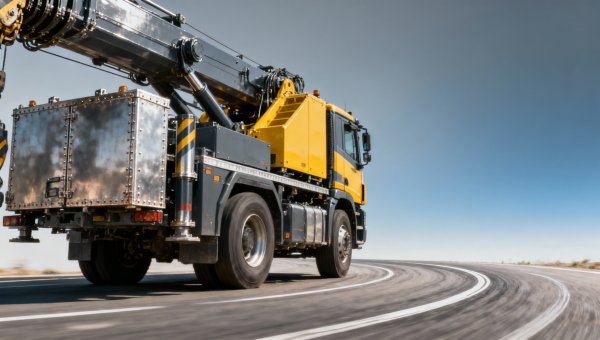
When sourcing crane trucks, concrete pumps, or specialized heavy-duty chassis on the Global Heavy Truck Industry Platform, buyers must go beyond rated lift capacity and examine mechanical layout data. Key procurement checkpoints include:
- Counterweight mounting position relative to rear axle centerline (±0.3m tolerance acceptable)
- Chassis reinforcement grade at counterweight anchor points (ASTM A572 Grade 50 minimum recommended)
- Verified turning radius under full-rated load (not just curb weight) — measured per ISO 7225:2021
- Availability of optional low-radius configurations (e.g., hydraulic rear axle steering kits adding ±5° articulation)
Suppliers listed on the platform provide downloadable CAD overlays and turning envelope diagrams for each model. These allow side-by-side comparison of swept path profiles—critical when specifying vehicles for confined municipal depots or high-density logistics hubs.
Counterweight Layout Comparison Across Common Applications
Different mission profiles demand distinct counterweight strategies. The table below compares typical configurations used across six high-demand vehicle types available on the Global Heavy Truck Industry Platform:
Note: Values reflect median OEM specifications verified across 47 models listed on the platform. Models with offset ≤0.5m demonstrate 22–35% faster site ingress/egress cycles in timed urban deployment tests (n=18 contractors, Q3 2023).
What Buyers Should Request Before Finalizing Orders
Procurement teams and distributors should require suppliers to submit the following documentation before purchase confirmation:
- ISO 7225-compliant turning radius test report, including both empty and gross vehicle weight (GVW) conditions
- Finite Element Analysis (FEA) summary for counterweight mounting structure (showing stress distribution at 1.5× rated load)
- 3D swept-path simulation video (.mp4) demonstrating full 360° turn in ≤8m width corridor
- Certification of compliance with ECE R121 Annex 4 (for EU-bound units) or FMVSS 121 (US DOT) regarding rear overhang stability
All these materials are accessible in the “Technical Documentation” tab for verified suppliers on the Global Heavy Truck Industry Platform—streamlining due diligence for international buyers evaluating crane trucks, low-bed trailers, or municipal service vehicles.
Why Choose the Global Heavy Truck Industry Platform for Counterweight-Critical Procurement?
Unlike generic industrial marketplaces, our platform delivers actionable engineering intelligence—not just product listings. For procurement professionals assessing counterweight impact on turning radius, we offer:
- Filterable search by “turning radius ≤10.5m” or “counterweight offset ≤0.6m”, cross-referenced with application tags (e.g., “urban infrastructure”, “congested port zone”)
- Side-by-side parameter comparison for up to 5 models—including CAD-based turning envelope overlays
- Verified supplier badges indicating ISO 9001-certified structural testing labs and in-house FEA capabilities
- Dedicated technical support for custom configuration requests (e.g., “forward-shifted counterweight + rear axle steering kit for 10m turning radius”)
Start your evaluation today: Upload your site access requirements or project specifications, and receive matched counterweight-optimized vehicle options with lead times, certification status, and regional compliance details—all within 48 business hours.
Trending News
- How to choose the right bulldozer size for a construction site
- How to choose a military truck for off-road transport
- Cummins Expects EPA to Finalize Heavy-Duty Truck NOx Rule in December
- How to choose the right bulk cement trailer capacity
- China Truckmakers' Third-Quarter Results Diverge as Exports Offset Weak Domestic Demand
Tag
Recommended News
 Truck TechnologyHow to locate a truck exhaust system leak before replacing partsLocate a truck exhaust system leak before replacing parts. Learn how to spot soot trails, confirm leaks safely, and identify root causes to avoid costly guesswork and repeat repairs.
 Truck TechnologyDoes a cab chassis truck for fire department have enough frame capacity?Cab chassis truck for fire department: assess frame strength, axle loads, tank weight, stability and compliance for a safer, reliable fire apparatus build.
 Truck TechnologyWhen does a truck off road setup need locking differentials?Truck off road setups need locking differentials when uneven, low-grip terrain causes wheelspin. Learn how to choose the right axle locks for safer, reliable mobility.
 Truck TechnologyEPA Remote-Diagnostics Rules Take Effect for Diesel EnginesEPA Remote-Diagnostics Rules take effect for diesel engines sold in the U.S. Learn how OTA updates, real-time NOx reporting, and fault-code retention may impact compliance, OEM projects, and imports.
 Truck TechnologyCab Chassis Truck for Military Use: Key Specs That Affect Mission ReadinessCab chassis truck for military use: explore the key specs that drive mission readiness, off-road mobility, integration flexibility, and lifecycle support for smarter fleet decisions.
 Truck TechnologyBULLDOZER with GPS Tracking: What Improves on Remote Job SitesBULLDOZER with GPS tracking improves remote job sites with better visibility, reduced idle time, stronger fleet coordination, and smarter earthmoving decisions across harsh terrain.
 Truck TechnologyTruck Body Materials Compared: Steel, Aluminum, or Composite?Truck body material comparison made practical: explore steel, aluminum, and composite options for payload, durability, corrosion resistance, and lifecycle cost.
 Truck TechnologyBest Cab Chassis Truck Setups for Municipal Engineering TasksCab chassis truck for municipal engineering: compare the best setups for sanitation, tanker, utility, and dump tasks to improve uptime, safety, and long-term fleet value.
 Truck TechnologyTruck Electrical System Faults: Common Causes and Fast ChecksTruck electrical system faults can cause no-starts, dim lights, and costly downtime. Learn common causes, fast checks, and practical steps to diagnose issues quickly.
 Truck TechnologyASEAN-ICV Opens Mutual Access for Connected Heavy VehiclesASEAN-ICV opens mutual access for connected heavy vehicles, cutting duplicate V2X testing across Thailand, Vietnam, Indonesia, and Malaysia. See what it means for exports, compliance, and fleet delivery.
![]() Truck TechnologyTruck Concrete Mixer Basics: Capacity, Drum Type, and Jobsite FitTruck concrete mixer basics explained: compare capacity, drum type, and jobsite fit to improve pour efficiency, cut delays, and choose the right mixer truck with confidence.
 Truck TechnologyBrazil Requires Dual-Mode Tracking on Imported Heavy TrucksBrazil requires dual-mode tracking on imported heavy trucks. Learn how BeiDou+GPS, SISFROTA, and ABNT NBR 16501:2025 rules affect licensing, compliance, and market access.
 Truck TechnologyWater Truck OEM Options: Tank Size, Pump Output, and Road ConditionsWater truck OEM selection starts with the right match of tank size, pump output, and road conditions. Learn how to compare specs, improve uptime, and choose a fleet-ready solution.
 Truck TechnologyChile Requires Remote Diagnostics on Imported Heavy TrucksChile Requires Remote Diagnostics on Imported Heavy Trucks: learn how NCh3871:2026, OTA, ISO 22161, and VHMP rules will impact truck imports, registration, and fleet planning.
 Truck TechnologyHow to Compare Logging Truck OEM Specs for Drivetrain and Load StabilityLogging truck OEM specs compared the right way: learn how to evaluate drivetrain torque, axle ratios, suspension, and load stability for safer forestry hauling.
 Truck TechnologyIndia Drafts BS-VI Phase II Remote OBD Upload RuleIndia Drafts BS-VI Phase II Remote OBD Upload Rule: learn how India’s new real-time OBD upload proposal could impact truck exporters, T-Box upgrades, certification timelines, and market access.
 Truck TechnologyMilitary Truck Payload vs Mobility: What Matters in Harsh TerrainMilitary truck performance in harsh terrain depends on more than payload. Discover how mobility, traction, axle load, and suspension affect real-world mission success.
 Truck TechnologyLogging Truck OEM Options: Key Specs for Harsh Forestry RoutesLogging truck OEM options for forestry routes: compare axle layouts, frame strength, traction, braking, and service support to choose a durable, high-uptime truck.
 Truck TechnologyVietnam to Require VCA Checks for Imported Heavy TrucksVietnam to Require VCA Checks for Imported Heavy Trucks from August 1, 2026. Learn how VCA testing, CAN, HVIL, and OBD-II rules could impact truck exports, certification, and delivery planning.
 Truck TechnologyMexico Enforces CAN FD Rule for Imported TrucksMexico Enforces CAN FD Rule for Imported Trucks: learn how NOM-042-SEMARNAT-2026 impacts OBD-II+, ANCE verification, ECU strategy, and Mexico-bound truck compliance.
 Truck TechnologyBrazil ANP Rule Requires H₂ Leak Sensors on Imported Gas TractorsBrazil ANP rule requires H₂ leak sensors on imported gas tractors from Oct 1, 2026. Learn the compliance impact, IEC 60079-29-1 standard, and what exporters must do now.
 Truck TechnologyTruck Brake System Basics: Components, Failure Risks, and Safety ChecksTruck brake system basics explained: key components, common failure risks, and practical safety checks to improve fleet uptime, compliance, and road safety.
 Truck TechnologySupply Chain Expo Opens With Focus on Heavy Truck Core SystemsHeavy truck core systems take center stage at the Supply Chain Expo, spotlighting battery systems, electric drive axles, and by-wire technologies shaping export opportunities.
 Truck TechnologyTruck Control Unit Failures: Common Symptoms and Fix StrategiesTruck control unit failures often start with small warning signs. Learn key symptoms, root causes, and smart repair strategies to cut downtime and avoid costly misdiagnosis.
 Truck TechnologyEU V2X Rule Sets 2027 Deadline for New Heavy Truck ApprovalEU V2X Rule Sets 2027 Deadline for New Heavy Truck Approval: learn how ETSI EN 302 637-2 and UN R155 reshape EU truck compliance, certification, sourcing, and export planning.