Chery Unveils Europe-Designed Smart Commercial Vehicle Platform at Birmingham Motor Show 2026
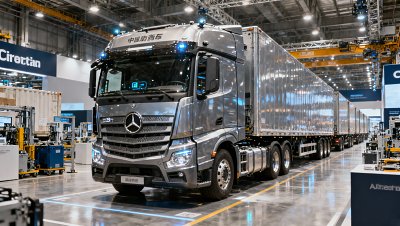
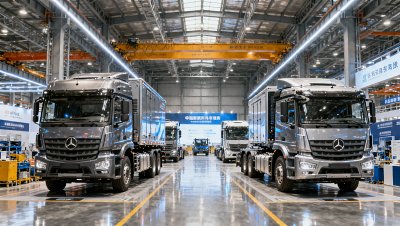
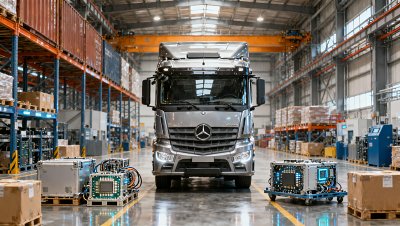
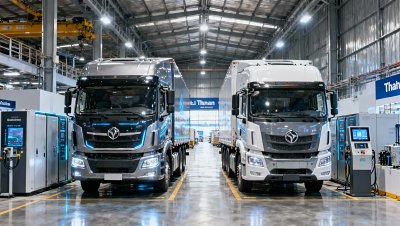
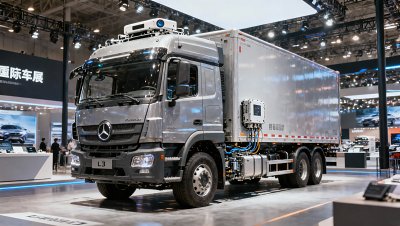
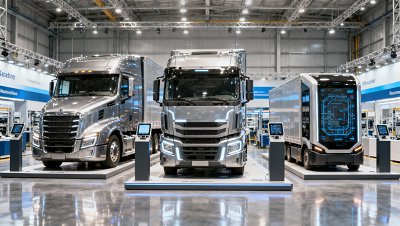
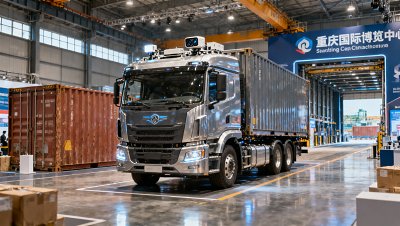
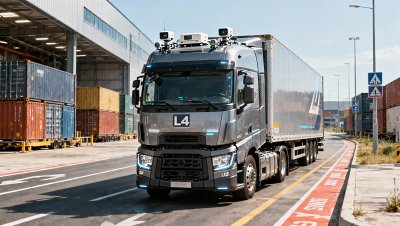
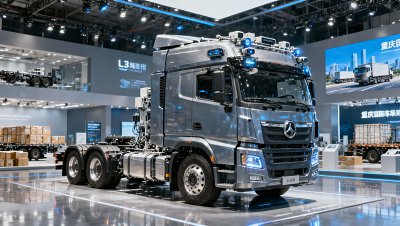
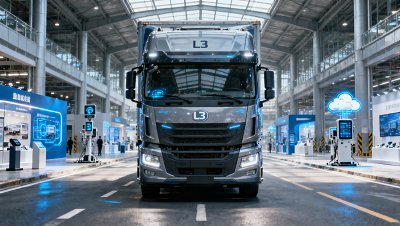
At the Birmingham Motor Show opening on 23 April 2026, Chery Commercial Vehicles will debut a new intelligent commercial vehicle platform developed to UK specifications and German engineering standards — marking the first entry of a China-originated smart heavy-duty truck platform into Europe’s mainstream technical procurement ecosystem. This development is especially relevant for automotive OEMs, Tier 1 suppliers, cross-border trade service providers, and fleet technology integrators operating in or supplying the EU and UK markets.
Event Overview
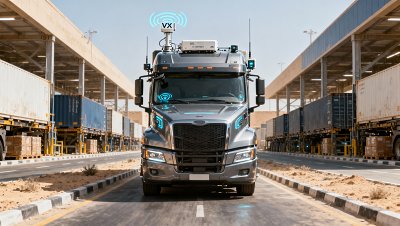
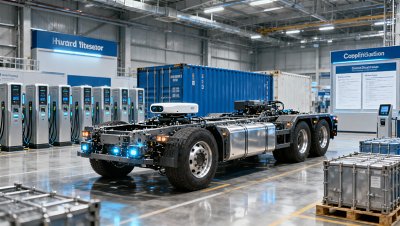
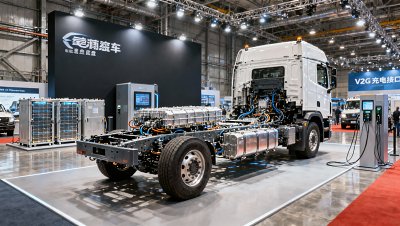
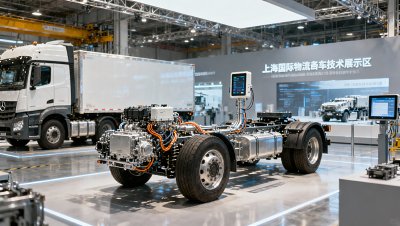
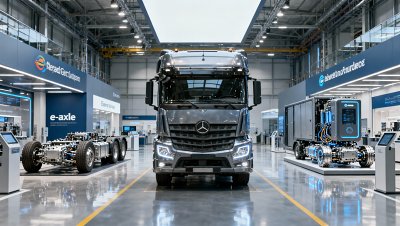
The Birmingham Motor Show opens on 23 April 2026. At the event, Chery Commercial Vehicles will launch its newly developed intelligent commercial vehicle platform — defined in the UK and engineered in Germany. The platform features standard integration of ETAS embedded diagnostic software and C-V2X vehicle-to-everything communication modules. It complies with UN ECE R155 cybersecurity certification requirements and supports the EU Uptime remote service SLA (Service Level Agreement). Initial production models based on this platform will be available for order by distributors in the UK, Norway, and Germany.
Industries Affected
Direct Export & Import Trading Firms
These firms may face revised technical eligibility criteria when sourcing commercial vehicles for EU/UK markets. The platform’s built-in compliance with ECE R155 and Uptime SLA implies stricter pre-market validation requirements — potentially affecting customs clearance timelines and certification cost structures for third-party importers not aligned with OEM-level cybersecurity or telematics service frameworks.
Automotive Tier 1 Suppliers (Especially Telematics & Diagnostic Systems)
Suppliers providing embedded diagnostics or V2X solutions may see increased competitive pressure — particularly those without ETAS-compatible toolchains or C-V2X stack certifications valid under EU type-approval rules. The platform’s ‘standard-fit’ architecture signals a shift toward integrated, OEM-certified subsystems rather than modular aftermarket add-ons.
Fleet Management & Remote Service Providers
Providers offering remote monitoring, predictive maintenance, or uptime-guaranteed SLAs must now assess interoperability with Chery’s certified platform. Its adherence to the EU Uptime SLA framework suggests future contracts may require demonstrable alignment with specific data exchange protocols, latency thresholds, and incident response benchmarks — not just generic connectivity.
Aftermarket Parts & Service Networks
Independent service centers and parts distributors may encounter limitations in accessing diagnostic logs or reprogramming functions, as ETAS-embedded systems often restrict low-level access to authorized channels. This could accelerate consolidation among certified repair networks in target markets (UK, Norway, Germany), particularly for high-value chassis and powertrain components.
What Stakeholders Should Monitor & Do Now
Track official documentation on ECE R155 implementation scope
While ECE R155 certification is confirmed, its exact coverage (e.g., whether it applies to full vehicle type approval or only to specific E/E architectures) remains unspecified. Exporters and suppliers should monitor updates from UK DVSA and EU ACEA working groups — not just Chery’s announcements — to distinguish regulatory mandates from OEM-specific commitments.
Verify compatibility with EU Uptime SLA technical annexes
The Uptime SLA referenced is a contractual framework, not a regulation. Stakeholders should obtain and review the actual SLA annexes published by the European Commission’s Connected Mobility Unit — especially clauses covering data ownership, minimum uptime percentages, and penalty triggers — before committing to joint service offerings.
Assess ETAS toolchain integration requirements early
ETAS tools (e.g., INCA, ISOLAR-EVE) require licensing, training, and hardware interfaces. Distributors and service partners planning to support diagnostics or calibration should initiate vendor engagement now — lead times for certified tooling access can exceed 12 weeks in regulated markets.
Prepare for phased market rollout beyond initial three countries
Initial orders are limited to UK, Norway, and Germany — but these represent distinct regulatory environments (UK CA, EEA type approval, national homologation). Companies should treat each as a separate operational test case, not assume scalability across other EU member states without further technical adaptation.
Editorial Observation / Industry Perspective
From an industry perspective, this launch is best understood not as a product milestone alone, but as a procedural signal: it reflects growing alignment between Chinese OEMs and European technical governance structures — specifically around cybersecurity, remote service accountability, and cooperative ITS (Intelligent Transport Systems) infrastructure readiness. Analysis来看, the emphasis on ‘UK definition + German engineering’ suggests deliberate segmentation of design authority and execution responsibility — a model likely to influence how other Chinese brands structure their EU market entries. Observation来看, the absence of mention of battery-electric drivetrains or autonomous driving levels indicates this platform prioritizes foundational digital infrastructure over advanced ADAS or propulsion — making it more immediately relevant to logistics operators upgrading legacy fleets than to AV-focused developers. Current significance is primarily procedural: it confirms that a China-based platform has met baseline technical gateways for EU procurement, but does not yet indicate scale, service depth, or long-term ecosystem adoption.
This announcement signals a formal step into structured European technical procurement — not a completed market entry. It reflects alignment on process (certification, SLA frameworks, embedded diagnostics), not necessarily on volume, localisation, or after-sales maturity. For stakeholders, it is more accurately interpreted as a benchmark for technical readiness than as evidence of near-term commercial displacement. A measured, capability-focused response — rather than reactive market positioning — remains most appropriate at this stage.
Source: Official preview information released by Chery Commercial Vehicles ahead of the Birmingham Motor Show 2026. Note: Technical specifications, certification scope, and SLA terms remain subject to official documentation release during or after the show — ongoing verification is recommended.
Trending News
- What drives logging truck cost beyond the base purchase price?
- How to match lowbed trailer deck height to your hauling equipment
- What documents are needed to export a low bed trailer to Southeast Asia?
- What to verify before choosing a delivery truck supplier for school transportation
- What an excavator manufacturer catalog should show before you compare models
Tag
Recommended News
 Truck Events & ExhibitionsEU to Require Smart Braking and Carbon LabelsEU will require smart braking and carbon labels for heavy trucks and semi-trailers from 2027 Q3. See what exporters must prepare now for type approval, AEBS, and compliance.
 Truck Events & ExhibitionsMENA Pilot Opens Smart Truck Approval PathMENA Pilot Opens Smart Truck Approval Path: explore how the new GCC+ MENA framework streamlines smart truck certification for V2X, ADAS L2+, and OTA access across Saudi Arabia, the UAE, and Egypt.
 Truck Events & ExhibitionsIAA Transportation 2026 Adds China New Energy Truck PavilionIAA Transportation 2026 adds a China New Energy Truck Pavilion, spotlighting certified EV truck makers and suppliers. Discover who qualifies, why EU compliance matters, and what buyers should watch.
 Truck Events & ExhibitionsIAA 2026 Preview: China EV Truck Entries Jump 42%IAA 2026 Preview reveals China EV truck entries jumping 42%, highlighting battery-swapping, hydrogen, and multi-energy chassis trends shaping compliance, sourcing, and market access.
 Truck Events & ExhibitionsIAA 2026: China Truck Tech Draws EU, US Fleet InterestIAA 2026 highlights rising EU and US fleet interest in China truck tech, from L3 intelligent heavy-duty trucks to low-carbon powertrains. See what this means for fleet procurement.
 Truck Events & ExhibitionsIAA 2026 Registration Signals New Compliance FocusIAA 2026 Registration highlights a new compliance focus in heavy truck markets, from certified supplier visibility to zero-emission and autonomous systems. Explore what it means for exporters and buyers.
 Truck Events & ExhibitionsIAA Transportation 2026 Extends Deadline to July 10IAA Transportation 2026 extends its deadline to July 10, giving exhibitors extra time while adding a new tech matchmaking zone for new energy trucks, buyers, and suppliers.
 Truck Events & ExhibitionsIAA 2026 China Group Deadline Extended to July 15IAA 2026 China Group Deadline Extended to July 15: discover why only 11 booths remain and how UN ECE R100.03 and ISO 26262 readiness could shape exhibitor access.
 Truck Events & ExhibitionsIAA 2026 Opens Registration as China NEV Commercial Vehicle Zone Grows 50%IAA 2026 opens registration as the China NEV commercial vehicle zone expands 50%. Explore buyer matchmaking, EV truck trends, and what global buyers and exhibitors should prepare now.
 Truck Events & ExhibitionsShanghai Show Highlights Export-Ready EV Truck SystemsShanghai Show Highlights Export-Ready EV Truck Systems as buyers shift toward intelligent e-axles, hydrogen chassis, and V2X diagnostics. See what this means for export compliance, sourcing, and delivery planning.
 Truck Events & ExhibitionsIAA 2026 Extends Registration, Adds China NEV ZoneIAA 2026 extends registration to June 30 and launches a China NEV Zone, spotlighting electric trucks, hydrogen vehicles, smart chassis, and V2X fleet tech for European buyers.
 Truck Events & ExhibitionsIAA Transport Extends China Signup, Adds NEV ZoneIAA Transport extends China signup to June 30 and launches a new NEV Zone. Explore how China NEV commercial vehicle suppliers can connect with European fleets, leasing firms, and Tier 1 partners.
 Truck Events & ExhibitionsALTS 2026 Opens in Shanghai With Multimodal FocusALTS 2026 opens in Shanghai with a multimodal focus, spotlighting TIR-compliant vehicles, cold chain trailers, and hazardous goods transport equipment. Explore the latest cross-border logistics trends.
 Truck Events & ExhibitionsBeijing Supply Chain Expo to Spotlight Smart Auto ChainBeijing Supply Chain Expo puts the smart auto chain in focus, highlighting NEV heavy-truck systems, automotive chips, domain controllers, and cross-border logistics opportunities.
 Truck Events & ExhibitionsThailand Industry Expo Highlights China’s E-TrucksThailand Industry Expo highlights China’s e-trucks with battery-swapping, hydrogen models, and smart dispatch systems—see why Southeast Asia buyers are placing trial orders.
 Truck Events & ExhibitionsChongqing Auto Show Puts L3 Truck Controllers in Export FocusChongqing Auto Show spotlights L3 truck controllers for export, with strong interest in domain controllers, drive-by-wire modules, and VLA kits across Europe and the Middle East.
 Truck Events & ExhibitionsLangfang Expo Signals New Export Matching for Smart TransportLangfang Expo Signals New Export Matching for Smart Transport, highlighting export-ready road transport equipment, B2B buyer matching, and compliance-focused opportunities for global procurement teams.
 Truck Events & ExhibitionsChongqing Auto AI Expo Puts Autonomous Trucks at CenterAutonomous trucks take the spotlight at the Chongqing Auto AI Expo as export-focused smart heavy truck solutions attract buyers from 32 countries. Explore market signals, cross-border deployment trends, and global logistics opportunities.
 Truck Events & ExhibitionsChongqing FATE 2026 Highlights AI Truck ComplianceChongqing FATE 2026 highlights AI truck compliance, showing how autonomous heavy truck makers, exporters, and buyers can prepare for EU, Middle East, and Latin America market entry.
 Truck Events & ExhibitionsChongqing Auto AI Expo Puts Focus on Autonomous TrucksAutonomous trucks take center stage at the Chongqing Auto AI Expo. Explore L3 commercialization, overseas distribution, compliance risks, and what it means for buyers and suppliers.
 Truck Events & ExhibitionsChongqing Auto AI Expo Opens With Focus on Autonomous TrucksChongqing Auto AI Expo spotlights autonomous trucks with L3 long-haul logistics solutions, vehicle-road-cloud systems, and compliance insights—see what it means for buyers and operators.
 Truck Events & ExhibitionsWIFFA Expo 2026 Booth Deadline Signals Compliance FocusWIFFA Expo 2026 booth deadline highlights a growing compliance focus in new-energy truck markets, with EU and Southeast Asia matchmaking shaping sourcing, certification, and trade-readiness decisions.
 Truck Events & ExhibitionsSmart New-Energy Chassis Draw Buying Interest at Turkey ExpoSmart new-energy chassis drew strong buying interest at Turkey Expo, with 210+ intention orders highlighting demand for V2X, steer-by-wire, and battery-swap heavy truck platforms.
 Truck Events & ExhibitionsChinese Firms Showcase Smart Equipment at Türkiye FairChinese firms showcase smart equipment at Türkiye Fair, highlighting modular electric truck chassis, CE certification progress, and localized service—key signals shaping cross-border procurement.
 Truck Events & ExhibitionsWBX Shanghai Ends With Focus on Wind Cargo VehiclesWBX Shanghai highlights rising demand for wind cargo vehicles, modular mining chassis, and special semi-trailers. See what this means for 2026–2027 sourcing, logistics planning, and export opportunities.