Vietnam to Require Chinese Remanufacturing Cert for Used Truck Imports
On May 13, 2026, Vietnam’s Ministry of Industry and Trade (MOIT) released the draft Amendment to the Regulation on Import Management of Motor Vehicles for public consultation. If adopted, the regulation will impose new traceability requirements on used truck imports—specifically targeting vehicles over five years old—and take effect on October 1, 2026. The policy directly affects China-Vietnam heavy-duty vehicle trade and signals a broader shift toward quality- and origin-based controls in Southeast Asian automotive import regimes.
Event Overview
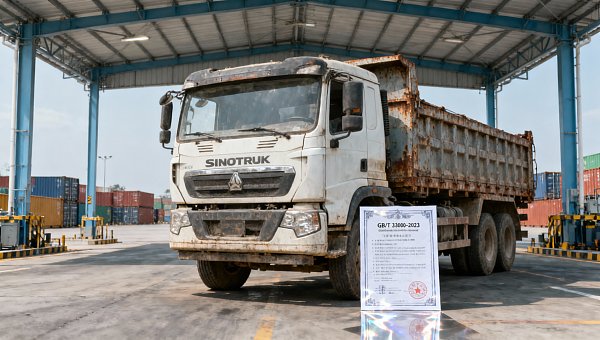
On May 13, 2026, Vietnam’s MOIT published the draft amendment for public comment. It proposes that, effective October 1, 2026, all imported used trucks aged more than five years must be accompanied by a certification document issued by the original Chinese manufacturer—or its authorized remanufacturing entity—verifying compliance with China’s national standard GB/T 33000-2023, Quality Management System for Remanufactured Products.
Industries Affected
Direct Trading Enterprises: Exporters and cross-border distributors of used heavy-duty trucks from China to Vietnam face heightened documentation burdens and verification delays. Compliance requires coordination with Chinese OEMs or certified remanufacturers—not just exporters—to obtain valid, auditable certificates. Non-compliant shipments risk rejection at Vietnamese customs, increasing landed cost uncertainty and contract renegotiation pressure.
Raw Material Procurement Enterprises: Firms sourcing scrap chassis, engines, or axles for downstream remanufacturing may see tighter upstream scrutiny. As Vietnamese import rules link eligibility to certified remanufacturing facilities, procurement contracts now implicitly require traceability back to GB/T 33000-2023–compliant operations—potentially reshaping supplier qualification criteria and audit frequency.
Manufacturing Enterprises (OEMs & Remanufacturers): Chinese heavy-truck OEMs—including Sinotruk, FAW, and Dongfeng—are incentivized to formalize and scale overseas remanufacturing service networks. However, establishing authorized entities in third countries (e.g., Vietnam or Thailand) entails regulatory registration, local staffing, and alignment with both Chinese quality standards and host-country import frameworks—a multi-year operational commitment, not merely a paperwork exercise.
Supply Chain Service Providers: Customs brokers, logistics platforms, and certification verification agencies must now integrate GB/T 33000-2023 compliance checks into pre-shipment workflows. This includes validating certificate authenticity (e.g., via QR-linked MOIT-recognized databases), verifying signatory authority, and confirming validity windows—tasks previously outside standard import clearance protocols.
Key Considerations and Recommended Actions
Verify OEM Authorization Pathways
Trading enterprises should proactively identify which Chinese OEMs have publicly designated remanufacturing partners—and whether those partners hold active GB/T 33000-2023 certification. Relying on generic “OEM-approved” claims without documented, verifiable authorization may prove insufficient under MOIT enforcement.
Align Documentation Timelines with Shipment Schedules
Certificates under GB/T 33000-2023 are typically valid for one year and require reissuance per batch or VIN group. Exporters must synchronize certificate issuance dates with vessel departure windows to avoid expiration mid-transit—especially critical for sea freight routes with extended port dwell times.
Assess Local Remanufacturing Feasibility
For manufacturers considering regional expansion, priority should go to jurisdictions where mutual recognition agreements exist between Vietnamese authorities and Chinese certification bodies (e.g., CNAS). Establishing remanufacturing hubs in Vietnam itself remains unlikely before 2027 due to pending technical regulations—but nearby ASEAN markets may offer transitional staging grounds.
Editorial Perspective / Industry Observation
Observably, this is not merely a technical import barrier—it reflects Vietnam’s strategic pivot toward circular economy governance in transport infrastructure. By anchoring used-vehicle eligibility to a specific Chinese standard, Hanoi indirectly elevates GB/T 33000-2023 as a de facto regional benchmark. Analysis shows that fewer than 12% of China’s licensed remanufacturers currently hold full GB/T 33000-2023 certification; thus, the rule may consolidate export volume among top-tier OEM-affiliated players while marginalizing independent recyclers. From an industry perspective, this is better understood as a demand-side catalyst for formalization—not a blanket restriction.
Conclusion
This regulation marks a structural inflection point: Vietnam is shifting from quantity-driven import management to quality-anchored, lifecycle-aware oversight. For stakeholders, the implication is clear—not just compliance adaptation, but strategic recalibration of asset recovery models, certification partnerships, and regional service architecture. A measured, evidence-based rollout—rather than abrupt enforcement—will determine whether the policy advances market maturity or introduces friction without commensurate gains.
Source Attribution
Official draft published by Vietnam’s Ministry of Industry and Trade (MOIT) on May 13, 2026, accessible via moit.gov.vn. Note: Final version, implementation guidance, and recognized certification bodies remain subject to official announcement. Monitoring of MOIT’s public consultation feedback summary (expected August 2026) and subsequent ministerial decree is advised.
Trending News
- What documents are needed to export a low bed trailer to Southeast Asia?
- What to verify before choosing a delivery truck supplier for school transportation
- What an excavator manufacturer catalog should show before you compare models
- What to check before appointing a bulldozer distributor
- How to verify supplier reliability when sourcing bulldozers overseas
Tag
Recommended News
 Policy & RegulationsGermany Ends EV Subsidy ExtensionGermany ends EV subsidy extension, reshaping EV and commercial vehicle plans in Europe. See how importers, distributors, and Chinese NEV suppliers should respond.
 Policy & RegulationsEU Rule Sets LCA Certification for Truck ImportsEU Rule Sets LCA Certification for Truck Imports: learn how the new EU LCA and EPD compliance rule will affect truck approvals, export timelines, costs, and delivery planning.
 Policy & RegulationsEU Requires LCA Reports for Imported HDVs from Oct 2026EU LCA reports for imported HDVs become mandatory from Oct 2026. Learn how the new EU heavy-duty vehicle carbon compliance rule affects exporters, suppliers, costs, and delivery readiness.
 Policy & RegulationsChina Tightens Export Filing for New Energy Heavy TrucksChina Tightens Export Filing for New Energy Heavy Trucks: learn how new HS code rules and CNAS carbon-footprint reports may impact customs clearance, compliance, and delivery timelines.
 Policy & RegulationsEU Updates CO2 Rules for Heavy-Duty Vehicle ApprovalEU Updates CO2 Rules for Heavy-Duty Vehicle Approval: learn how new lifecycle carbon and battery due diligence requirements affect EU market access, approval timing, and compliance costs.
 Policy & RegulationsChina Customs Adds New Export Fields for Road Transport EquipmentChina Customs adds new export fields for road transport equipment from Aug 15, 2026. Learn how drive type and certification data may affect compliance, clearance speed, and export planning.
 Policy & RegulationsEU Tightens Truck WVTA Brake and Lighting TestsEU Tightens Truck WVTA Brake and Lighting Tests: learn how Regulation (EU) 2026/1387 reshapes brake response, headlamp compliance, certification timing, and EU market access.
 Policy & RegulationsEU Sets CO2 Rules for New Heavy Trucks from 2027EU Sets CO2 Rules for New Heavy Trucks from 2027: learn how new EU CO2 limits, OBD, and remote data upload requirements could reshape type approval, costs, and delivery planning.
 Policy & RegulationsEU Brings Forward Cybersecurity Approval for Heavy TrucksEU heavy truck cybersecurity approval moves to August 1, 2026. Learn how WVTA, UNECE R155, OTA and telematics rules will impact EU exports, type approval and delivery plans.
 Policy & RegulationsEU Moves Truck Cybersecurity WVTA Forward to Aug 1, 2026EU truck cybersecurity WVTA moves to Aug 1, 2026. Learn how UN R155 and EU 2022/1426 affect heavy truck type approval, exports, suppliers, and compliance planning.
 Policy & RegulationsEU Brings Forward WVTA Cybersecurity Approval for TrucksEU Brings Forward WVTA Cybersecurity Approval for Trucks: learn how the 2026 deadline impacts heavy truck exports, retrofit projects, supplier compliance, costs, and EU market-entry planning.
 Policy & RegulationsEU Brings Forward WVTA Cybersecurity Approval for Heavy TrucksEU heavy truck WVTA cybersecurity approval now starts on August 1, 2026. Learn how EU type approval, CSMS audits, ADAS, OTA, and registration risks affect exporters and manufacturers.
 Policy & RegulationsEU Cybersecurity Approval Rule Takes Effect for Heavy TrucksEU Cybersecurity Approval Rule now reshapes heavy trucks market access. Learn how CSMS, UNECE R155, and WVTA deadlines could impact certification, delivery, and EU export readiness.
 Policy & RegulationsEU Requires EN 15038 Declarations for Truck ImportsEU Requires EN 15038 Declarations for Truck Imports: learn how the new EU rule affects heavy truck customs clearance, compliance timing, and export readiness.
 Policy & RegulationsEU Rule Brings SCIP Filing to Imported Truck Battery PartsSCIP filing for imported truck battery parts becomes critical in the EU from Oct 1, 2026. Learn how the rule impacts heavy-duty truck exports, aftermarket parts, and customs compliance.
 Policy & RegulationsEU REACH Expands to Truck Battery PartsEU REACH expands to truck battery parts, covering lithium-ion battery modules, BMS units, and thermal systems. Learn how SCIP filing, SVHC disclosure, and EU export compliance may affect truck suppliers.
 Policy & RegulationsEU Sets Battery Footprint Rule for Heavy TrucksEU Sets Battery Footprint Rule for Heavy Trucks: learn how the 2027 EU battery carbon footprint requirement could impact type approval, customs clearance, and truck exports.
 Policy & RegulationsEU Requires Certified V2X Modules in Heavy TrucksEU Requires Certified V2X Modules in Heavy Trucks from July 22, 2026. Learn how UN R155 and ETSI EN 303 648 rules will impact EU type approval, registration, and exports.
 Policy & RegulationsEU Tightens V2X Approval for Heavy TrucksHeavy trucks entering the EU face tougher V2X approval from July 22, 2026. Learn how UNECE R155/R156 and EU Type Approval will affect registration, exports, and delivery readiness.
 Policy & RegulationsEU Rule Takes Effect: Heavy Trucks Need V2X from July 22, 2026Heavy trucks entering the EU from July 22, 2026 need V2X modules and UN R155 approval. Learn how this rule impacts compliance, certification, exports, and delivery.
 Policy & RegulationsEU Opens Euro 7 Transition for Heavy TrucksEU Opens Euro 7 Transition for Heavy Trucks: learn how new filing rules, battery carbon footprint declarations, and OBD II checks will impact EU truck exports and compliance planning.
 Policy & RegulationsEPA Update Removes Seven Chinese Diesel Engine ModelsEPA Update Removes Seven Chinese Diesel Engine Models: learn how this EPA compliance change could affect North American truck exports, sourcing, certification, and delivery planning.
 Policy & RegulationsEU Enforces Euro 7 for New Heavy TrucksEU Enforces Euro 7 for New Heavy Trucks: learn how stricter NOx, NH₃, and brake particle certification impacts EU market access, registration timing, and exporter compliance costs.
 Policy & RegulationsLight Duty Truck Manufacturer in USA: Key Compliance ChecksLight duty truck manufacturer in USA selection starts with compliance. Learn the key checks for FMVSS, emissions, load ratings, and traceability before you buy.
 Policy & RegulationsEU Enforces Euro 7 Upgrade for Heavy Truck ImportsEU Enforces Euro 7 Upgrade for Heavy Truck Imports: learn how new PN, NH3, brake and tire wear tests affect certification, customs clearance, and on-time EU delivery.