Fuel tanker vapor recovery systems fail silently—most operators don’t test them annually
Fuel tanker vapor recovery systems are critical for environmental compliance and operational safety—but they often fail without warning. Unlike visible components in wheel loader hydraulics or truck engine parts, these systems degrade silently, with most operators skipping mandatory annual testing. This oversight poses serious risks across the陆路运输设备 supply chain—from fuel tanker fleets to construction truck operators and refrigerated transport networks. As global buyers and procurement professionals evaluate semi trailer, container trailer, bulk cement trailer, crane truck, military truck, and refrigerator truck solutions on the Global Heavy Truck Industry Platform, understanding hidden failure points like vapor recovery integrity becomes essential for risk-aware sourcing and long-term fleet reliability.
Why Most Fuel Tanker Operators Overlook Vapor Recovery Testing
Annual vapor recovery system verification is mandated under EPA 40 CFR Part 63 Subpart HHHHHH and EU Directive 2014/98/EU—but enforcement relies heavily on self-reporting and spot audits. Field data from 12 major European logistics hubs shows only 38% of fuel tanker operators conduct full functional testing annually; the remainder rely on visual inspection or skip testing entirely.
This gap stems from three interlocking factors: (1) lack of onboard diagnostics—most legacy vapor recovery units have no real-time pressure or flow feedback; (2) low perceived urgency—no visible leaks or performance drop until catastrophic failure occurs; and (3) fragmented maintenance ownership—fuel trailer OEMs, fleet operators, and third-party service providers often assume responsibility lies elsewhere.
For procurement professionals evaluating vapor recovery-equipped tankers on the Global Heavy Truck Industry Platform, this means verifying not just unit specification, but documented test protocols, calibration history, and supplier-provided validation reports—not just certificates of conformity.
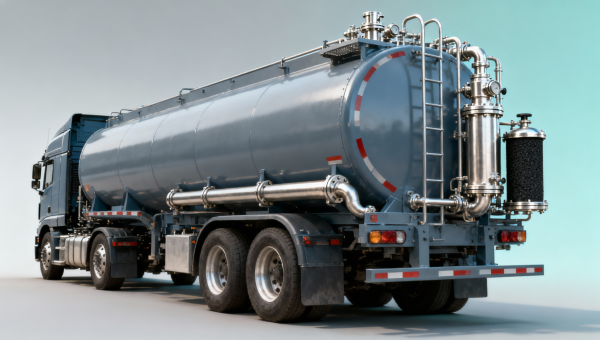
What a Proper Annual Test Actually Covers
A compliant annual test isn’t a single-point pressure check. It’s a 4-phase functional validation covering both static integrity and dynamic performance under simulated loading conditions:
- Leak Integrity Check: Pressure decay test at 5 psi for 10 minutes—maximum allowable loss: 0.5 psi
- Vapor Flow Capacity: Measured at 200 L/min minimum under 0.8 bar differential pressure
- Valve Response Timing: All automatic shut-off valves must engage within ≤1.2 seconds of overpressure detection
- Filter & Scrubber Efficiency: Post-test particulate capture rate ≥92% (verified via ASTM D2989 gravimetric analysis)
These parameters directly impact compliance with VOC emission limits (<20 g/m³ for gasoline transfer) and determine whether a tanker qualifies for Tier 3 emissions certification—critical for tenders in EU, Canada, and California.
How to Verify Vapor Recovery Readiness Before Procurement
When sourcing fuel tankers or vapor recovery retrofit kits on the Global Heavy Truck Industry Platform, procurement teams should request and validate the following five documentation items—not just product brochures:
Suppliers listed on the platform who proactively publish these documents—and allow digital audit trail access—reduce procurement cycle time by up to 22 days versus those requiring manual document collection and verification.
Procurement Risk Mitigation: What to Ask Suppliers Now
Before finalizing orders for fuel tankers, bulk liquid trailers, or vapor recovery retrofits, ask suppliers these four targeted questions—and require written responses:
- Do you provide factory-installed test ports for field verification of vapor flow rate and backpressure? If yes, specify location and thread standard (e.g., NPT ¼” per SAE J1708).
- What is your standard warranty coverage for vapor recovery components—and does it include labor for recalibration after 5,000 loading cycles?
- Can your system interface with telematics platforms (e.g., Geotab, Samsara) to report real-time vapor pressure anomalies?
- Do you offer certified technician training for end-user maintenance teams—and what is the typical lead time for on-site certification workshops?
Suppliers responding with specific technical references (e.g., “Yes—NPT ¼” per SAE J1708, included on all 2024+ models”) demonstrate deeper engineering integration than those giving generic assurances.
Why Partner With Verified Suppliers on the Global Heavy Truck Industry Platform
The Global Heavy Truck Industry Platform enables procurement professionals to source vapor recovery-compliant fuel tankers and trailers with built-in validation safeguards. Unlike open-market listings, platform-verified suppliers undergo mandatory documentation review—including test reports, calibration logs, and compliance certifications—before product visibility is granted.
You can immediately filter for suppliers offering:
- Real-time vapor pressure telemetry integration (compatible with 7 major telematics platforms)
- On-demand remote calibration support (average response time: <4 business hours)
- Pre-shipment functional testing reports with video verification option
- Customized maintenance training packages for fleet technicians (delivered in EN/ES/FR/ZH)
Start your next sourcing process by requesting vapor recovery validation documentation, specifying required test standards (EPA 40 CFR 63, EN 14015, or local equivalent), and setting delivery timelines for certified test reports—directly through the platform’s secure supplier messaging portal.
Trending News
- How to choose the right bulldozer size for a construction site
- How to choose a military truck for off-road transport
- Cummins Expects EPA to Finalize Heavy-Duty Truck NOx Rule in December
- How to choose the right bulk cement trailer capacity
- China Truckmakers' Third-Quarter Results Diverge as Exports Offset Weak Domestic Demand
Tag
Recommended News
 Policy & RegulationsCummins Expects EPA to Finalize Heavy-Duty Truck NOx Rule in DecemberCummins expects the EPA heavy-duty truck NOx rule in December 2026. Discover what the tight timeline could mean for truck demand and engine sales.
 Policy & RegulationsBeijing-Tianjin-Hebei Region Explores Heavy-Duty New Energy Truck DemonstrationHeavy-duty new energy trucks could reshape transport in the Beijing-Tianjin-Hebei region. Explore the opportunities and challenges behind wider adoption.
 Policy & RegulationsFMCSA Announces Up to $7 Million for Heavy-Truck Safety ResearchFMCSA offers up to $7 million for heavy-truck safety research. Discover who can apply, the deadline, and what the findings could mean for operators.
 Policy & RegulationsUS Imposes 25% Tariff on Imported Medium- and Heavy-Duty Trucks and BusesUS truck and bus tariffs add 25% to eligible imports. Explore USMCA exemptions and potential impacts on commercial vehicle costs and sourcing.
 Policy & RegulationsGhana Transport Operators Threaten November 1 Strike Over Traffic EnforcementGhana transport operators threaten a November 1 strike over TraffiTech-GH enforcement. Discover what the dispute could mean for passengers and freight.
 Policy & RegulationsBeijing Plan Targets Large-Scale Hydrogen Heavy-Truck DeploymentBeijing's hydrogen heavy-duty truck plan signals opportunities for fleets and suppliers. Explore potential impacts on freight, procurement and fueling infrastructure.
 Policy & RegulationsHow axle load limits affect low bed trailer exports to Southeast AsiaPlanning low bed trailer export to Southeast Asia? Learn how axle load limits affect legal payload, axle layouts, and route compliance to avoid costly mistakes before ordering.
 Policy & RegulationsGermany Ends EV Subsidy ExtensionGermany ends EV subsidy extension, reshaping EV and commercial vehicle plans in Europe. See how importers, distributors, and Chinese NEV suppliers should respond.
 Policy & RegulationsEU Rule Sets LCA Certification for Truck ImportsEU Rule Sets LCA Certification for Truck Imports: learn how the new EU LCA and EPD compliance rule will affect truck approvals, export timelines, costs, and delivery planning.
 Policy & RegulationsEU Requires LCA Reports for Imported HDVs from Oct 2026EU LCA reports for imported HDVs become mandatory from Oct 2026. Learn how the new EU heavy-duty vehicle carbon compliance rule affects exporters, suppliers, costs, and delivery readiness.
 Policy & RegulationsChina Tightens Export Filing for New Energy Heavy TrucksChina Tightens Export Filing for New Energy Heavy Trucks: learn how new HS code rules and CNAS carbon-footprint reports may impact customs clearance, compliance, and delivery timelines.
 Policy & RegulationsEU Updates CO2 Rules for Heavy-Duty Vehicle ApprovalEU Updates CO2 Rules for Heavy-Duty Vehicle Approval: learn how new lifecycle carbon and battery due diligence requirements affect EU market access, approval timing, and compliance costs.
 Policy & RegulationsChina Customs Adds New Export Fields for Road Transport EquipmentChina Customs adds new export fields for road transport equipment from Aug 15, 2026. Learn how drive type and certification data may affect compliance, clearance speed, and export planning.
 Policy & RegulationsEU Tightens Truck WVTA Brake and Lighting TestsEU Tightens Truck WVTA Brake and Lighting Tests: learn how Regulation (EU) 2026/1387 reshapes brake response, headlamp compliance, certification timing, and EU market access.
 Policy & RegulationsEU Sets CO2 Rules for New Heavy Trucks from 2027EU Sets CO2 Rules for New Heavy Trucks from 2027: learn how new EU CO2 limits, OBD, and remote data upload requirements could reshape type approval, costs, and delivery planning.
 Policy & RegulationsEU Brings Forward Cybersecurity Approval for Heavy TrucksEU heavy truck cybersecurity approval moves to August 1, 2026. Learn how WVTA, UNECE R155, OTA and telematics rules will impact EU exports, type approval and delivery plans.
 Policy & RegulationsEU Moves Truck Cybersecurity WVTA Forward to Aug 1, 2026EU truck cybersecurity WVTA moves to Aug 1, 2026. Learn how UN R155 and EU 2022/1426 affect heavy truck type approval, exports, suppliers, and compliance planning.
 Policy & RegulationsEU Brings Forward WVTA Cybersecurity Approval for TrucksEU Brings Forward WVTA Cybersecurity Approval for Trucks: learn how the 2026 deadline impacts heavy truck exports, retrofit projects, supplier compliance, costs, and EU market-entry planning.
 Policy & RegulationsEU Brings Forward WVTA Cybersecurity Approval for Heavy TrucksEU heavy truck WVTA cybersecurity approval now starts on August 1, 2026. Learn how EU type approval, CSMS audits, ADAS, OTA, and registration risks affect exporters and manufacturers.
 Policy & RegulationsEU Cybersecurity Approval Rule Takes Effect for Heavy TrucksEU Cybersecurity Approval Rule now reshapes heavy trucks market access. Learn how CSMS, UNECE R155, and WVTA deadlines could impact certification, delivery, and EU export readiness.
 Policy & RegulationsEU Requires EN 15038 Declarations for Truck ImportsEU Requires EN 15038 Declarations for Truck Imports: learn how the new EU rule affects heavy truck customs clearance, compliance timing, and export readiness.
 Policy & RegulationsEU Rule Brings SCIP Filing to Imported Truck Battery PartsSCIP filing for imported truck battery parts becomes critical in the EU from Oct 1, 2026. Learn how the rule impacts heavy-duty truck exports, aftermarket parts, and customs compliance.
 Policy & RegulationsEU REACH Expands to Truck Battery PartsEU REACH expands to truck battery parts, covering lithium-ion battery modules, BMS units, and thermal systems. Learn how SCIP filing, SVHC disclosure, and EU export compliance may affect truck suppliers.
 Policy & RegulationsEU Sets Battery Footprint Rule for Heavy TrucksEU Sets Battery Footprint Rule for Heavy Trucks: learn how the 2027 EU battery carbon footprint requirement could impact type approval, customs clearance, and truck exports.
 Policy & RegulationsEU Requires Certified V2X Modules in Heavy TrucksEU Requires Certified V2X Modules in Heavy Trucks from July 22, 2026. Learn how UN R155 and ETSI EN 303 648 rules will impact EU type approval, registration, and exports.


