Heavy Equipment Export to Mexico: Cost Factors Beyond Shipping Rates
When evaluating heavy equipment export to Mexico, shipping rates are only part of the total landed cost. For financial decision-makers, taxes, customs compliance, inland transport, insurance, documentation, and equipment specifications can significantly affect budget accuracy and ROI. Understanding these cost factors helps reduce unexpected expenses, improve supplier evaluation, and support more confident cross-border purchasing decisions.
Why a checklist approach works better for financial approval
For many buyers, heavy equipment export to Mexico appears straightforward at first: compare freight quotes, choose a supplier, and approve the purchase. In practice, the largest budget deviations usually come from items that sit outside the shipping line invoice. A checklist-based review helps finance teams identify hidden cost drivers before purchase orders are signed, especially when importing trucks, trailers, construction machinery, chassis, or specialized road transport equipment.
This matters because landed cost is not only about moving equipment across borders. It also includes regulatory readiness, tax exposure, product conformity, inland delivery, after-sales support, and the timing of cash outflows. For a financial approver, the right question is not “What is the freight rate?” but “What is the full cost of acquisition, compliance, delivery, and operational readiness in Mexico?”
First review: the core cost checklist for heavy equipment export to Mexico
Before approving any transaction involving heavy equipment export to Mexico, use the following checklist to test whether the supplier quotation reflects the real landed budget.
- Commercial term clarity: Confirm whether pricing is EXW, FOB, CFR, CIF, DAP, or another Incoterm. Cost responsibility changes significantly depending on where risk and transport obligations transfer.
- HS code and duty basis: Verify the classification for trucks, trailers, machinery, attachments, and spare parts. Incorrect coding can change duty rates, trigger customs delays, or result in penalties.
- Import taxes and VAT treatment: Check applicable duties, VAT, customs processing fees, and whether recoverability assumptions are valid under the buyer’s tax structure.
- Mexican compliance requirements: Review emission rules, safety standards, labeling, serial number consistency, and any required certificates tied to the equipment category.
- Port and border handling fees: Budget for terminal handling, unloading, inspection charges, storage, demurrage, and customs broker fees.
- Inland transport in Mexico: Estimate final-mile delivery from the port or border to the project site, warehouse, or dealer yard. Oversized loads often require permits and escorts.
- Insurance scope: Confirm whether cargo insurance covers full invoice value, inland legs, theft risk, loading damage, and claims processing conditions.
- Packaging and preservation: Check whether the equipment needs crating, weather protection, fluid handling, battery isolation, or anti-corrosion treatment for transit.
- Commissioning and technical support: Include costs for inspection on arrival, assembly, calibration, startup, operator training, and translation of technical documents.
- Spare parts and downtime risk: The cheapest export quote may become the most expensive option if replacement parts are unavailable locally or warranty claims take too long.
Cost factors beyond shipping rates that finance teams should quantify
1. Import duties, VAT, and customs-related charges
In heavy equipment export to Mexico, tax treatment often has a greater budget impact than ocean or land freight. The total payable amount may include import duty, VAT, customs processing charges, broker service fees, and inspection-related expenses. If the equipment is bundled with accessories, attachments, or spare parts, each item may require separate classification. Even a small classification error can alter the landed cost model.
Financial approvers should ask for a pre-import classification review and a cost breakdown based on customs value, not only supplier invoice value. It is also useful to confirm whether the declared value includes tooling, manuals, spare kits, or freight elements that may affect tax calculation.
2. Border compliance and document accuracy
Documentation errors create direct and indirect costs. A missing serial number, inconsistency between invoice and packing list, incorrect equipment description, or absent certificate can delay customs clearance and generate storage fees. For road transport equipment, detailed product information is especially important because model, year, configuration, and usage status may affect admissibility.
A strong supplier for heavy equipment export to Mexico should provide a complete document pack early, including commercial invoice, packing list, bill of lading or transport document, certificate of origin when relevant, technical specifications, and any compliance records needed by customs or the final buyer.
3. Inland transport and site delivery complexity
Many cost estimates stop at the port or border, but the final destination in Mexico may be the most expensive leg. Construction machinery, heavy trucks, or semi-trailers may require low-bed transport, route studies, permits for oversize dimensions, escort vehicles, or temporary storage before delivery to site. Remote mining, infrastructure, and municipal project locations can add substantial transport and handling costs.
For finance teams, this means the supplier quote should be tested against actual destination conditions: road access, unloading equipment availability, local restrictions, and whether fuel, tolls, and waiting time are included.
4. Insurance, risk transfer, and claims exposure
Insurance is often treated as a small line item, but inadequate coverage can turn into a major financial loss. Heavy equipment is exposed to damage during loading, sea transit, cross-border transfers, and inland delivery. Some policies exclude rust, water ingress, improper packing, or damage discovered after unloading. Others insure only a portion of invoice value.
A careful heavy equipment export to Mexico review should confirm the insured amount, deductible, coverage territory, claims timeline, and who is responsible for filing a claim. The finance team should also verify the point at which risk transfers under the chosen Incoterm.
5. Equipment configuration and compliance adaptation
Not all heavy vehicles and machinery are ready for the Mexican market in their original export configuration. Differences in emission standards, lighting, braking systems, tires, warning labels, manuals, or telematics may require modification. Even if each adaptation cost seems manageable, the combined amount can materially affect approval thresholds.
This is particularly relevant for trucks, trailers, and specialized transport units. A lower purchase price may hide post-arrival conversion work, additional inspections, or delayed deployment.
Quick evaluation table for landed cost review
The table below helps financial approvers organize a heavy equipment export to Mexico decision before issuing final approval.
Different purchase scenarios require different checks
For complete trucks and road transport fleets
If the purchase involves complete trucks, tractors, or fleet units, focus on homologation, emissions, axle configuration, and after-sales parts support. The long-term financial risk is not only import cost but utilization rate. If parts availability is weak, fleet downtime can erase the savings from the initial purchase price.
For construction machinery and project equipment
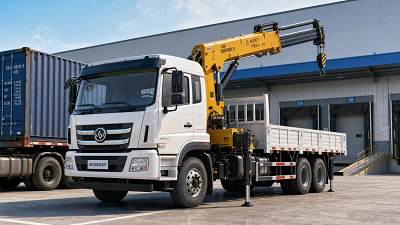
For excavators, loaders, cranes, or other project-based equipment, confirm mobilization cost to the worksite, assembly requirements, operator training, and local service response time. Project deadlines can amplify the cost of customs delay or missing parts.
For trailers and semi-trailers
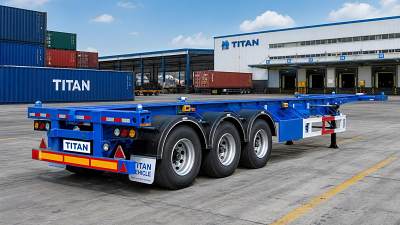
Trailers often look simpler to import, but brake systems, lighting, dimensions, and coupling compatibility deserve close review. Additional adaptation or inspection costs may arise if the product specification is based on another market standard.
Commonly overlooked items in heavy equipment export to Mexico
- Currency fluctuation: Exchange rate movements between quotation, deposit, shipment, and customs payment can change the real acquisition cost.
- Payment structure: Letters of credit, staged payments, and advance deposits create different financing costs and cash-flow pressure.
- Port congestion and storage: Even correctly shipped equipment can accumulate detention and storage if documents arrive late or customs inspection takes longer than expected.
- Used versus new equipment treatment: Requirements, admissibility, inspection scrutiny, and refurbishment assumptions may differ.
- Warranty execution cost: A warranty is only financially valuable if spare parts, labor authorization, and response time are workable in Mexico.
Practical execution steps before final budget approval
To make heavy equipment export to Mexico more predictable, finance and procurement teams should align on a short execution sequence:
- Request a landed cost sheet with separate lines for equipment value, freight, duties, VAT, customs brokerage, insurance, inland delivery, and commissioning.
- Ask the supplier for technical specifications, serial data, dimensions, weight, and compliance documents before confirming production or dispatch.
- Validate the destination route in Mexico, including permits, offloading needs, and site restrictions.
- Stress-test the budget with delay scenarios such as customs inspection, exchange rate movement, and spare parts lead time.
- Compare suppliers not only by export price, but by documentation quality, responsiveness, product fit, and support capability across the full commercial vehicle lifecycle.
How a specialized B2B platform supports better approval decisions
For companies sourcing trucks, trailers, construction machinery, chassis, or parts internationally, a specialized industry platform can reduce decision risk. The Global Heavy Truck Industry Platform helps buyers compare suppliers, review product categories, access market information, and evaluate sourcing options across the heavy truck supply chain. For financial approvers, this improves supplier visibility and makes it easier to request comparable quotations, verify equipment details, and assess commercial credibility before approving cross-border purchases.
Final approval guidance and next-step questions
The main lesson in heavy equipment export to Mexico is simple: shipping rates are visible, but the real financial risk often sits in taxes, compliance, inland delivery, insurance, and operational readiness. A disciplined checklist allows finance teams to approve purchases based on total landed cost rather than incomplete quotations.
Before moving forward, it is wise to confirm five questions with the supplier or sourcing platform: What is the exact Incoterm? Which import taxes and fees are expected in Mexico? What documents and compliance records will be provided before shipment? What inland delivery assumptions are included? And what service, warranty, and spare parts support will be available after arrival? Clear answers to these questions lead to more accurate budgets, stronger ROI evaluation, and more confident heavy equipment purchasing decisions.
Trending News
- When does a light commercial vehicle for urban delivery save fleet costs?
- How to choose an off road truck for steep and unstable job sites
- How to match crane truck lifting capacity to your jobsite loads
- What drives logging truck cost beyond the base purchase price?
- How to match lowbed trailer deck height to your hauling equipment
Tag
Recommended News
 Transportation CostsWhat drives logging truck cost beyond the base purchase price?Logging truck cost goes far beyond the base price. Explore chassis, cranes, trailers, fuel, compliance, and support factors to make a smarter timber-hauling investment.
 Transportation CostsWhat Drives Water Truck Cost for Construction and Mining Fleets?Water truck cost depends on tank size, chassis, spray system, and lifecycle support. Learn how construction and mining fleets compare quotes and avoid costly spec mistakes.
 Transportation CostsTruck Bulk Transport: Cost, Capacity, and Loading RisksTruck bulk transport explained: compare cost, capacity, and loading risks to choose safer, more efficient equipment and reduce lifecycle expense.
 Transportation CostsContainer Trailer Cost Factors That Affect Total Landed PriceContainer trailer cost goes far beyond the factory quote. Discover the key factors shaping total landed price, from specs and freight to taxes, compliance, and after-sales support.
 Transportation CostsBulldozer Price in 2026: What Changes the Total Cost Beyond the QuoteBulldozer price in 2026 means more than the quoted number. Learn how freight, duties, fuel, maintenance, downtime, and resale shape total ownership cost.
 Transportation CostsWater Truck Cost in 2026: What Drives Price and Lifetime ExpenseWater truck cost in 2026 depends on tank size, chassis, compliance, fuel, and maintenance. Learn what drives price and lifetime ownership expense before you buy.
 Transportation CostsLogging Truck Price in 2026: What Changes Total Ownership Cost?Logging truck price in 2026 is only the starting point. Learn how fuel, maintenance, payload, financing, and resale value shape total ownership cost.
 Transportation Costs2026 Truck Leasing Cost Trends: What to Budget for This YearTruck leasing in 2026 means more than a monthly rate. Learn the key cost trends, hidden budget risks, and smart planning tips to control fleet expenses this year.
 Transportation CostsDump Truck Wholesale Pricing: What Changes Total Fleet CostDump truck wholesale pricing is only the start. Learn how fuel, downtime, parts support, and truck specs shape total fleet cost and smarter sourcing decisions.
 Transportation CostsIndustrial Transportation Cost Drivers in 2026: Fuel, Utilization, and DowntimeIndustrial transportation costs in 2026 are driven by fuel volatility, fleet utilization, and downtime. Learn how to compare suppliers, cut hidden costs, and protect transport margins.
 Transportation CostsContainer Trailer Cost Factors That Affect Total Purchase ValueContainer trailer cost goes beyond the quote. Discover how steel, axles, compliance, shipping, and maintenance shape total purchase value and help you choose smarter.
 Transportation CostsTruck Tipper Price Breakdown: What Drives Total Cost in 2026Truck tipper price in 2026 depends on more than the quote. Discover what drives total cost, hidden fees, specs, compliance, and supplier value before you buy.
 Transportation CostsHeavy Equipment Transport: Key Cost Factors and Route Planning TipsHeavy equipment transport costs depend on size, permits, routing, and timing. Learn practical route planning tips to cut delays, control budgets, and move equipment smarter.
 Transportation CostsCrane Truck Cost Breakdown: Purchase, Setup, and Operating ExpensesCrane truck cost explained from purchase and setup to fuel, maintenance, and downtime. Compare suppliers smarter and plan total ownership costs with confidence.
 Transportation CostsTruck Cement Sourcing: How to Compare Supply Risk and Delivered CostTruck cement sourcing made smarter: learn how to compare supply risk, logistics reliability, and delivered cost to avoid delays, cut hidden expenses, and protect project margins.
 Transportation CostsHeavy Duty Trucks for Sale in Australia: What Impacts Total CostHeavy duty trucks for sale in Australia: discover what really impacts total cost, from fuel and maintenance to compliance, finance, and resale value for smarter buying.
 Transportation CostsHow to Request an Accurate Construction Machinery QuotationConstruction machinery quotation tips for getting accurate, approval-ready pricing. Learn what details to prepare, compare supplier offers, and avoid hidden cost risks.
 Transportation CostsTianjin Port TIR Rates Rise 8% on June 17Tianjin Port TIR rates rise 8% as diesel costs and new BeiDou+GPS tracking rules reshape Central Asia road freight. See what exporters and shippers must adjust now.
 Transportation CostsBulk Cement Trailer Capacity vs Operating Cost ExplainedBulk cement trailer capacity directly affects fuel use, trip frequency, maintenance, and ROI. Learn how to compare sizes, cut operating costs, and choose the best trailer for your routes.
 Transportation CostsWater Truck Cost Breakdown: Purchase, Fuel, and MaintenanceWater truck cost explained from purchase price to fuel, maintenance, downtime, and resale. Compare suppliers smarter and estimate true ownership cost before you buy.
 Transportation CostsLight Commercial Vehicle for Food Delivery: Cost vs RangeLight commercial vehicle for food delivery buyers should weigh cost vs range, downtime, and service support to cut total delivery costs and choose the right fleet fit.
 Transportation CostsConstruction Machinery Cost Breakdown: Purchase, Fuel, and MaintenanceConstruction machinery cost explained through purchase price, fuel use, and maintenance impact. Learn how to compare lifecycle expenses and choose equipment with better long-term value.
 Transportation CostsTIR Digital Clearance Goes Live on China-Kazakhstan-Russia RouteTIR Digital Clearance goes live on the China-Kazakhstan-Russia route, cutting average clearance from 72 to 25 hours. See how e-CMR integration can improve road freight visibility, planning, and delivery control.
![]() Transportation CostsTruck Leasing vs Buying: Which Lowers Fleet Costs in 2026?Truck leasing vs buying in 2026: discover which option lowers fleet costs, protects cash flow, and improves flexibility for smarter fleet budgeting.
 Transportation CostsTruck Leasing vs Buying: Cost Risks to Check FirstTruck leasing vs buying: uncover hidden cost risks in mileage, maintenance, depreciation, downtime, and contracts before choosing the best fleet strategy.